
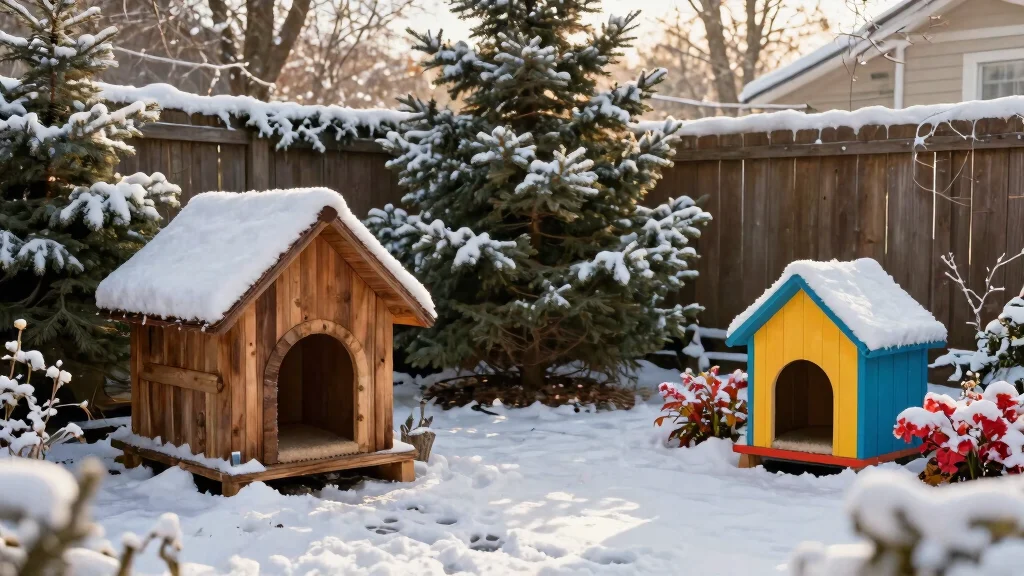
As the chilly winds of winter blow in, it’s easy to feel the pangs of concern for our furry friends, especially outdoor cats. These independent creatures might enjoy the thrill of exploring the world outside, but when temperatures drop, they need a warm, safe place to rest. That’s why I put together this guide on outdoor cat shelters that stay warm in freezing weather. Whether you’re an experienced cat owner or a new pet parent, you’ll find the perfect shelter solution to help keep your feline warm and cozy.
If you love your outdoor pets and want to ensure their comfort during the colder months, this post is for you. You’ll discover a range of DIY insulated cat shelters that are easy to build and maintain, no matter your skill level. From classic wooden boxes to creative repurposed dog houses, I’ve gathered 14 unique cat shelter designs that are not only functional but also appealing. Each idea is designed with warmth and safety in mind, allowing your outdoor cat to snuggle up and stay protected from the harsh winter elements.
By the end of this post, you will have a wealth of options to create the ideal winter cat shelter. You’ll gain practical insights and tips to help you choose the best design for your space and your cat’s needs. Plus, with these DIY cat shelter ideas, you’ll find that providing outdoor pet protection doesn’t have to be a daunting task. Let’s dive in and ensure our furry friends stay warm and happy this winter!
[link-whisper-related-posts]Key Takeaways
– Explore 14 unique outdoor cat shelter designs that focus on warmth and safety, perfect for cold climates.
– Discover how to repurpose common materials like wooden boxes and dog houses to create insulated cat houses.
– Learn practical tips for insulating shelters to maximize warmth for your outdoor pet.
– Find step-by-step instructions for building each type of shelter, making it easy and fun to create your own.
– Ensure your cat’s outdoor safety and comfort during freezing temperatures with thoughtful design choices.
1. The Classic Wooden Box Shelter
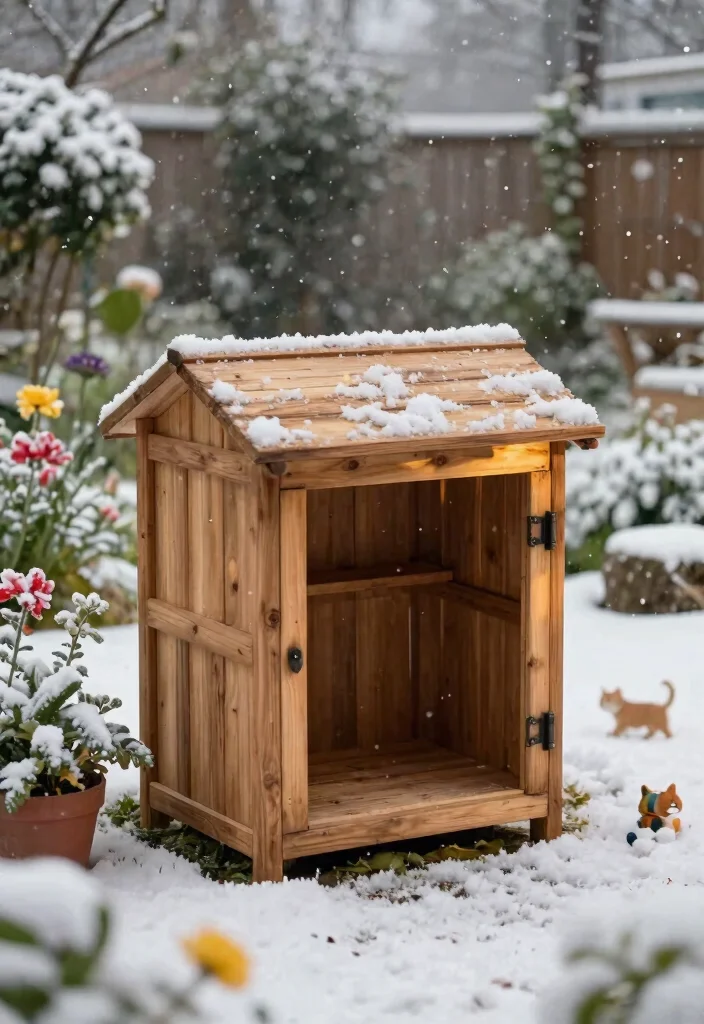
If you’re seeking a straightforward yet effective solution for your outdoor cat, the classic wooden box shelter is an excellent choice. Made from durable plywood or reclaimed wood, this design provides a sturdy refuge against harsh weather. Elevate the shelter off the ground to keep it dry and cozy, ensuring your furry friend stays warm and safe during cold snaps.
Consider adding personal touches, like painting it in bright colors or using decorative elements to match your garden. This shelter not only protects your cat but also enhances the visual appeal of your outdoor space.
Key features to consider:
– Insulation: Line the interior with straw or blankets for warmth without moisture retention.
– Entrance: Cut a small entry point to shield against wind and snow.
– Ventilation: Drill small holes near the top to allow airflow while keeping out the cold air.
By placing a classic wooden box shelter in your yard, you create a functional and attractive haven for your outdoor cat.
Fun fact: Elevate a classic wooden box shelter 3–6 inches off the ground and add a thin insulation layer—heat loss can drop by up to 40% in freezing weather. Your outdoor cat shelter stays warm, dry, and welcoming.

SUPERIOR INSULATION FOR ULTIMATE WARMTH: Our outdoor cat house is constructed with thermal insulation and polypropylene board, this cat shelter effectively retains heat, ensuring your feline stays cozy even in freezing temperatures.

【Keep Your Pets Safe】Our heated outdoor cat house is dedicated to providing a warm and comfortable shelter for feral cats, community cats, barn cats and other outdoor cats. Built with a highly robust construction, the house can withstand extreme weather and accidental impacts, ensuring the safety of outdoor pets. The exit-only escape door is a thoughtful touch, it allows cats to flee from predators in emergencies while keeping cold air out. Heated outdoor cat shelter size: 17.7"Lx15"W x17.5"H.
Key Trade-offs & Our Top Pick
When choosing the perfect outdoor cat shelter for cold weather, several options stand out. Let’s break down a few of the most popular designs to help you make an informed decision.
1. The Classic Wooden Box Shelter
– Pros:
– Durable and long-lasting material ✔
– Provides good insulation with proper design
– Can be customized easily for your cat’s needs
– Cons:
– Can be heavy and difficult to move
– Requires maintenance to prevent rot
– More expensive than some other options
– Best for: Cat owners looking for a sturdy, permanent shelter that can withstand harsh conditions.
2. The Insulated PVC Cat House
– Pros:
– Lightweight and easy to transport
– Great insulation properties to keep cats warm
– Resistant to moisture, promoting a dry environment
– Cons:
– May not be as visually appealing as wooden shelters
– Can be prone to scratching by active cats
– Some versions may not offer adequate ventilation
– Best for: Those who prioritize warmth and moisture resistance in a portable design.
3. The Cozy Straw Bale Shelter
– Pros:
– Excellent insulation with natural materials
– Cost-effective and easy to set up
– Biodegradable and eco-friendly
– Cons:
– Might attract pests if not managed properly
– Requires regular upkeep to maintain effectiveness
– Aesthetically less pleasing to some homeowners
– Best for: Budget-conscious individuals who want a quick and effective solution.
– Pros:
– Keeps cats dry and warm off the ground
– Provides a fun space for your cat to lounge and play
– Can provide good ventilation if designed properly
– Cons:
– More complex to build compared to simpler shelters
– Can be challenging to access for cleaning
– May not offer maximum protection against extreme cold
– Best for: Cat owners who want to combine play and shelter in a multi-functional space.
5. The Styrofoam Cooler Shelter
– Pros:
– Extremely affordable and easy to create
– Excellent insulation properties for freezing temperatures
– Lightweight and easy to transport
– Cons:
– May not be as durable as other materials
– Limited space might not accommodate larger cats
– Less visually appealing and may not blend with your yard design
– Best for: DIY enthusiasts looking for a quick and cheap winter solution.
Expert Recommendation:
Best Overall: The Classic Wooden Box Shelter
The Classic Wooden Box Shelter stands out as the best overall choice. It combines durability, warmth, and customization, making it suitable for various climates. While it may require more initial investment and upkeep, its long-term benefits and ability to withstand extreme conditions make it worth it for most cat owners.
Why We Picked This:
We understand that some may prefer alternatives like the Insulated PVC Cat House for its portability or the Cozy Straw Bale Shelter for budget reasons. Each option has merit, depending on your specific needs. Consider your cat’s habits, your budget, and whether you need a permanent or temporary shelter solution. Always think about your cat’s comfort and safety when making your choice!

Superior Insulated & Elevated Design: This heated cat house features a 5" elevated bed to prevent moisture, keeping cats dry and warm. Inside, advanced aluminum foil insulation locks in warmth, ensuring a snug and cozy environment even on the coldest days

Spacious & Versatile - Measuring 25.19 x 13 x 16.92 inches, our Multi-Use Outside Cat Shelter offers ample space for community cats, feral cats, puppies, and rabbits, suitable for various indoor and outdoor environments like gardens and rooms

【𝗔 𝗠𝘂𝘀𝘁-𝗛𝗮𝘃𝗲 𝗳𝗼𝗿 𝗢𝘂𝘁𝗱𝗼𝗼𝗿 𝗖𝗮𝘁𝘀 𝗶𝗻 𝗪𝗶𝗻𝘁𝗲𝗿 𝗮𝗻𝗱 𝗥𝗮𝗶𝗻𝘆 𝗗𝗮𝘆𝘀】- - Our heavy-duty heated cat house provides ample protection for cats. It is soak-proof, weather-resistant, built with DOUBLE-LAYER SHELL+AIR CAVITY for warmth and has heating function, so cats can stay comfortable no matter what the outdoor climate is like. Specialized waterproof materials protect stray and feral cats from the harsh weather. Heated Cat House Suit for Cats Under 14 lbs.
2. The Insulated PVC Cat House
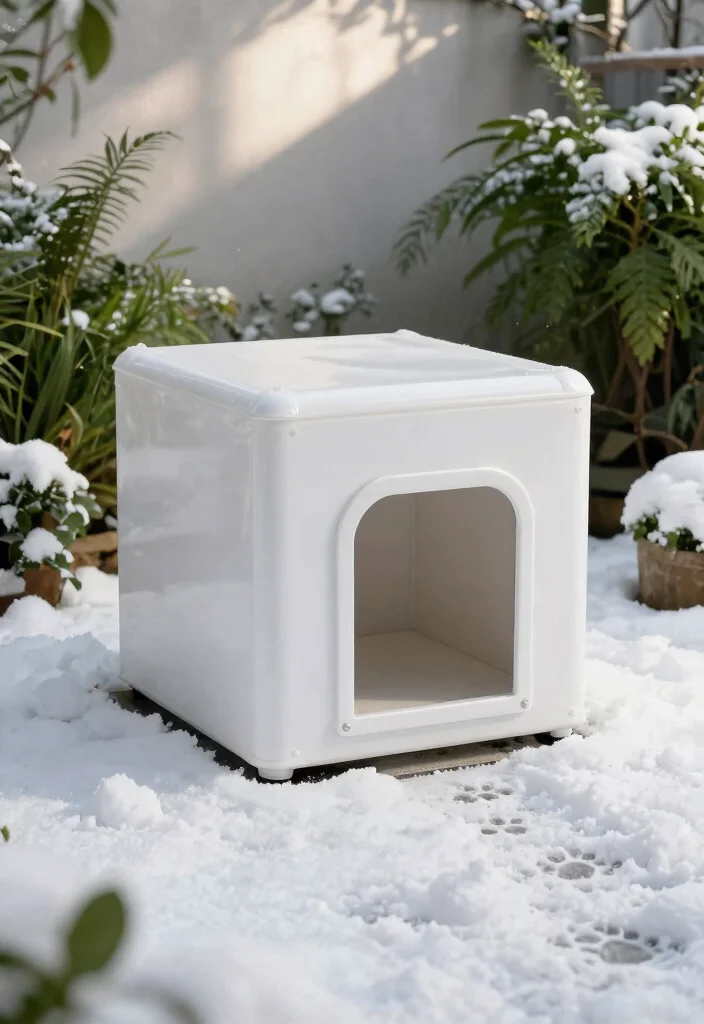
For a modern twist on outdoor cat shelters, the insulated PVC cat house is a fantastic option. This DIY project offers excellent insulation thanks to the air pockets within the PVC, keeping your cat warm during freezing weather. Easy to assemble and lightweight, it’s perfect for those who like to rearrange their outdoor spaces.
To build, use PVC sheets to form a box and fill the walls with Styrofoam for added insulation. Don’t forget to include a small flap door to provide easy access while keeping the cold at bay.
Reasons to choose a PVC cat house:
– Durability: Weather-resistant material ensures longevity.
– Lightweight: Simple to move and reposition as needed.
– Easy to Clean: Smooth surfaces make maintenance a breeze.
This stylish shelter not only keeps your feline snug but also adds a contemporary flair to your garden.

LURE A STRAY BACK HOME - dark and natural colors for a cat house outdoor will reduce the defenses of the stray without feeling exposed to all the wildlife - a haven for the neighbor feral.

Fully insulated with scratch guard insulation on the floor, ceiling and walls for maximum warmth and durability

Elevated Design with Ground Stakes:The outdoor cat house comes with sturdy ground stakes and a support frame to lift the cat house off the ground and keeps the shelter away from cold, wet surfaces—improving warmth, reducing moisture, and preventing water seepage during rain or snow
3. The Cozy Straw Bale Shelter
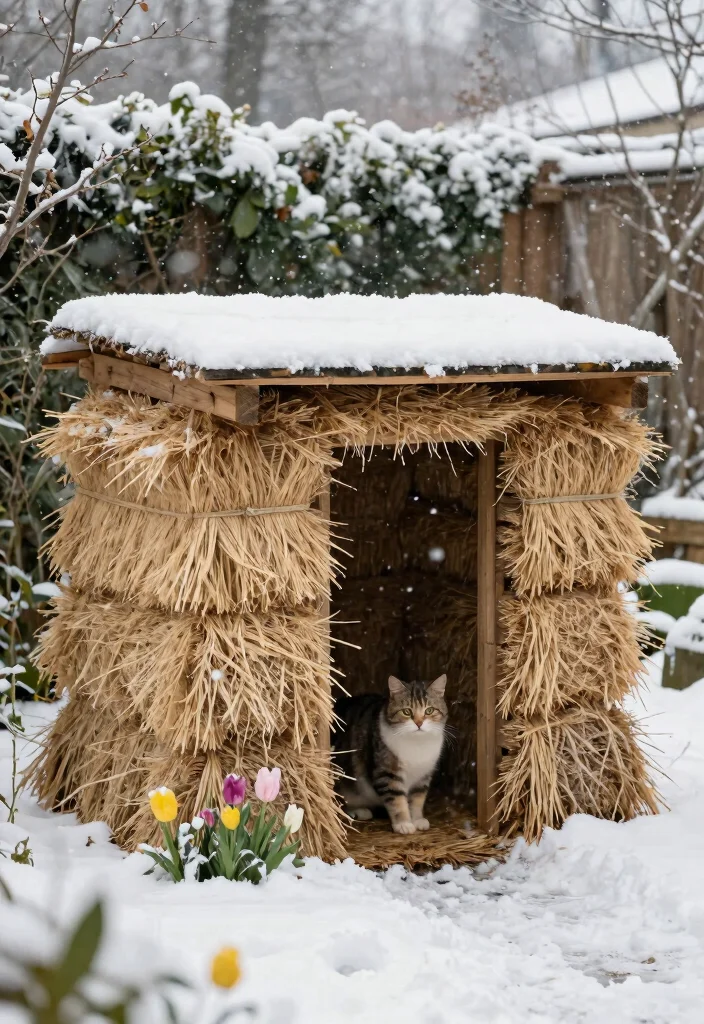
Straw bales offer an eco-friendly and cost-effective solution for outdoor cat shelters. This design involves stacking straw bales to create a snug, insulated space where your cat can escape the cold. It’s a popular choice for those seeking sustainable options that blend harmoniously with nature.
To construct, arrange the bales in a square or rectangle, leaving an entry point for your cat. Top it with a wooden board or tarp for protection against rain and snow.
Essential building tips:
– Arrangement: Stack bales to form a cozy nook.
– Roofing: Use wood or tarp for added shelter.
– Warmth: Fill with straw for comfort and insulation.
The cozy straw bale shelter not only provides warmth but also enhances the natural beauty of your garden, making it a perfect retreat for your furry friends.

OUTDOOR CAT HOUSE: A cozy shelter for indoor and outdoor use. The sturdy construction features pet-friendly Pine wood with a weatherproof water-based stain - protecting your feline friend from all the elements

Durable Fir Wood: Made of natural fir panels with an asphalt roof, this outdoor cat shelter is waterproof, moisture-resistant, and designed to withstand rain, snow, and sun. Treated with sustainable water-based paint, it resists rot, ensuring long-lasting durability. Note: The smell from the wooden cat shelter is normal and is characteristic of natural fir wood.

SPACIOUS GREEN 2-STORY DESIGN FOR MULTIPLE CATS: Designed to fit 2-3 cats (under 15 lbs each), this green 2-story wooden cat house creates separate spaces for climbing, resting, hiding, and lounging. The upper balcony offers a cozy lookout spot while the lower level provides added privacy and comfort
4. The Repurposed Dog House
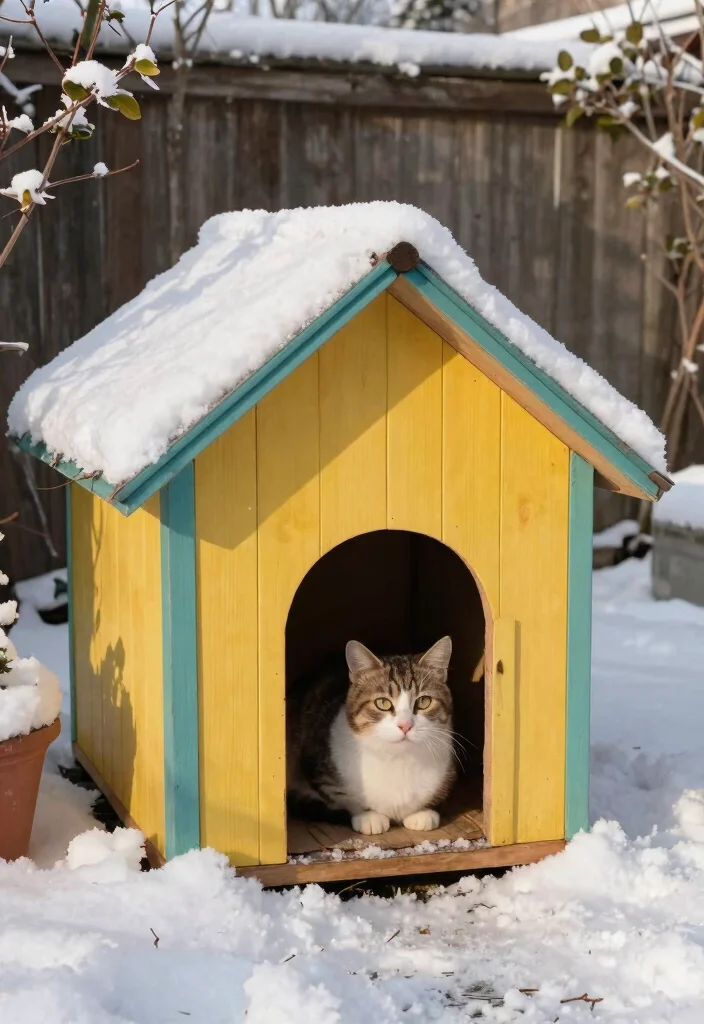
Transforming a repurposed dog house into an outdoor cat shelter is a smart and sustainable choice. These structures often require minimal modifications to serve your cats well, making them an efficient solution for protecting your feline friends from the elements.
Start by adding foam board insulation to the walls and floor for enhanced warmth. Line the interior with blankets or straw for comfort, and adjust the entrance to be the right size for your cat.
Modification ideas:
– Insulation: Incorporate foam board for better warmth retention.
– Comfort: Use blankets or straw inside for coziness.
– Entrance Adjustment: Ensure the entry is cat-friendly and well-insulated.
This option not only recycles existing materials but also creates a protective haven for your outdoor companions.

Built for real weather, not just mild days - Constructed from ECOFLEX, a non-toxic wood-polymer composite that won't absorb moisture like plywood or cardboard shelters. Panels help retain warmth in winter and stay cool in summer, and the raised floor lifts cats off cold, damp ground.

Large Outdoor Cat House: Comfortable cat house, Perfect for outdoor cats and small dogs that sleep In garages, porches, barns, or even in the house.

🐈【Large Insulated Cat House for All Seasons】This large outdoor cat house (20.4"×15.3"×17.3") provides an insulated feral cat shelter perfect for winter, yet versatile for year-round use. Its spacious interior comfortably houses cats, small dogs, or other small animals indoors or outdoors—ideal for balconies, porches, gardens, or living rooms.
5. The Styrofoam Cooler Shelter
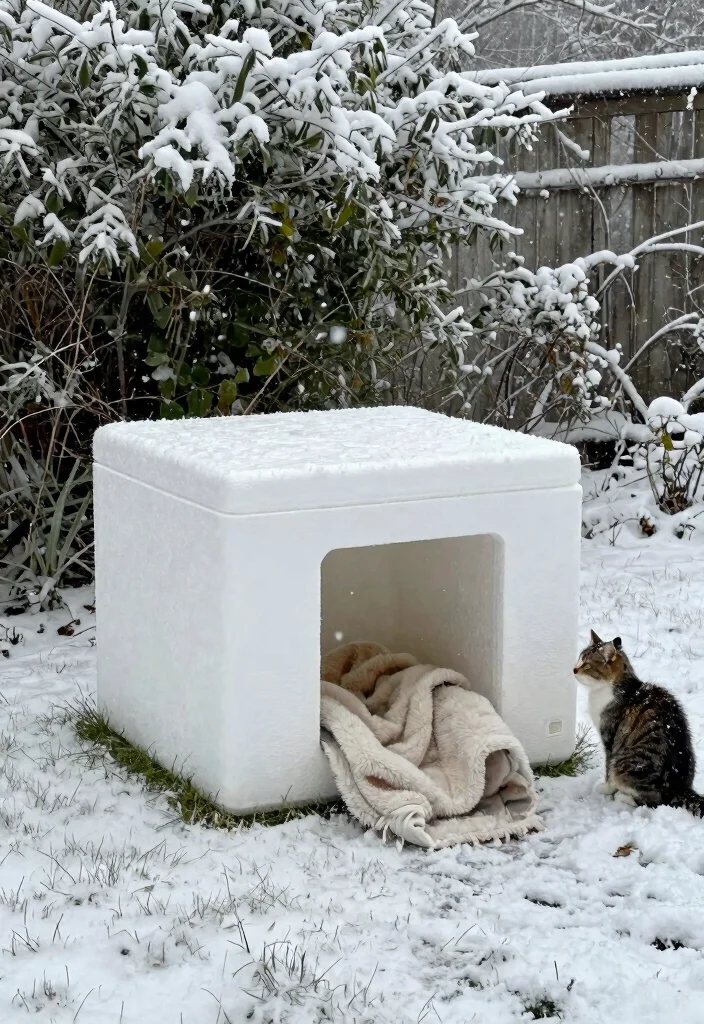
The humble Styrofoam cooler is an often-overlooked gem for DIY cat shelters. Its excellent insulation properties make it an ideal choice for shielding cats from the cold. Lightweight and portable, it’s a practical solution for outdoor cat care.
To create your shelter, select a large cooler and cut a small entry hole on one side. Line the interior with straw or an old blanket to provide warmth and comfort.
Quick steps to build:
– Choose the Right Size: Find a cooler spacious enough for your cat.
– Entrance: Ensure the hole is appropriately sized for easy access.
– Bedding: Add straw or a blanket for warmth.
This budget-friendly and portable shelter allows you to easily move it around your yard, making it a flexible solution for outdoor cat protection.
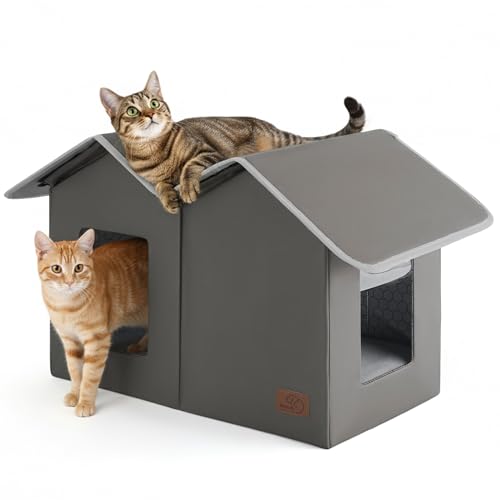
Rainproof: Constructed with waterproof membrane fabric on exterior walls, this outdoor cat house weatherproof design keeps rain out completely

【𝗔 𝗠𝘂𝘀𝘁-𝗛𝗮𝘃𝗲 𝗳𝗼𝗿 𝗢𝘂𝘁𝗱𝗼𝗼𝗿 𝗖𝗮𝘁𝘀 𝗶𝗻 𝗪𝗶𝗻𝘁𝗲𝗿 𝗮𝗻𝗱 𝗥𝗮𝗶𝗻𝘆 𝗗𝗮𝘆𝘀】- - Our heavy-duty heated cat house provides ample protection for cats. It is soak-proof, weather-resistant, built with DOUBLE-LAYER SHELL+AIR CAVITY for warmth and has heating function, so cats can stay comfortable no matter what the outdoor climate is like. Specialized waterproof materials protect stray and feral cats from the harsh weather. Heated Cat House Suit for Cats Under 13 lbs.
6. The Elevated Cat Loft
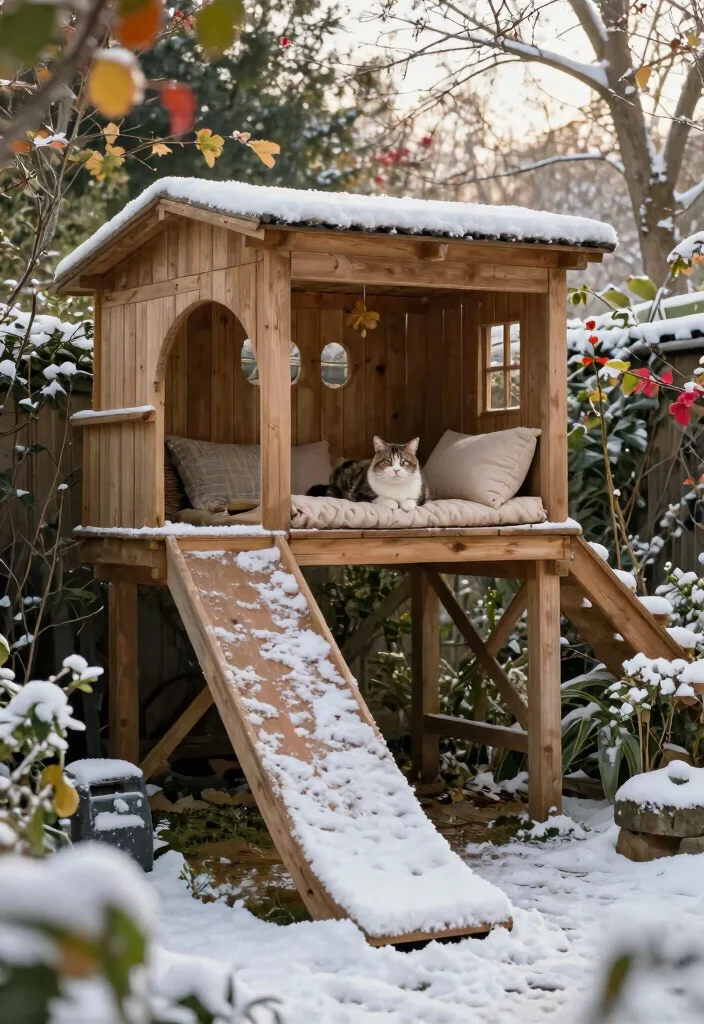
If you want to get creative, consider constructing an elevated cat loft. This unique design not only keeps your cats off cold ground but also offers a fun spot for them to rest and play. It’s a delightful way to enhance their outdoor experience.
Use wood or pallets to build a raised platform, adding walls and a roof for protection. Include a ramp or steps to make it accessible for your feline friends.
Building ideas include:
– Structure: Construct with wood or pallets for a sturdy base.
– Access: Add a ramp or steps for easy climbing.
– Decor: Use cushions or blankets for a cozy lounging area.
This elevated design not only provides warmth but also offers a perfect lookout point for your cat, making it a charming addition to your garden.

Large Size: Suitable for cat whelping or at least 2 adult cats, 31.5"L x 15.8"W x 26"H

HEATED OUTDOOR CAT SHELTER: Give outdoor cats, feral cats, and community cat colonies a warm, secure place to rest; this insulated heated cat house provides cozy protection from cold weather, wind, snow, and rain
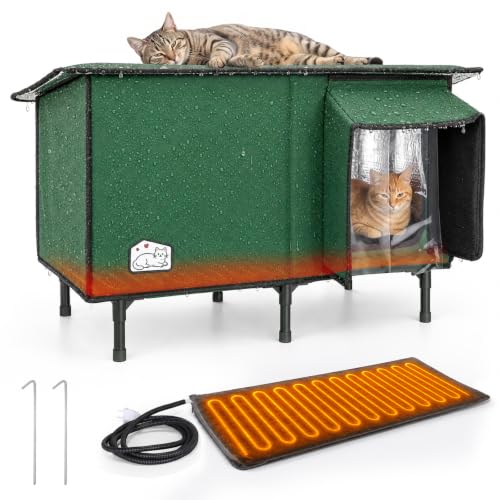
【SPACIOUS OUTDOOR CAT SHELTER WITH COMFORTABLE SIZE】Designed with a 25.6" L x 13.4" W x 17.7" H exterior size, this heated outdoor cat house provides a cozy resting space for cats, kittens, and small pets. The roomy interior allows cats to stretch, turn around, and relax comfortably, making it ideal for outdoor cats, feral cats, and small animals.
7. The Igloo Cat Shelter
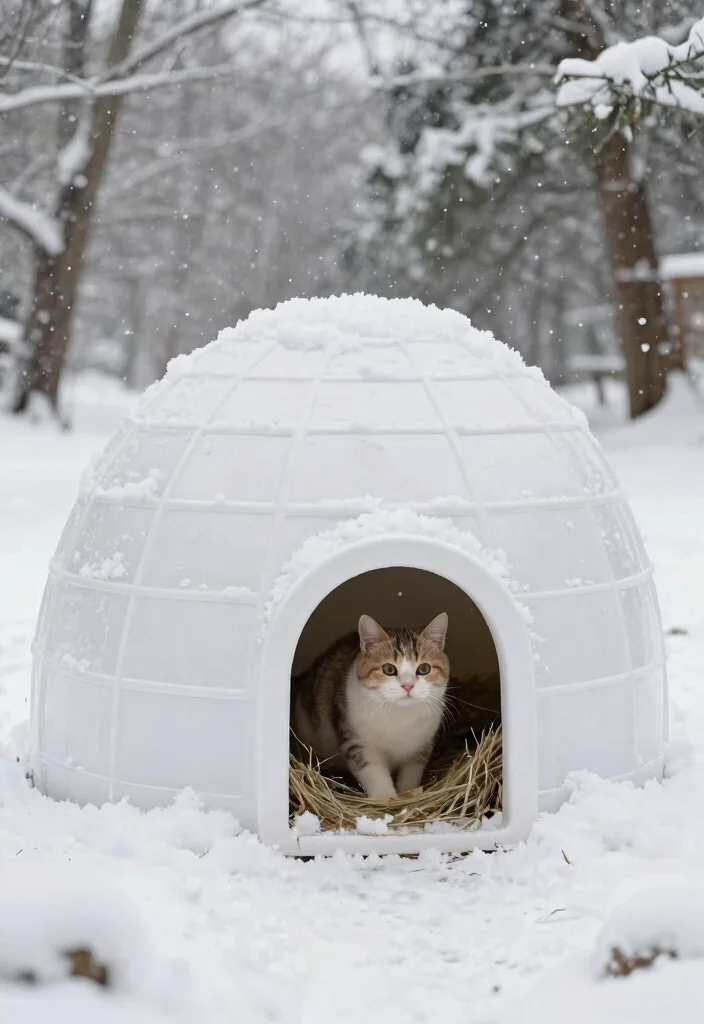
Inspired by nature, the igloo cat shelter is a fantastic option for cold climates. Its rounded shape effectively deflects wind and snow, providing excellent insulation for your furry friend. This innovative design combines function with creativity.
To build, use plastic bins or create a frame with PVC pipes, then cover it with heavy-duty plastic. Don’t forget to add a small entrance for easy access.
Helpful building tips:
– Materials: Utilize plastic bins or PVC for the frame.
– Access Point: Create a small entry for your cat.
– Insulation: Fill the interior with straw or blankets for warmth.
This imaginative project not only serves a practical purpose but also showcases your creativity in your garden.
Fun fact: a rounded igloo shelter can deflect wind and snow, reducing wind chill by up to 40% for an outdoor cat shelter. Build with plastic bins or PVC, then seal with heavy-duty plastic and a small entrance. Your feline stays warmer, happier, and safer.

🐱 All-Season Weatherproof Protection: Fecuria cat houses for outdoor cats are built to last, featuring durable, scratch-resistant Oxford fabric that stands up to daily use. The inner PP plate add sturdy structure and double waterproof, while the TPU coating adds a final moisture barrier—keeping inside warm, dry, and cozy no matter the weather outside! Plus, the comfort cushion makes our outdoor cat house suitable for year-round indoor and outdoor use—It's more than a outdoor cat shelter, it's a safe, private spot your feline friend will love.

UPGRADED SEAMLESS BOTTOM FOR SUPERIOR WATERPROOFING: Unlike traditional cat houses with stitched floors that allow moisture to seep through needle holes, our outdoor cat house features a cutting-edge seamless roof and bottom design. This innovative construction creates an impenetrable barrier against ground moisture and rain, ensuring your feline friend stays dry and comfortable even during heavy storms or on wet surfaces

【All-Season Sanctuary】Features a removable 0.2-inch insulated liner for customizable winter warmth and a weatherproof, elevated design that keeps cats dry and insulated from cold, damp ground all year round, allowing you to adapt the house’s insulation to any season or weather. Pro Tip: When in the hottest days, add a pet-safe ice pack inside (ice pack not included) for extra cooling.
8. The Pallet Cat Shelter
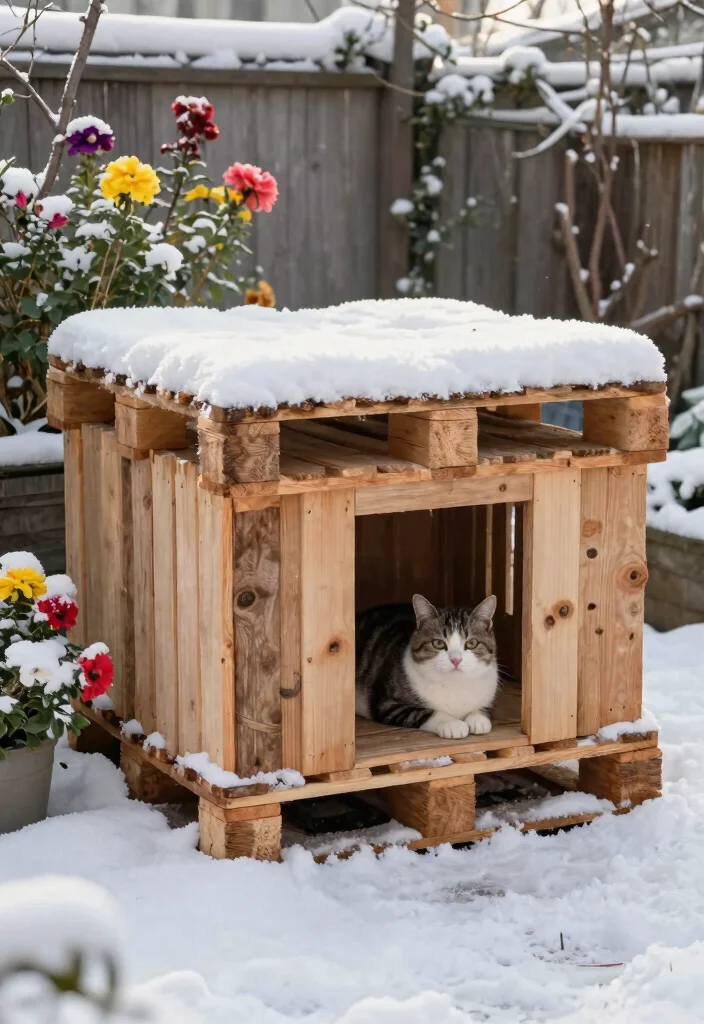
Reclaimed wooden pallets are a fantastic base for constructing a cat shelter. This eco-friendly option reduces waste while providing a solid and customizable design. It’s a great way to create a unique space for your outdoor cats.
Begin by using one pallet as the base and stacking another on top to create an enclosed area. Fill the gaps with straw or an old blanket for insulation and comfort.
Construction steps include:
– Base Layer: Stack pallets for a sturdy structure.
– Insulation: Use straw or blankets for warmth.
– Entrance Modifications: Cut an entry hole shielded from the wind.
This rustic shelter not only serves its purpose but also adds character to your yard, making it a charming retreat for your feline friends.

【Elevated Raised Design for All Seasons】: This outdoor cat house features sturdy elevated leg frame to keep the house off wet ground, damp floors and cold wind. Effectively isolate moisture, prevent rainwater infiltration and keep interior dry and warm, great for year-round outdoor use.

Made of high quality fir wood material, stable, sturdy and durable

【Two-Level Outdoor Cat Feeding Station】 Innovative outdoor cat feeding station and shelter designed with a smart dual-level structure, providing an elevated feeding platform on top and a protected resting area below. Ideal for feral cats, stray cats, and community cat care, supporting up to 2 cats in a clean and organized outdoor setup.
9. The Plastic Storage Container Shelter
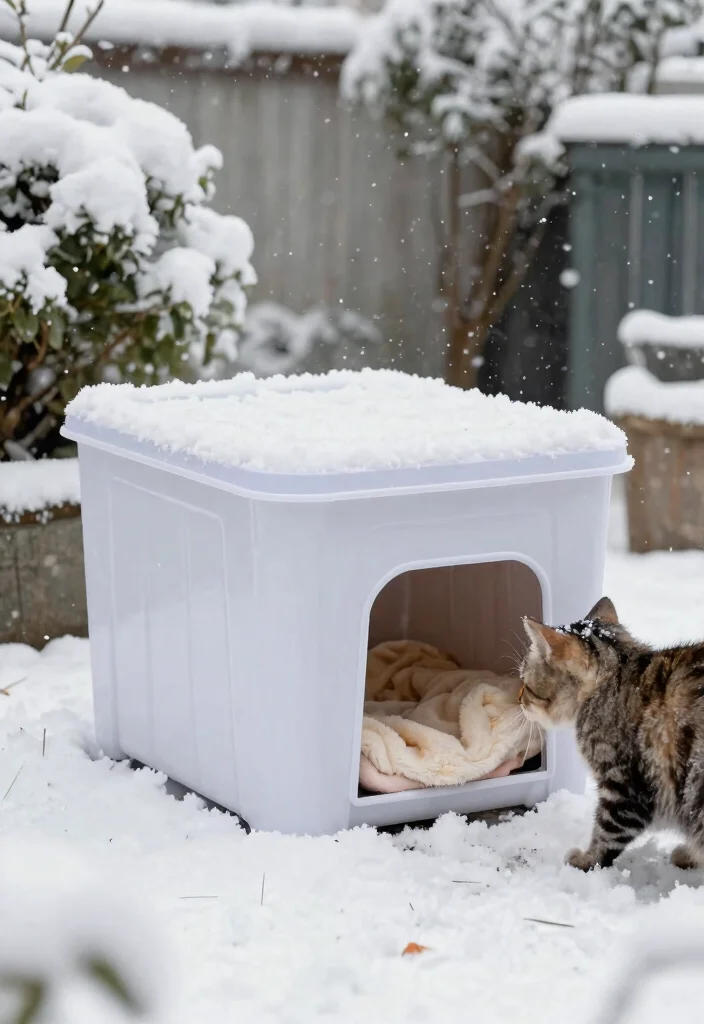
A plastic storage container offers a creative and budget-friendly solution for outdoor cat shelters. Waterproof and easy to find, these containers are perfect for keeping your cat safe from the elements. They’re also simple to set up and move around as needed.
To create this shelter, select a large, heavy-duty plastic container with a lid. Cut a small hole in the side for entry and line the bottom with straw or an old blanket for comfort.
Steps to create your shelter:
– Choosing Containers: Look for large, sturdy options.
– Entrance: Cut a small hole for easy access.
– Bedding: Add straw or blankets for warmth.
This quick DIY project is not only practical but also allows for flexibility in placement around your garden.

Waterproof Roof and Raised Base: The roof features a PVC membrane for 100% waterproofing. The raised base effectively insulates against ground moisture and cold air. These features keep the cat house clean and dry, making it ideal for outdoor environments.
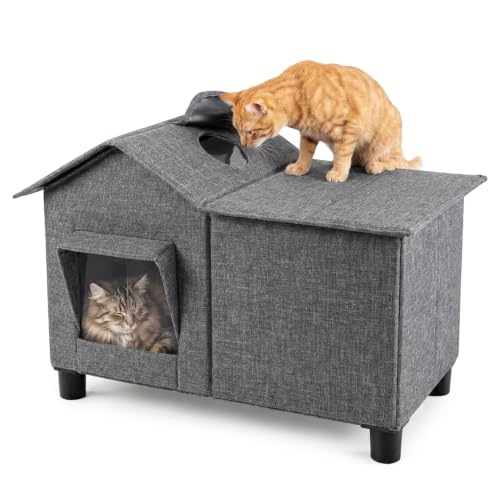
LARGE SIZE & ROOMY SPACE: Measuring 23.6" L × 13.4" W × 15.35" H, this spacious cat house gives cats room to stretch, snuggle and snooze. The 7" × 7.5" door provides a convenient entry point, while the included plush cushion adds a soft spot for resting.

【All-Weather Protection】:Designed to shield your feline friends from the elements, this cat shelter features a fully enclosed structure with only a dedicated entry point. The elevated base keeps the interior dry above ground level. Its weather-resistant build offers reliable defense against rain, wind, and harmful UV rays, making it a dependable retreat for outdoor, feral, or community cats.
10. The Modern Cat Condo
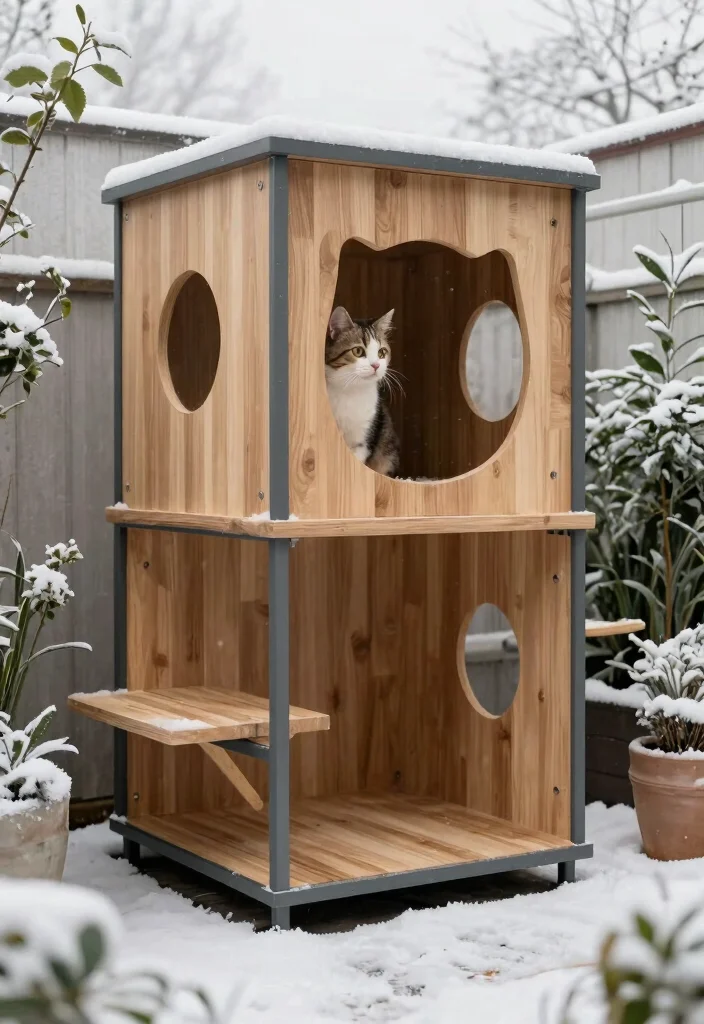
For a stylish and functional option, consider a modern cat condo. This design merges aesthetics with practicality, offering not just shelter but also a fun play area for your cat. It’s a wonderful way to show off your love for your pets while enhancing your outdoor space.
Choose materials like wood, corrugated metal, or heavy-duty plastic for a contemporary look. Include multiple levels or platforms for exploration, and ensure cozy bedding is available on each level.
Design features to consider:
– Materials: Opt for stylish materials that withstand weather.
– Interior Setup: Include various levels for play and rest.
– Weatherproofing: Ensure it’s insulated with a sheltered entryway.
This modern cat condo can become a focal point in your garden, blending beautifully with your home’s design.
11. The Easy Canvas Tent Shelter
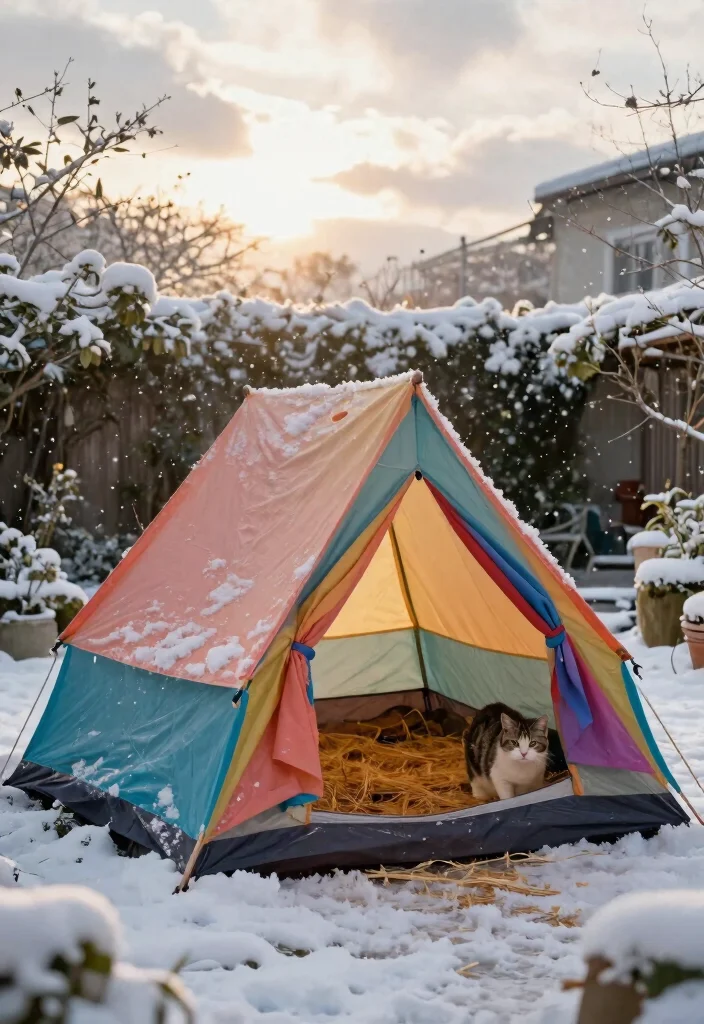
If you’re looking for a quick and simple solution, a canvas tent shelter is a fantastic idea. This lightweight structure can be set up in no time, providing a warm retreat for your cats. It’s ideal for those who need a flexible shelter option.
Use a large canvas tarp or repurpose an old tent for this project. Secure the tarp to the ground with stakes, creating an enclosed area for your cats. Line the floor with straw or blankets to keep them cozy.
Creating your tent:
– Materials: Use a sturdy canvas tarp or tent.
– Setup: Secure the tarp to form a shelter.
– Bedding: Provide straw or blankets for warmth.
This easy-to-move shelter is perfect for cat lovers looking for a temporary solution, and it’s a fun project for the whole family!
12. The Outdoor Cat Hideaway
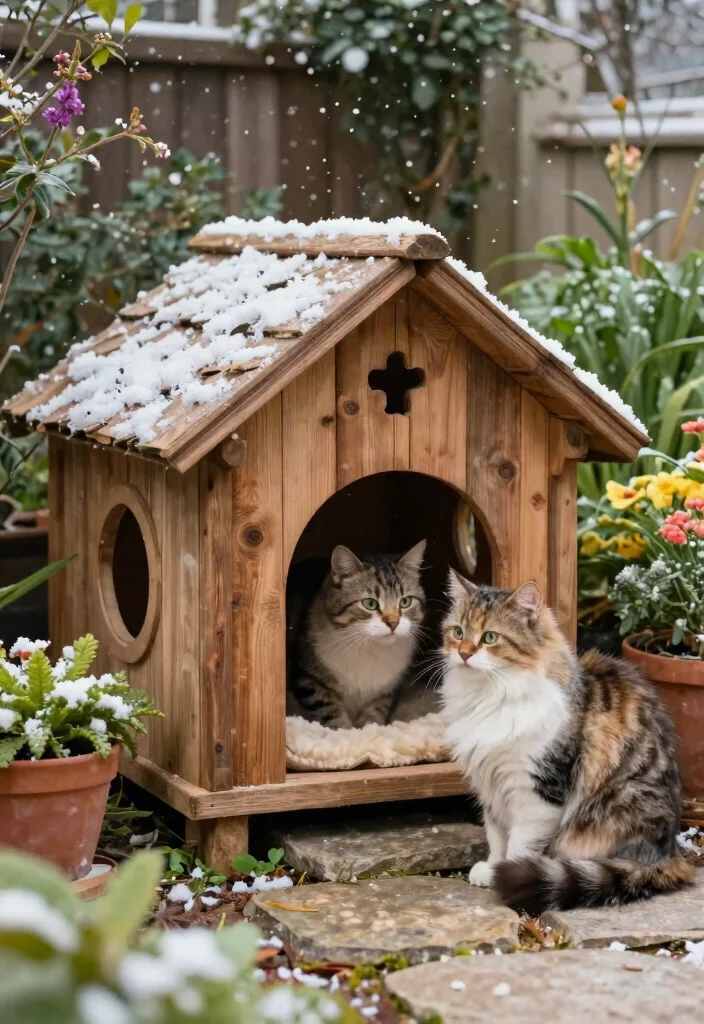
Creating a stylish hideaway for your outdoor cats is both practical and visually appealing. This design can integrate into existing structures or stand alone, offering a secure spot for your cats to retreat. It’s a beautiful way to enhance your yard while serving a purpose.
Use natural materials like wood, stones, and plants to build the hideaway, allowing it to blend seamlessly into your garden. Include small cubbies for your cats to curl up in, ensuring they feel safe and protected.
Design ideas include:
– Incorporate Nature: Use natural elements for a harmonious look.
– Caves and Cubbies: Design cozy spaces for security.
– Warmth: Fill with soft bedding for comfort.
This imaginative project not only provides shelter but also adds artistic flair to your outdoor space, benefiting both you and your feline companions.
Fact: a well-built outdoor cat shelter in your garden can cut nighttime shivering by 50%. Make it a hideaway with natural materials and small cubbies so cats curl up and feel safe. The best part? It blends with your yard and invites cozy visits.
13. The Compact Cardboard Shelter
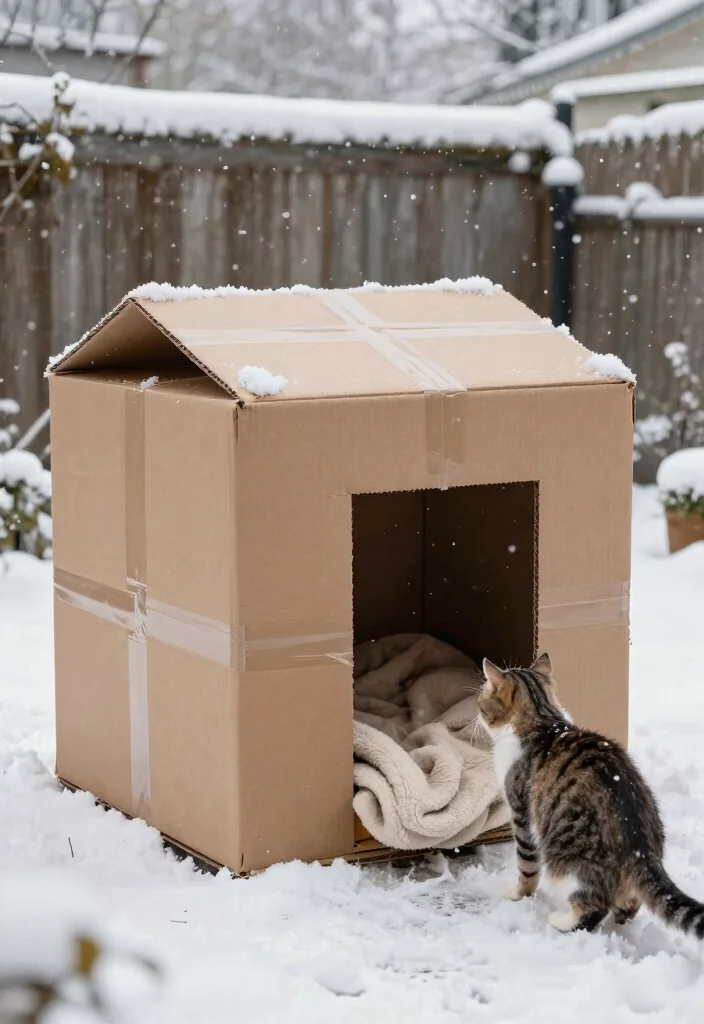
For those on a tight budget, a cardboard shelter can be a quick and effective solution to keep your kitty warm. While not as durable as other materials, it can offer immediate protection when built correctly. This makes it a practical option during cold spells.
Begin with sturdy cardboard boxes and tape them securely to form a shelter. Line the inside with straw or old blankets for warmth, and cover the structure with a plastic tarp to protect against moisture.
Steps to build your shelter:
– Choose Sturdy Boxes: Use larger boxes for better insulation.
– Insulation: Line with straw or blankets for warmth.
– Waterproofing: Cover with a tarp to shield from the elements.
This temporary solution is great for urgent needs, but remember to replace the cardboard as needed, ensuring your kitty stays comfortable.
14. The Earth-Sheltered Den
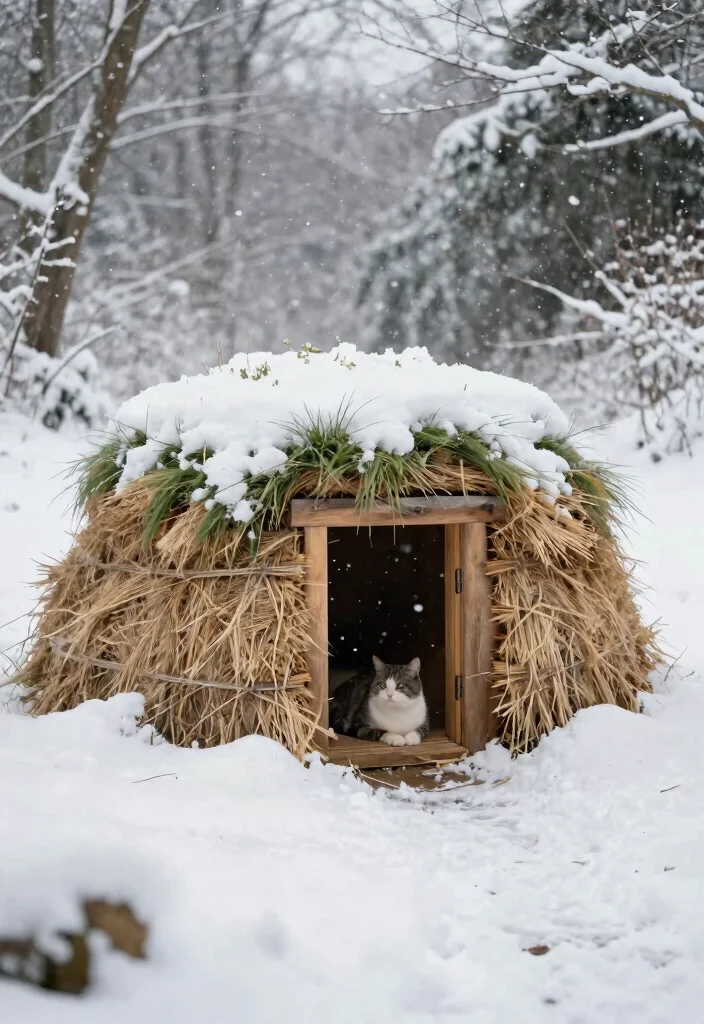
An earth-sheltered den is an excellent choice for providing exceptional insulation while also creating a unique outdoor cat shelter. By partially burying the structure, you harness the earth’s natural warmth, keeping your pet cozy during cold days.
Use wood and straw bales for the walls, and cover the top with soil and grass. Make sure to create a small entrance that leads into a snug underground space, ensuring it’s inviting for your cat.
Construction tips include:
– Materials: Use wood and straw bales for walls.
– Design: Create a cozy entrance into the den.
– Bedding: Provide soft materials for comfort.
This eco-friendly design not only serves as a shelter but also harmonizes beautifully with your landscape, making it a thoughtful option for caring cat owners.
Conclusion
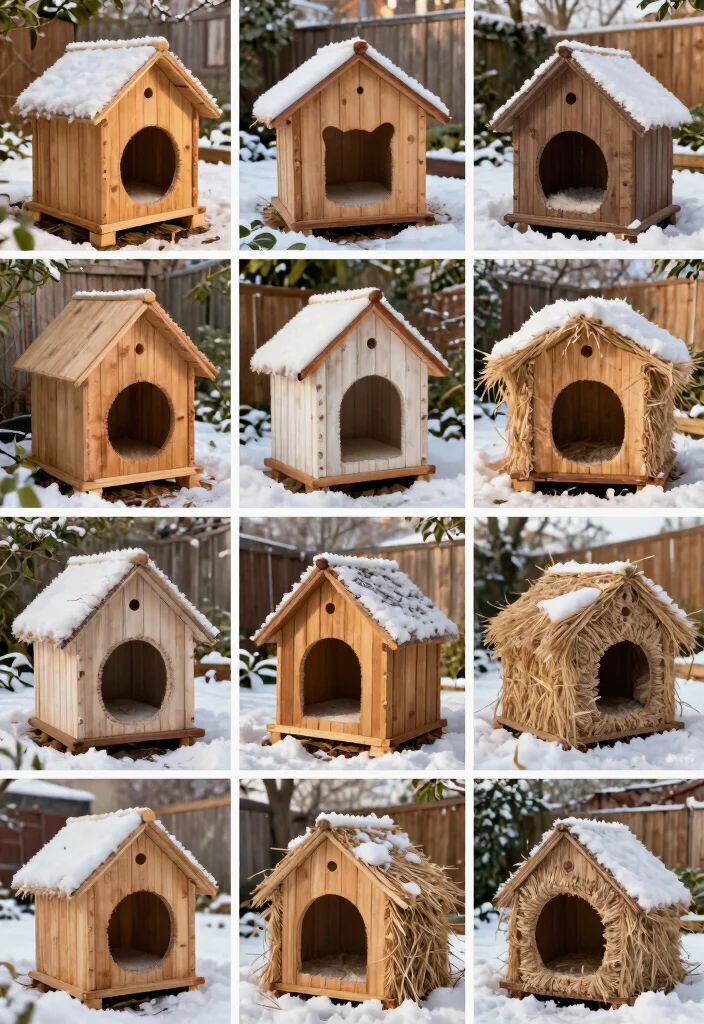
Building a warm and safe outdoor cat shelter is essential for ensuring the comfort of our feline friends during winter months. These 14 creative ideas range from simple to more elaborate designs, providing options for every skill level and budget. Maintaining a safe environment for outdoor cats not only helps them thrive but also fosters a sense of community.
So, gather your materials, unleash your creativity, and give your outdoor cats the cozy havens they deserve!
Note: We aim to provide accurate product links, but some may occasionally expire or become unavailable. If this happens, please search directly on Amazon for the product or a suitable alternative.
This post contains Amazon affiliate links, meaning we may earn a small commission if you purchase through our links, at no extra cost to you.
Frequently Asked Questions
What are the best outdoor cat shelter ideas to keep cats warm in freezing weather?
Combining insulation, wind protection, and dry bedding is key for a warm outdoor cat shelter. Start with an insulated outer box or repurposed cooler lined with 1–2 inches of foam board and sealed seams. Add a weatherproof roof and elevate the shelter off the ground to avoid damp floors. Use a small entry tunnel or weatherproof flap to cut down on drafts. Line the floor with straw (refresh weekly) instead of hay, and place the shelter in a sheltered spot against a wall or under eaves. If you want extra warmth, consider a low-watt heated pet mat with a thermostat designed for outdoor use, but keep it safely wired and protected from moisture. Regularly check for moisture, pests, and weight of the bedding. This approach aligns with practical outdoor cat shelter and DIY cat shelter ideas for winter.
What are the best cat shelter designs for winter protection?
Look for designs that minimize drafts and maximize warmth: options include a repurposed cooler with foam insulation, a wooden insulated hut with a sealed door, or a double-wall design with an air gap. Position the shelter with the entrance away from prevailing winds and add a weather flap to reduce drafts. Elevate and seal the base to keep out moisture. Use straw for bedding and refresh weekly; avoid hay. Finish with a water-resistant roof and a simple drainage setup to prevent leaks. These cat shelter designs help keep a single or small group of cats cozy all winter.
Which materials are safest for insulated cat houses in freezing weather?
Safe, outdoors-ready materials make a winter shelter last. Use exterior-grade plywood or durable cedar for walls, and choose non-toxic insulation such as XPS foam boards or foil-faced polyiso. Build a water-tight roof with shingles or metal. The interior can be lined with a thin plywood base and a raised floor. Bedding should be straw instead of hay to avoid moisture and pests. Seal seams with weatherproof caulk and use weather stripping on the door. Avoid treated woods in direct contact with pets and choose non-toxic finishes. This setup supports insulated cat houses that stand up to cold climates.
How can I protect outdoor pets and keep the shelter dry and predator-proof in winter?
Prioritize outdoor pet protection by choosing a sheltered spot, a sealed unit, and a snug entry. Elevate the shelter on a stand to prevent moisture intrusion and add a roof overhang. Seal gaps around the door with weather stripping and install a snug inner liner to cut drafts. Use a small entry hole about 1.5 inches in diameter to deter larger critters while still letting a cat pass. Add a detachable inner cover that can be washed, and consider a door flap or clear panel to reduce drafts while keeping light in. Regularly inspect seals after storms to maintain outdoor pet protection.
How big should an outdoor cat shelter be, and how do I maintain it through winter?
Keep the shelter compact enough to trap heat but roomy enough for a cat to turn around. A common guideline is about 12–18 inches wide and 18–24 inches long for a single cat, with a height around 12 inches; adjust for larger cats or multiple occupants. Use removable bedding that can be washed or replaced, and refresh straw weekly to stay dry. Keep the exterior dry and well-sealed, and clear a small snow-free area around the entrance. Regularly inspect for moisture leaks after storms and clean the interior as needed. This approach aligns with DIY cat shelter ideas to keep outdoor cats safe and warm all winter.
Related Topics
outdoor cat shelter
insulated cat houses
winter cat shelters
DIY cat shelter ideas
cold weather pet care
pet protection
easy DIY projects
sustainable pet solutions
cat shelter designs
feline winter shelter
shelter building tips
beginner friendly