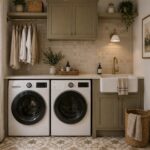
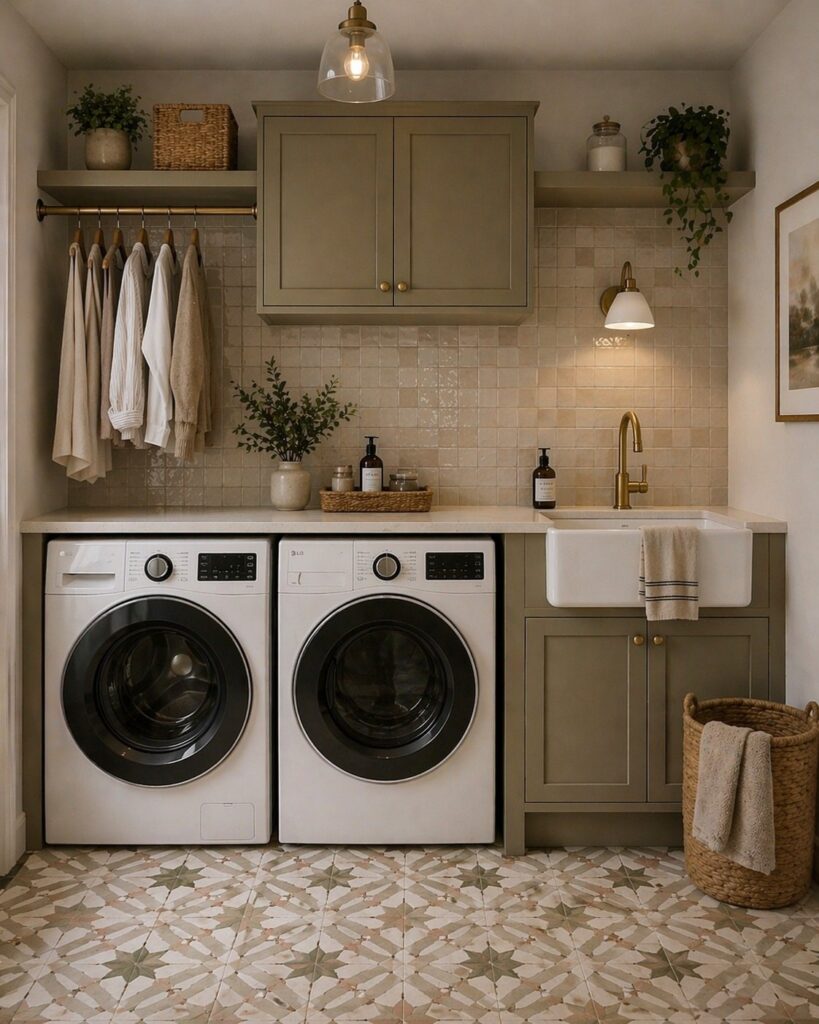
The options I see most often fall into two camps: hard tiles that handle water and softer vinyls that feel better underfoot while you fold.
How you use the room matters more than the hallway view, since a floor that works for a quick in-and-out trip differs from one that holds up to daily sorting and folding.
[link-whisper-related-posts]1. Ceramic or Porcelain Tile
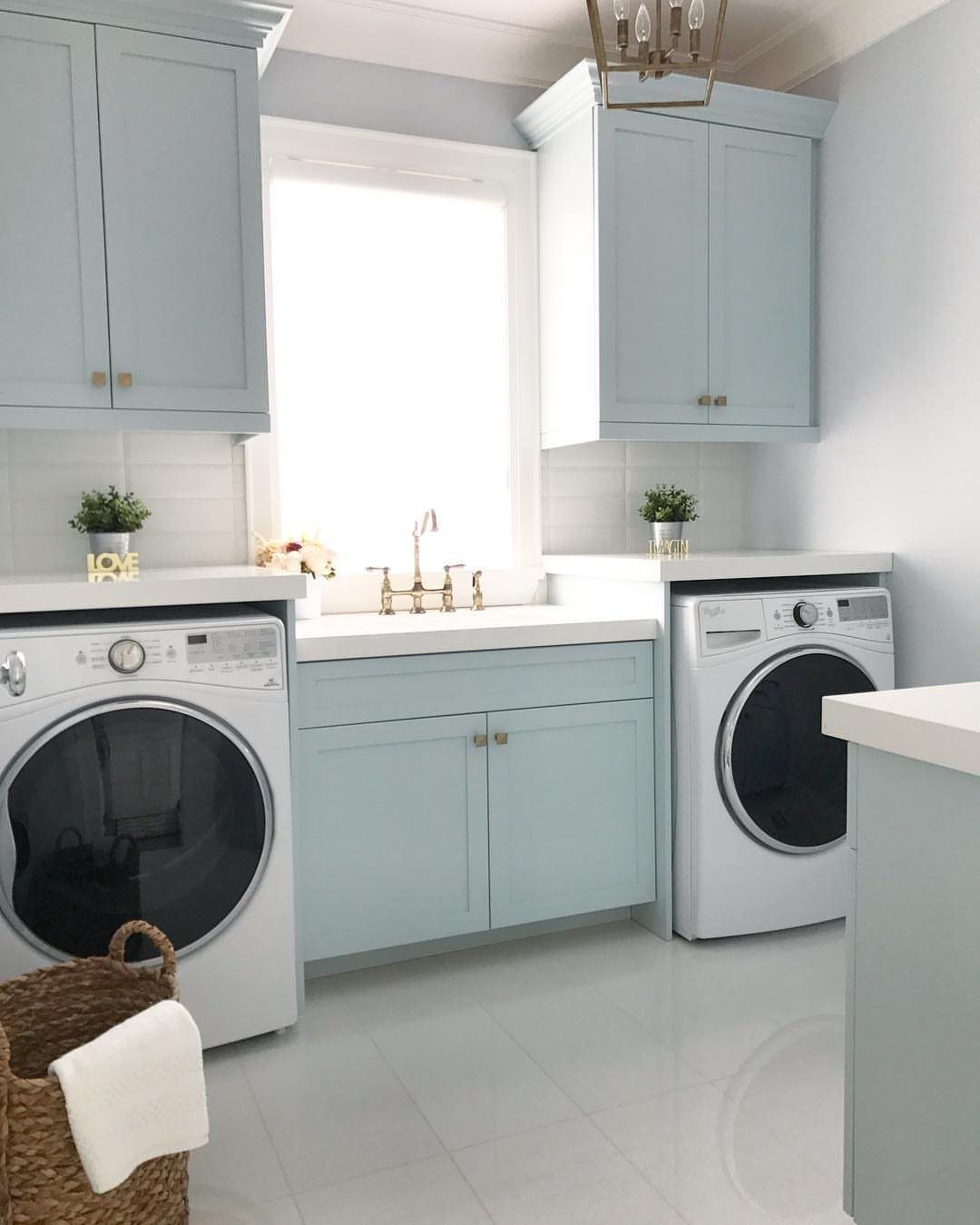
Ceramic or porcelain tile is the floor you install when you want to stop thinking about your floor. It handles standing water, heavy appliances, and years of foot traffic without complaint.
At $8 to $15 per square foot installed, it costs more than vinyl options, but you are paying for permanence.
Glossy white tile bounces light around a small laundry room and wipes clean with a damp mop. Grout lines need occasional sealing to stay stain-free, and the surface is cold and hard underfoot.
I would add a gel mat in front of the washer if I spent long stretches folding clothes here.
This suits homeowners who prioritize durability over comfort and plan to stay put long enough to amortize the higher cost.
2. Luxury Vinyl Plank (LVP)
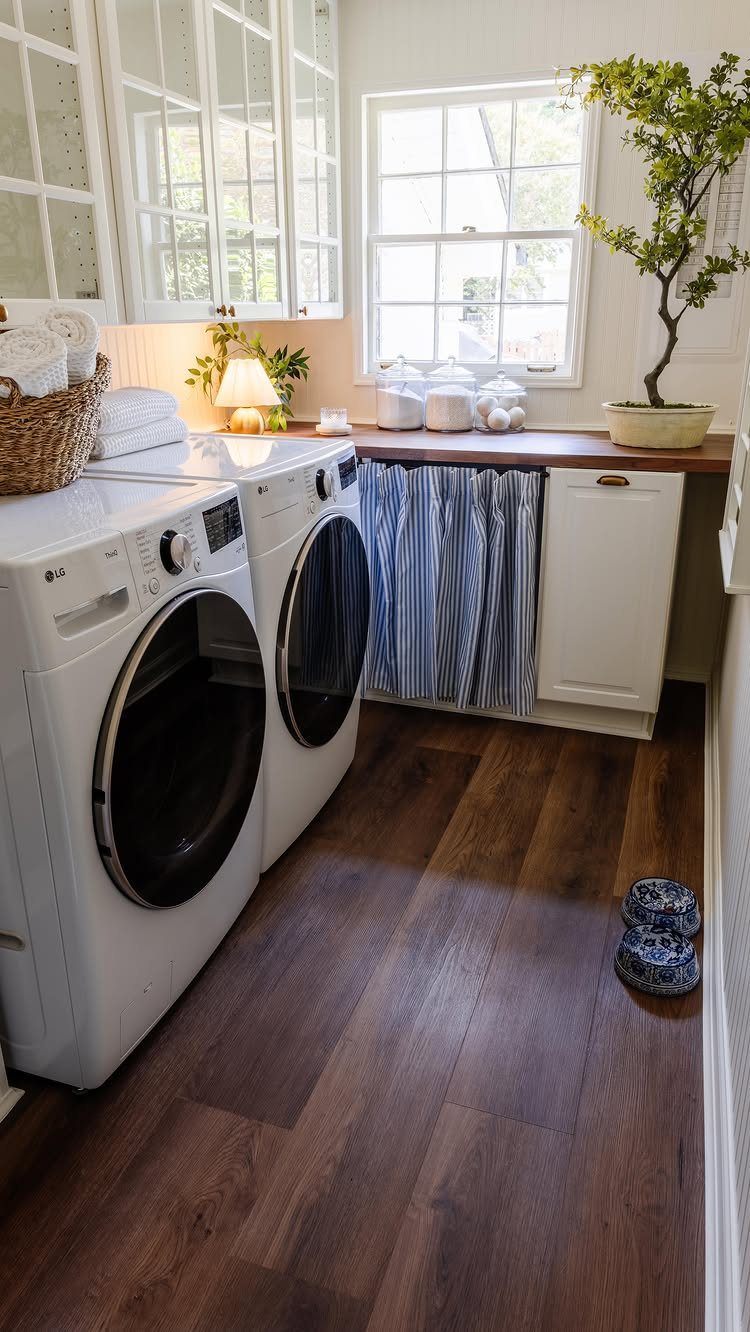
Luxury vinyl plank gives you most of tile’s water protection with none of its penalties. It runs about $6.50 per square foot installed, stays warm and quiet underfoot, and survives a laundry room flood with a simple wipe-up.
Dark wood-look planks pass for hardwood from the doorway; only up close does the give-away disappear.
Rigid-core SPC plank holds up better under a washing machine’s weight and vibration than the softer WPC stuff.
The stiffer core resists compression and holds flat under a washer’s weight and vibration, which matters more here than in a bedroom or hallway.
Installation takes a day for most rooms, and a damaged plank swaps out without tearing up the whole floor.
This is the choice I would make for a second-floor laundry room or any space where I fold clothes standing up.
3. Checkered Marble Tile Flooring
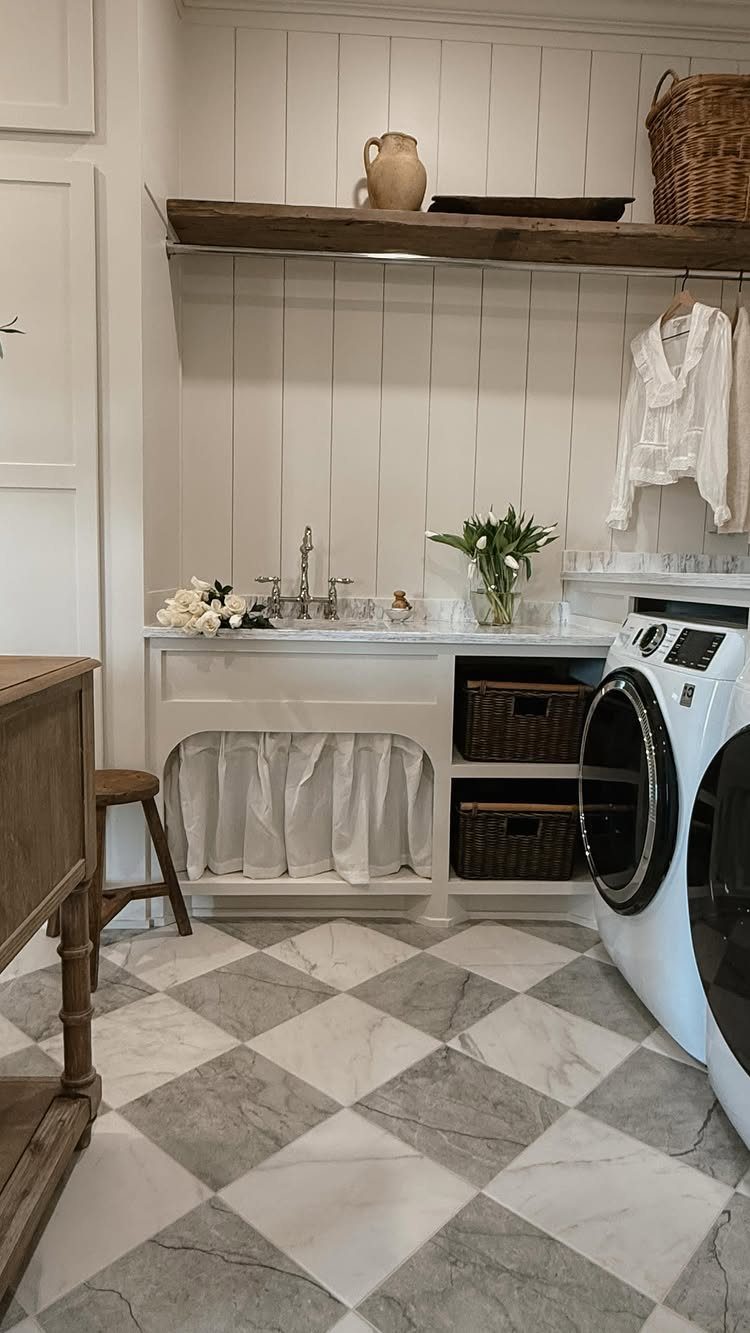
Grey and white checkered marble tile carries a classic pattern into a utility space without feeling utilitarian. Stone-look checkerboard against white cabinetry and natural wood reads more finished pantry than basement afterthought.
Real marble demands sealing and stains easily; the marble-look porcelain or ceramic version you are more likely to find gives the same visual effect with none of the maintenance anxiety.
The pattern hides lint and dust better than solid flooring, which I count as a genuine advantage in a room that generates both constantly. This suits someone who wants their laundry room to feel designed rather than merely outfitted.
4. Light Wood Herringbone Flooring
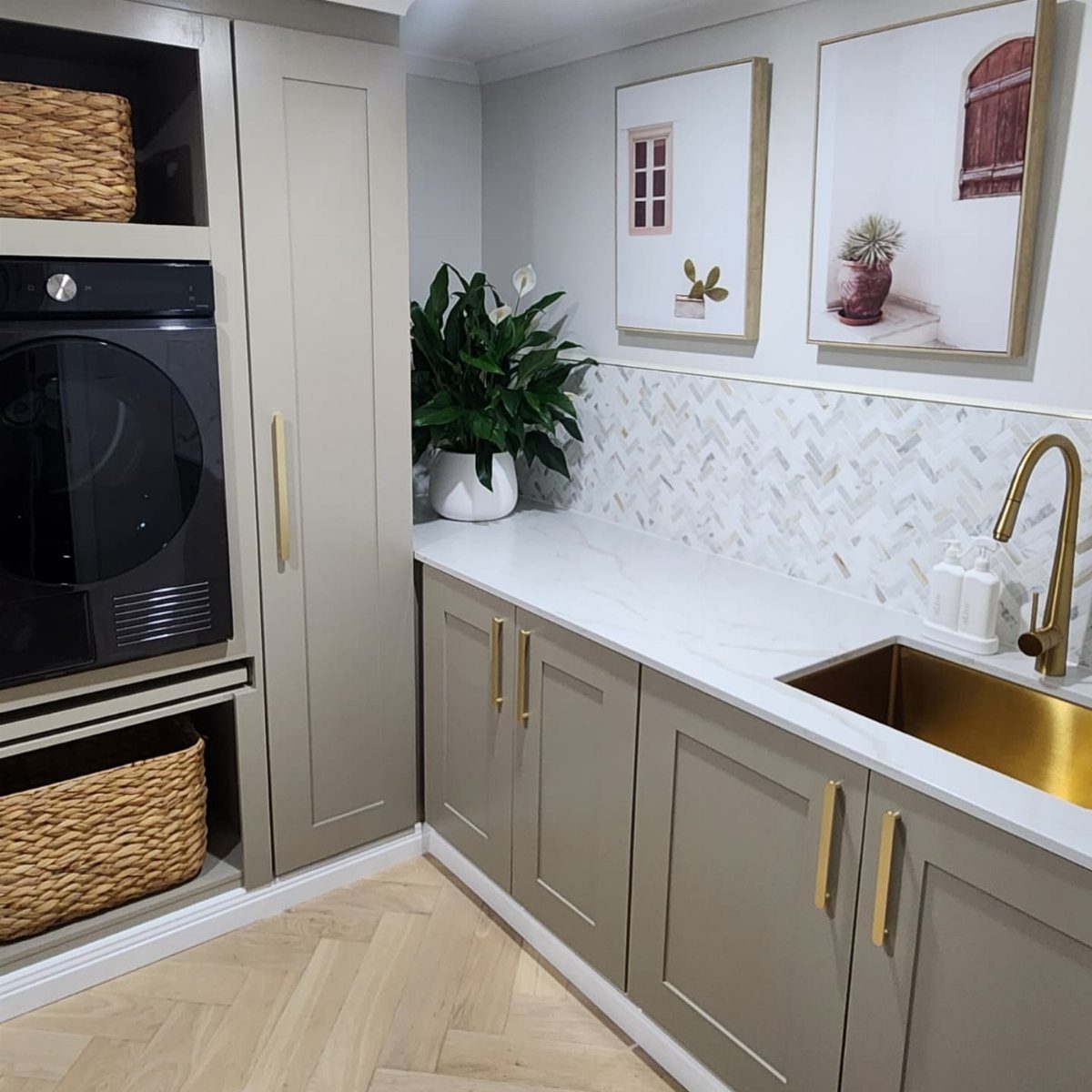
Herringbone installation at this scale turns a small laundry room into a space that feels considered.
Light wood tones keep the herringbone pattern from overwhelming the room, while grey cabinets and gold hardware frame it as intentional design rather than leftover flooring from another project.
True wood herringbone in a laundry room is risky; moisture warps it and leaks ruin it. I would use waterproof LVP or engineered tile with this layout instead, getting the visual complexity without the material vulnerability.
Angled installs cost more in labor and burn through extra material; I order more than I think I need and accept the waste as part of the look.
This pattern rewards a room visible from a hallway or kitchen, where the floor reads as part of the house’s overall design language rather than a closed-off utility choice.
5. Wide-Plank Wood Flooring
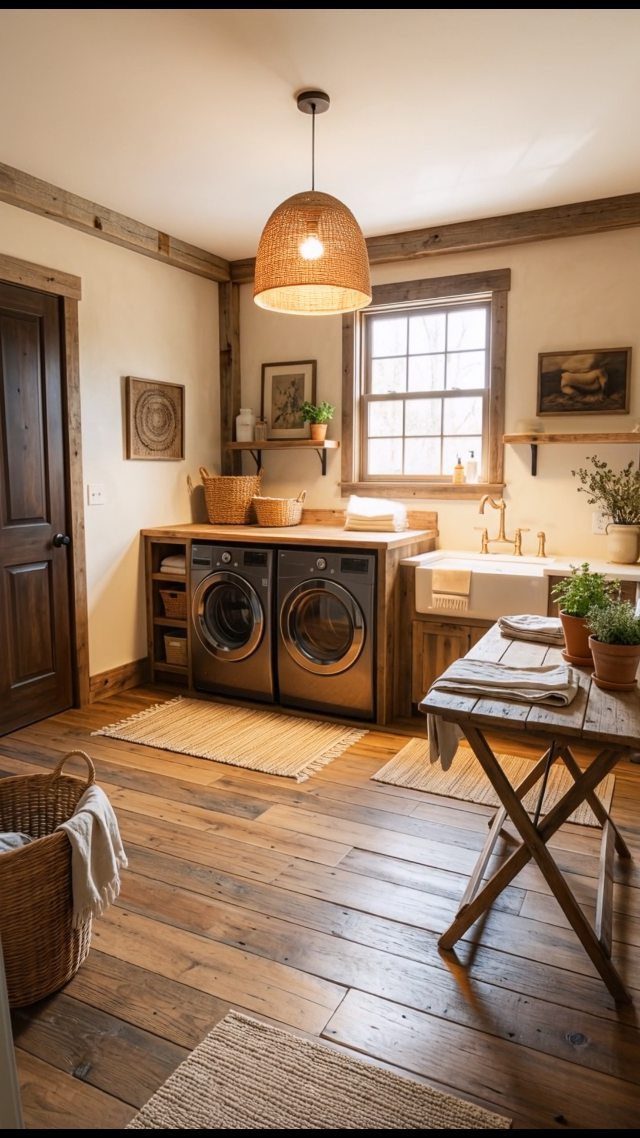
Wide-plank wood flooring in a laundry room is a statement that you value appearance over caution. Wide rustic planks with natural grain and varied tones carry a farmhouse warmth that vinyl imitates but rarely achieves authentically.
Solid hardwood here is a gamble I would not take. Engineered wood with a thick wear layer offers more stability, though no wood product survives standing water.
If your washer has ever leaked, if your room lacks a floor drain, or if you live in a humid climate, this is the wrong choice regardless of how beautiful it looks in photos.
For a second-floor laundry room with a drip pan under the washer, good ventilation, and a homeowner who accepts refinishing as eventual maintenance, engineered wide plank can work. Everyone else should admire the look and install LVP that copies it.
6. Patterned Geometric Tile
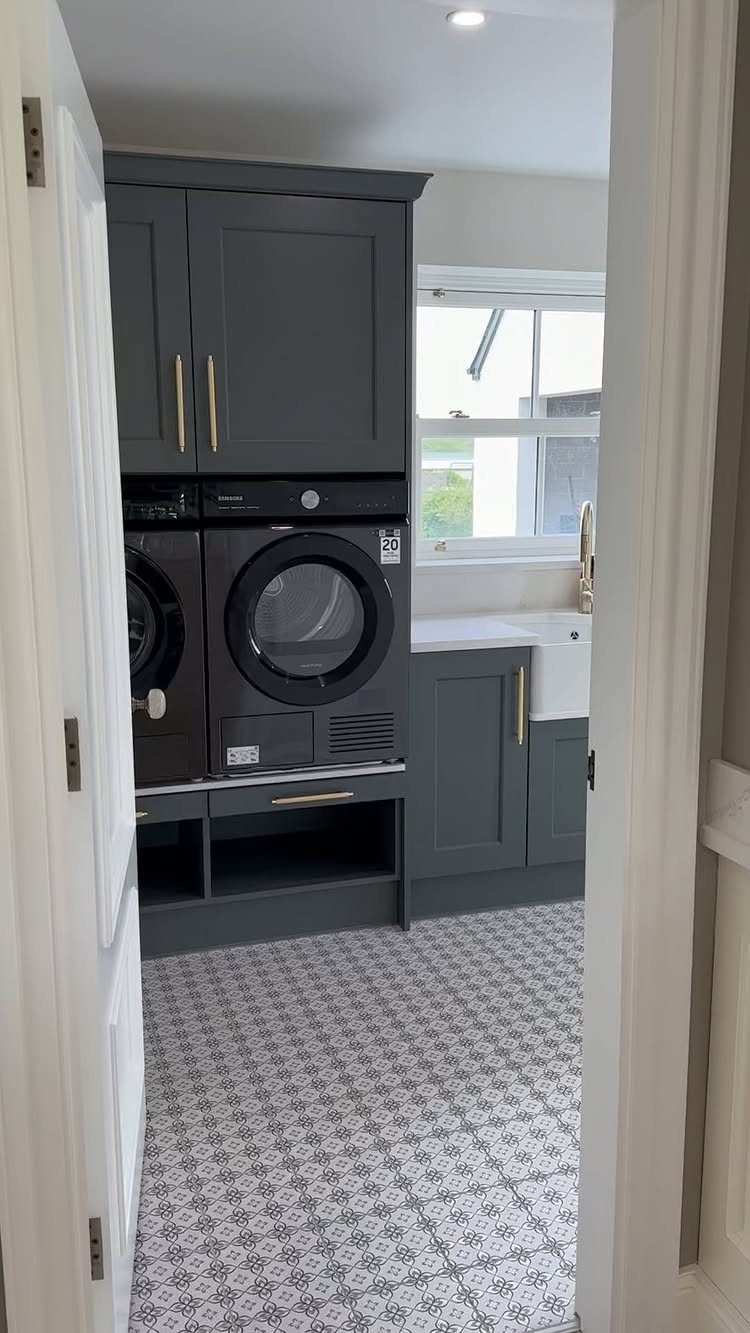
Geometric patterned tile lets a laundry room carry design weight normally reserved for entryways or powder rooms. The black, white, and grey motif above reads as deliberate and current without demanding a full room renovation to match.
Patterned tile works best at a scale where the repeat is visible; in a closet-sized laundry, the pattern gets cut off at edges and loses its rhythm.
I would use this in a room at least 6 feet in both directions, or run the same tile into an adjoining mudroom or hallway to give the pattern room to breathe.
The busy surface conceals dirt and the occasional dropped sock, but it also limits your freedom to change cabinet colors later. This suits someone with a settled palette who wants one memorable element in an otherwise functional space.
7. Herringbone Tile Flooring
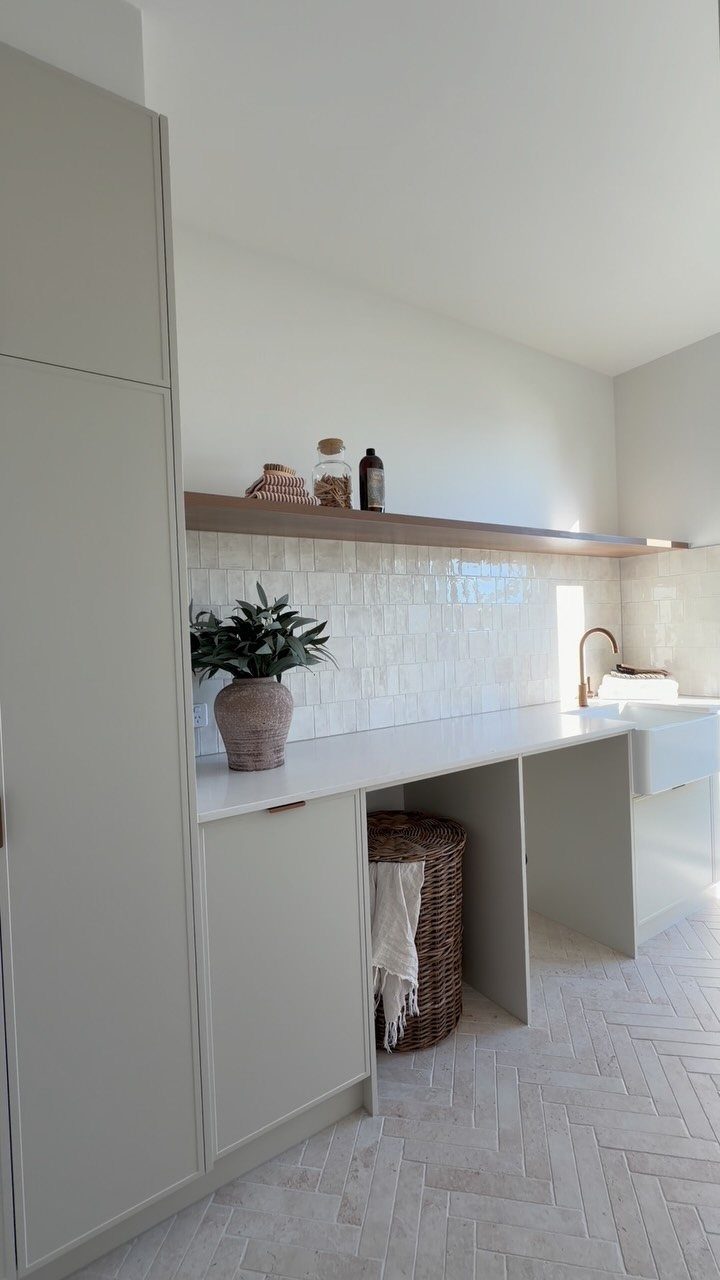
Herringbone tile gives a small laundry room the visual movement of hardwood with the water tolerance of porcelain. The 2:1 rectangle, set diagonally, stretches a narrow floor and hides the slight wobble every washer develops.
Grout lines run at angles, so vibration stress spreads rather than concentrating on a single joint the way straight tile suffers. A medium grey grout, lighter than the tile, keeps the pattern readable without turning into a grid.
Laying it yourself means more cuts than straight brick pattern: every edge piece is a trapezoid, not a rectangle, and a wet saw is non-negotiable. Budget an extra day for that alone.
A floor done this way reads as designed, not merely installed.
I’d steer a weekend renovator toward larger format rectangles, 4 inches wide or 6 inches wide, rather than the classic subway size. Fewer cuts, almost the same effect, and your back thanks you.
8. Black and White Checkered Flooring
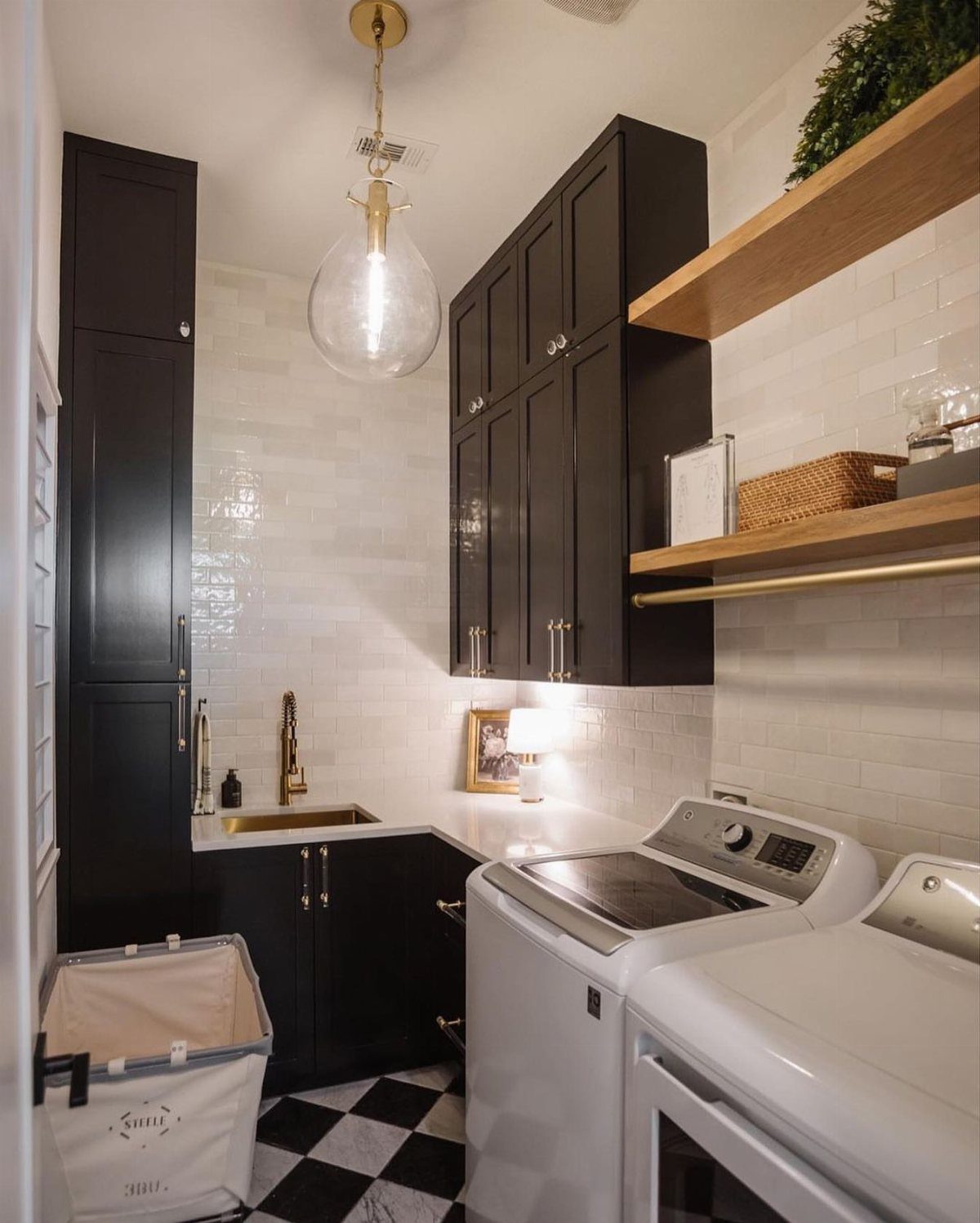
Black and white checkerboard is the one laundry room floor that reads as deliberate even in a basement with exposed joists and a slop sink. The high contrast masks lint, dust, and the inevitable detergent drip.
Smaller squares keep the pattern busy enough to feel vintage without turning dizzying; bigger ones need a larger room to breathe.
Porcelain through-body tile, not natural stone, handles the weight of a loaded washer without the risk of a cracked marble square.
Grout color splits the difference: white grout brightens the black squares, dark grout quiets the white ones. I lean dark in a working laundry room.
Dirt collects in grout, and pretending otherwise is a cleaning schedule I don’t keep.
The look suits a room with some existing character: black hardware, a painted cabinet, a vintage sign. In a blank white box it can feel like a costume.
If your walls are beige and your trim is off-white, this floor demands you change one or the other.
Water and Moisture Resistance
Water resistance in a laundry room is not a bonus feature; it is the first filter.
A washer hose fails, the drain backs up, or condensation pools under the dryer, and the floor either handles it or starts a cascade of problems.
Water-resistant flooring gives you a window to wipe up a spill, but water that slips through a seam will still swell the core or buckle the surface.
Traditional laminate is the clearest example: it looks sealed, yet its fiberboard core sucks up water and crumbles at the edges. Once the seams puff up, they do not flatten back down.
I would skip hardwood, laminate, and carpet entirely. Hardwood cups and buckles under standing water.
Laminate is worse, with seams that bloat the moment water sits. None of the three have any business in a room built around a machine that moves gallons of water per load.
Installation Considerations
Click-lock luxury vinyl planks are the easiest path for a weekend installer.
Sheet vinyl demands more precision: the subfloor must be smooth, and cutting around corners and pipes takes patience.
Tile drags in backer board, leveling compound, and curing time before you can walk on it or roll the washer back into place.
If it needs work, that time and cost belong in the budget upfront. For a quick turnaround with minimal tools, click-lock LVP is the practical choice.
Tile rewards the extra effort with permanence, but it is not a one-day project.
Aesthetic Appeal
Large-format tiles stretch a small room visually and cut down on grout lines to clean. Wood-look LVP carries warmth through from the hallway or kitchen without the water risk of actual wood.
Light floors push the walls outward in a tight room; darker tones swallow the scuffs and detergent drips that collect by the second year.
I would match the flooring tone to adjoining rooms when the laundry room opens off a hallway or kitchen. Visual continuity makes a small utility space feel like part of the house rather than an afterthought.
Long-term Investment
Durability in a laundry room is tested by concentrated abuse: appliances dragged during installation, laundry baskets dropped, and constant foot traffic in a tight footprint. The floor needs to absorb this without showing wear patterns.
Porcelain tile and high-wear-rated LVP handle this best. For vinyl, I would hunt for a wear layer of at least 12 mil for residential use; that thin top sheet is what stands between daily traffic and the print layer underneath.
Thicker planks, 6mm or more, resist dents better under a washer’s weight.
Softer materials fail here. Cork and low-density vinyl dent under appliance pressure.
A sample tested under a loaded laundry basket tells you more than the marketing copy. For a laundry room that sees daily hard use, commercial-grade options are worth the small premium over standard residential ratings.
Frequently Asked Questions
Which flooring is better for a laundry room, tile or LVP?
LVP feels better underfoot if you are standing there sorting socks, and a spilled bleach bottle wipes up without the panic that tile grout would bring.
Tile is the tougher long-term choice at $8 to $15 per square foot, but it is cold, hard, and unforgiving during long folding sessions.
What type of flooring is best for a washing machine room?
Waterproof flooring is non-negotiable. LVP and porcelain or ceramic tile are the two materials that handle leaks, standing water, and a washer’s vibration without warping, staining, or growing mold.
Carpet, laminate, and hardwood all fail quickly in this environment.