These modern TV unit ideas range from a weekend paint job with furring strips to a full custom built-in with soft-close sliders, with options for renters who need floating consoles and plug-in LED strips as well as first-home owners ready to recess the screen into permanent shelving.
[link-whisper-related-posts]1. Floating Console
A floating console mounts directly to the wall, leaving the floor completely open beneath it. That gap makes a small room feel larger and gives you one less surface to clean around.
Most of these attach with a heavy-duty French cleat or concealed bracket strong enough for the weight of the unit plus anything you load onto it. I would not trust toggle bolts alone for anything holding a TV.
The ones in the photos pair white lacquer with oak or a stone-look top, and the best installations add a back panel behind the TV to hide cords.
This works best in apartments where floor space is tight, but you will need to locate studs or use solid blocking. A hollow wall without either means calling in a pro or picking a different idea.
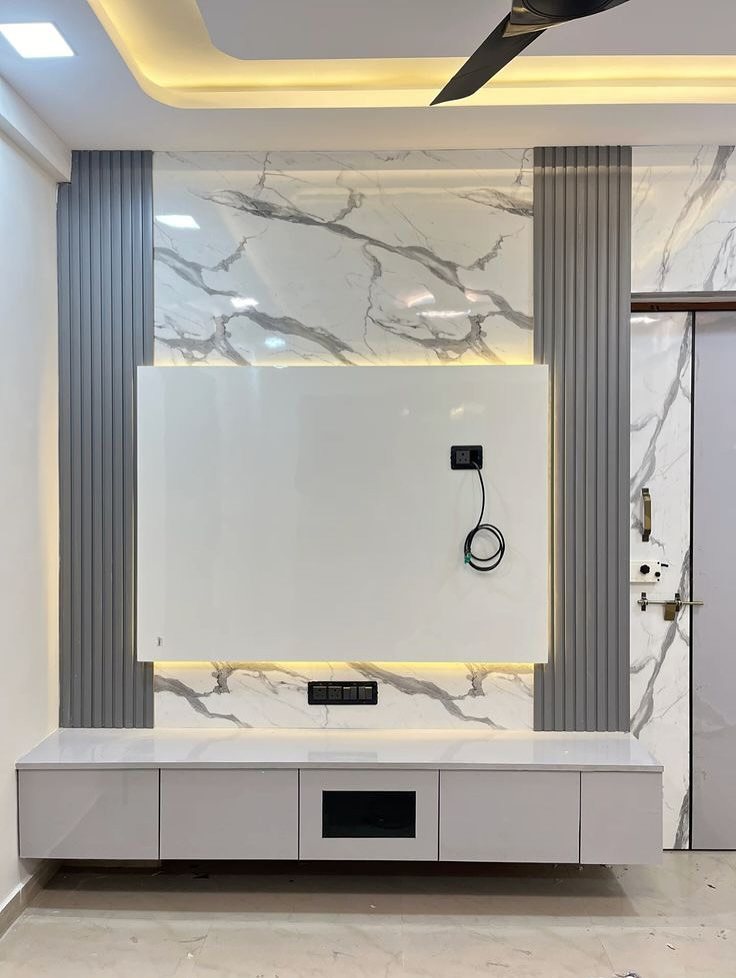
2. Marble-patterned Back Panel
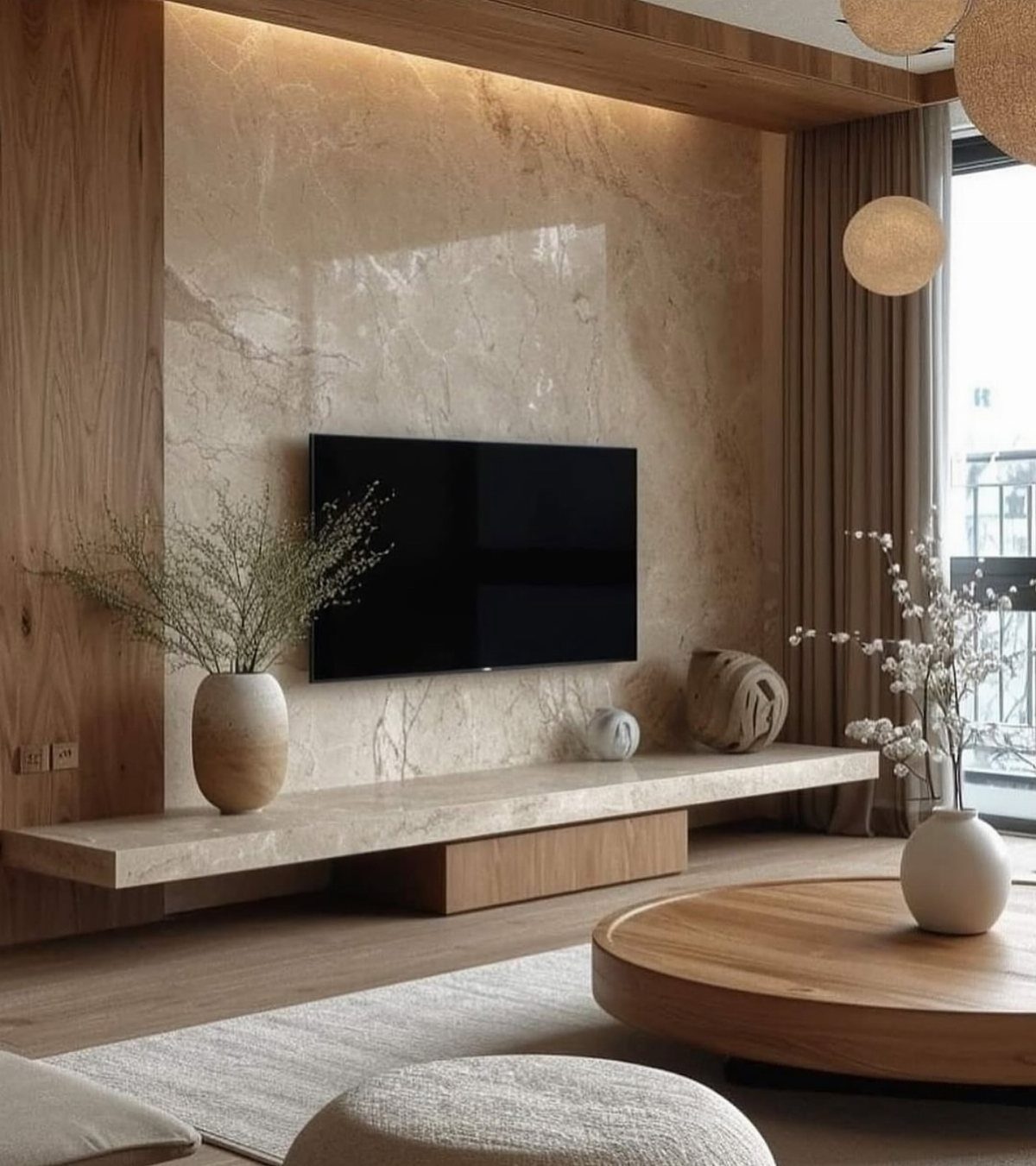
Marble-patterned panels give a wall the look of stone without the weight or the price of real slabs.
Large-format porcelain or printed acrylic reads as marble without the upkeep, and the veining runs in soft greys and creams with the occasional gold thread.
Installation is straightforward if the wall is flat: adhesive and a few mechanical fasteners at top and bottom.
A full sheet plus trim pieces for the edges is the kind of material cost that still leaves room in a project budget for the console itself.
The floating console beneath needs to align with the panel’s width, so measure both together before ordering anything.
I would skip this in a rental; the panel is permanent and the wall behind it will need skim-coating when you leave.
For a first home you plan to keep a while, this is a focal point that reads as expensive without being it.
3. Vertical Wood Slats
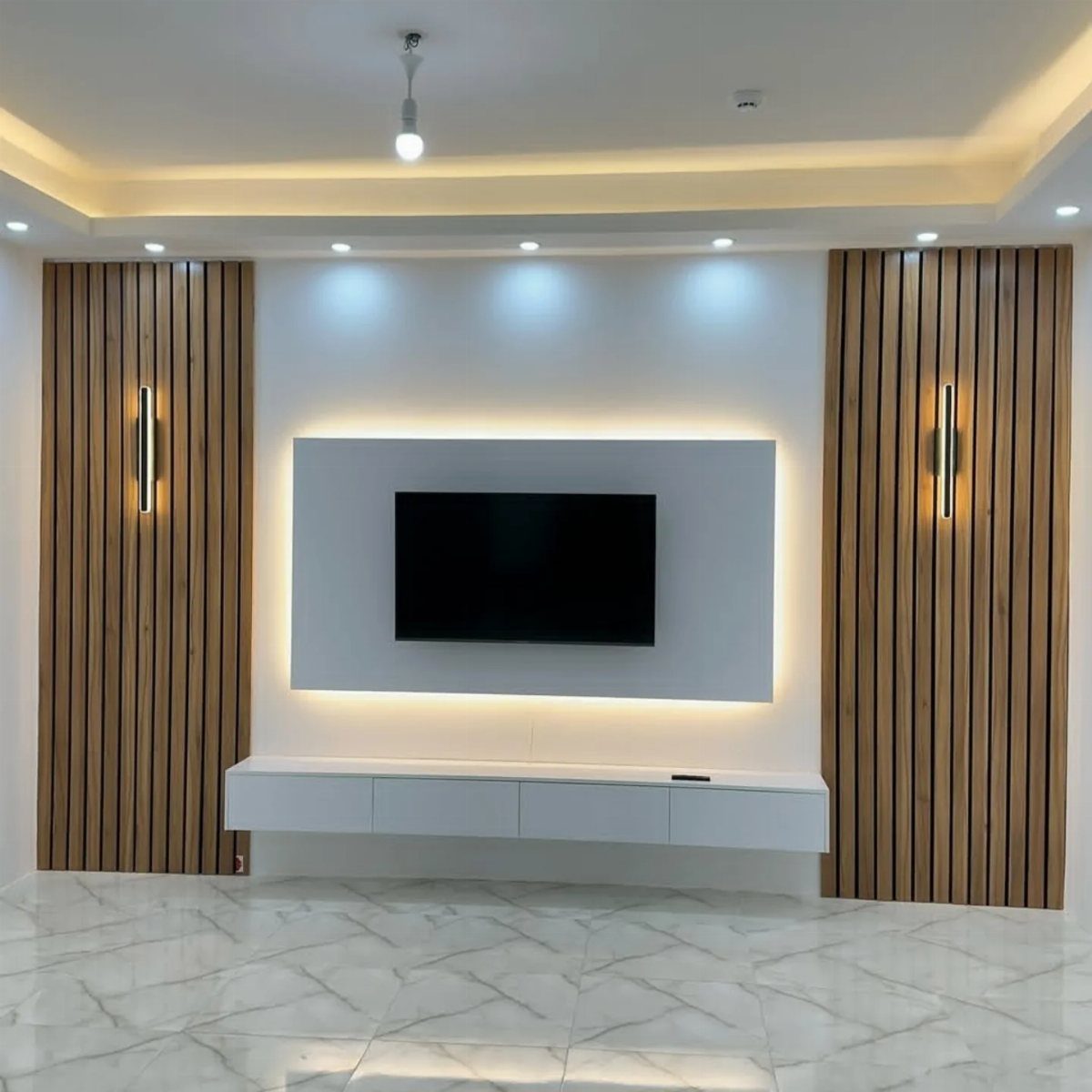
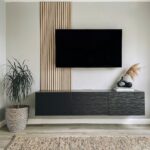
Vertical wood slats add shadow lines that make a flat wall feel built-in and intentional. Narrow slats with tight gaps run floor to ceiling or frame the TV area as a contained panel.
Ready-made slat panels come in oak, walnut, or painted MDF, and a single sheet usually covers a feature wall without cutting.
Cutting around outlets and mounting the TV bracket takes planning; I mark every stud and every cutout on the panel back before lifting it.
Some installers add LED strips behind the slats for a glow that seeps through the gaps, which is optional but effective in evening light.
This idea trades some dust-catching surface for warmth. If you hate dusting, a flat panel wall is easier; if you want texture without clutter, this is the middle ground.
4. Integrated LED Lighting
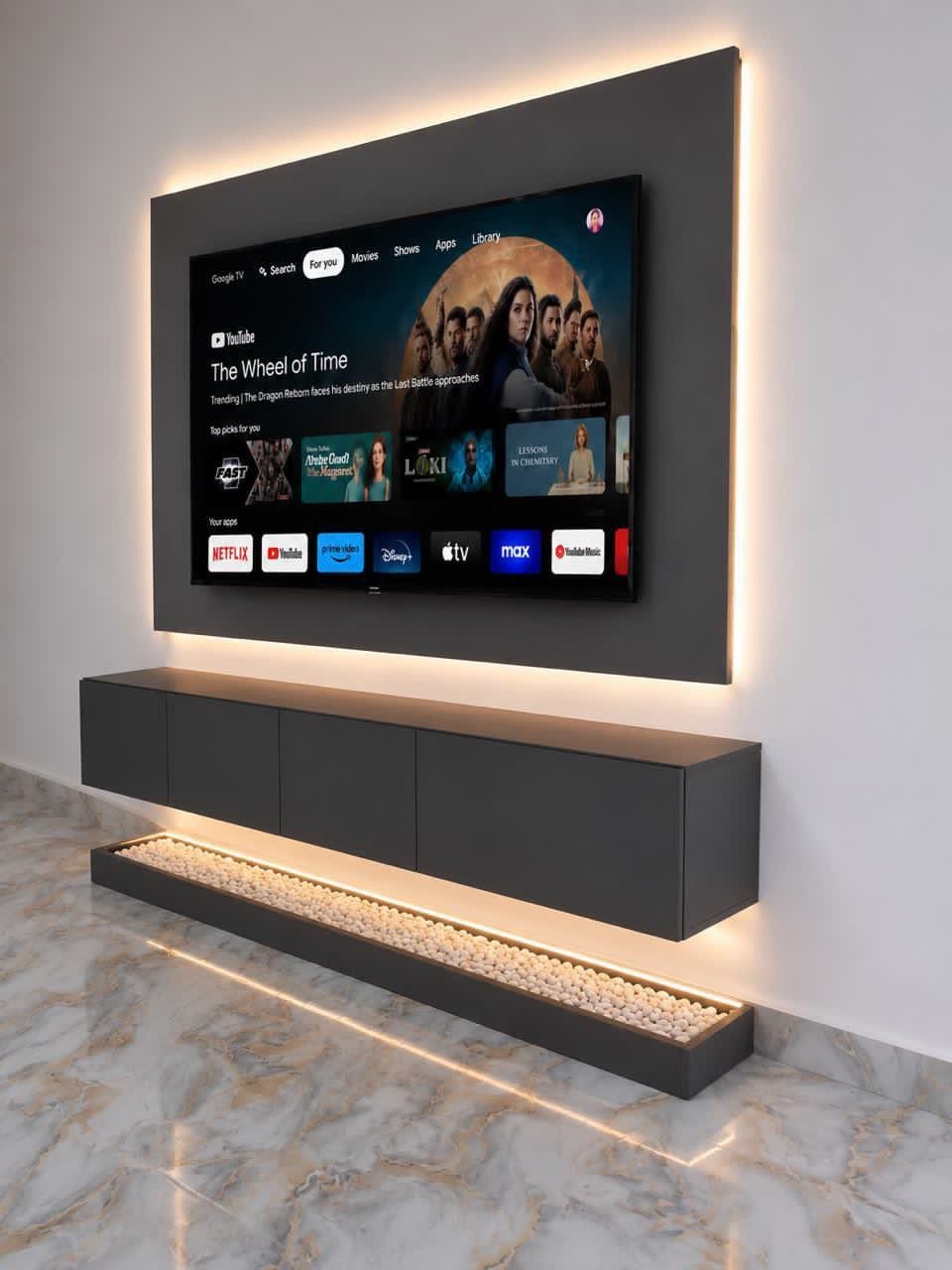
Warm LED strips tucked behind panels or consoles do what overhead lights cannot: they define the TV area as its own zone and cut eye strain when the screen is the only other light source.
Warm white tape, the color temperature of dim incandescent bulbs, runs on a plug-in driver or hardwired transformer.
A full reel with driver is cheap enough to experiment with, and the hard part is hiding the source so you see only the glow.
Mount strips to the back edge of a floating console or the rear of a wall panel so the glow bounces off the surface behind.
Battery-powered versions exist but dim fast; I would wire it properly or skip it. This suits renters only if you are comfortable with plug-in kits and cord management, since hardwiring needs an electrician and landlord permission.
5. Open Shelving
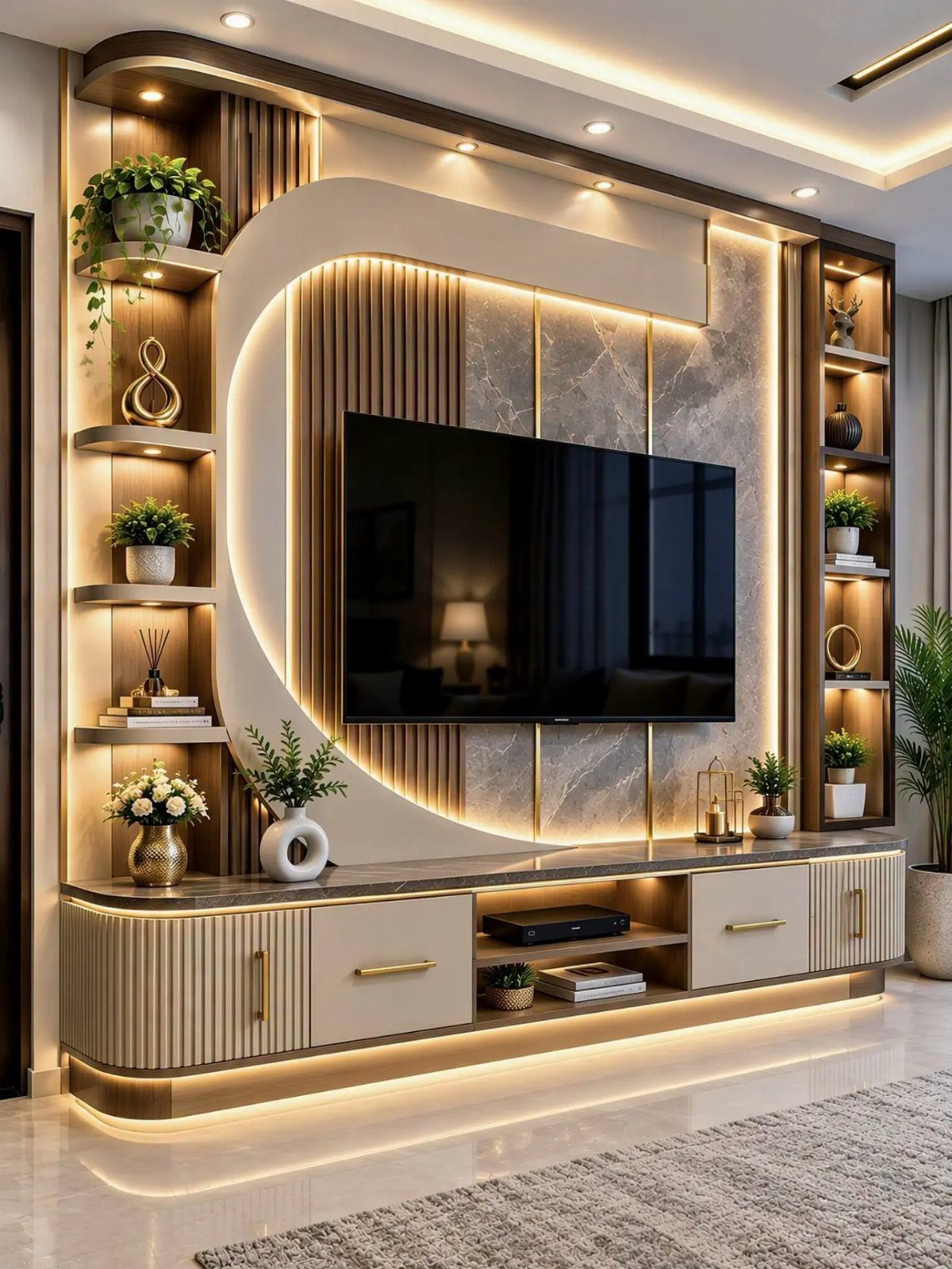
Open shelving flanking a TV keeps the wall from feeling like a black rectangle floating in space.
Closed storage below with open cubes above gives you a place to hide cables and a place to display plants, books, and objects that draw the eye sideways.
Standard modular shelving is deep enough for most objects but too shallow for large baskets. If you are buying rather than building, measure your actual items first; I have seen people order beautiful units that fit nothing they own.
The marble-patterned backs in some versions are laminate panels, not stone, applied to the rear wall of each cube.
This idea asks you to curate. Empty shelves look abandoned, cluttered ones look messy.
It suits someone who already owns objects worth displaying and has time to edit the arrangement seasonally.
6. Dark Wood Cabinetry
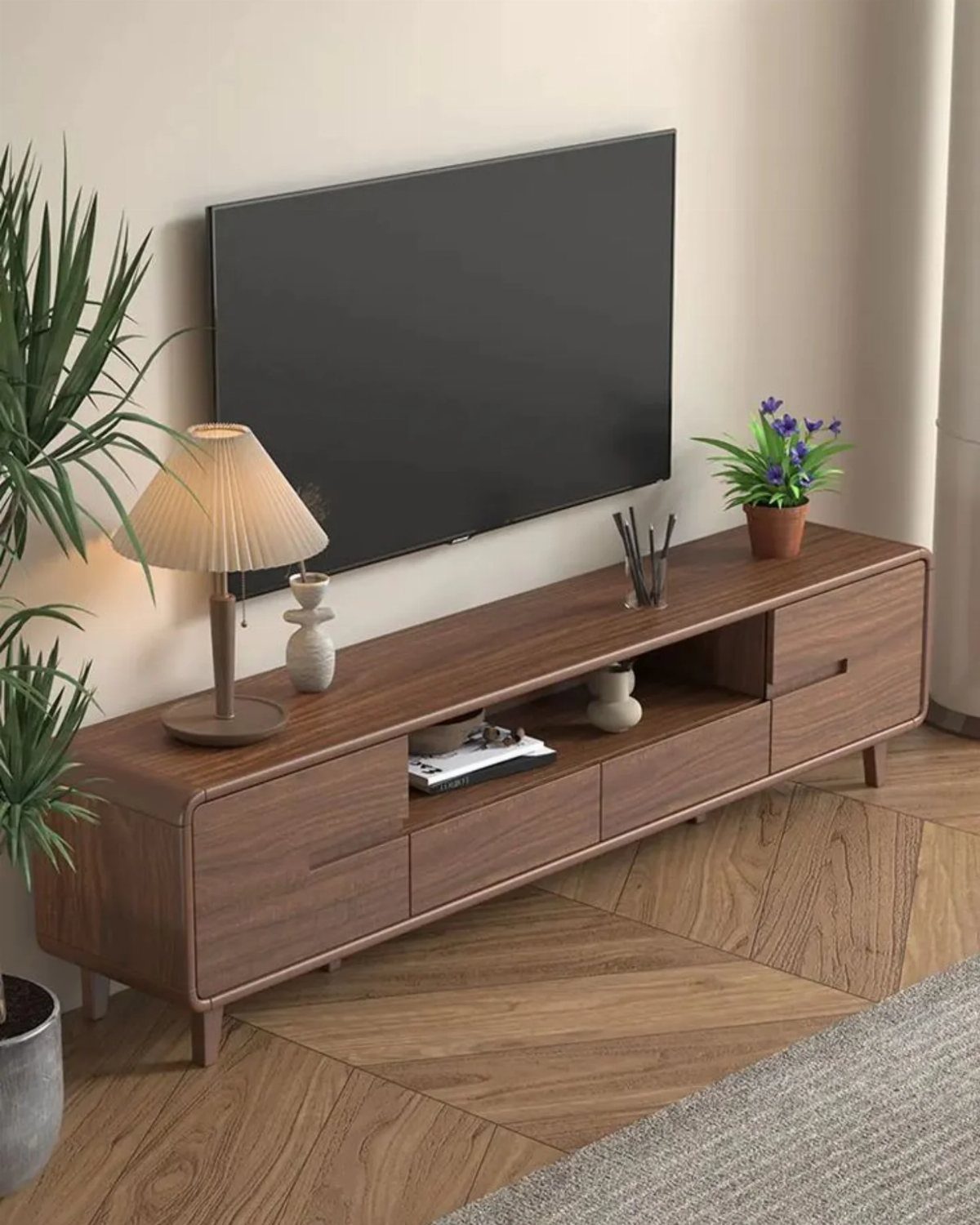
Dark wood cabinetry grounds a room and hides the most cable clutter.
Walnut or stained oak with clean slab fronts and no visible hardware reads quiet and expensive, and the best ones include cable channels inside the legs or back panel.
A solid wood console runs high from most retailers, though veneer over plywood drops the price enough to leave budget for the rest of the room.
The herringbone floors in the photos are a lighter oak, and that contrast matters: dark-on-dark reads as a void, while light flooring beneath dark furniture defines both.
I would add felt pads and a cord of the same wood tone to tie it to lighter walls. This idea trades the airiness of floating units for storage capacity and visual weight.
Choose it when you have components to hide, children who will touch things, or a large wall that needs filling.
7. Minimalist Design
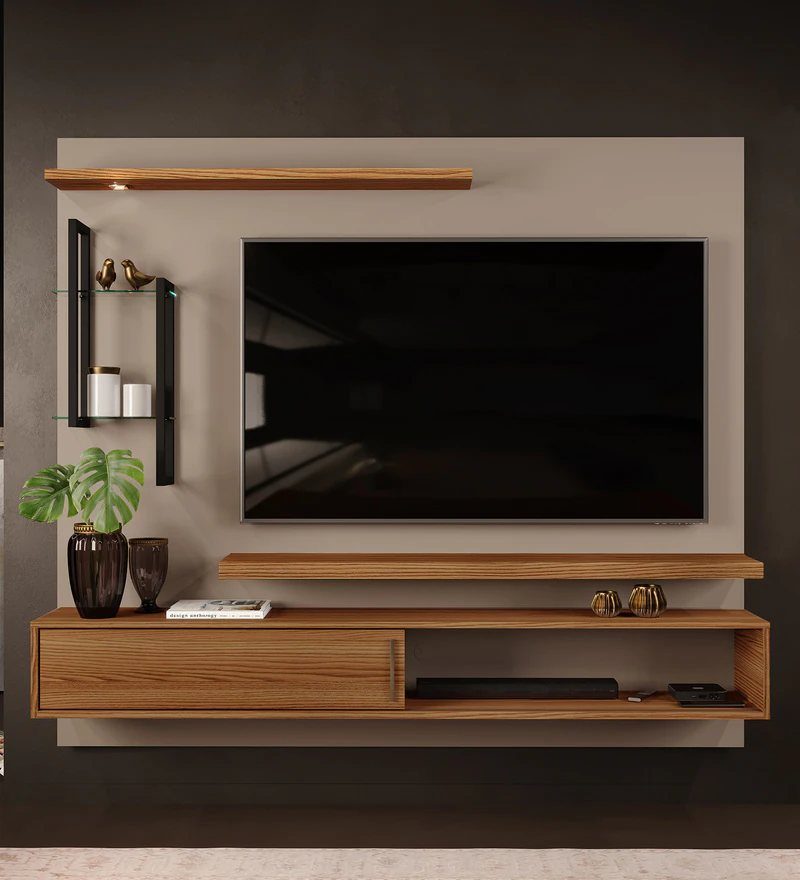
A minimalist unit strips away everything that does not hold the screen or hide the cables. Neutral walls, one floating shelf above and a low console below, let the television sit as the only dark rectangle in the room.
The versions I have seen that work keep the top shelf high enough to clear soundbars but not so high that you crane your neck.
This suits renters who cannot build in and first-home owners who want the look without the carpenter. I would pick white oak or ash for the console; the grain adds texture without clutter.
Glass shelves on the side work only if you own very few objects to display, otherwise they collect dust and guilt.
8. Custom Designs
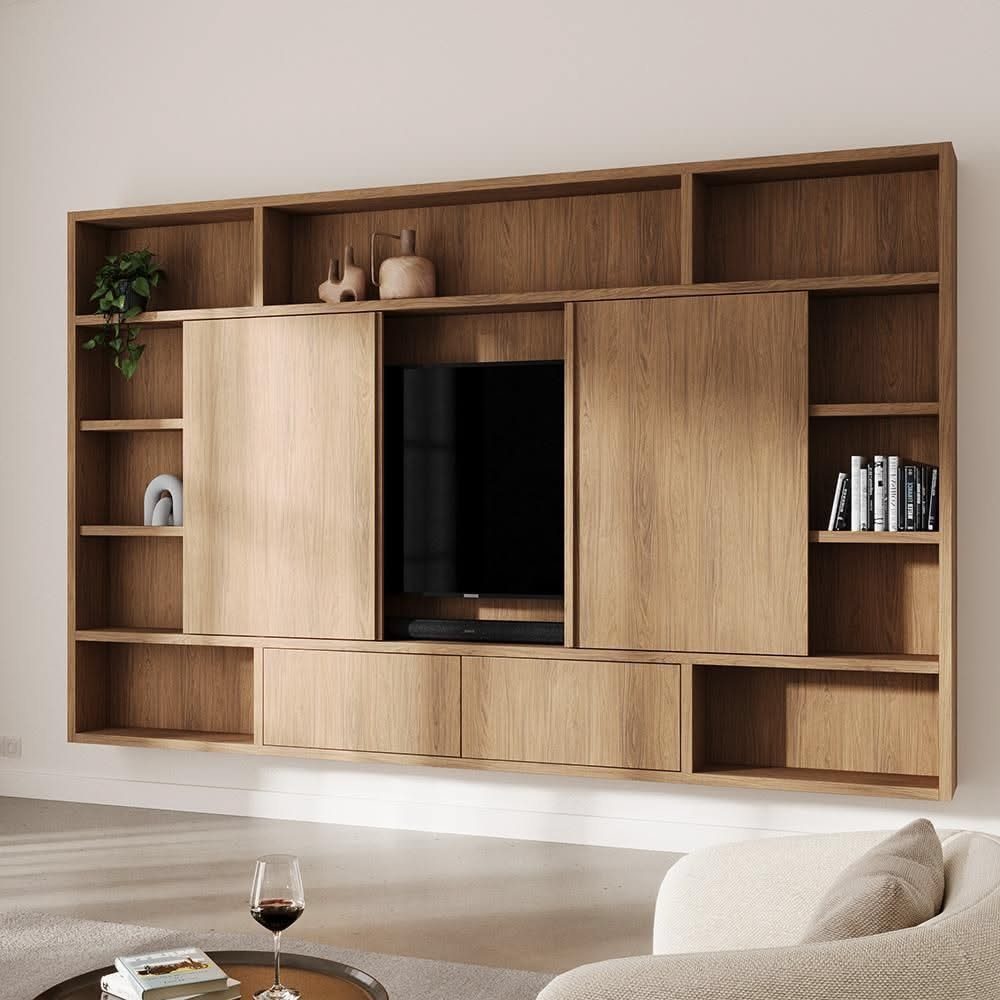
Custom-built units solve the problem every standard console has: your wall is not standard. A unit that spans nearly the full width of its room, with sliding doors that reveal or hide the screen depending on whether company is over.
Built to the wall’s exact dimensions, it leaves no gap for dropped remotes or cat toys.
The cost for a straightforward built-in starts higher than most furniture and climbs fast with hardware like soft-close sliders. I drew my first design on graph paper, 1 square to 3 inches, and a local cabinet shop turned it around in 3 weeks.
Measure twice for the TV cutout; manufacturers’ diagonal screen sizes do not include bezels, and a quarter inch too tight wrecks the whole piece.
9. Accent Color Wall Panels
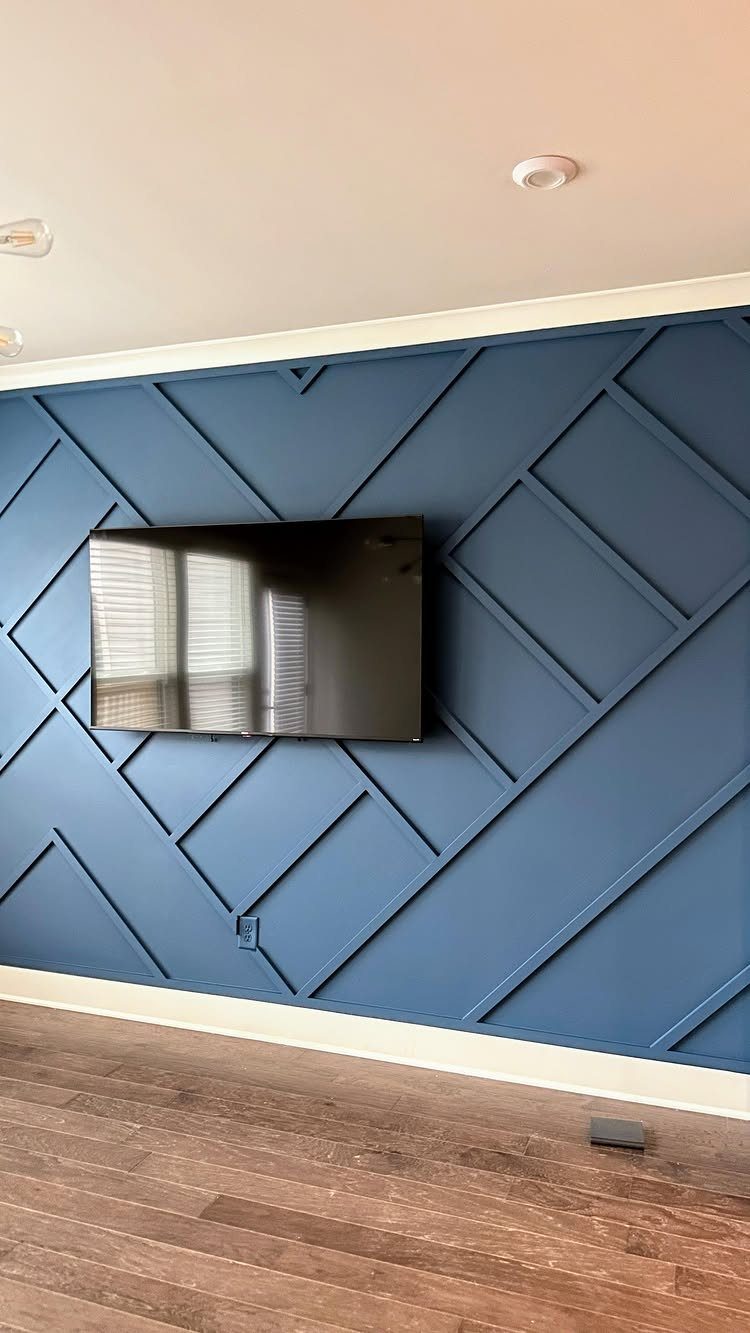
One bold wall behind the television does more than any furniture change to make the room feel designed.
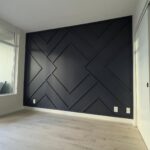
Deep blue paneling uses raised slats in a geometric grid; the TV goes where the pattern is plainest, so the eye reads the wall as architecture rather than backdrop.
Painting the unit in the same hue, or keeping it pale wood against the color, keeps the focus on the wall itself.
This is a weekend job if you use 1-by-2 furring strips and paint. I would test the blue in both morning and evening light; strong colors shift dramatically.
Painting or paneling behind the TV means living with that color long-term. A neutral sofa becomes necessary, and the wall will outlast your next television by years.
10. Built-in Shelving
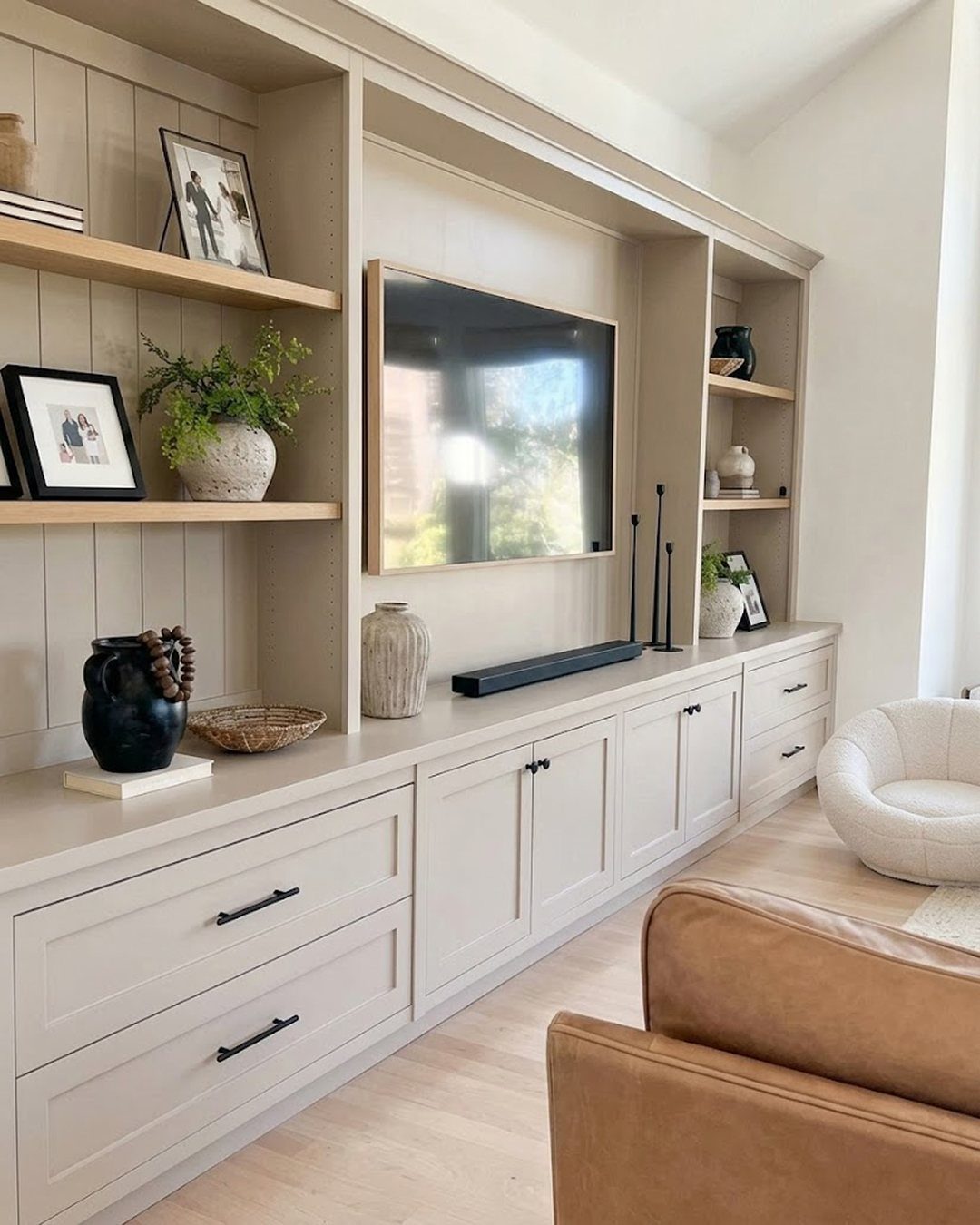
Built-in shelving turns the television wall into the room’s single largest piece of furniture.
A unit that runs floor to ceiling with lower cabinets for hiding cables and gaming gear, open shelves at eye level for books, and a recess sized exactly to the screen.
Reading it as one continuous form rather than separate pieces is what makes the room feel finished.
Drywall and a stud finder get you most of the way there; I used pre-finished plywood for the interior boxes and poplar trim painted to match the walls.
Allow more depth if you plan to store media components, less if you are all streaming. The niche should be 2 inches wider than your television on each side; tighter looks precise in photos and frustrates in person when you upgrade.
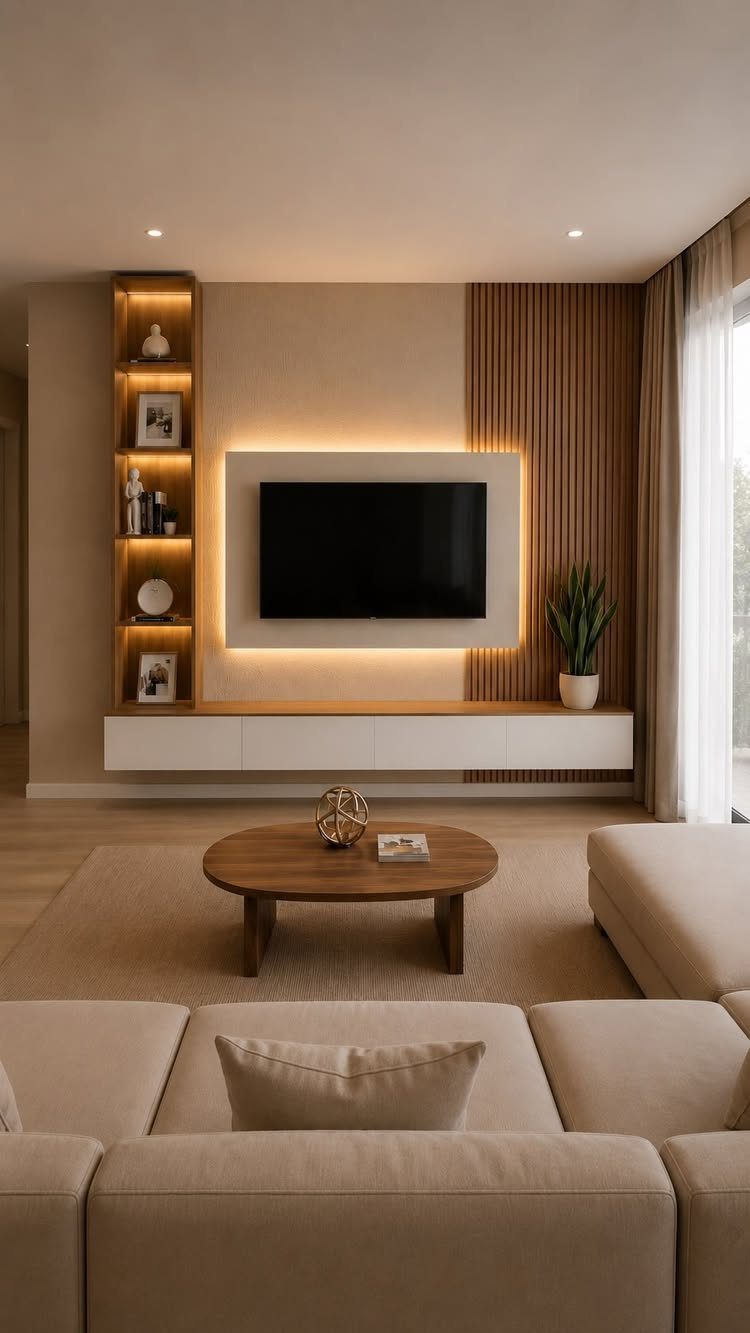
11. Earthy Tones and Soft Lighting
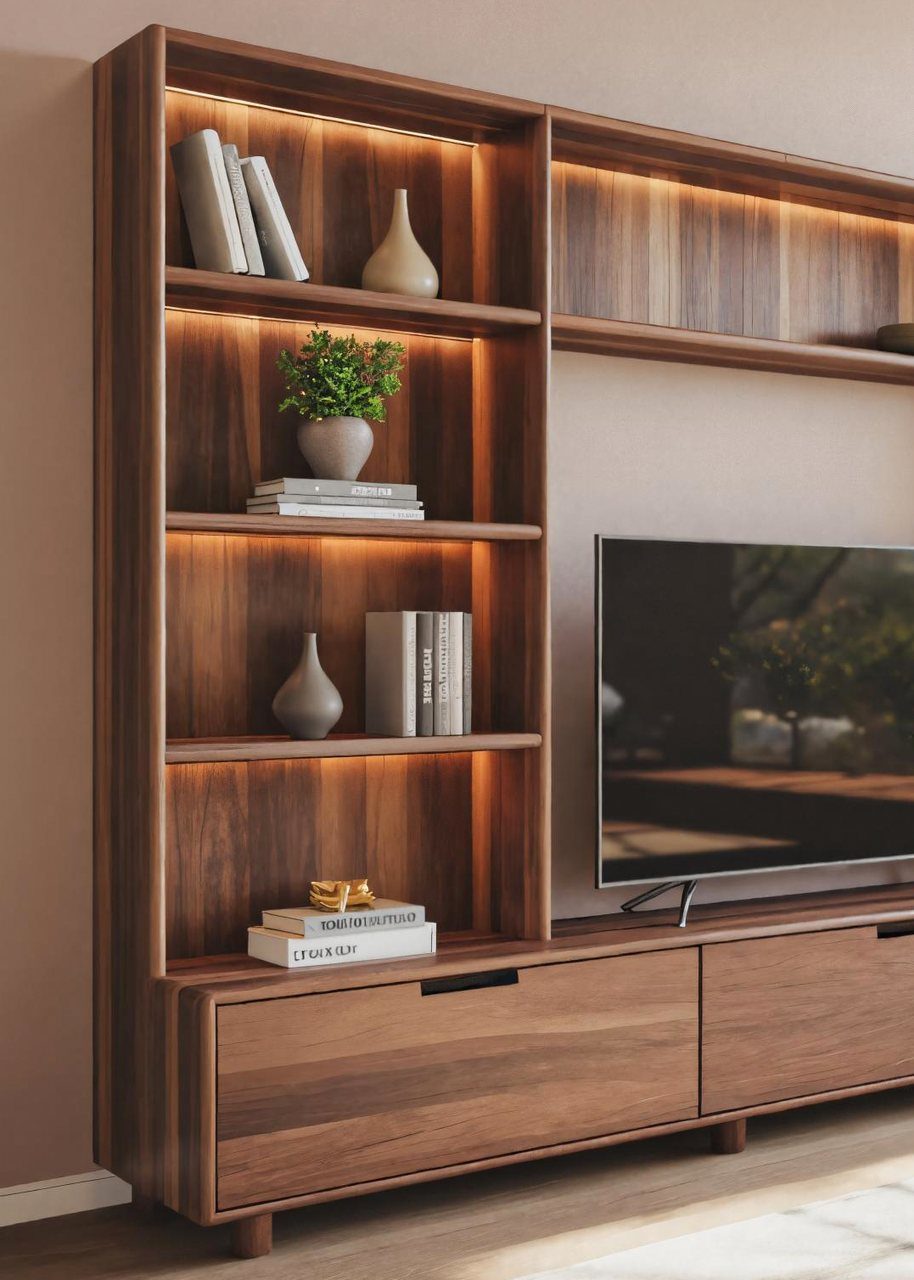
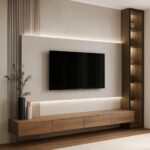
Warm wood and downward-facing LED strips turn a television wall into the place you actually want to spend evening hours.
The under-shelf lighting is warm, the color temperature of old incandescent bulbs, and it throws enough glow that you can dim the overhead fixture and still move around safely.
Walnut or teak tones pair with this light better than ash or maple; the orange undertones amplify rather than fight the warmth.
A smart switch synced to sunset lets the glow start automatically without reaching for a button. Quality tape and a dimmer driver cost less than most accent chairs, and the whole setup runs for years.
The risk is overdoing it: more than 2 shelves lit this way starts to read as restaurant rather than living room.
12. Geometric Shelving and Consoles
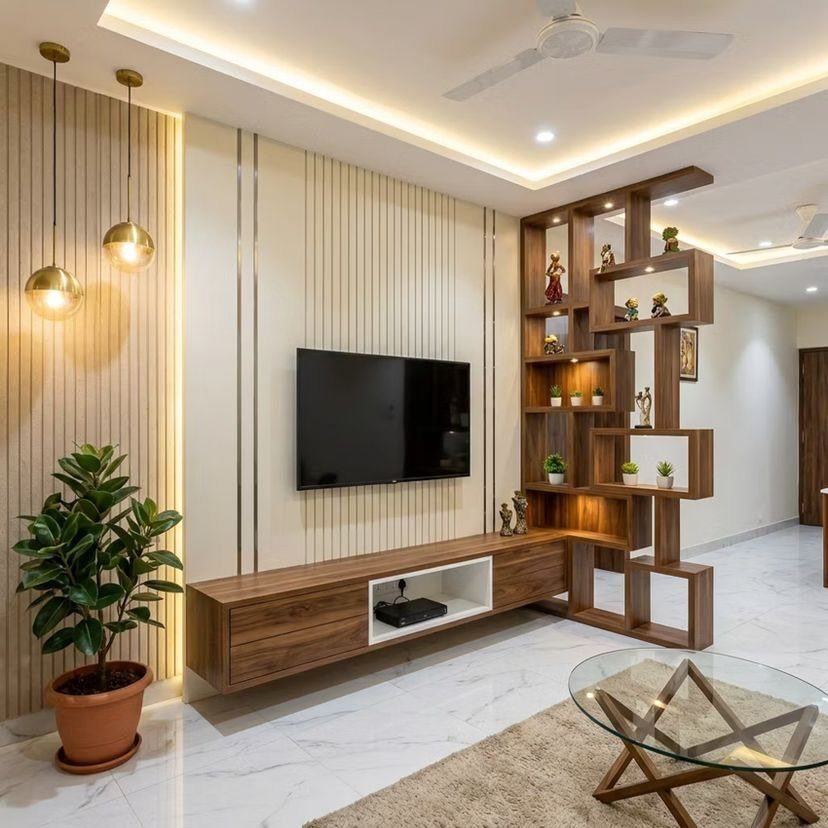
Interlocking rectangular shelves, some open and some backed, break the usual flat plane of a television wall into something sculptural.
A unit that functions as a partial room divider; you walk around it to enter a second seating area, and the gaps between compartments keep sightlines open while defining the boundary.
Vertical grain on the cabinet plays against horizontal paneling on the wall behind.
Building this yourself from stock lumber would take a full week and serious patience with angles. I would buy the open frame and size your television panel to slip inside it.
The black accents visible in some versions read as shadow and keep the wood from looking too busy. Best for larger rooms; in tight spaces the geometry overwhelms.
13. Modern TV Unit with Fireplace
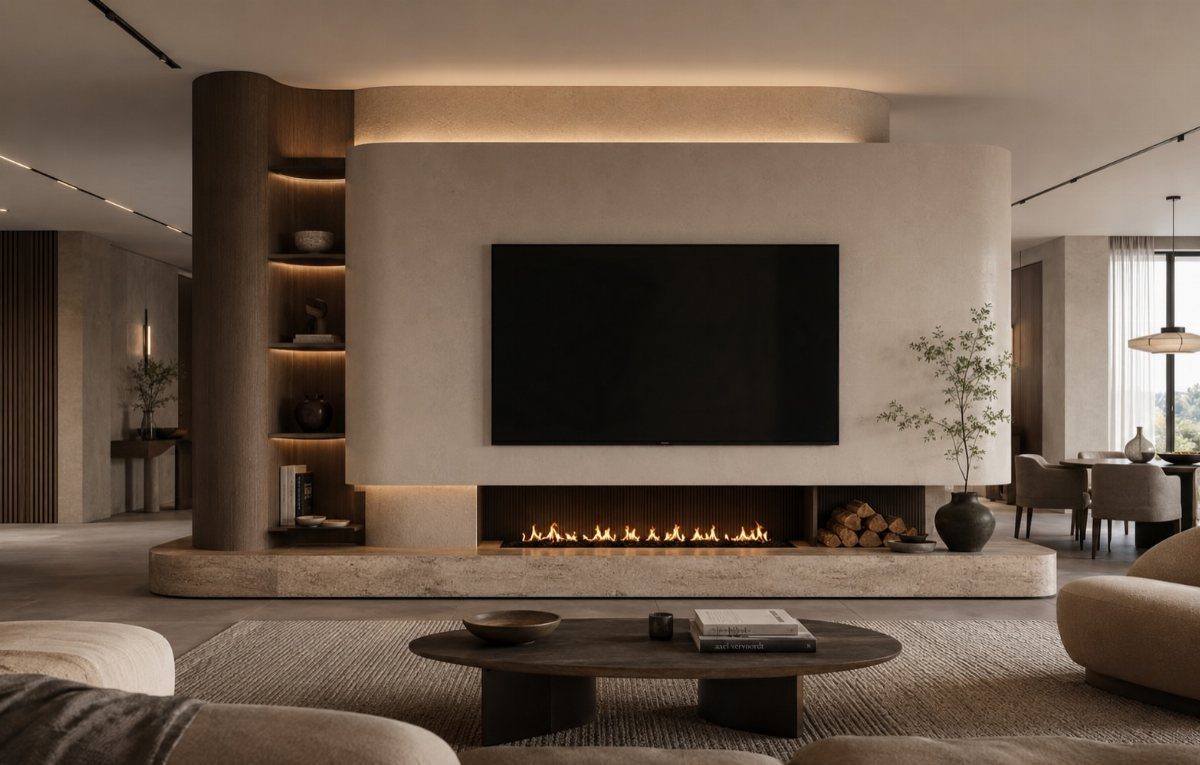
A linear electric fireplace beneath the screen turns the wall itself into the room’s center of gravity.
The heat stays low and forward, so a mounted TV above it runs no risk; I’ve seen setups where the mantel shelf got too warm for electronics.
The 48" and 63" built-in widths from Fire & Ice’s LumaForest line fit most standard TV widths without looking undersized. Three-sided glass gives flame visible from angles, which matters in open-plan rooms where people watch from the kitchen island too.
A basic two-sided unit from a big-box store reads as appliance, not architecture, so the upgrade to something that looks built-in is where the money goes.
Stone or wood-look surround panels finish the transition from wall to firebox. I’d keep the surround material the same tone as the floor or a shade darker; lighter tricks the eye into seeing a hole in the wall.
Best for rooms where the TV wall already faces the main seating. The fireplace adds weight; if your windows or an art collection compete for attention, this fights rather than helps.
14. Multi-functional Units
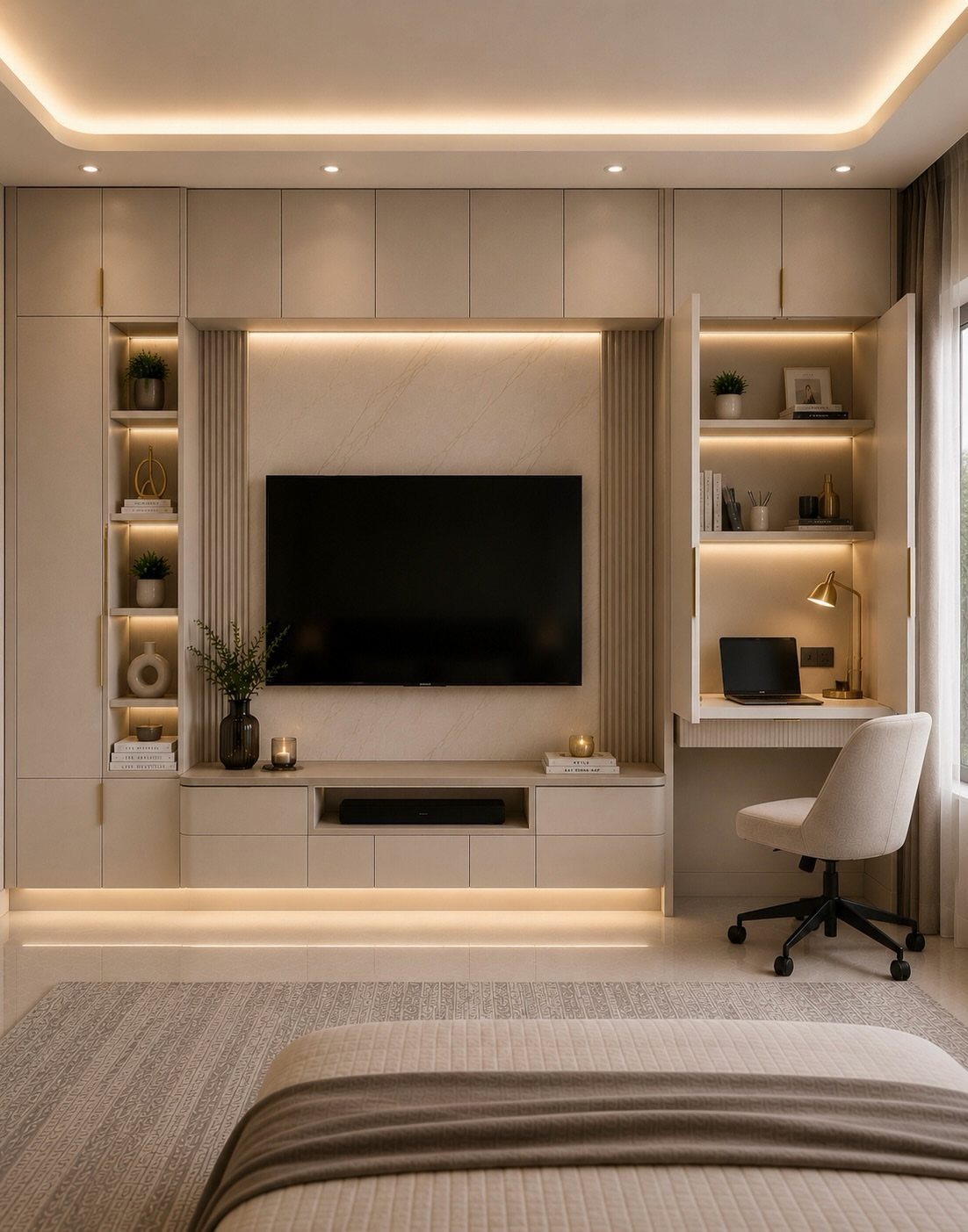
The desk built into the same run as the TV turns a living room wall into actual workspace without the dorm-room look of a folding table.
Closed cabinets below hide files, open shelving above holds reference books or display, and the screen doubles as monitor when work demands it.
What makes this work is the seam: the desk surface should read as a cutout in a single plane, not a second piece shoved against the first.
Carrying the same materials across both functions is what keeps a multi-functional unit from looking like two pieces shoved together.
Wood slats or a stone-look panel behind the monitor zone separate work from watch visually even when they share one wall.
Check your chair depth before committing to cabinet depth. A standard desk chair needs 24" of knee clearance; shallow built-ins save floor space but trap your legs.
Also verify outlet placement: one circuit for the TV, another for the laptop, and USB ports at desk height so cords don’t cross the work surface.
I would only add the desk if this wall faces away from the main social zone. Working with your back to the room feels exposed; working facing the sofa means meetings see your laundry.
Styling Tips for TV Units
A TV unit looks finished when the objects on it relate to the rest of the room.
If your sofa throws are a heavy linen, a ceramic vase with a similar dry texture on the console ties the two areas together.
Mixing textures only works when there is a through-line: glossy, rough, glossy, rough reads as pattern; glossy, glossy, rough, rough reads as mistake.
Decor reads better low in front of the screen and taller at the ends, which keeps the sightline open. This frames the television without blocking the IR sensor or the speaker grille.
A single object at the exact center of a console looks staged; offset it by a third and the arrangement relaxes.
The unit itself should pick up one color already in the room, not introduce a new one. If your walls are warm white and your floors are ash, a console in either tone bridges the gap.
A third wood tone, different from both, becomes the thing people notice first, and not in the way you want.
Trends in TV Unit Design
Minimalism in TV units has shifted from the all-white look of a few years back toward quieter palettes: off-white, pale oak, and the soft grey of unfinished concrete.
The change is subtle but enough that the bright white lacquer units now read as dated to anyone who follows furniture releases.
Integrated lighting has moved from accent to expected. Warm LED strips behind floating consoles started as a design-magazine feature and are now standard in mid-market units from most retailers.
The difference now is concealment: earlier versions showed the diode dots, current tape has enough diffusion to read as a glow.
Natural materials gained ground as laminate printing improved. Stone-look porcelain and printed wood grain on MDF are now convincing enough that the real material is a choice, not a necessity.
I would still choose actual wood for anything within hand reach; the temperature and slight give under a knuckle are hard to fake.
Space-saving Solutions
Floating units free floor space visually and physically, but the savings shrink if you need a separate cabinet elsewhere for components that do not fit.
Measure your gear first: a soundbar, a gaming console, and a router together need more depth than some floating consoles allow.
Built-in shelving uses wall cavity depth that would otherwise sit empty. A standard 2-by-4 wall with drywall gives you usable depth before you project into the room; that is enough for paperbacks, small plants, and cable boxes mounted sideways.
Anything deeper and you are building out, not in.
The real space saver is combining functions. The trade is commitment: you cannot drag a built-in to your next apartment.
Built-ins make sense only if you plan to stay long enough to enjoy them, not for a short lease.
Color Schemes for Modern Units
Neutral walls with a single saturated piece behind the television remain the safest modern choice. Deep navy, forest green, or a warm terracotta on the panel behind the screen reads as intentional against white or greige surroundings.
The color belongs to the architecture, not the furniture, so it survives a sofa swap.
Natural wood finishes work best when the tone relates to the floor. A walnut console on walnut floors disappears; the same console on pale oak defines both.
I would match closely or contrast clearly; the half-step between reads as a mistake in matching.
Pops of color through objects, not paint, suit renters and the indecisive. A cobalt ceramic, a single large book with a red spine, a small brass lamp: these change fast when you tire of them.
Paint behind a mounted television is a Saturday to apply and a Saturday to cover; choose it only when you are certain.
Frequently Asked Questions
What is the latest TV unit design?
The latest designs lean toward floating consoles, marble-patterned back panels, and vertical wood slats with hidden LED strips. Minimalism still rules, but with warmth from oak, walnut, and soft lighting rather than stark white alone.
Integrated features matter more than ever: cable channels built into legs, back panels that hide cords, and units that double as desks or room dividers.
What are the TV stand design trends for 2026?
Floating consoles, textured wall panels, and multi-functional units are the clearest direction. A console mounted with a French cleat leaves floors open, while slat panels or stone-look backs add texture without clutter.
Units that combine TV storage with a desk or fireplace are gaining ground as rooms serve more purposes than they used to.
How to style a modern TV stand?
Start by hiding what you can: cables through built-in channels, components in closed cabinets. Then add one or two objects with actual weight, a ceramic vase or a stack of books, rather than filling every shelf.
Open shelving needs editing seasonally; empty reads abandoned, crowded reads messy. Keep the wall behind working too, with a panel or paint color that frames the screen as intentional architecture.
What are some creative TV wall unit ideas?
Built-in shelving that runs floor to ceiling turns the whole wall into furniture; recess the TV exactly and leave 2 inches of air on each side.
Backlit panels with LED strips behind slats or a floating console create a glow that defines the area after dark. For something sculptural, geometric open frames can act as partial room dividers while keeping sightlines open.
A built-in unit made for your exact wall handles odd corners or a sloped ceiling that store-bought pieces just shimmy around, though the price starts around $2,000 and soft-close drawer hardware runs it up from there.