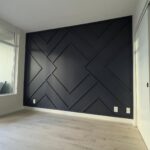
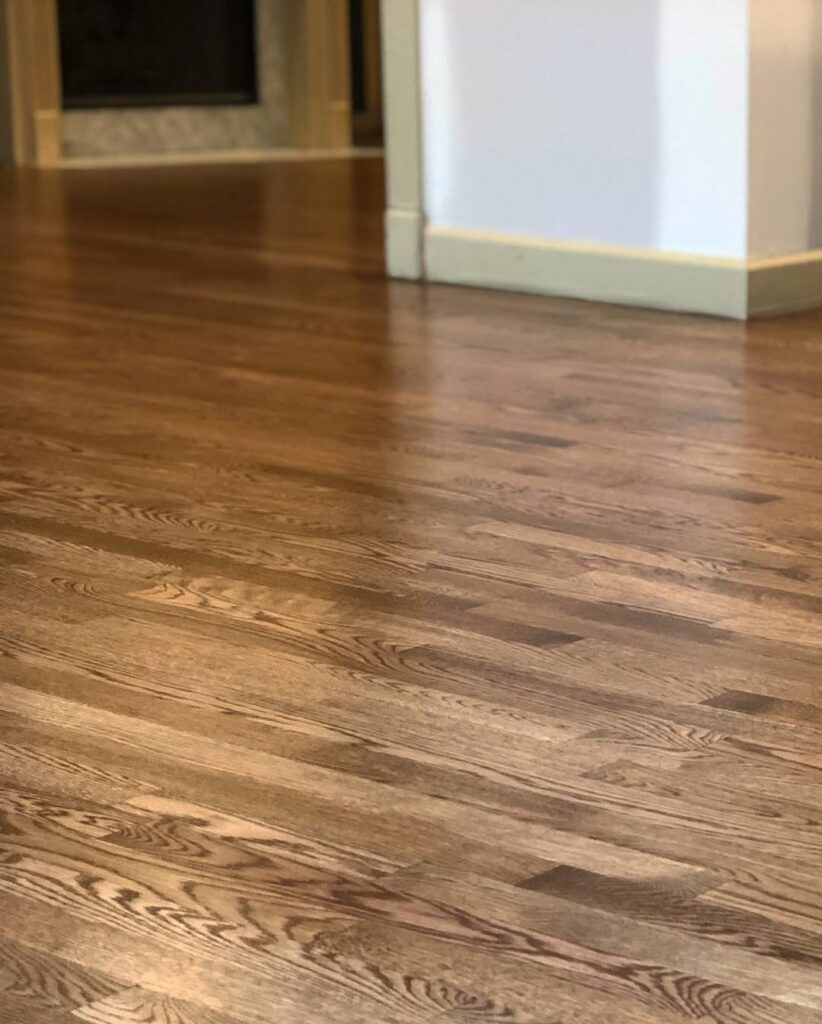
Special walnut hardwood floors pair with everything from crisp white cabinetry to deep blue walls, so the deciding factor is which mood you want the room to settle into.
If your baseboards are thin, contrast trim buys them some visual weight against the dark boards; if you can only paint, the blue wall pairing is your move.
Either way, test a sample board at floor level in afternoon light before you commit, because walnut’s purple undertones can turn cream cabinets pink.
[link-whisper-related-posts]1. Walnut Flooring with Distinctive Swirling Grain
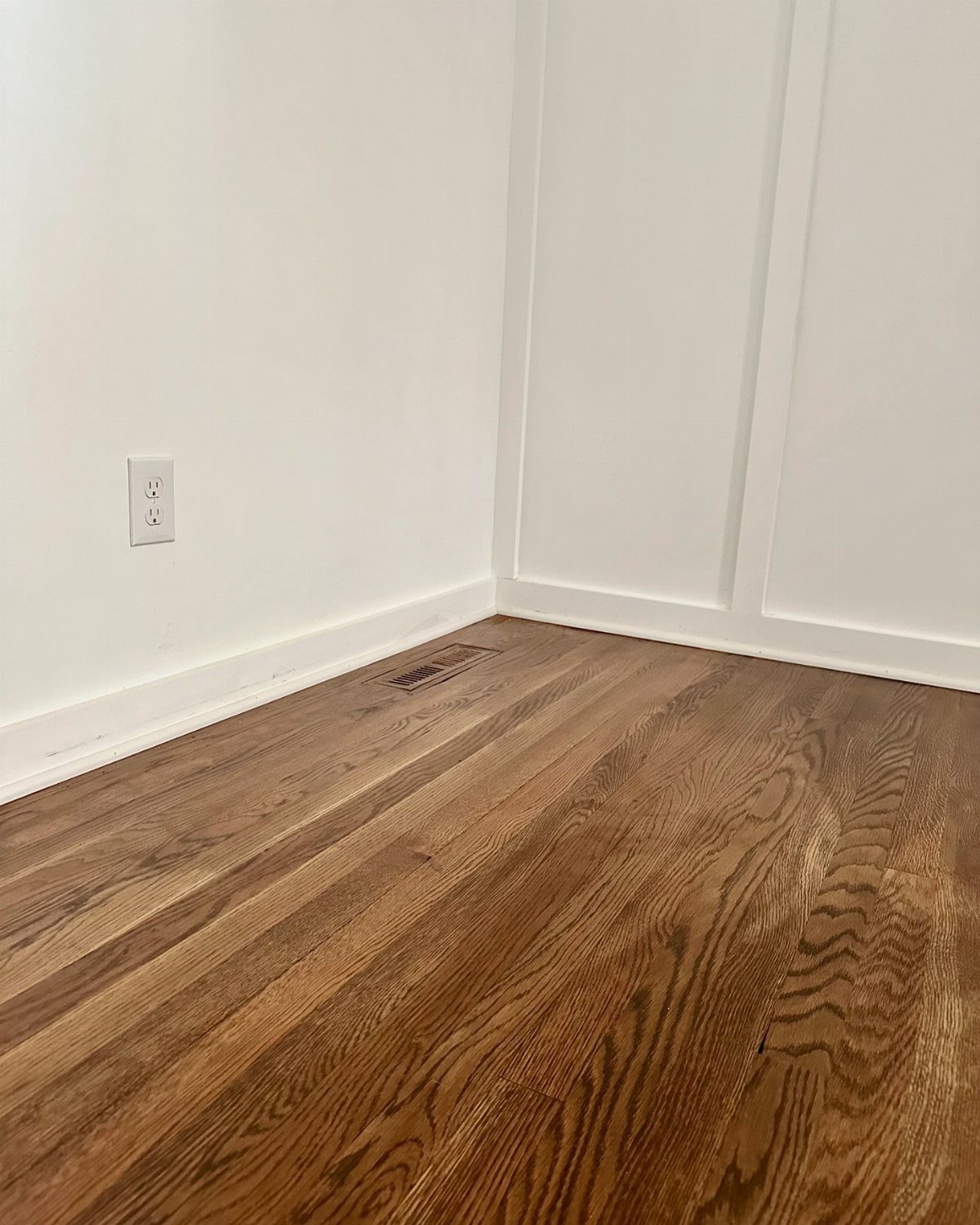
Swirling grain is the whole reason to choose walnut over a cheaper brown stain on oak.
Boards with grain that moves in waves rather than straight lines catch light differently across the day, so the floor shifts with the sun without changing anything else in the room.
I have seen plain walnut next to figured walnut in the same room, and the figured stuff always draws the eye first.
Mills sort this grain into a separate grade, so it costs more per square foot and you may wait longer for enough matching bundles to cover a whole room.
If your timeline is tight, ask the supplier whether they can hold the entire lot before you order samples.
Best for formal living rooms or primary bedrooms where you want the floor to be the statement, not just the background.
2. Walnut Flooring with White Cabinetry
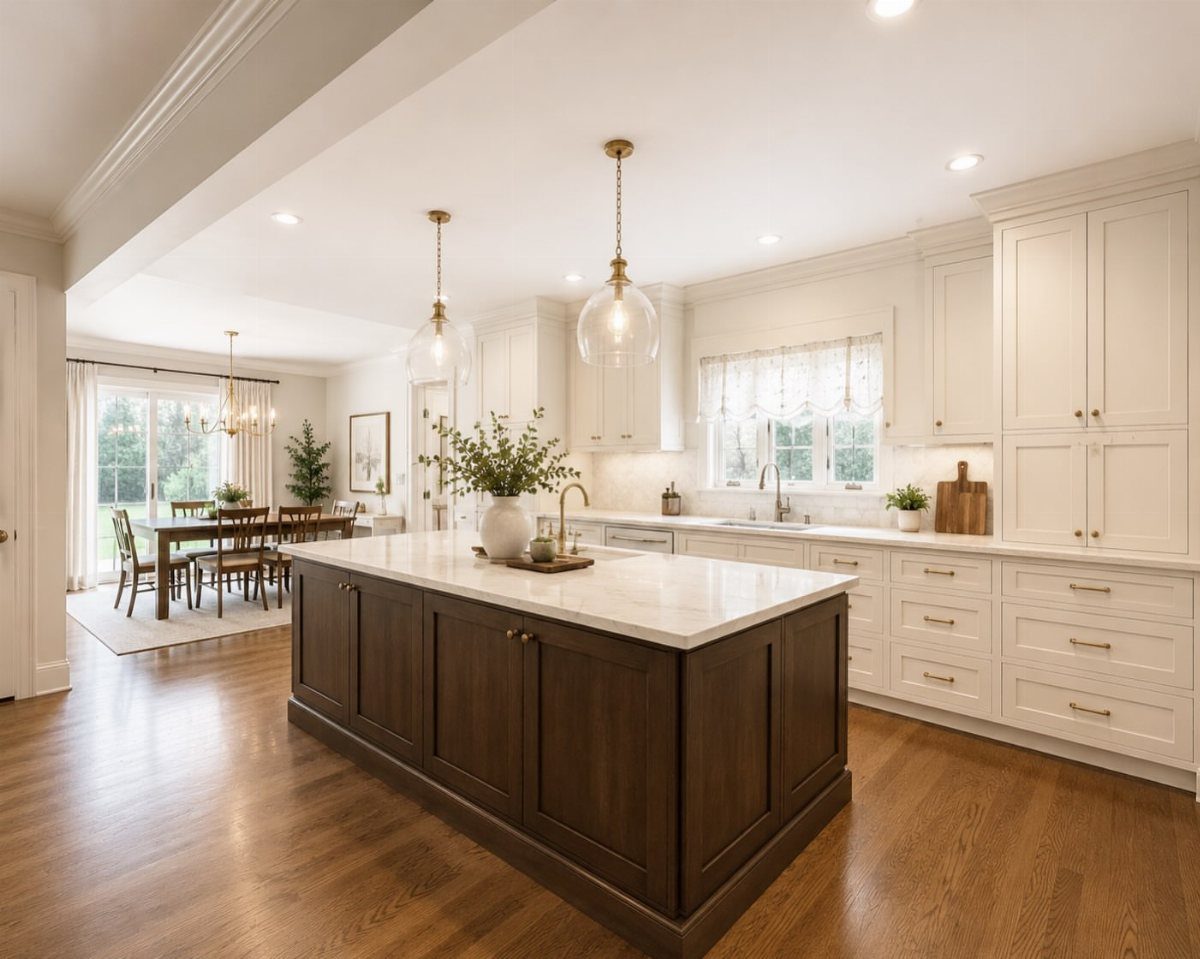
White cabinets can read cold against gray or pale floors, but walnut underneath warms the whole kitchen without clashing.
A dark island on the same walnut as the perimeter keeps the palette tight; if you are mixing species, I would match the floor to the island and let the cabinets stand alone.
Walnut hides crumbs and dust better than maple or white oak, which matters more in a kitchen than almost anywhere else.
One thing to check: if your cabinets are a warm white rather than a stark one, request a sample board and set it on the floor in afternoon light.
The purple undertones in some walnut lots can turn cream cabinets pink.
3. Modern Living Room Walnut Floors
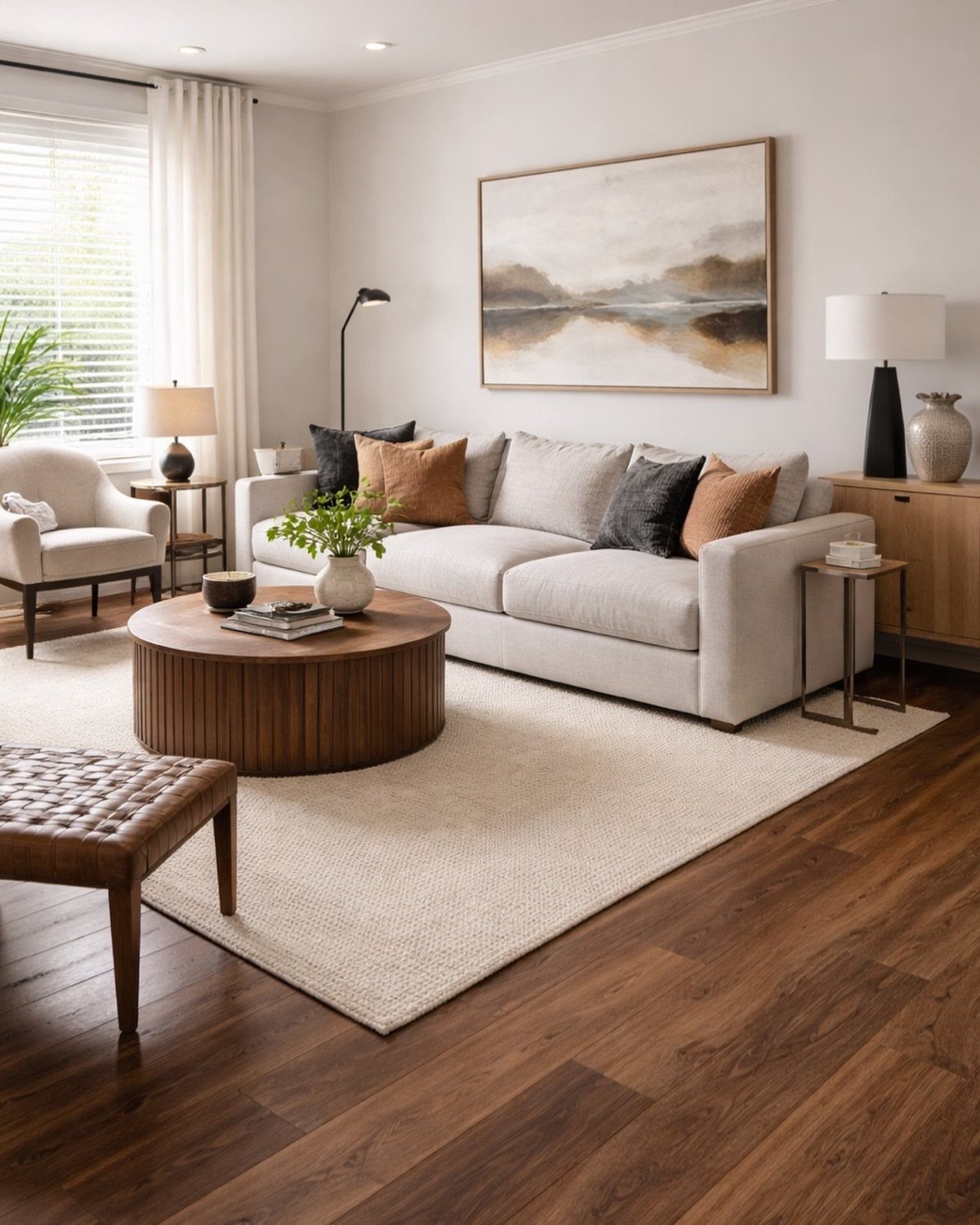
A modern living room with walnut floors works because the dark ground lets pale upholstery and light walls breathe. Beige and cream furnishings would look muddy on a mid-tone oak floor; against walnut they read as intentional contrast.
I would keep the rug small enough that the walnut still reads as the room’s anchor rather than a border.
Wall color matters more than people think: off-white with enough yellow plays nice with walnut’s warmth, but a blue-white can make the same floor look ashy. Test your paint sample at floor level, not eye level, before you commit.
4. Bright Hallway Walnut Flooring
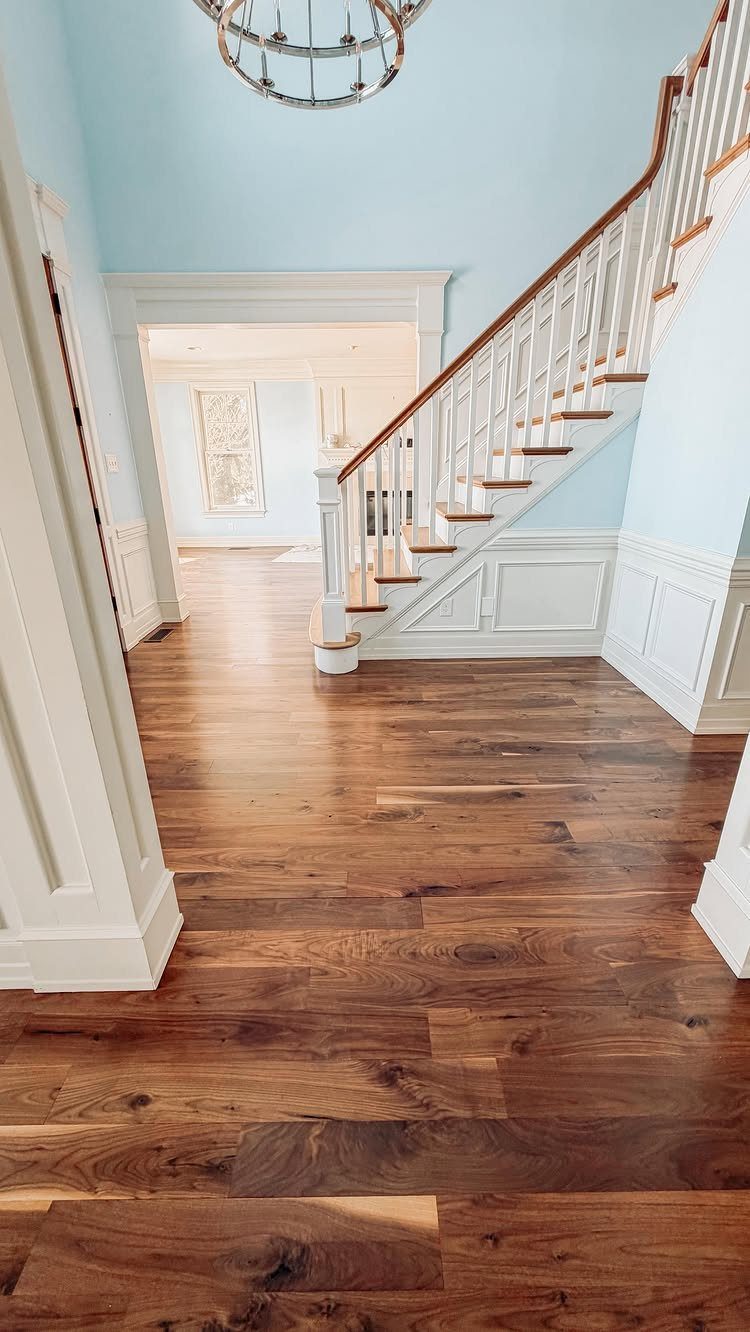
Hallways get whatever light they get, and walnut in a bright foyer like this one gains depth instead of losing it.
The polish on these boards reflects the staircase and the blue walls, which makes the narrow space feel wider than it is.
White risers keep the eye moving upward instead of stopping at the dark tread line, a move I would steal for any two-story entry. Wainscoting painted to match the risers ties the whole vertical path together.
5. Contrast Trim and Walnut Floors
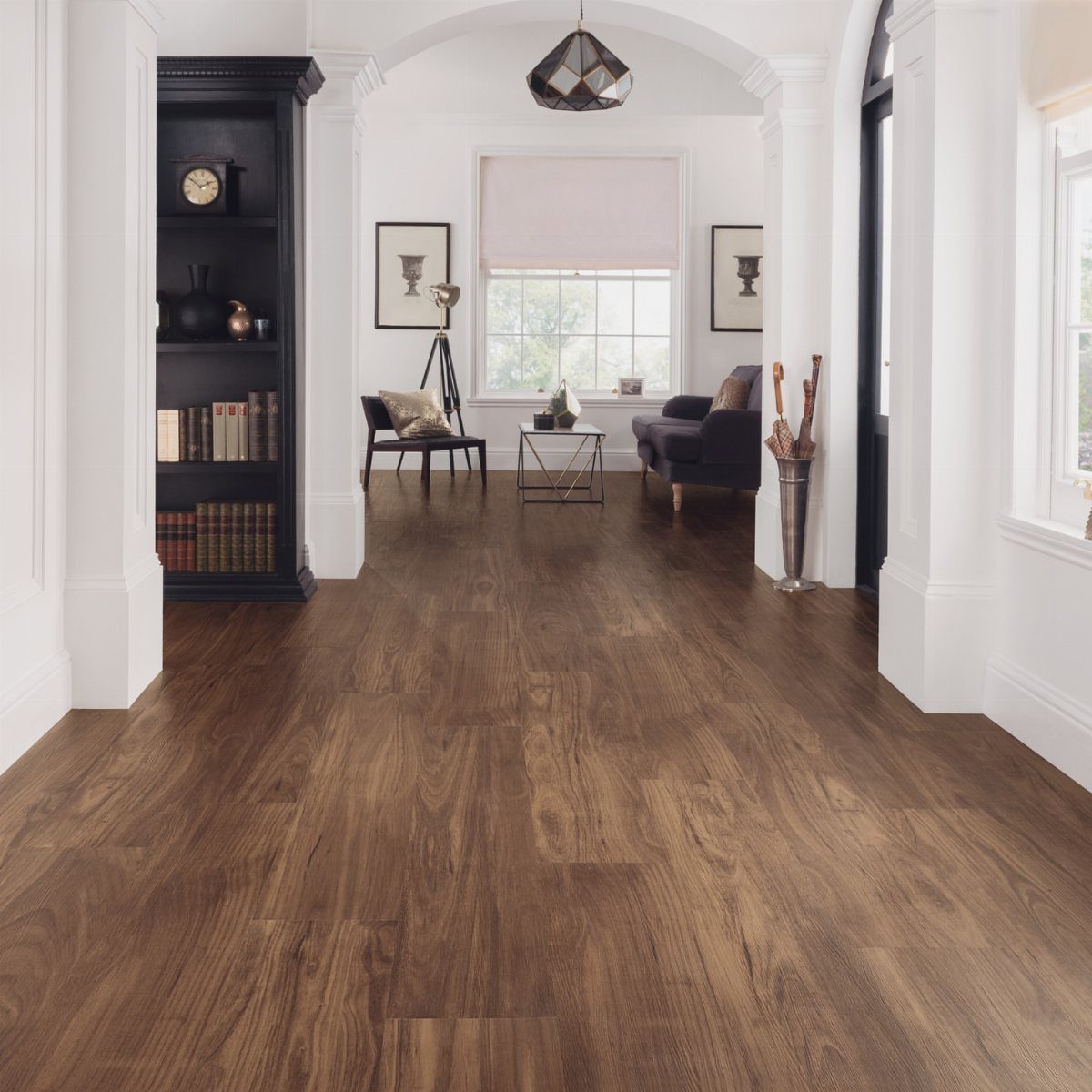
White trim against walnut floors is a high-contrast move that only works if the architecture earns it.
Wide archways and thick moldings give the eye somewhere to rest between the dark floor and the pale walls; in a plain drywall box with thin baseboards, the same pairing can look like a mistake you have not fixed yet.
Check your existing trim width before you choose the floor. Thin baseboard will need upgrading, or the dark boards will swallow it.
Black furniture deepens the contrast further; if you prefer a softer look, medium-toned wood pieces bridge the gap without adding another strong voice.
6. Stair Treads with White Risers
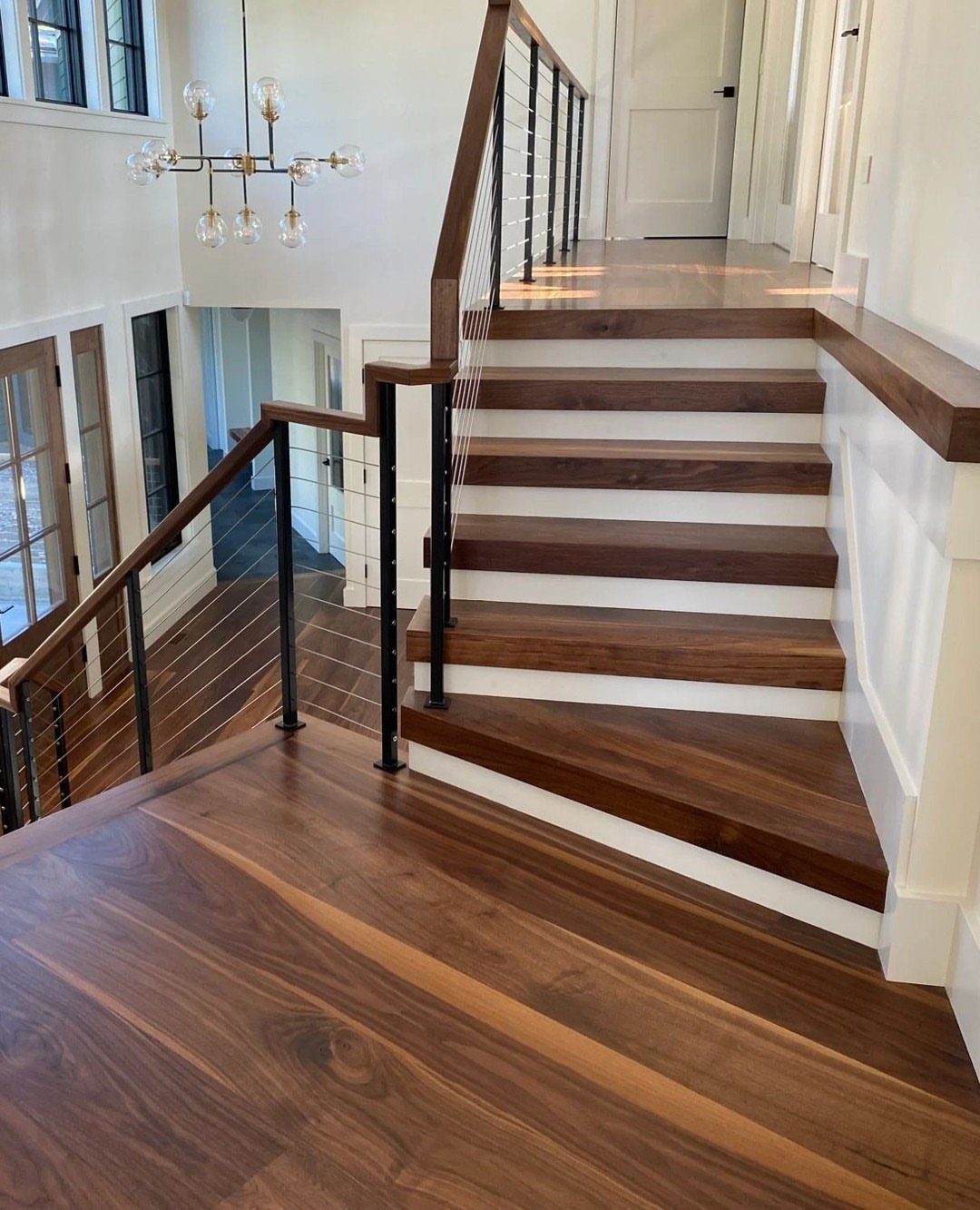
Stair treads take more abuse than any floor surface in the house, and walnut’s medium hardness means you will see the wear eventually.
The white risers here do the practical work of hiding scuff marks from shoes, while the dark treads hide the grit that causes them.
Cable railings with a wood handrail, like black metal paired with walnut, keep sight lines open in an open-plan entry.
I would budget for a harder species on the treads if you have kids or a large dog, or accept that you will sand and refinish the stairs sooner than the living room.
The chandelier placement matters too: light from above shows every scratch, so a dimmable fixture lets you choose what you see.
7. Walnut Floors Paired with Blue Walls
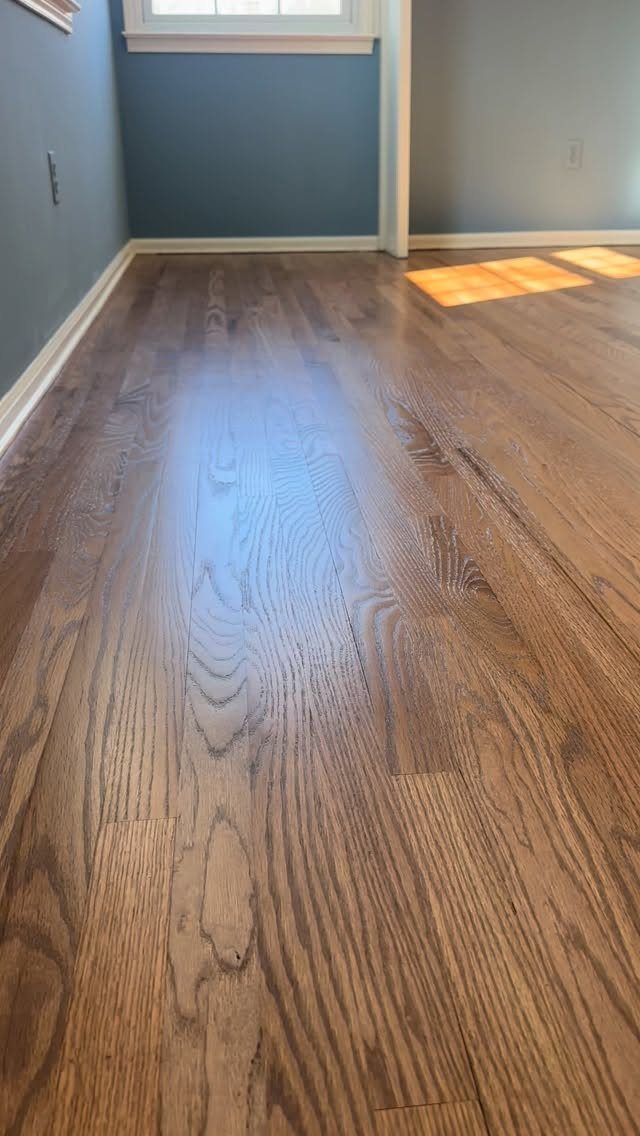
Blue walls with special walnut floors read as intentional rather than accidental because the wood’s medium brown sits between orange and red on the color wheel, making it a natural partner for cool tones.
White baseboards keep the pairing crisp; without that break, the colors can muddy.
A gray-blue or slate works better than a navy here. Navy fights the warmth of walnut and turns the room heavy, while a lighter blue lets the grain stay the focus.
This suits renters who can paint walls but cannot change floors, and first-home owners who inherited a finish they want to live with rather than sand out.
Blue reads trendy, so the combination may not age as well as walnut with white or gray.
Paint the ceiling the same white as the baseboards. Two whites in one room is where this look falls apart.
Maintenance Tips
Walnut scores about a 3 on the hardness scale, which is middle of the pack, not the toughest choice for a high-traffic hallway.
That darker color hides small dents and scratches better than pale maple or white oak, so the floor stays presentable longer between full cleanings.
A broom and an occasional damp mop are enough to keep the finish looking decent. The boards can be sanded and refinished when the wear eventually shows, which makes walnut a long-term flooring investment rather than a surface you replace.
Design Compatibility
The grain itself demands a shift in how you think about hardwood flooring.
Lighter species like white oak or maple give you a different palette to build around; walnut’s unique color means you adjust the room to show off its best qualities rather than treating it as a blank base.
Stain Testing
Testing stain colors in your own space matters more than comparing samples side by side. Lighting alone changes how a stain reads, and surrounding finishes, paint colors, and furniture all affect the final look.
Start by finding colors in the range you want, thinking about depth and whether you prefer a cool or warm undertone. Get actual samples, then look at each one individually rather than lined up next to its competitors.
A color can read entirely different when it stands alone on your floor boards.
Long-term Investment
The wood suits both rustic looks and more subtle, formal directions, making it a flexible complement across styles. For a DIY home remodel or a new house, it captures a look that lighter species simply do not provide.
Frequently Asked Questions
Is special walnut a good floor color?
A special walnut floor reads differently at 8 a.m. and 4 p.m., and that living shift is half the reason to choose it.
Pale sofas and white trim stand out against it, and the tone is dark enough that cat hair and dropped cereal do not announce themselves from across the room.
Is walnut good for hardwood floors?
Walnut floors hold up fine in bedrooms and dining rooms; I would think twice before laying them on stairs that see boots and paws every hour of the day.
It offers a rich chocolate-brown color and distinctive grain patterns that develop a patina over time, and it pairs well with both traditional and modern interiors.
What is special walnut?
Special walnut lands in the middle of the brown spectrum, warm enough to avoid the orange cast of some oak stains but not so red that it fights a gray wall.
It is a premium choice that mills often sort into separate grades when the grain is figured or swirling.