These ideas run from a simple stain change on existing boards to herringbone layouts that demand a dead-square room and a full extra order of material.
The right choice depends on how much water your kitchen sees and whether you need the option to refinish in place.
Six of the nine use solid 3/4 inch stock because that thickness survives real kitchen traffic and still leaves meat for several sandings down the road.
[link-whisper-related-posts]1. Light Wood Kitchen Flooring
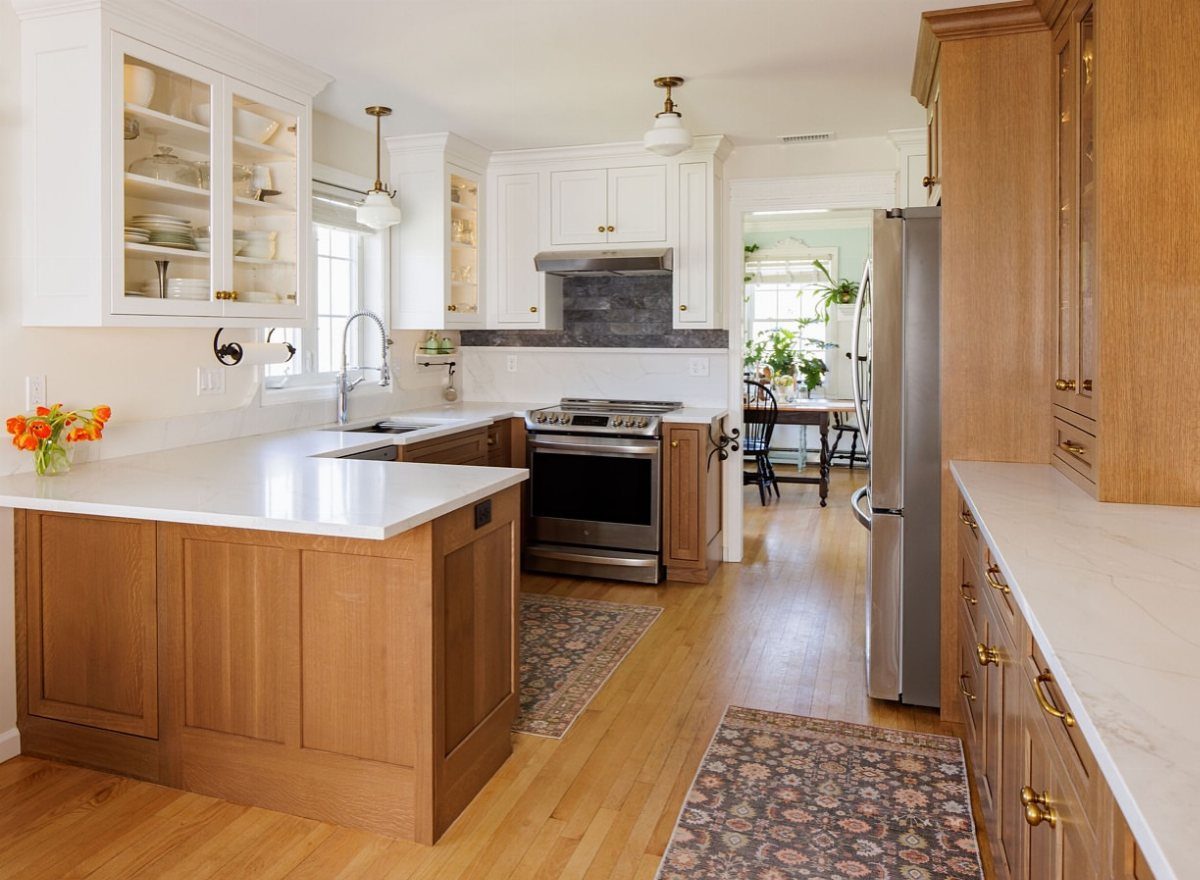
Light wood floors bounce daylight around a small kitchen better than any paint trick I have tried.
White Oak carries a pale grain that reads as Scandinavian without trying too hard, and solid 3/4 inch material holds up to real kitchen traffic.
I would stick with solid hardwood over engineered here. The kitchen sees too much water for thin wear layers, and full-thickness stock gives you enough meat for several refinishings when the surface finally dulls.
Maple and hickory hold up harder if you have kids dropping spoons, though their grain stays quieter than oak’s.
This look suits renters who might refinish existing floors rather than replace them. A drum sander and a weekend of progressively finer grit gets you from honey-pine regrettable to something that reads intentional.
You can’t go wrong with laying hardwood floors in a kitchen, especially if your home boasts an open floor plan.
2. Medium Brown Flooring
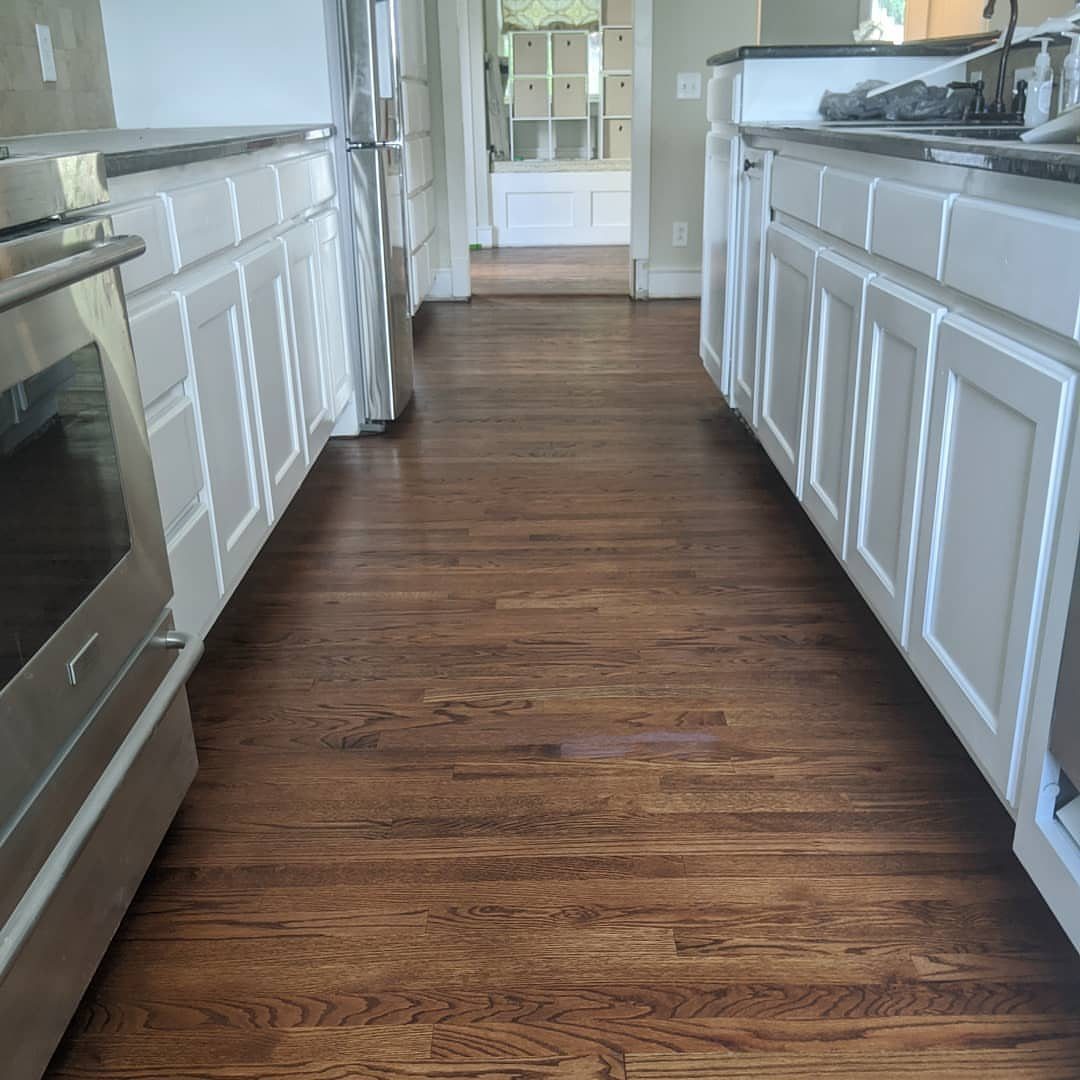
Medium brown hides the grit that shows on pale floors by Wednesday afternoon. The tone sits between the trendy extremes, so it does not read dated as fast as the gray wave or the blonde moment that preceded it.
Solid 3/4 inch red oak in a medium stain runs heavily available and refinishes well. The grain shows enough to add interest without shouting, and the dust you tracked in from the garden disappears until Saturday.
White shaker cabinets pull it toward Modern Farmhouse; navy walls push it toward old clubhouse, if you want something less expected.
I have lived with floors this color. They forgive the daily wear that lighter finishes broadcast and darker finishes require constant sweeping to look kept.
3. Herringbone Pattern
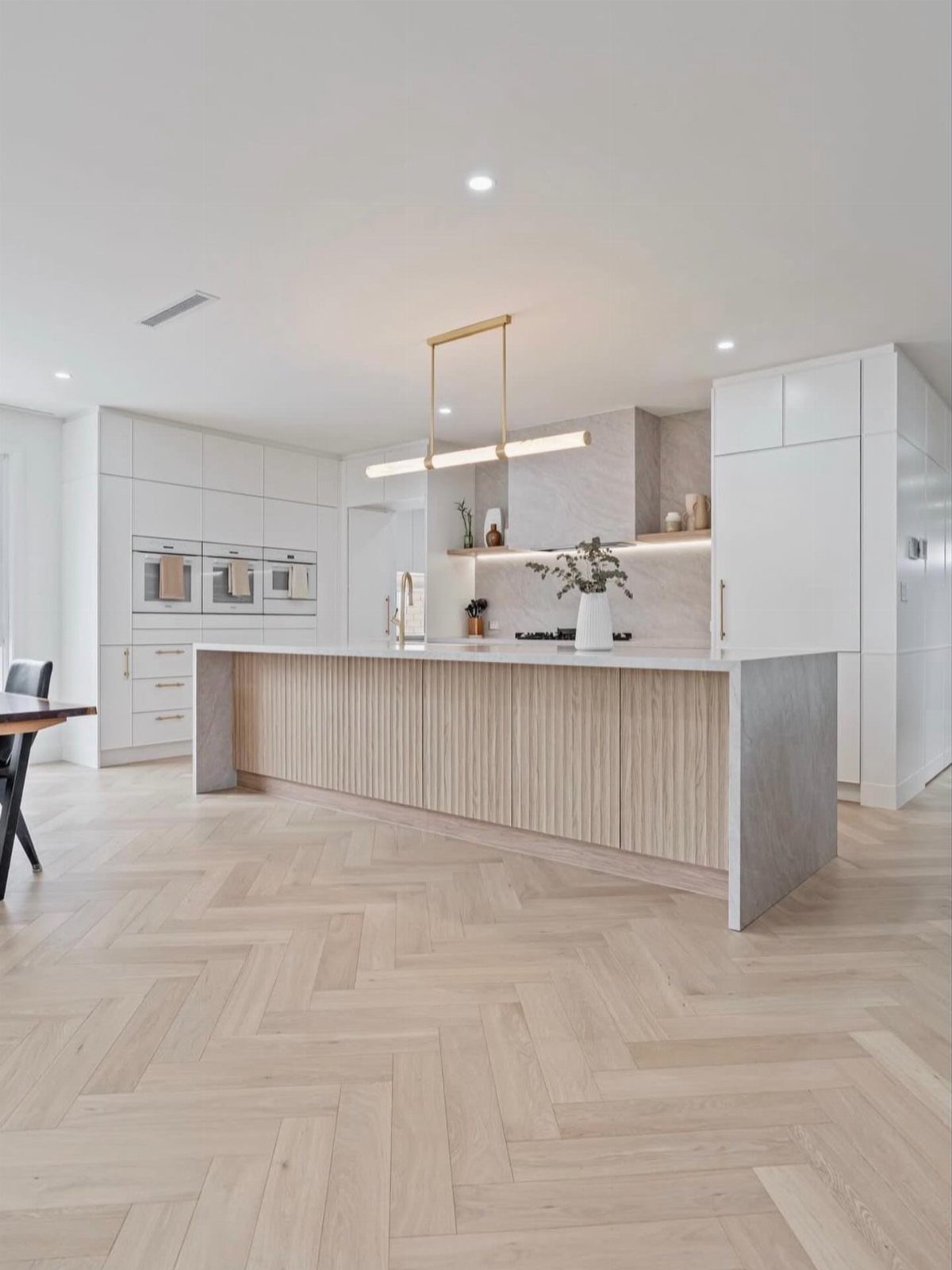
Herringbone reads as effort and money spent, though the material cost is identical to straight plank. The labor multiplies: every piece ends on two cut angles, and the layout demands a dead-square room or the error amplifies.
Start with engineered hardwood if your subfloor has any give. Solid 3/4 inch herringbone is traditional, but the shorter pieces lock less forgivingly than long planks.
A mid-width plank, the standard range, handles the pattern without looking busy.
A host who wants the kitchen to feel designed rather than installed will find the extra weekend worth it.
I would not attempt this as my first flooring project; the angle cuts waste enough board that ordering extra is not cautious, it is required.
4. Warm Medium Oak
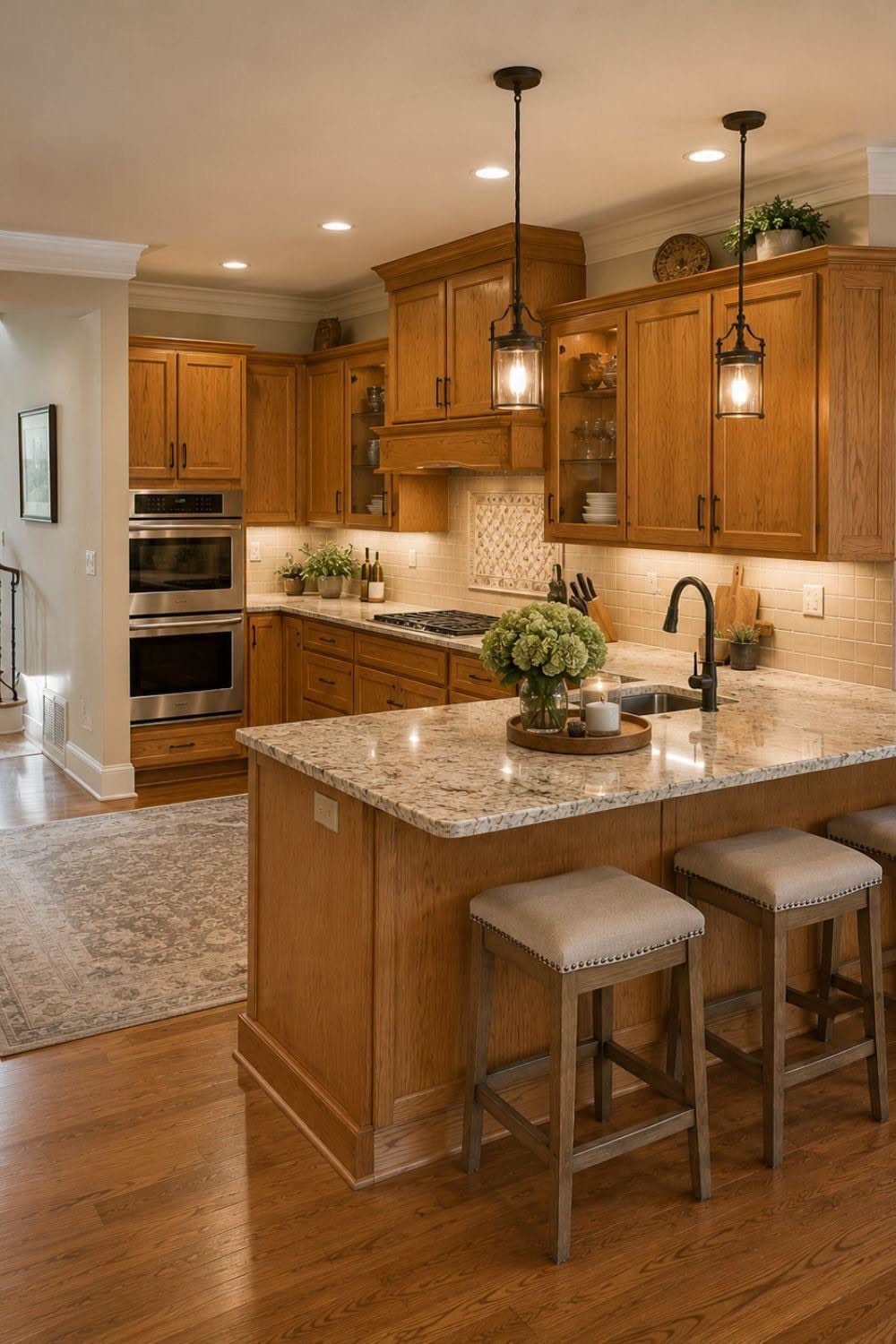
Warm medium oak is the floor color that outlasts the trends because it refuses to pick a side. Not light enough to show every dropped flour handful, not dark enough to swallow a dim room.
Oak’s grain pattern carries the visual weight so the finish can stay simple.
Solid stock with a natural or lightly ambered oil finish lets you refinish when the wear shows, which in a family kitchen happens sooner than you’d like even with decent maintenance.
The tone pairs with white cabinets without the starkness of pale floors, and it warms up granite that might otherwise read cold.
This is the safe choice that does not feel like surrender. I would default here if I planned to sell soon and did not want to guess at the next buyer’s taste.
5. Checkerboard Pattern
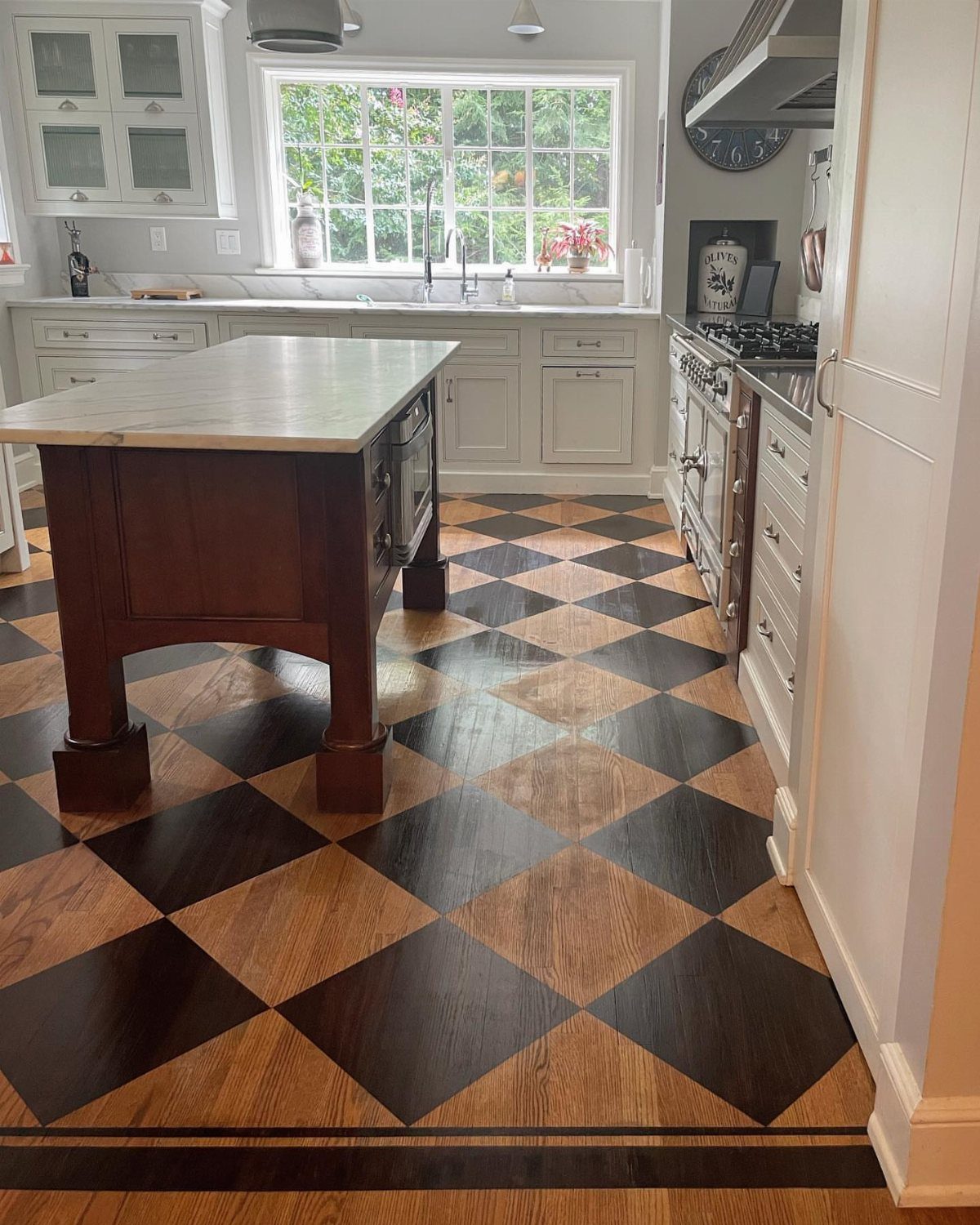
Checkerboard hardwood is not tile pretending to be wood; it is two wood stains, two species, or stained against natural, cut into squares and laid alternating.
Squares come in a range of sizes, and the pattern demands precision. A hairline gap between squares grows visible fast when the contrast is high.
I would practice the layout with dry pieces before any adhesive touches the subfloor.
Gray and white softens the formality toward rustic; dark and natural oak pushes it traditional. The maintenance is identical to any hardwood, but the pattern hides the inevitable scratch better than uniform plank.
This suits someone who wants the kitchen to feel considered without importing Parisian pretension.
6. Cool Gray Floors
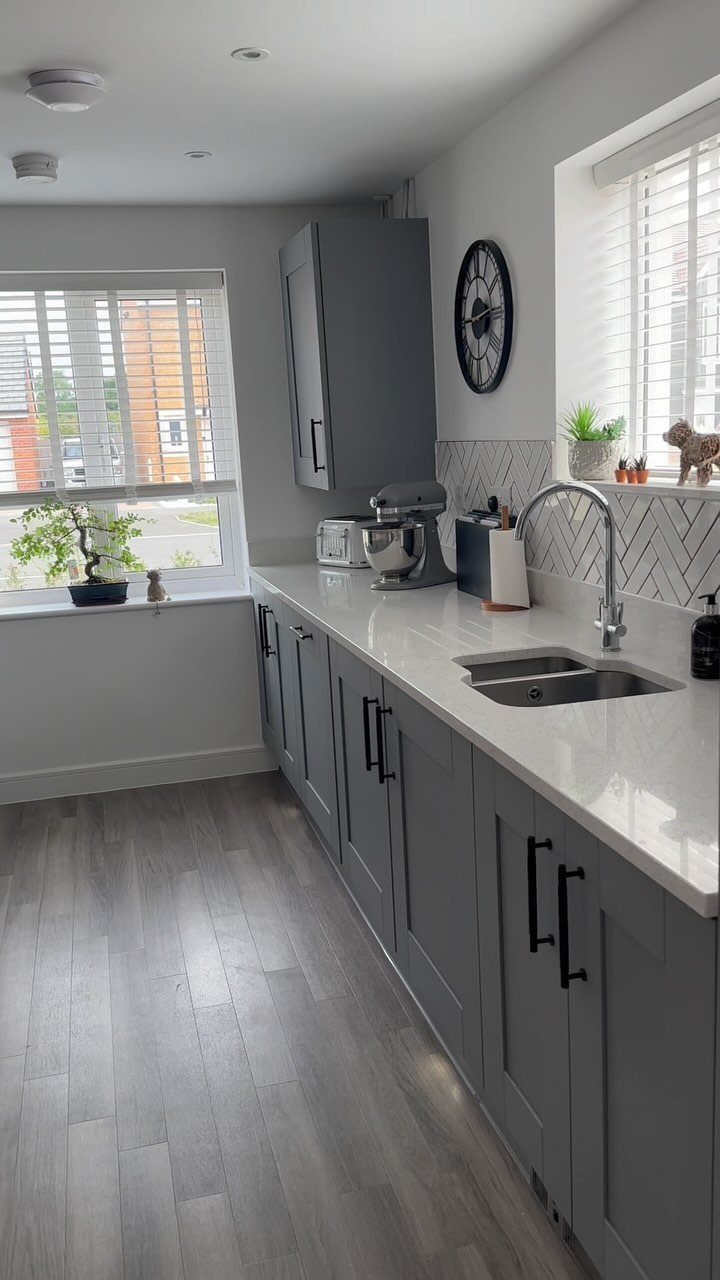
Cool gray floors read clean and current, though the 2026 trend shifts warm. If your cabinets are already gray shaker and your counters white, the floor can complete the palette without adding another competing element.
Light oak or ash takes the gray stain better than red oak, which can pull pink. Engineered plank with a real wear layer works here if the budget is tight, but I would not go too thin in a kitchen.
The refinishing option matters too much.
The risk is dating. Gray dominated the last cycle heavily enough that it already reads dated to a specific era.
I would choose this only if the rest of the house commits to cool tones, or if I planned to refresh again in 8 years. For longevity, warm medium oak still wins.
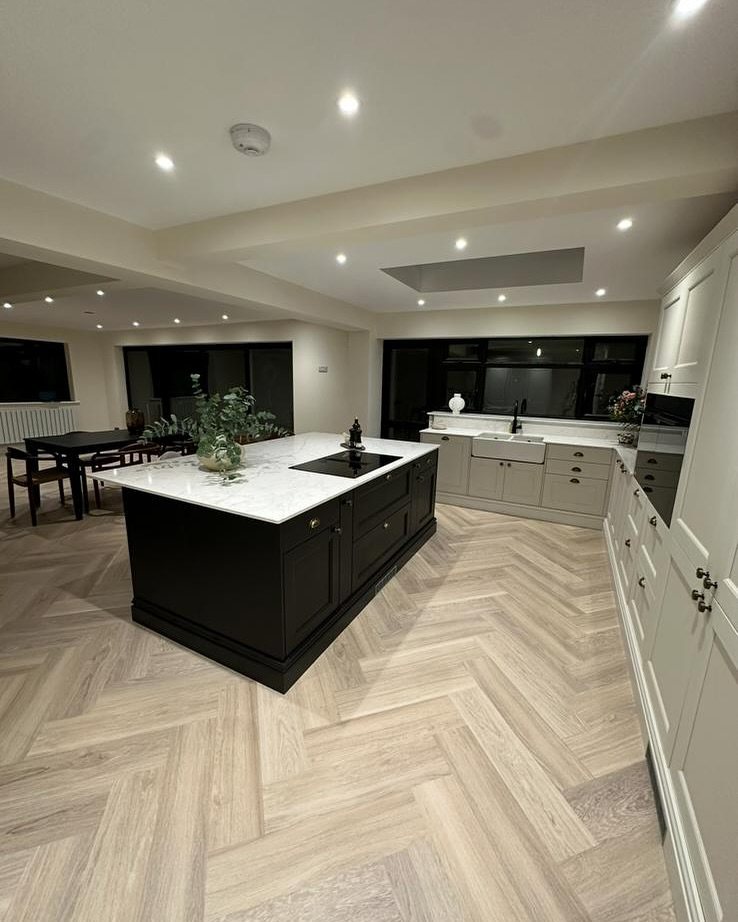
7. Light Gray Cabinets with Blonde Wood Flooring
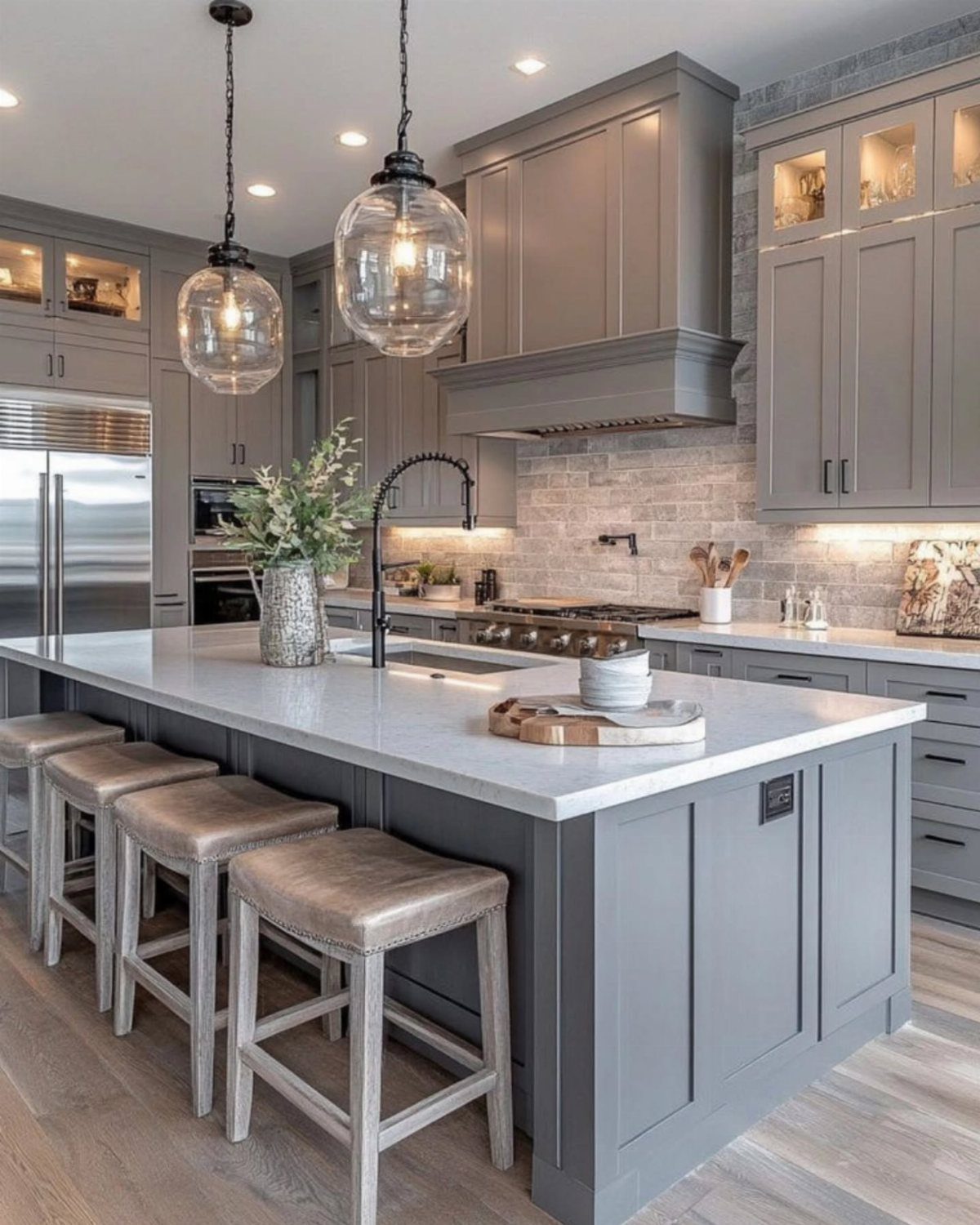
Light gray cabinets can read cold in a kitchen with too much stone or metal. Blonde wood flooring fixes that by pulling warmth up through the whole room.
The tone is closer to raw oak than to honey, so it stays modern without going yellow.
If you are choosing the wood, look for a species rated light on the sample strip, ash or white oak in a natural grade.
Engineered planks run thinner, 3/8 to 1/2 inch, and cost less than solid hardwood while holding up to kitchen traffic. I would pick pre-finished to skip the sanding dust and move in faster.
This pairing suits renters who painted cabinets and need one permanent element to anchor the space, or owners who want a gray kitchen that still feels like people cook there.
8. Wide Plank Hardwood Flooring
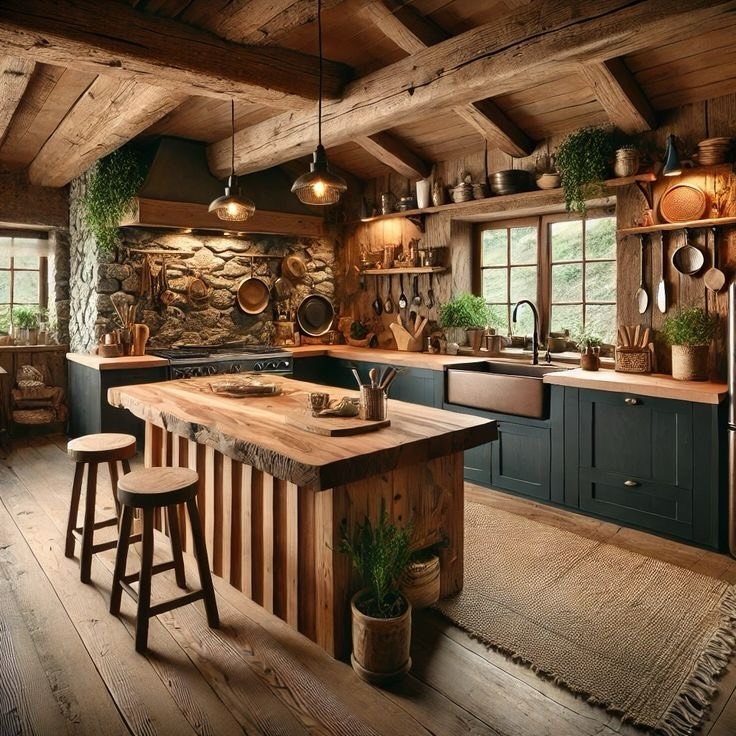
Wide planks start at 6 inches and run past 7, and in a small kitchen that extra width tricks the eye into seeing fewer seams and more open floor.
Rustic kitchens use wide planks with beams and stone, but the same trick works in a plain room with no other statement pieces.
Domestic oak or ash keeps the price down, and engineered construction stretches the budget further since you are paying for a thin wear layer over plywood rather than solid stock.
A matte or wire-brushed finish hides the scuffs that come with cooking in work boots or dog nails.
Extra-wide planks need a dead-flat subfloor; any cupping shows across a broad board like a wave on a pond. For most kitchens, 6 to 7 inches hits the balance.
9. Light Wood Floors with Black Cabinets
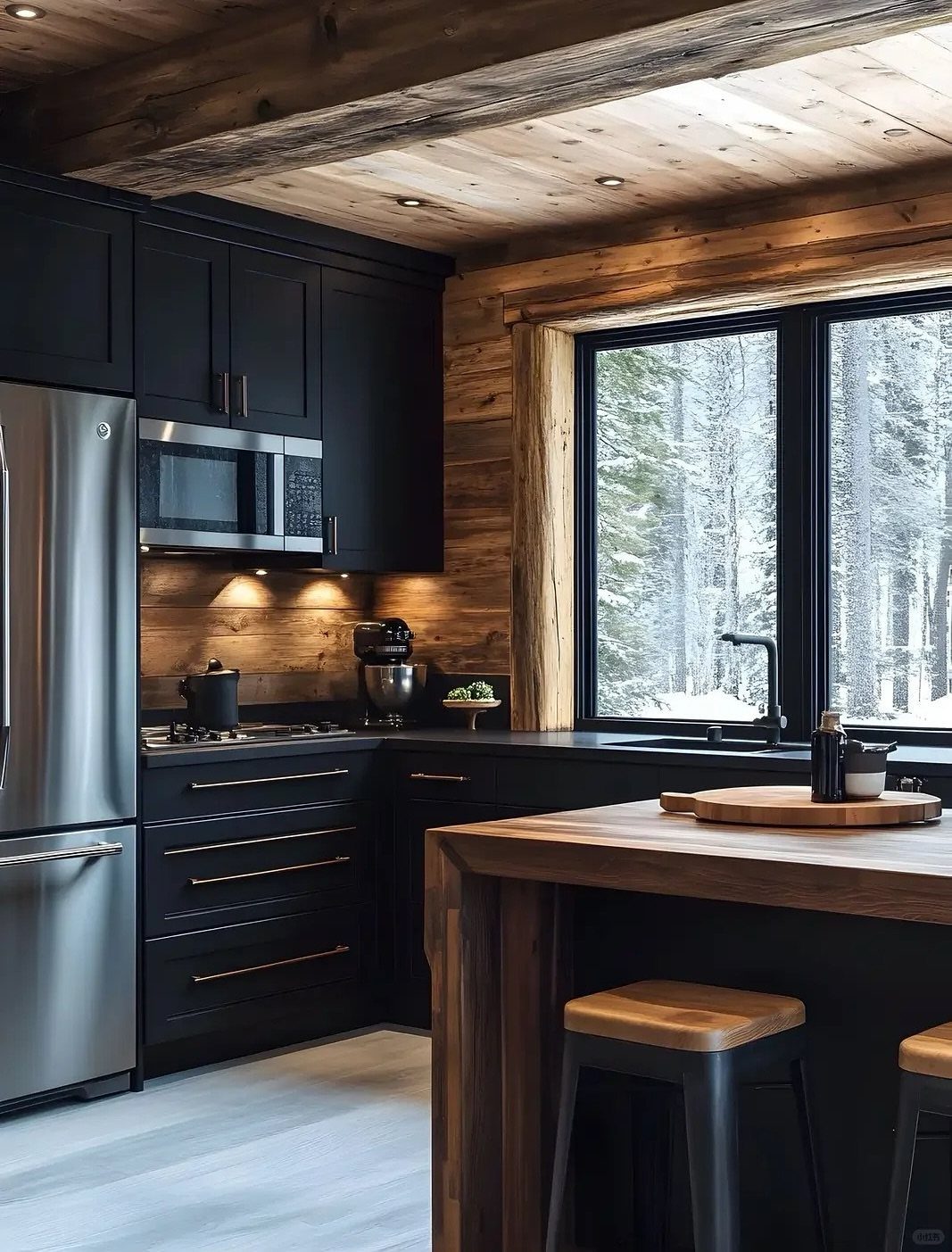
Pale floors with black cabinets give the sharpest contrast, and the risk is that it turns into a showroom rather than a kitchen you use.
Natural wood walls and a view of trees soften the edges, which is one way to do it.
In a city apartment with drywall, you would need leather, brass, or plants to keep the room from feeling like a photo studio.
The floor itself wants to be the lightest tone you can find, natural white oak or even bleached ash, because anything darker muddies the effect.
Solid hardwood handles refinishing if you ever tire of the drama and want to warm the tone.
This is the choice for someone who wants the kitchen to read as designed, not decorated, and who will wipe the cabinets down often because every fingerprint shows.
Pros and Cons of Wood Floors
Wood floors in a kitchen warm the whole house when the layout is open, but the moisture risk is real. A sink overflow or a slow leak under the dishwasher will find the seams.
Solid 3/4 inch stock can be sanded and refinished 3 to 5 times over its life, which matters because scratches from dropped knives and dragged chairs accumulate faster here than in a bedroom.
Prevention costs less than repair. Felt pads under table legs stop the dents that happen when someone pulls out a chair.
Rugs at the sink and the back door catch the grit that acts like sandpaper under shoes.
I would run a dehumidifier in summer if the kitchen sits over a damp crawl space; the wood swells and shrinks with humidity, and that movement opens gaps.
Choosing the Right Wood Species
Oak, maple, and hickory carry the hardness ratings that matter in a kitchen. Oak is the standard for a reason: it dents less than pine, takes stain predictably, and the grain hides wear.
Maple runs harder still, with a smoother, quieter figure that reads modern. Hickory tops the domestic list for resistance to dropped cast iron and dog claws, though the color variation board to board can look busy if you prefer uniform.
Exotic species like Brazilian cherry or walnut offer grain you will not find in domestic lumber, but some need more careful maintenance than the common three.
Engineered construction resists moisture better than solid wood, which matters near the refrigerator water line and the dishwasher. Oak or maple gets my vote for a first kitchen floor; I’d save the exotics for a space that sees less abuse.
Matching Floors with Cabinets
Matching floor to cabinet is about contrast and undertone, not about finding twins.
The undertone is where most people slip: a gray cabinet with a blue cast wants a floor with a cool or neutral undertone, not something that pulls honey.
Light matters. A kitchen with one small window and no cross-light will die under a dark-on-dark scheme.
I would hold samples against the cabinets at the actual hour I use the kitchen, morning or evening, because the bulb in the flooring aisle is not the sun that hits your house.
Maintenance Tips for Kitchen Floors
Refinishing beats replacement when the surface dulls but the boards are sound. Solid hardwood handles 3 to 5 full sandings; engineered with a 2 to 3 millimeter wear layer manages one or two light passes.
The cost difference is substantial enough that I would buy the thicker wear layer even if it stretches the budget.
Daily care is simple and boring, which is why people skip it. Sweep the grit before it grinds underfoot.
Wipe spills before they sit. Mats at the sink and the entry catch water and abrasive that would otherwise scratch.
Felt pads under furniture legs prevent the dents that show most on softer species. Ventilation controls humidity; wood moves with moisture, and the gaps that open in winter will close in summer if the swing is not too extreme.
Frequently Asked Questions
What type of hardwood flooring is best for a kitchen?
Solid 3/4 inch hardwood wins for refinishing, but engineered handles moisture better near sinks and dishwashers.
Solid white oak or maple makes sense if you plan to stay long enough to sand it down someday; engineered works better when the subfloor has movement or the budget only allows a thinner wear layer.
The kitchen sees too much water to go too thin on that top veneer.
Is it a good idea to put hardwood floors in the kitchen?
Yes, if you accept the maintenance. Hardwood adds warmth that tile and vinyl do not match, and in an open plan it keeps the flow continuous.
The risk is moisture and dropped utensils, so softer species like pine will disappoint you. The refinishing option matters more than the initial perfection, which is why wood in a kitchen still holds up as a practical choice.
What is the current trend in kitchen flooring?
Warm tones have replaced the gray wave. Light white oak with honey or beige undertones leads, along with wide planks at 7 inches or more and matte wire-brushed finishes that hide scuffs.
Should wood floors be lighter or darker than cabinets?
Contrast matters more than matching. Dark cabinets need lighter floors to keep the room open; black cabinets against pale wood is the sharpest version, though it risks showroom sterility.
Two dark elements together shrink a kitchen unless the light is abundant. I would default to medium oak against anything bold, or natural white oak against navy or black.