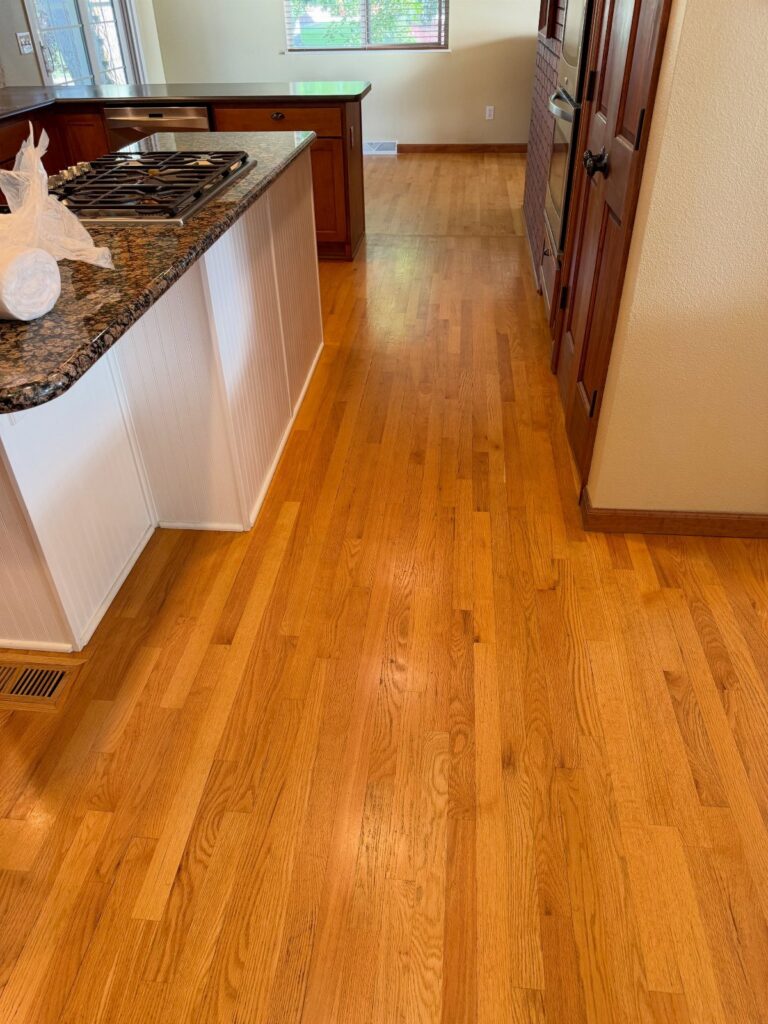
Kitchen floors in wood run from solid oak you can sand down and refinish, to engineered boards thin enough to solve a height mismatch with the living room next door, and the finish you put on top matters as much as the board itself.
The deciding factor is how much water your household actually spills; a galley kitchen with light cooking keeps solid hardwood alive, while daily ice cubes on the ground point you toward a harder finish instead.
Water-based polyurethane in satin is what takes the beating, and it gives out long before the wood underneath ever will.
[link-whisper-related-posts]1. Solid Hardwood Flooring
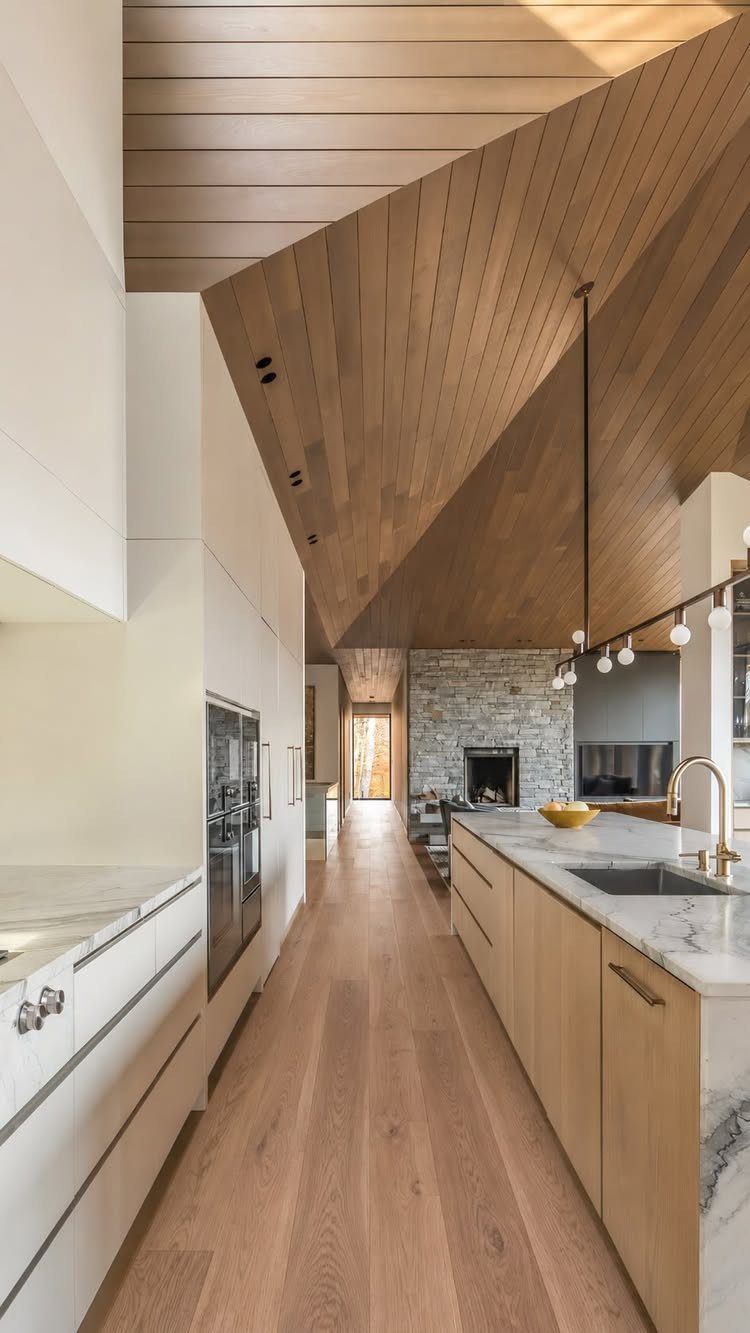
Solid hardwood runs one full piece of wood from top to bottom, so you can sand out scratches and lay down fresh finish more than once.
Oak is the usual starting point for its traditional look; hickory costs more but carries more character in the grain.
Water resistance is the weak spot. Solid hardwood has almost none, and kitchens guarantee spills.
Planks can warp or cup where moisture sits, so this choice works best in a kitchen that sees light cooking, not a household that drops ice cubes daily and leaves them.
If your heart is set on solid hardwood, I’d put it in a galley kitchen with good ventilation and keep a mat by the sink. Otherwise, save this material for the living room and read on.
2. Hardwood Floor Finish
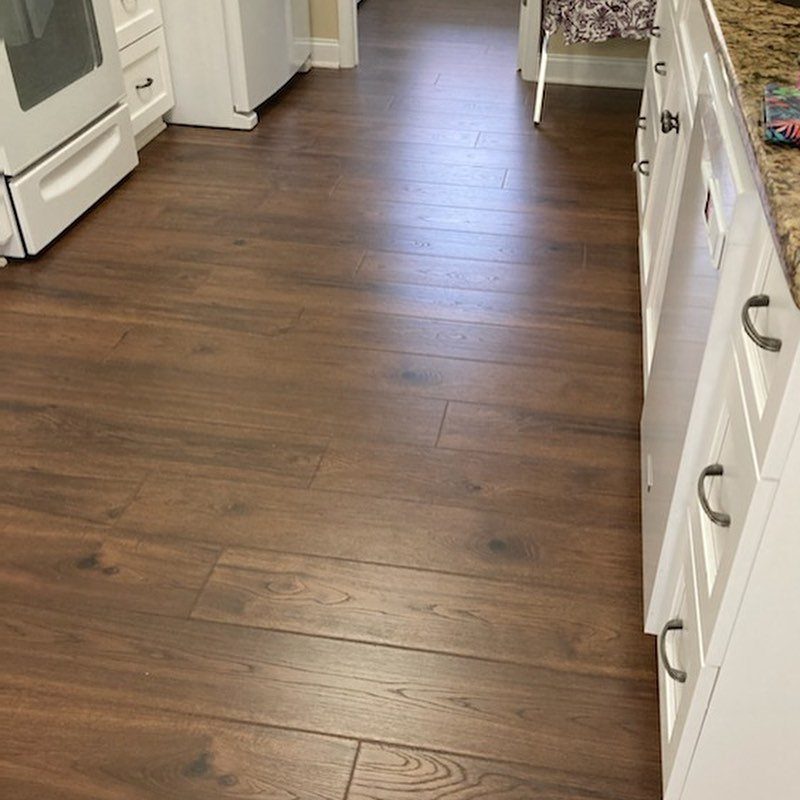
A finish is the protective skin that keeps your floor from becoming a scratch map of every dropped pan. Oil-based gives that deep, amber look people associate with old libraries, but it needs more upkeep over the years.
Water-based polyurethane dries fast, smells less, and still protects against the usual kitchen traffic.
UV oiled or lacquered finishes add a harder barrier against daily wear and clean up easier, which matters when tomato sauce hits the boards. The sheen level is a separate choice; satin hides the small stuff better than high-gloss.
For a kitchen that sees real use, I’d take a water-based polyurethane in satin and plan to recoat every few years. The finish gives out before the wood underneath does, which is exactly why it matters.
Limited moisture-resistance – A properly finished wood floor has some protection against moisture. However, if you’re laying wood floors in a kitchen, you’ll need to take extra care to ensure that your floors stay dry.
— Tarkett
3. Seamless Design Integration
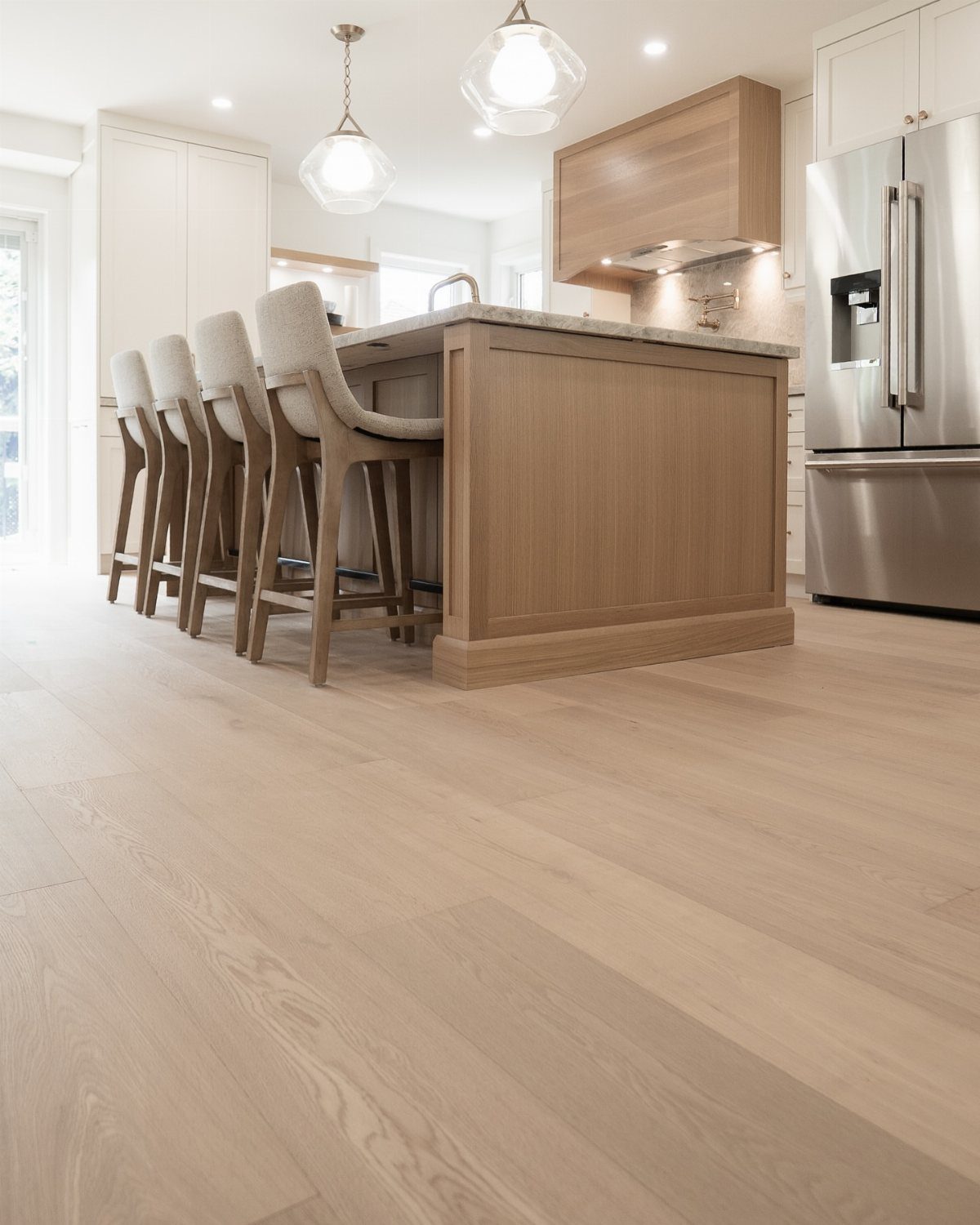
Running the same wood from the living room straight into the kitchen erases the visual stop that a threshold or tile border creates.
In an open plan, this matters more; the eye travels uninterrupted and the space reads larger than it is.
The wood tone has to carry both rooms. A wide plank in a light tone reads as neutral enough to sit under pale cabinets and a warmer island without clashing with either.
If your adjoining room has a dark floor already, matching it in the kitchen is possible but the kitchen will feel dimmer.
Check your subfloor height against the existing hardwood. Engineered wood can be thinner than solid and still give you the same face, which solves the transition problem when levels do not line up.
4. Aesthetic Appeal
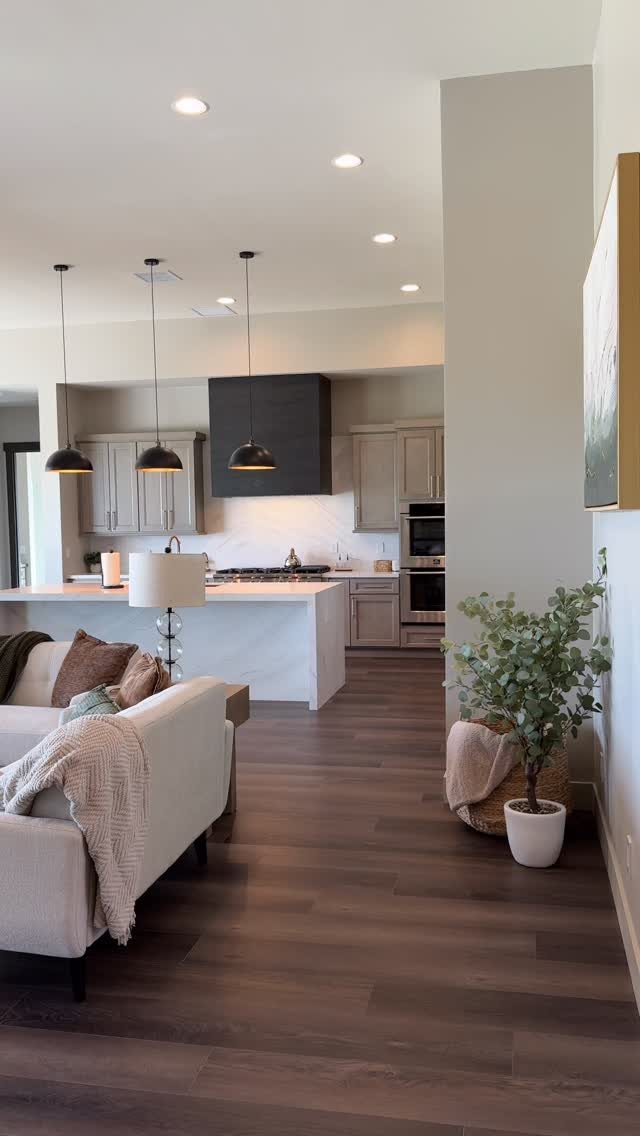
Wood floors warm up a kitchen in a way tile and stone cannot match.
The range of tones is the real flexibility. Honey-colored wood suits a rustic or farmhouse kitchen; platinum or grey-tinged finishes read modern and pair well with the matte cabinets that are common now.
The same species, oak or walnut, can sit at either end of that spectrum depending on stain.
This look asks for consistency in adjoining rooms. A dark floor that stops at a kitchen threshold looks like a mistake; one that flows through reads intentional.
I’d choose the tone based on the room that gets more sun, since natural light shifts how warm or cool a stain reads.
Cleaning Recommendations
A damp mop and a wood-safe cleaner handle the daily film that collects in a kitchen. I wring the mop nearly dry before it touches the boards; standing water is what warps the edges over time.
Between moppings, a quick vacuum pulls the grit that acts like sandpaper under shoes.
The finish does the real protective work, so I reapply oil or lacquer on the schedule the manufacturer sets rather than waiting for dull spots to show.
Common Concerns
Water damage, scratches, and upkeep are the three worries I hear most. None of them disappear, but each shrinks with the right habits.
Wiping spills before they pool, keeping pet nails trimmed, and recoating the finish before it wears through to bare wood: these three habits together keep a kitchen floor presentable for years.
The material is not bulletproof; it is repairable, which is a different kind of security.
Visual Continuity
In an open plan, the same wood running wall to wall reads as one room instead of two boxed-in spaces. The eye moves freely, and the square footage feels larger than it measures.
The tone has to work in both zones, though. I would pick the lighter of the two adjoining rooms and carry that through, since dark wood under kitchen cabinets already weighs the space down.
Where subfloor heights differ, engineered planks can match the face of solid hardwood in the next room without building up a transition strip.
Health Benefits
Grout lines in tile trap moisture and bacteria; wood does not offer those pockets. For allergy sufferers, that difference matters, since dust and dander sit on top of a sealed wood surface instead of settling in.
The floor still needs regular cleaning to earn that advantage. Underfoot, wood runs warmer and softer than tile or stone, which I notice when I am standing at the counter for an hour of prep work.
The comfort is practical, not luxurious.
Frequently Asked Questions
What is the best type of wood flooring for a kitchen?
Engineered wood is the safer bet for most kitchens.
Its layered construction resists the warping and cupping that solid hardwood suffers when moisture sits on it, and you still get a real wood surface that can be refinished once or twice.
I’d look for a UV oiled or lacquered finish on top; it buys you more time when the dog’s water bowl overflows or pasta water boils over.
Can you put a wood floor in a kitchen?
Yes, though I’d stick with engineered wood rather than solid hardwood. Engineered wood handles the humidity shifts and the occasional puddle better, while still giving you the warmth and resale value that people want from wood.