A bathroom accent wall can run from removable wallpaper to a slab of onyx that costs more than the fixtures, and the deciding factor is how wet the wall gets before you even pick a material.
Tile behind a tub needs the floor structure checked; wallpaper across the room only needs smooth drywall and patience at the corners.
Fireclay’s Appalachian line shows up twice here, once as brick tile and once as colored ceramic, which gives some sense of how far the same manufacturer can stretch across budgets.
[link-whisper-related-posts]1. Mosaic Tile Accent Wall
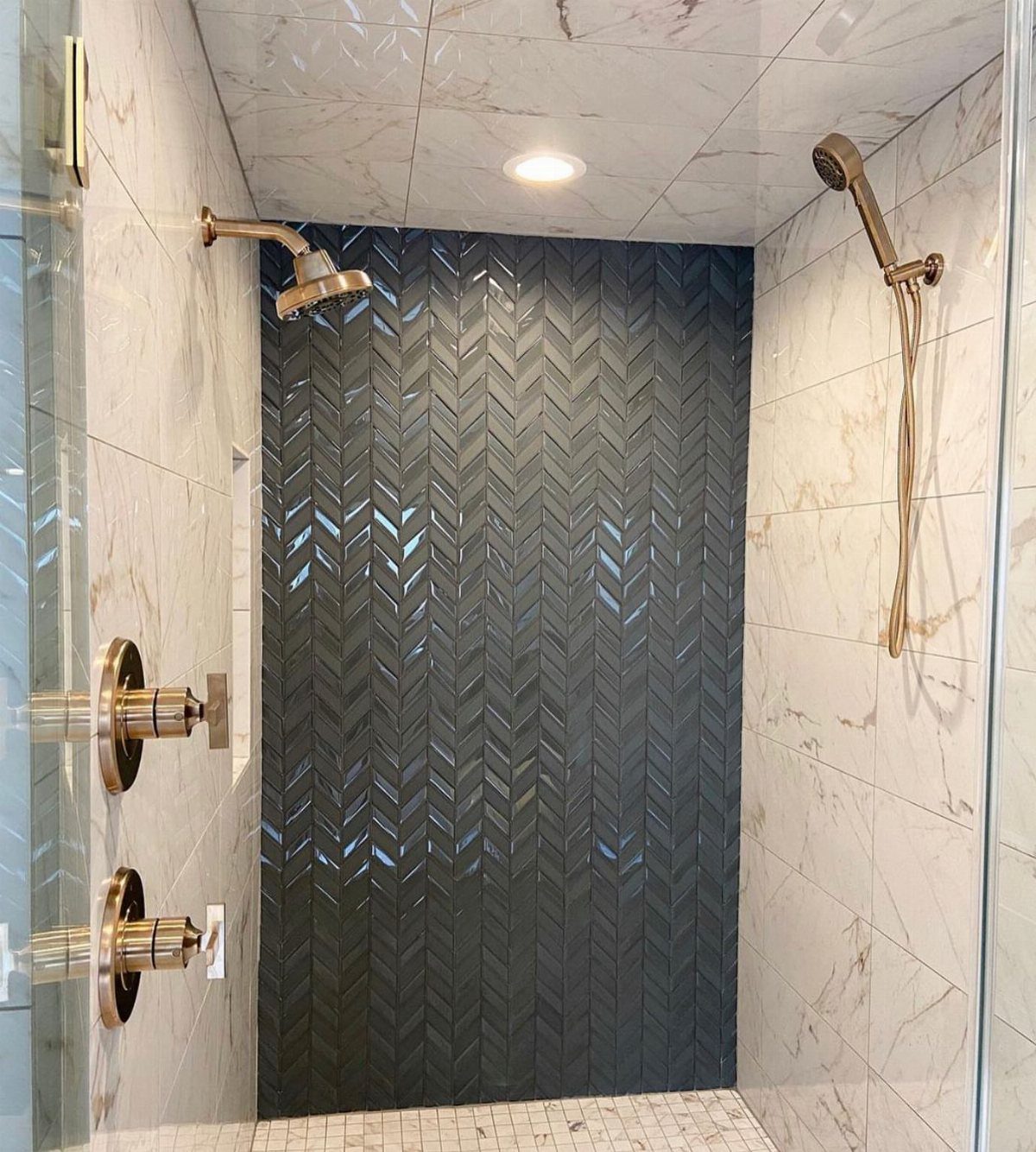
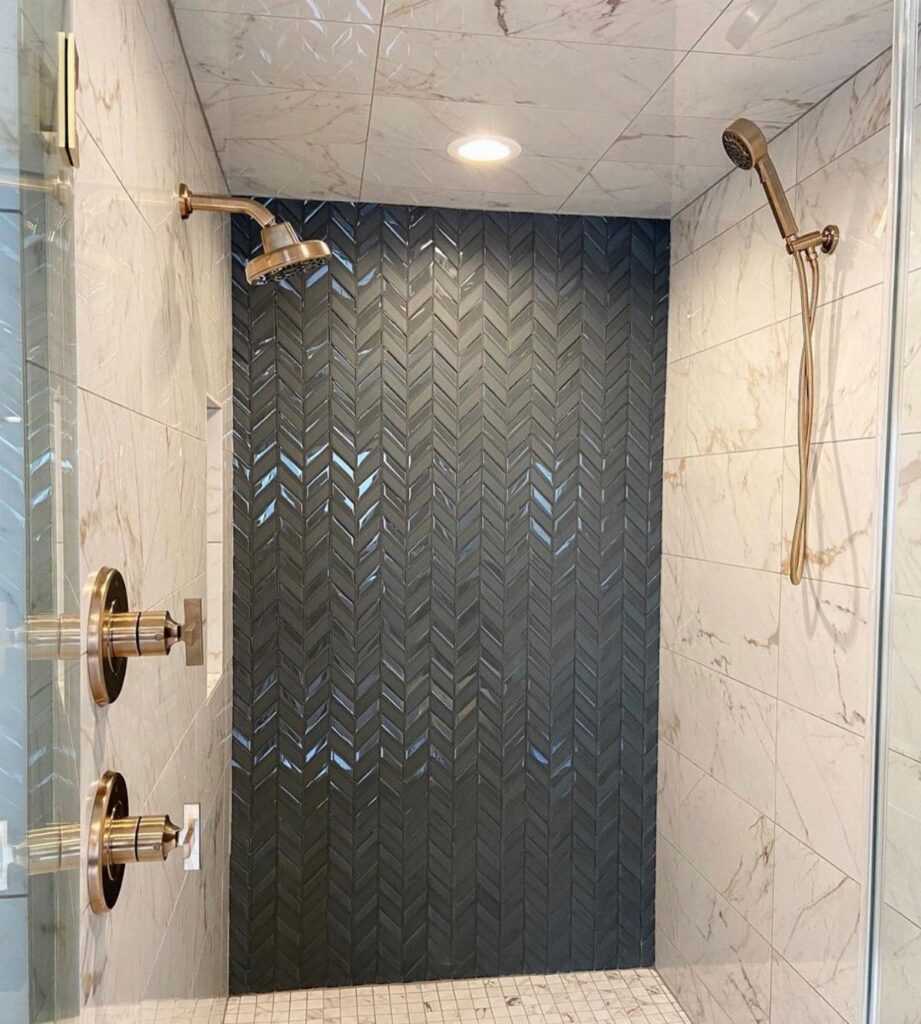
A mosaic accent wall lives on detail that reads as art up close and texture from across the room. Dark chevron glass catches light against calm marble; that contrast is the whole trick.
I would keep mosaic to one plane: the back of a shower, a vanity backsplash, a recessed niche. Covering every wall turns the effect into noise, and the grout lines multiply your cleaning.
The sheets install like any tile, though the mesh backing can sag on a vertical surface until the thinset grabs; a few spacers wedged behind the sheet while it sets saves the pattern from drifting.
Behind a pedestal sink or inside a shower bench niche, mosaic gives you a jewel-box moment for roughly the same labor as a plain field tile.
Skip it if your bathroom already has busy flooring or patterned wallpaper nearby; this idea needs quiet neighbors.
2. Marble Tiles
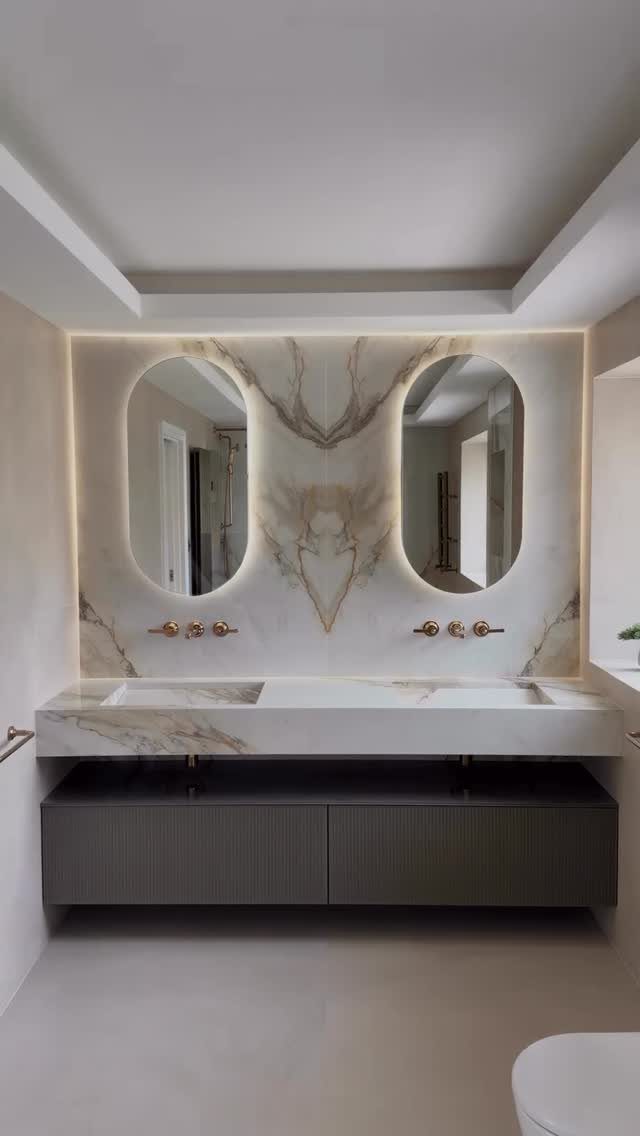
Marble reads expensive because it is, but porcelain that mimics veining has closed the gap enough that I have trouble telling them apart on a wall. Bookmatched slabs behind mirrors, lit like artwork, want a fabricator, not a weekend.
For a renter or a first timer, a single marble-look porcelain panel behind the tub or as a full shower back wall gives the luxe focal point without the sealing, etching, and replacement anxiety of real stone.
The porcelain cuts with a wet saw, sets with standard thinset, and never asks for resealing.
Real marble suits someone staying put and spending once. Porcelain suits the rest of us.
Either way, run it floor to ceiling; marble stopped at chair rail height looks like an afterthought.
3. Wood Look Tiles
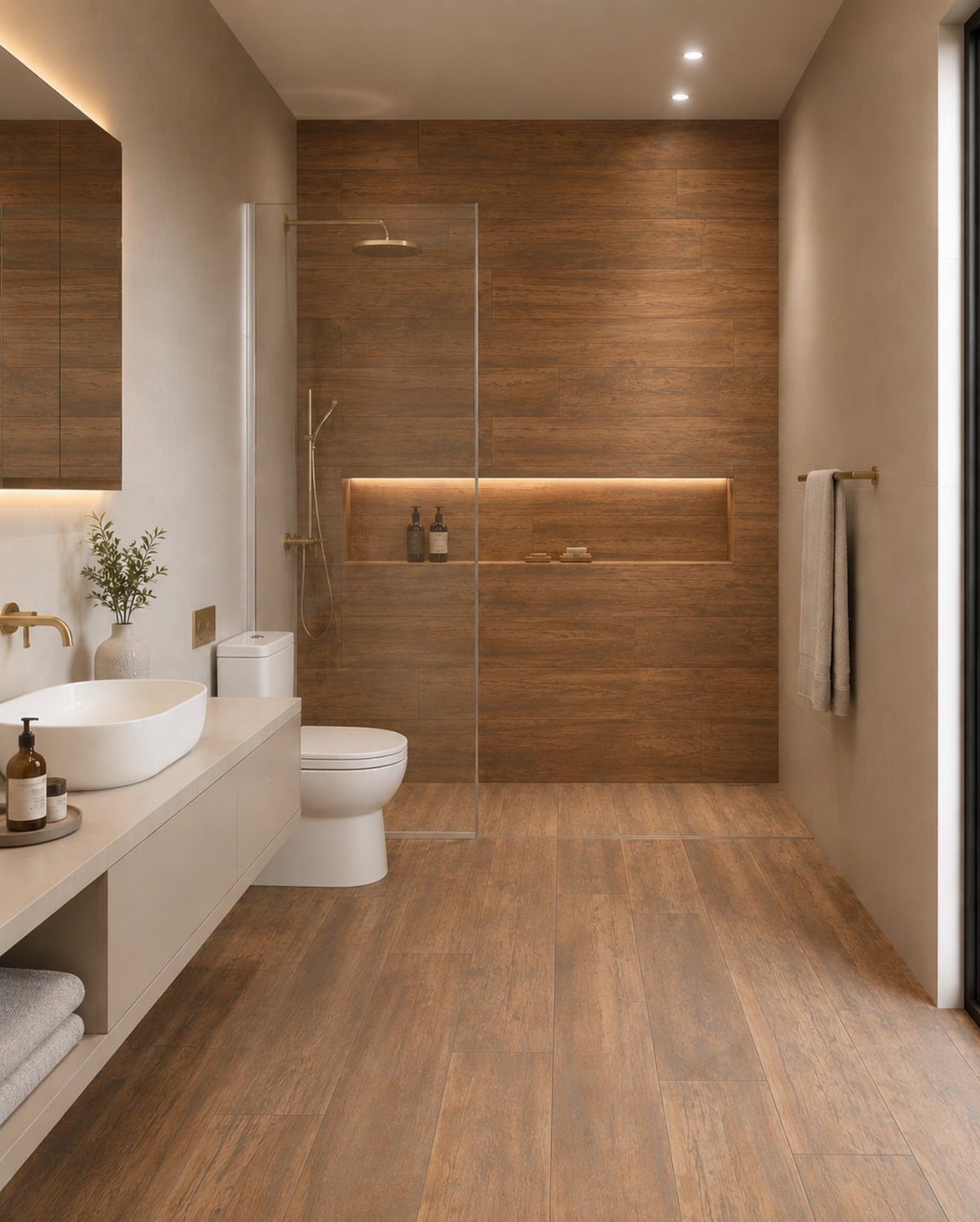
Wood-look tile on a bathroom wall sounds wrong until you see it: the grain breaks up the clinical white we all inherit, and the porcelain body laughs at humidity that would warp real boards in a season.
Running it up a shower back wall and across the floor turns the whole room into something warmer.
I like it best on one vertical plane rather than wrapping every surface.
Behind a freestanding tub, or as the back wall of a glass shower where the fixtures give you metal contrast, the tile reads as intentional rather than apologetic.
Installation is standard, but pay attention to grout color. Matching grout disappears and lets the planks read as wood; contrasting grout turns the look into tile playing dress-up.
Samples on the actual wall, lit by your actual window, settle that call fast.
4. Bold Wallpaper
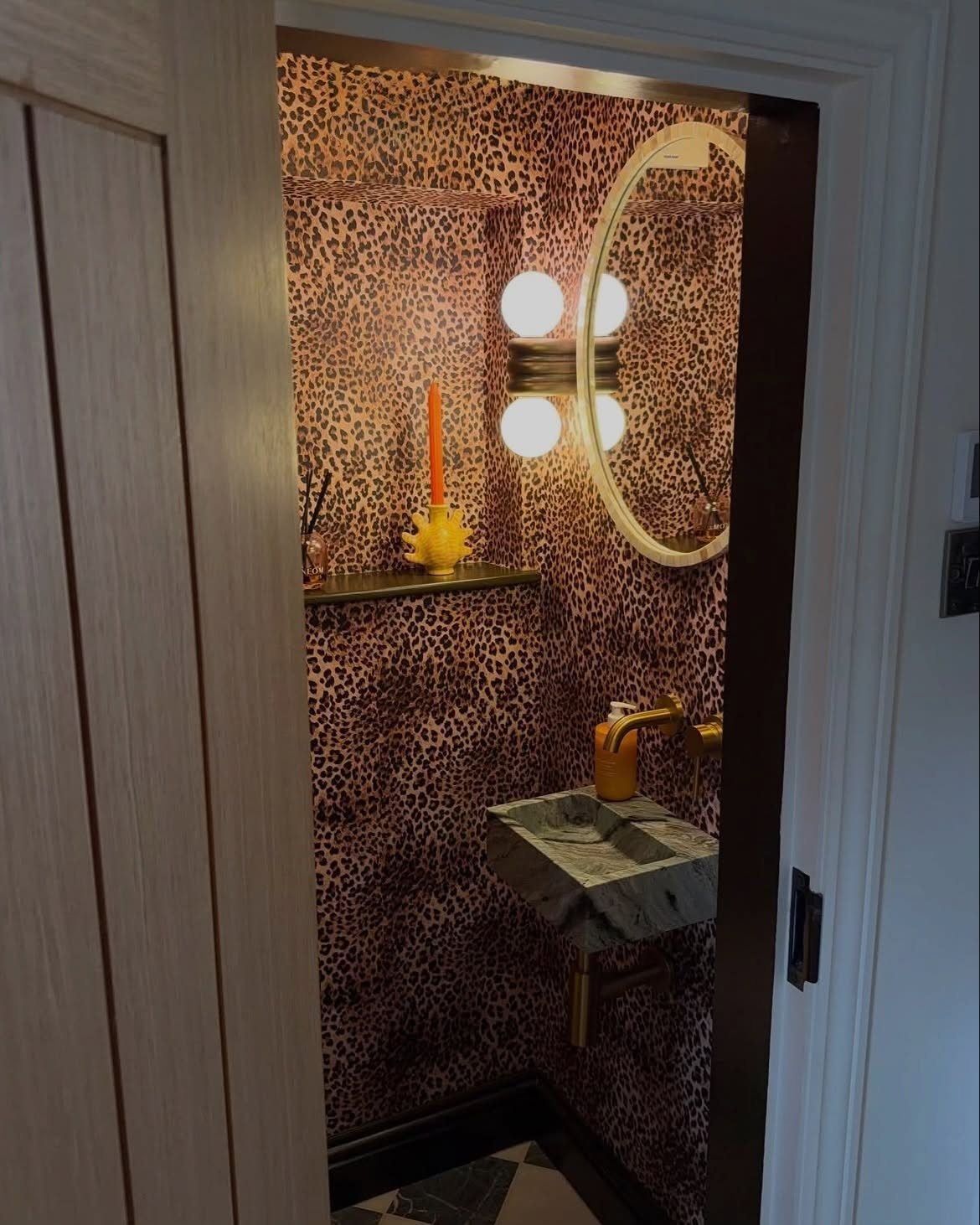
Wallpaper in a bathroom still feels risky to say out loud, but the current vinyl-coated and non-PVC options handle steam better than the peeling memories we grew up with.
A powder room is the safest test case. No shower steaming it daily, door usually closed, visitors in and out.
Botanical or geometric patterns work there; in a full bath, I would keep wallpaper to the wall opposite the shower or behind a vanity where splashing is minimal.
Removable papers exist now, and for a renter or a commitment-phobe that matters. Smooth the wall first, prime any texture, and accept that corners and outlets will show your patience or lack of it.
Pattern matching eats extra paper; order over your square footage and keep the receipt.
5. Vertical Stacked Rectangular Tiles
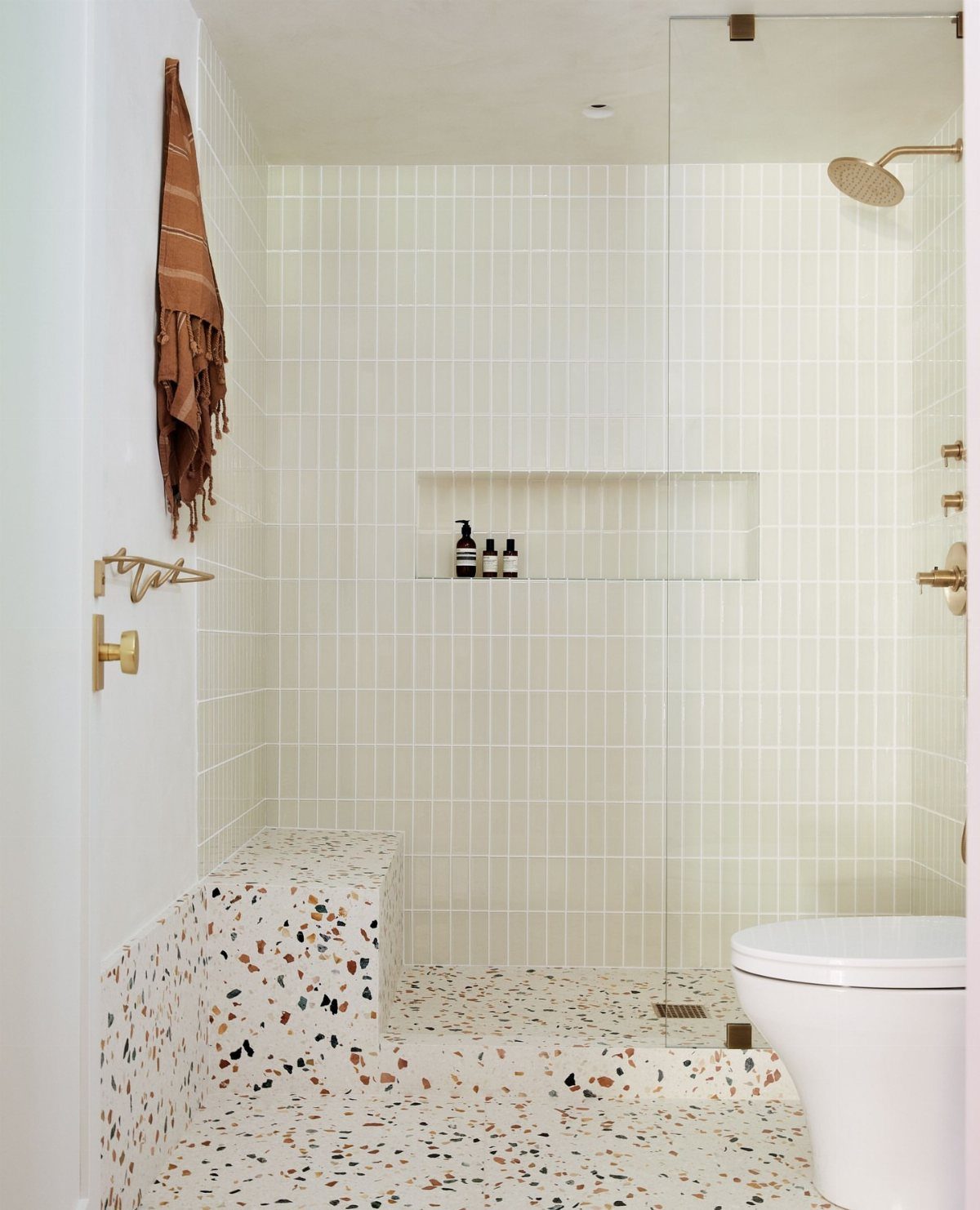
Vertical tile does something subtle to a room: the eye travels up without being told, and a standard ceiling reads taller. Off-white rectangles stacked without offset, clean as a gallery wall, with brass fixtures and terrazzo for company.
Stacked bond, not running bond, is what makes it. The lines stay continuous, the rhythm is architectural, and the look is more modern than subway tile by half.
Narrow vertical formats or large rectangles turned on end both work; the common thread is that upward grain.
I would use this anywhere the ceiling feels low: basement baths, attic conversions, any space where you want height more than width.
Grout matters less here than with mosaic, but a tone-on-tone choice keeps the wall reading as surface rather than grid. The installation is straightforward, though lippage control becomes visible fast on large tiles; a leveling system is worth the money.
6. Tile with Wood Accent Wall
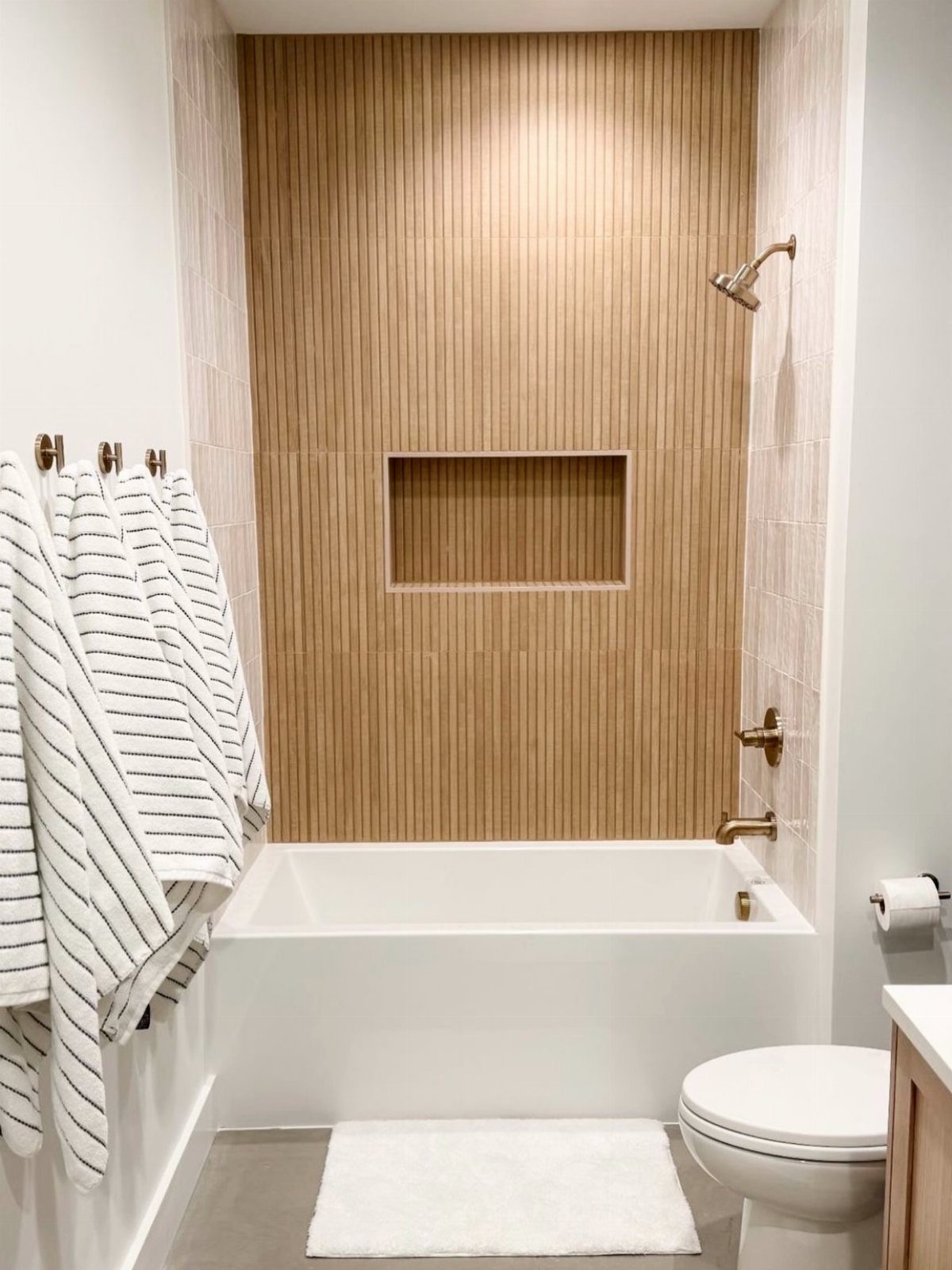
Mixing tile with wood on one wall gives you texture contrast that neither material achieves alone. Vertical wood-look slats behind a tub, flanked by quiet beige tile, with a recessed niche carved into the wood zone for shampoo and soap.
The practical version for a DIYer: one material as the field, the other as a framed insert. Tile the whole shower, then bring in a wood-look porcelain plank section behind the fixtures.
Or run real wood or a wood-look laminate on a wall outside the spray zone, with tile capping the wet areas. Stone with painted drywall, smooth with textured; the principle is the same.
This idea trades simplicity for interest. Two materials means two suppliers, two delivery dates, and a joint line that has to meet precisely.
I would not attempt it as my first tile project. For a second or third, though, it breaks the formula of one-wall-one-material in a way that reads as designed, not decorated.
7. Antique Mirror Tiles
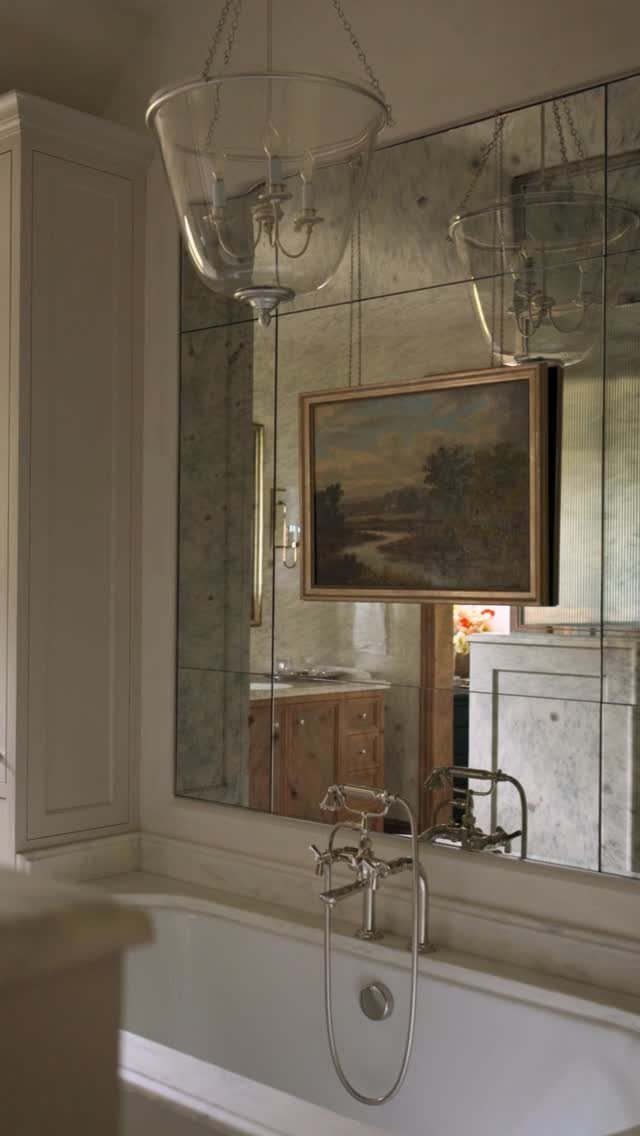
Antique mirror tiles turn a bathroom wall into something that feels found rather than installed. The mottled, aged surface catches light without throwing back a clear reflection, so you get atmosphere instead of vanity-mirror glare.
Plain fixtures and one good pendant are enough; the wall carries the whole mood. These tiles work on one wall only; wrap the room and you risk a funhouse effect.
Check that your wall can handle the weight, and ask your supplier whether the backing is suitable for humid air before you order.
For a small powder room where you want impact on a Saturday install, this is the move I’d make.
8. Zellige Tiles
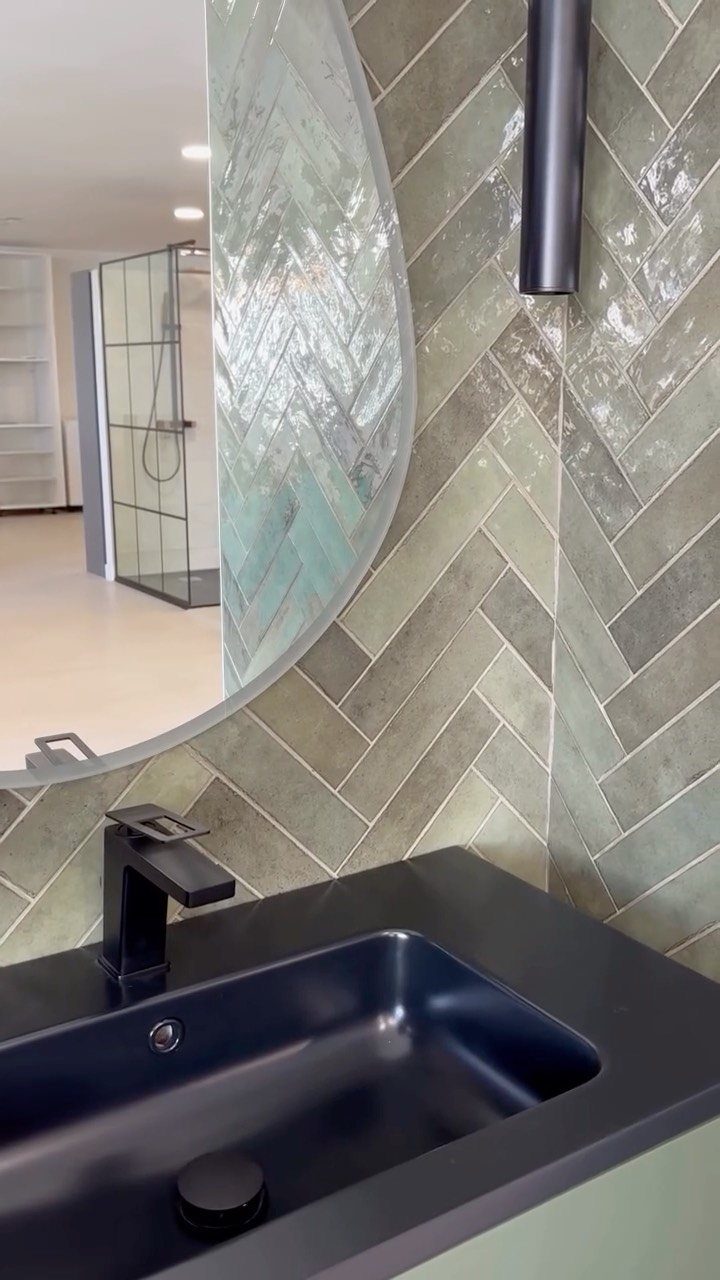
Zellige tiles carry the slight unevenness of hand-cut glaze, and that variation is what makes them. Green herringbone reads as one color from across the room, then breaks into individual pieces as you move closer.
The gloss catches light differently across each tile, so your wall changes through the day. That makes them forgiving of imperfect walls; the surface disguises small bumps that would telegraph through flat ceramic.
Budget extra time for layout. The color shifts enough tile to tile that you will want to shuffle pieces before setting them.
I would sort by shade and distribute the darkest and lightest evenly rather than trusting randomness.
9. Black and White Tiles
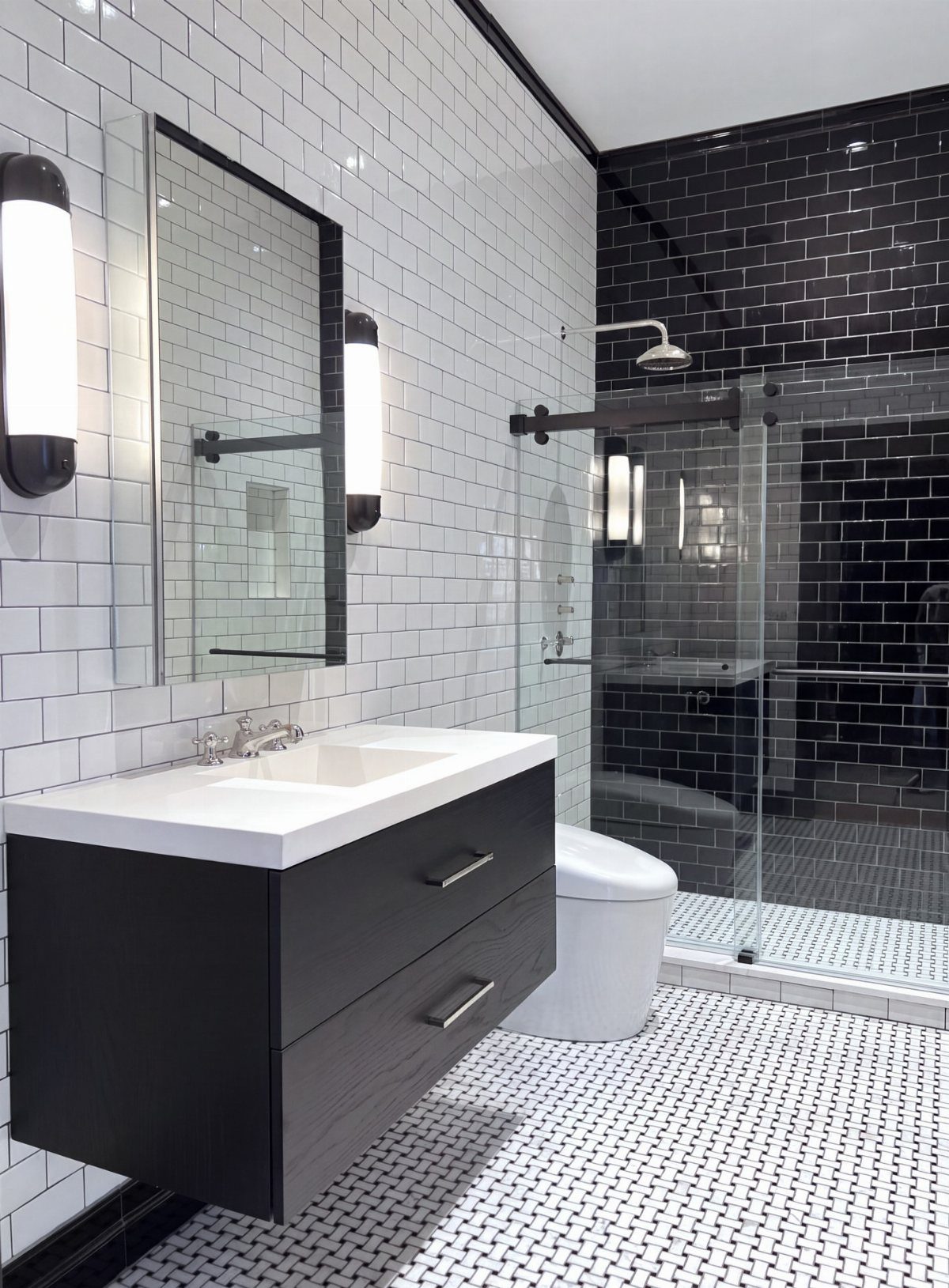
Black and white tile relies on contrast rather than color, which means it stays readable under yellow bathroom lighting that muddies everything else.
White subway tile on the main wall and black in the shower is one way to split them; reversing it, a checkerboard, or vertical stripes all work.
The pattern you choose changes the feel more than the colors do. Horizontal bands widen a narrow room; vertical stacks draw the eye up; checkerboard reads as deliberate and slightly retro.
Grout color matters here: white grout on white tile disappears, while dark grout on either color turns the grid into part of the design.
10. Natural Stone
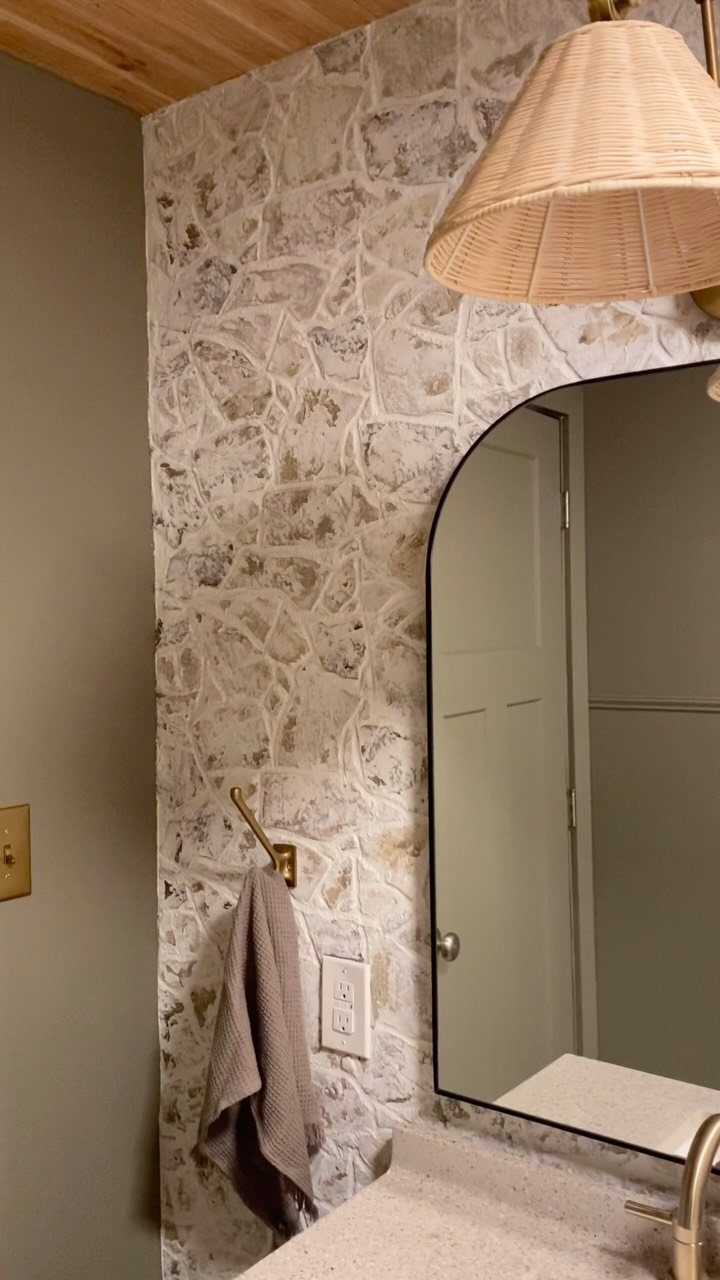
Natural stone carries the irregularity of quarried material; no two pieces match, which is why you pay for it. Light stone with heavy grout lines gives a stacked-fieldstone look rather than slick slab.
Marble, travertine, and slate each handle moisture differently. Travertine is porous enough to need sealing; slate can flake if the wrong grade gets wet repeatedly.
Stone-look porcelain solves both problems and cuts the price, though the texture is printed, not real.
I would use actual stone only where I could touch it: a wall behind the vanity, not across from the shower where soap spray hits daily.
11. Tile Accent Wall Behind Bathtub
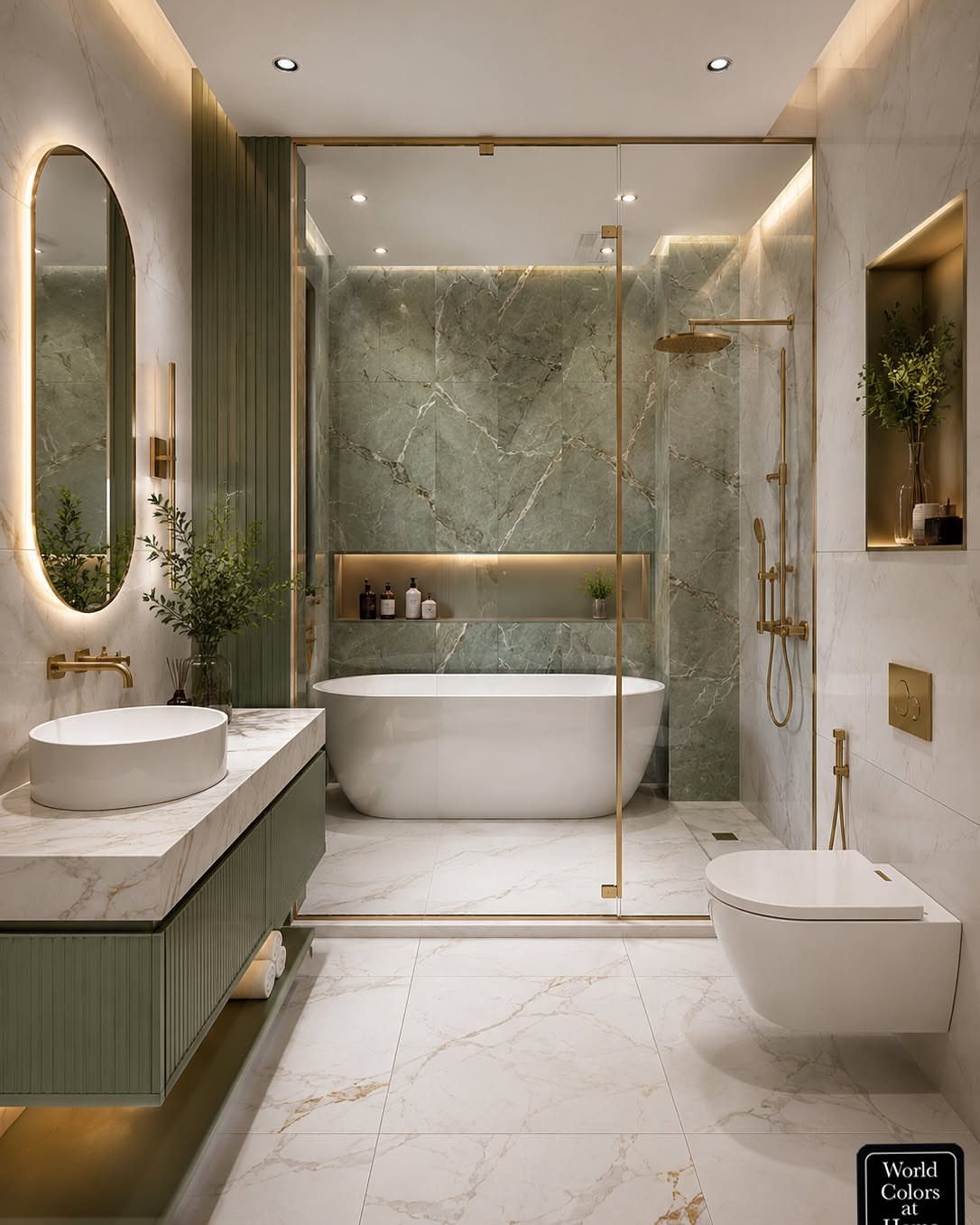
A freestanding tub against a blank wall looks like it landed there by accident. Running tile or stone floor-to-ceiling behind it fixes that, turning the tub into an intentional moment.
Green marble running inside the shower enclosure lets the wet area and tub share one visual anchor. You can get the same effect with large-format porcelain; the fewer the grout lines, the more continuous the read.
Check your floor structure before you commit to real stone; a full wall of marble adds serious weight.
I would light this wall if I could. A recessed fixture above the tub turns the tile into something you see even with the bathroom door open.
12. Onyx Walls
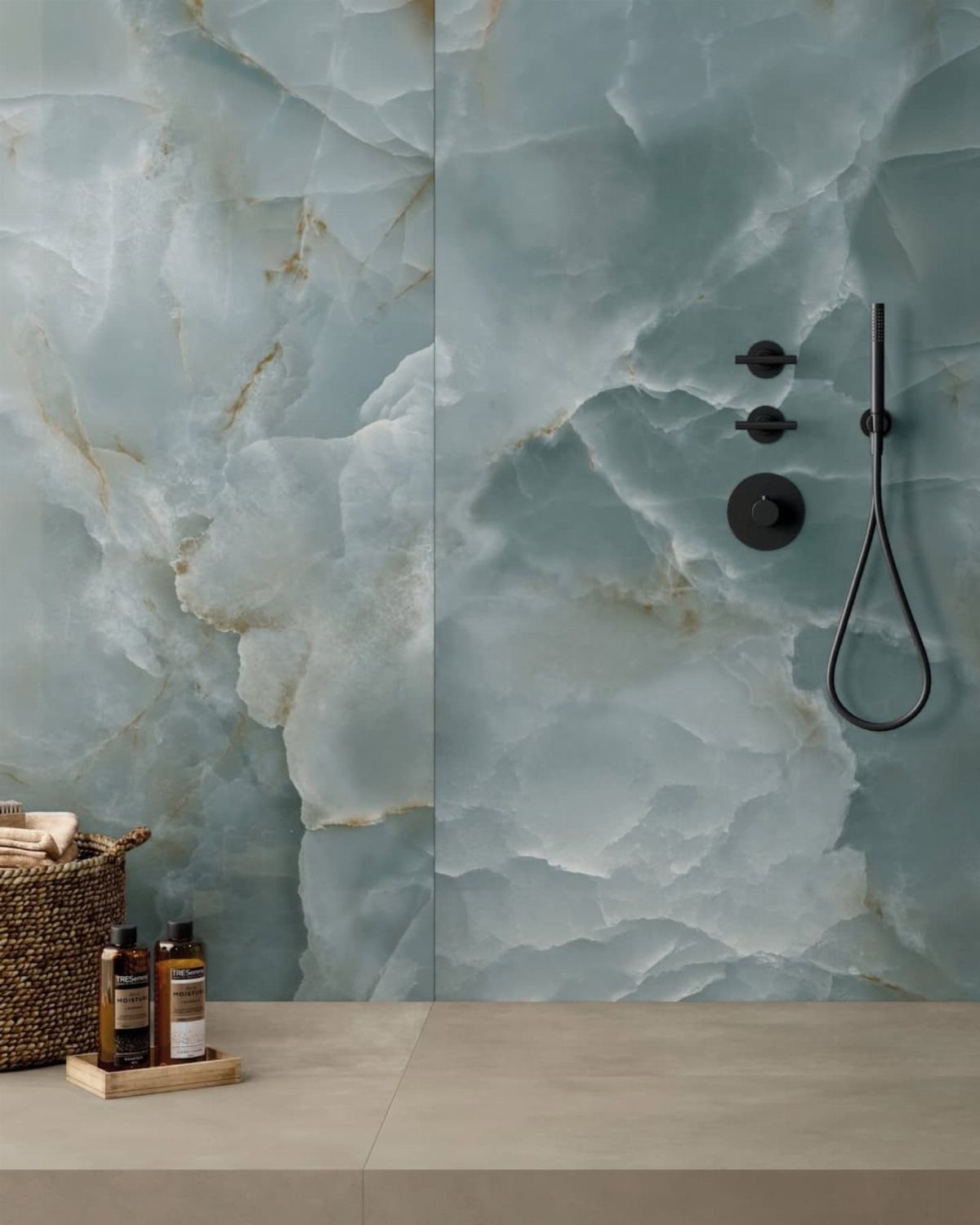
Onyx is translucent; hold a strong light behind it and the stone glows. That rarity comes with fragility.
Pale blue-green with gold veining reads as luxury because it is: onyx costs more than marble, scratches easier, and demands professional sealing.
Most onyx installs use slabs, not tiles, which means fewer seams but harder replacement if something cracks. The wall behind the shower fixtures is the right use; you look, you do not lean or set things down.
I would consider onyx only for a powder room or a master bath where the wall stays visible and untouched. For a kids’ bath or a rental, the stone-look porcelain from earlier entries is the smarter money.
13. Colored Tiles
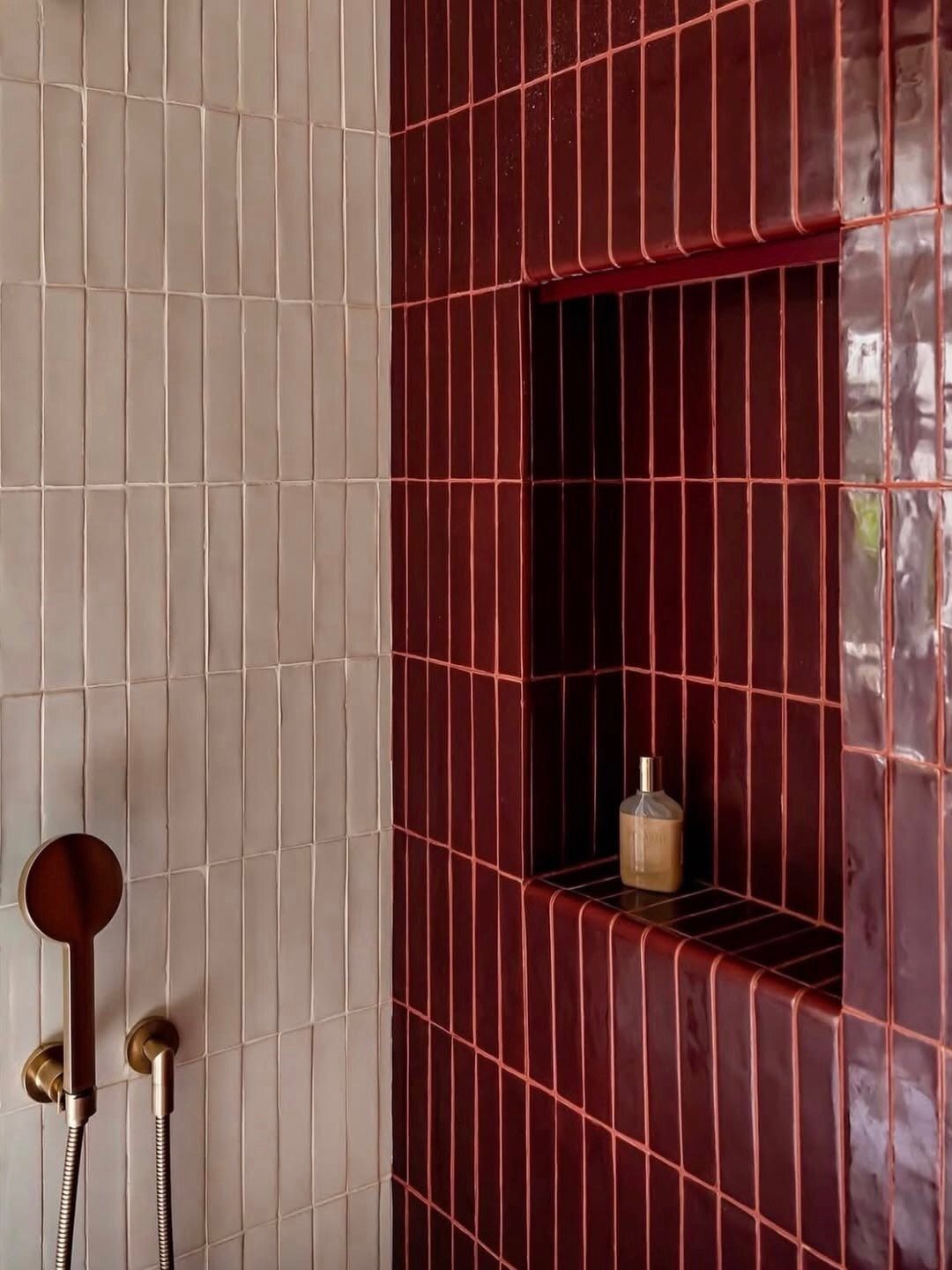
A single wall of burgundy subway tiles turns a white shower into something you actually notice.
I like this move for renters or first-home owners because one wall of color costs far less than full coverage would, and you still get the impact.
Glossy ceramic catches light differently than matte, so hold samples up where your actual bulbs hit them. Fireclay’s brick shapes come in colors like Appalachian if you want that same saturated look with more texture.
Terrazzo is another route if you prefer speckled color over solid blocks, though that reads more retro than bold.
This works best when the colored wall faces the door, so it hits you walking in. Keep fixtures and towels neutral; the tile is doing the work.
14. Wood Slat Accent Wall
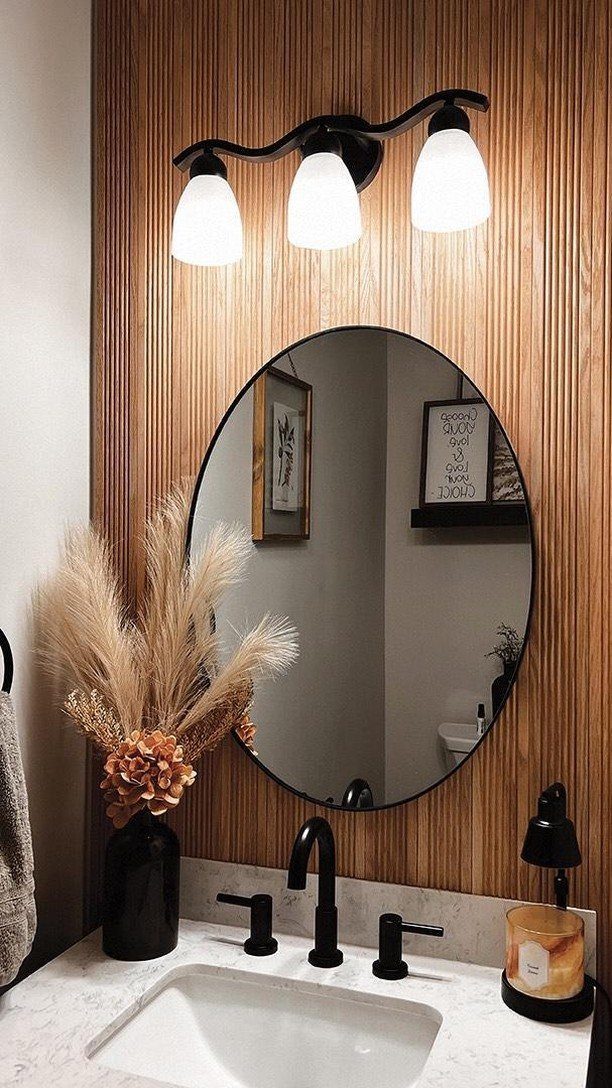
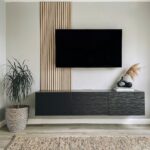
Vertical slats behind a vanity add warmth without the moisture risk of actual wood in a bathroom. Prefab slat panels screw right to studs through the gaps, so the even spacing looks harder than it is.
I priced real individual slats once for a full wall and the material alone ran past what I was willing to spend. The panel route costs a fraction of that and you are done in an afternoon.
Wood-look tile is the alternative if your bathroom sees serious steam; it gives the same vertical lines with zero swelling.
Black fixtures and a round mirror pair well because the slat texture already provides interest. Too many competing shapes and the wall starts to look busy.
15. Exposed Brick Accent Wall
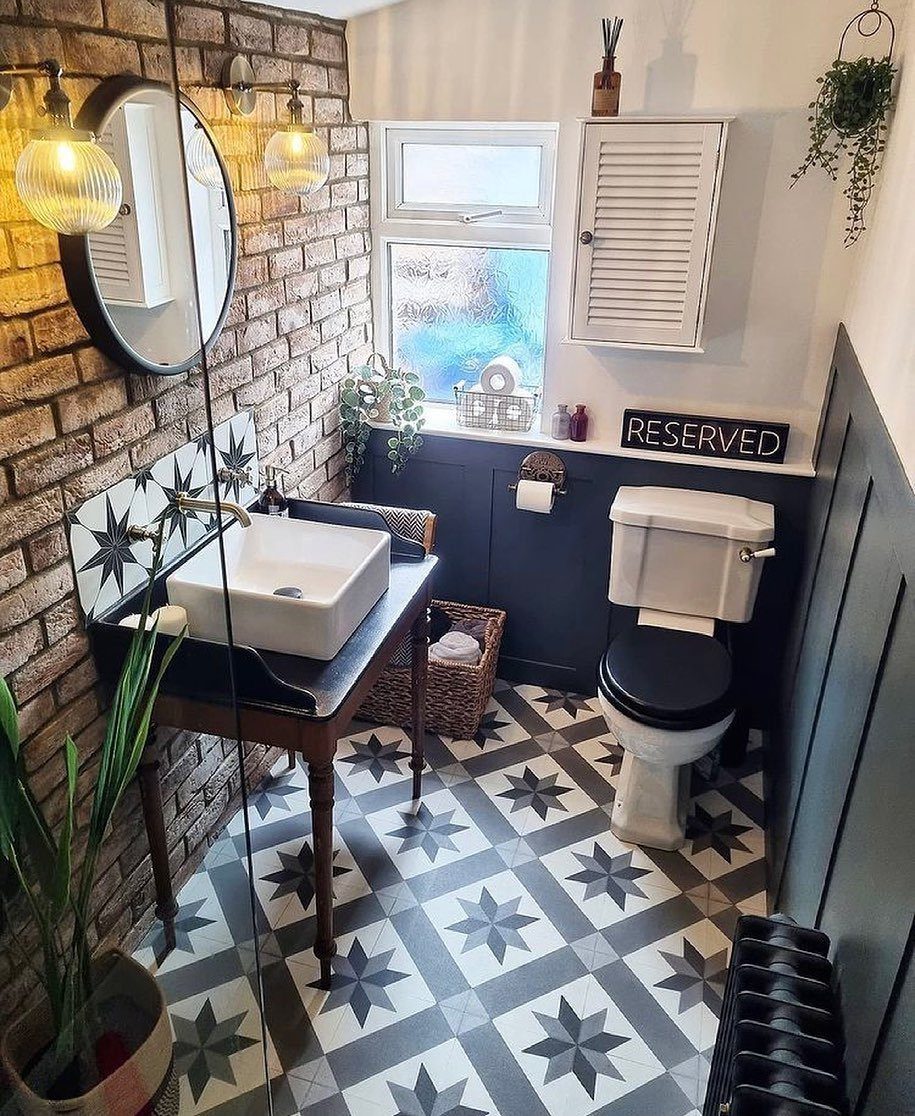
Real exposed brick in a bathroom is rare for good reason: old brick is porous, crumbles under moisture, and costs a fortune to seal properly. The wall is almost certainly brick tile, which is what I would use.
Thin brick tile weighs about 85% less than traditional glazed brick and cuts install time to a weekend. You grout it like any tile but the face stays textured, so the result reads as historic rather than ceramic.
Appalachian from Fireclay is one line that carries the irregular color variation actual brick has.
This suits small bathrooms especially because the texture adds depth without eating space.
Patterned floor tiles work with it if you keep the palette restrained; the photo’s grey and white star pattern holds together because the brick stays in one warm tone.
16. Elongated Hexagon Tile Wall
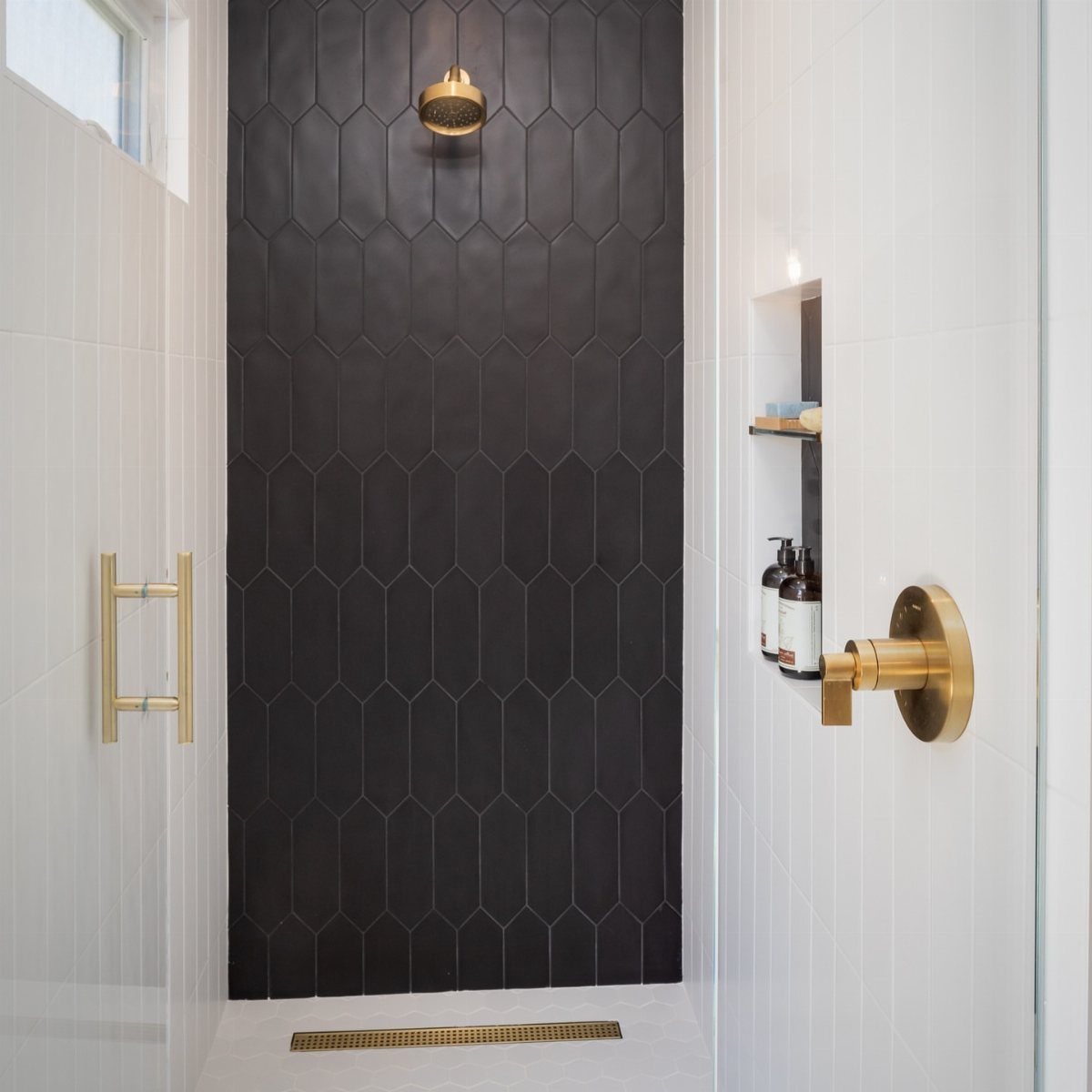
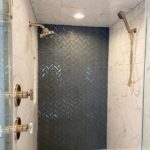
Elongated hexagons stretch the familiar honeycomb shape vertically, which draws the eye up in a shower that might otherwise feel like a box. The black ones here read almost as slate until the gold fixtures catch against them.
These come in ceramic, porcelain, glass, or stone depending on your budget and your wall’s structure. A large-format white hexagon on surrounding walls, like the 8×9 matte porcelain Apollo Tile lists, keeps the contrast clean without fighting the accent.
I would not mix multiple hexagon sizes; pick one scale and let the color do the variation.
Dark grout with dark tile is nearly forgiving of install imperfections, which matters if this is your first tile job. Light grout on black hexagons shows every waver.
Choosing the Right Wall
The wall you see first from the doorway is usually the right one. In a small bathroom, that first impression may be your only chance at a focal point.
Behind the vanity is the safest bet. The mirror, the counter, and the fixtures already pull the eye there, so a contrasting material reads as intentional reinforcement rather than decoration for its own sake.
Tile, wallpaper, or something with texture each has its place depending on the wall and the budget.
The back wall inside a shower can handle the pattern while everything around it stays plain; just confirm whatever you pick carries a wet-area rating before you buy.
If you have several features competing, pick the one you want to notice. One accent wall is enough.
Zhuzh up your walls with some chic decor. The sky’s the limit when it comes to sprucing up your bathroom walls.
Moisture Considerations
Not every material that looks good on a sample board survives a bathroom. Humidity is the test, and steam finds the gaps you forgot to check.
Tile rated for wet areas will say so on the specification sheet. That rating means it resists moisture damage, not merely tolerates water.
If the sheet does not mention it, ask before you buy.
Vinyl-coated and non-PVC papers stand up to humidity without releasing fumes, and peelable versions are available now for renters who want to pack up the pattern when they leave.
Paint needs the right sheen and proper prep. Flat paint in a full bath is asking for mildew; eggshell or higher, with a moisture-resistant primer underneath, is the minimum.
Mixing Materials
Mixing materials on one wall adds depth that a single surface cannot reach. Matte stone against glossy glass, or metal tile alongside ceramic, creates contrast that reads as designed rather than accumulated.
Thickness is what complicates mixing materials. A glass mosaic and a quarried stone tile rarely share the same depth, and that difference telegraphs through grout lines and shadow.
Check the actual dimensions before you order, not the nominal sizes, and plan the transition so the finished plane stays even.
To keep the mix from looking random, repeat something from the accent wall elsewhere in the room. The brass finish from a metal tile might reappear on the faucet.
A stone tone could show up in the floor. One shared element ties the wall to the rest of the space so the combination reads as intentional.
I would not mix more than two materials on a single wall. Three starts to look like you could not decide.
Accent Wall Mistakes to Avoid
Bold tile, a patterned floor, a colorful vanity, and elaborate fixtures do not add up to interest; they cancel each other out into noise. Pick one or two statements and let the rest support.
Small patterns stretched across a large wall turn restless, and oversized patterns in a tight bathroom swallow the room. Hold the sample up in the actual room, not the store, and step back to the doorway to gauge scale.
Lighting changes everything. The same tile that reads warm under a pendant turns flat under recessed cans.
Test your actual bulbs against the material before you commit.
Trends pass. Pick something you can stand past this year’s mood, especially for tile, since tearing it out costs serious money.
The wall directly in your line of sight from the door is the default choice when nothing else argues for attention. If you are unsure, start there.
Frequently Asked Questions
Which wall should be the accent wall in a bathroom?
The wall you see first when you walk in, or the one your tub or vanity sits against, usually earns the accent. These spots already pull the eye, so the accent reads as intentional rather than random.
A freestanding tub floating against bare drywall looks forgotten; running tile from floor to ceiling behind it gives the whole setup a reason to be there.
Are accent walls outdated in 2026?
No. In bathrooms especially, one accent wall still works because the small space turns a single bold choice into a contained statement rather than a scattered one.
New materials like large-format porcelain, zellige, and improved vinyl wallpaper keep the idea fresh.
What are 2026 bathroom trends?
Large-format tile, natural stone and stone-look porcelain, bold patterns, textured surfaces, and carefully chosen wallpaper.
Vertical stacked rectangular tiles draw the eye up to make low ceilings read taller, and black tile with brass fixtures has stuck around for good reason.
What makes a bathroom look tacky according to designers?
A bathroom starts to feel cheap when nothing gets to rest: a loud wall, busy floor, bright vanity, and ornate fixtures all demanding the eye at once.
Ignoring moisture limits is another fast route to regret, like real wood where steam hits daily or unsealed stone across from the shower.