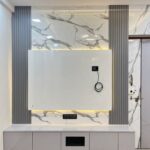
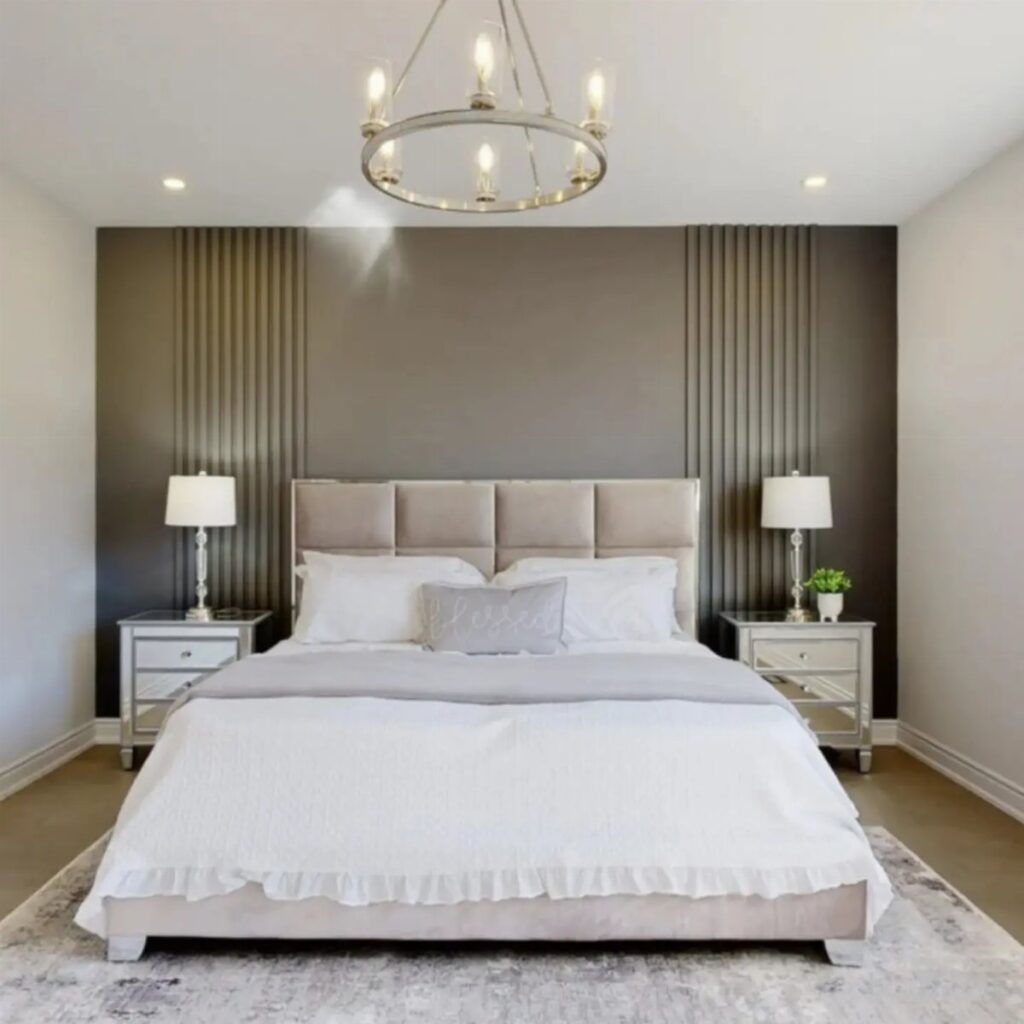
These 10 ideas run from $20 in paint to a full weekend with power tools, and the one that fits depends on whether you need to peel it off when the lease ends or nail it in for good.
Renters will live inside the same peel-and-stick options that homeowners can glue or staple permanently.
A hand-painted floral mural, for instance, finishes in an afternoon for under $20, while diagonal wooden battens demand a miter saw and more time than I had that weekend.
[link-whisper-related-posts]1. Wall Mural
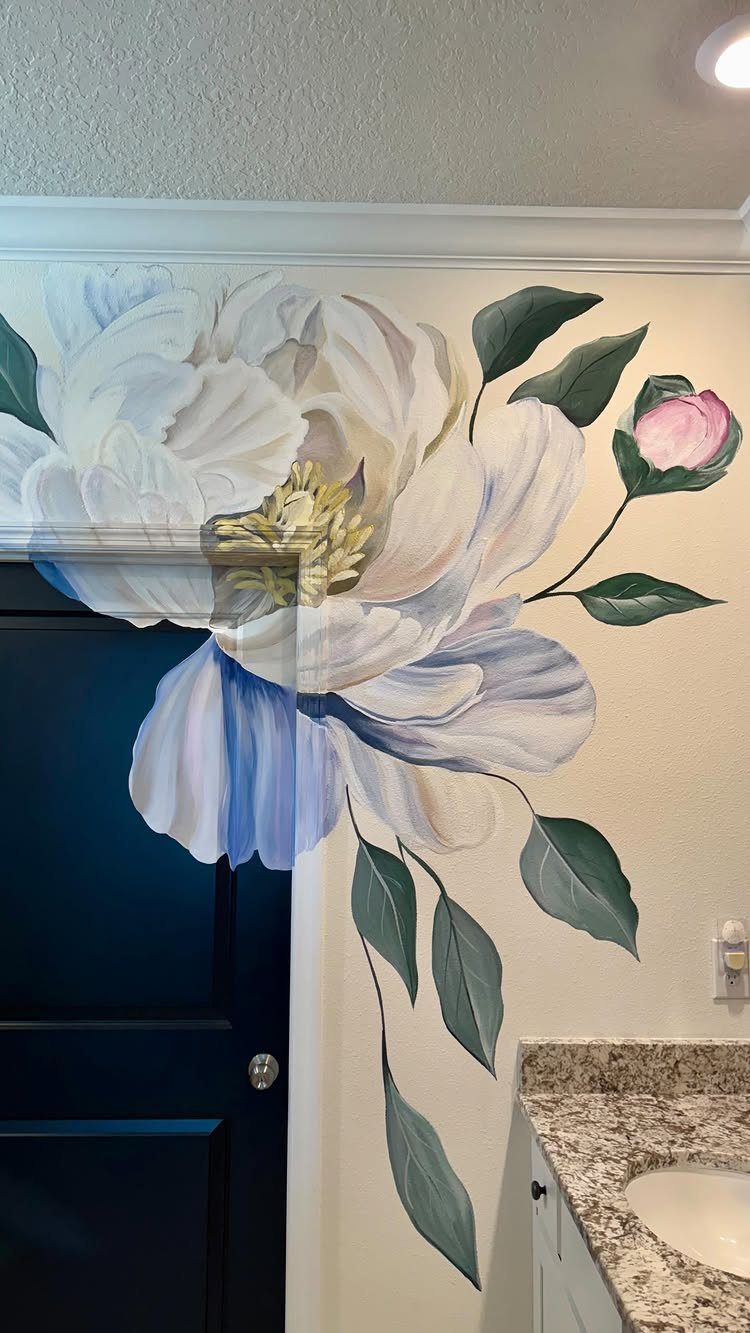
A hand-painted floral mural turns a plain white wall into something you’d pay to see in a boutique hotel.
Black acrylic paint and an angled brush are enough if your hand stays steady for a sweeping peony or linear design that crosses a doorway corner and keeps going. The whole thing runs under $20 and finishes in an afternoon.
Artists who want color can build from there; renters who can’t draw have options like large peel-and-stick decals that mimic the same look without the commitment.
I’d only attempt freehand in a bathroom or bedroom where the light stays soft and flaws read as texture. A living room with direct afternoon sun shows every wobble.
2. Door Trim/Molding Accent Wall
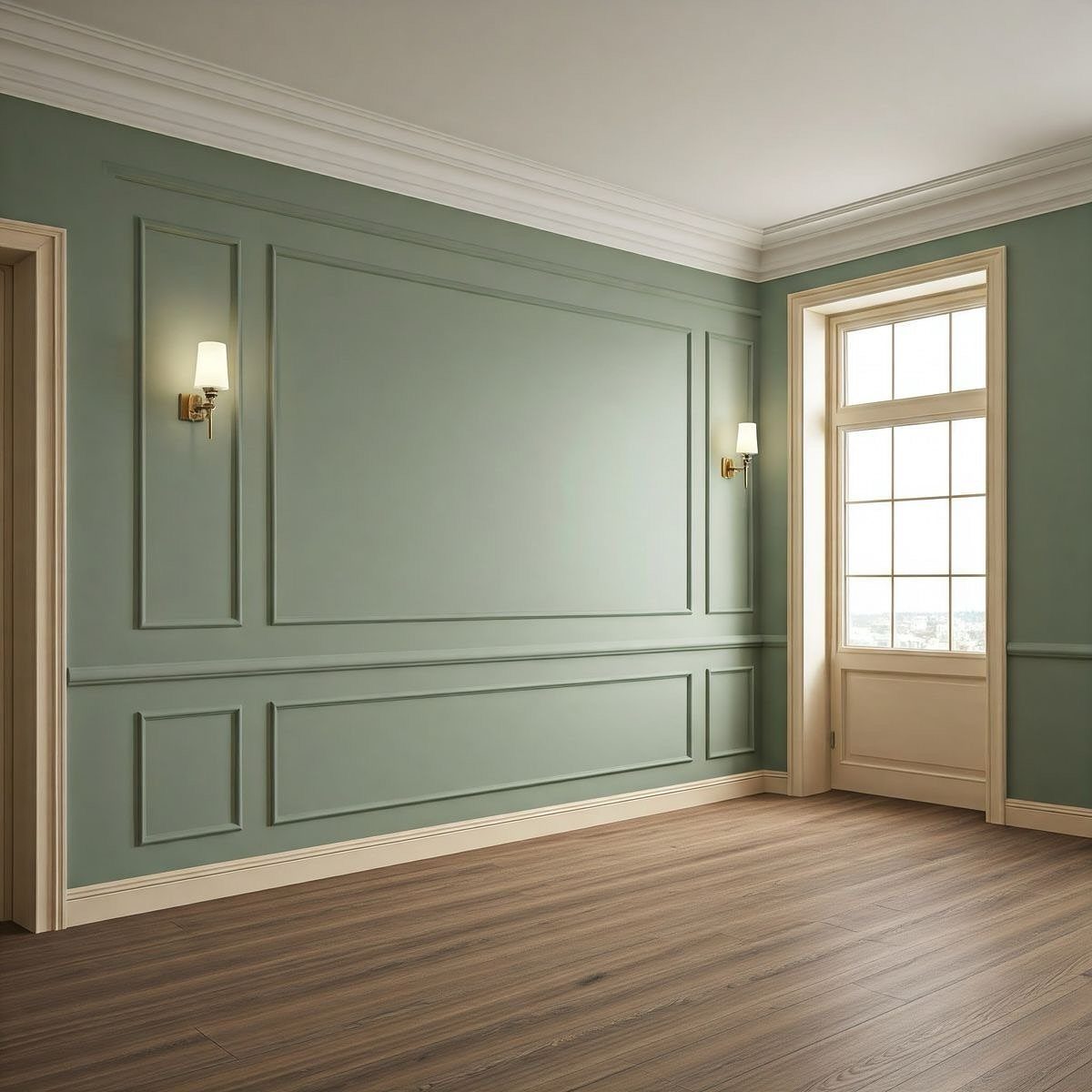
Leftover door trim from another project becomes the bones of a wainscoting-style wall without the wainscoting price. Two simple boxes behind a headboard, cut to match and glued or nailed in place, add shadow lines that read as permanent architecture.
Pre-cut plastic panels or flexible peel-and-stick strips work if you rent and need to pull it down later; construction adhesive or a nail gun makes it durable if you own.
Either way, budget $20–$30 and a few hours, then add plug-in sconces if the wall still feels flat afterward.
Painting the boxes to match the wall later keeps the look current. Painting them in a contrasting tone doubles the visual weight, which smaller rooms don’t always need.
3. Bold Geometric Patterns
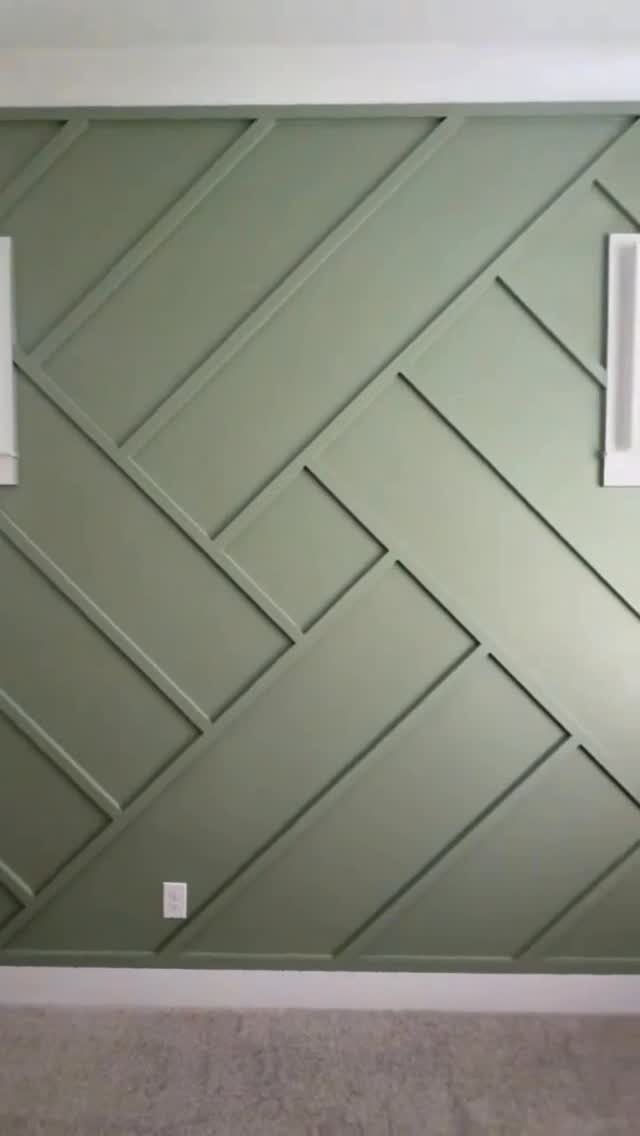
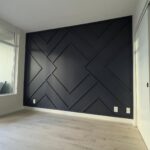
Thin wooden battens laid in diagonal, intersecting lines turn a solid-colored wall into a sculpture that catches morning and evening light differently. The sage green version reads calm; a darker base with natural wood battens reads more cabin, less cottage.
Angular shapes work best when you map them on paper first, since "geometric" fails fast if the spacing wanders.
A monochromatic scheme, where battens and wall share one color family, keeps the effect architectural rather than decorative; contrasting colors push it toward statement.
This one eats a weekend and a miter saw. I’d save it for a room that already has plain furniture and no competing patterns, because the wall becomes the pattern.
4. Patterned Wallpaper Accent Wall
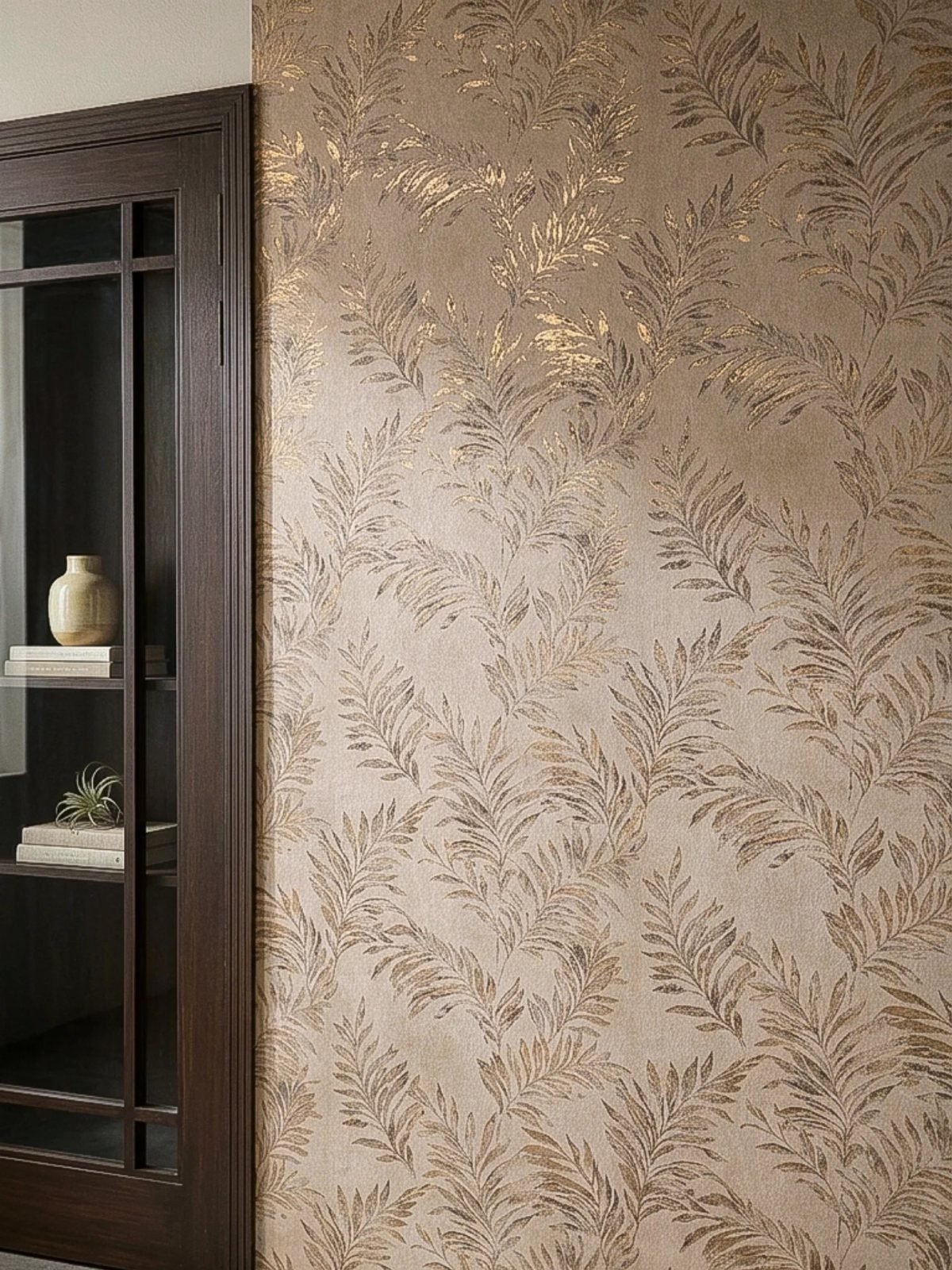
Peel-and-stick wallpaper on a single wall gives you permission to choose something louder than you’d risk across a whole room.
Metallic gold leaf on a textured beige ground, like what sits above, reads expensive at 40 cents to $1.50 per square foot because the light does the work.
Floral, geometric, wood grain, or retro prints all arrive in the same format: roll it out, smooth it down, peel it back up if the seam drifts.
No tools required, though a smoothing kit helps at corners and ceiling lines where air pockets collect.
One wall keeps the cost sane and the effect intentional. Two walls of competing pattern turns a bedroom into a headache.
5. Painted Boho Accent Arch
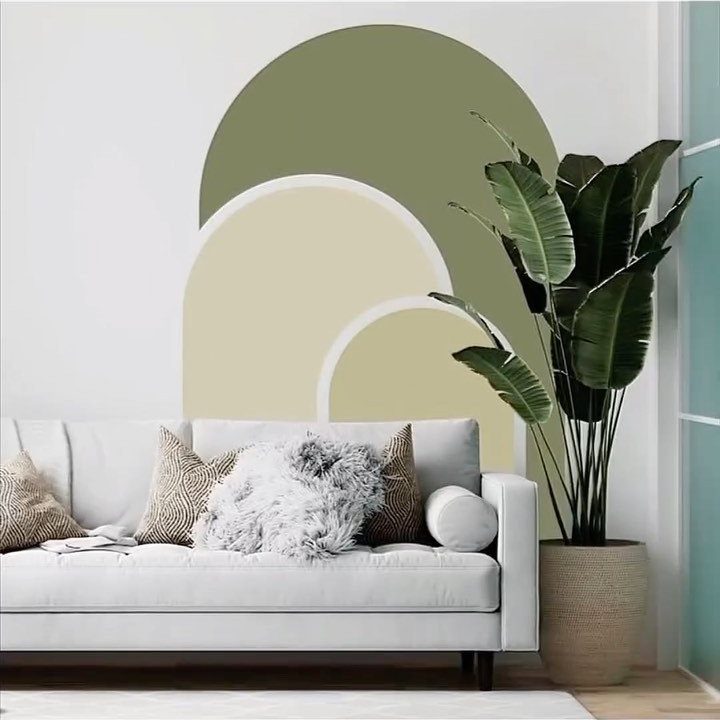
Overlapping arches in olive green and beige, painted directly onto existing white, add bohemian structure without the bohemian clutter of hanging textiles.
The shape creates a visual headboard behind a sofa or bed, so you gain the effect of furniture backing without losing floor space.
One latex paint in a soft color does it; two colors, overlapping, give you depth that reads as intentional rather than tentative.
You can paint over your current wall color without priming if it’s already flat or eggshell, though a contrasting base wall underneath the arches pushes the shape forward harder.
Freehanding curves rewards practice. Decals in the same arch shape exist for those of us whose curves wobble.
6. Ombré Wall
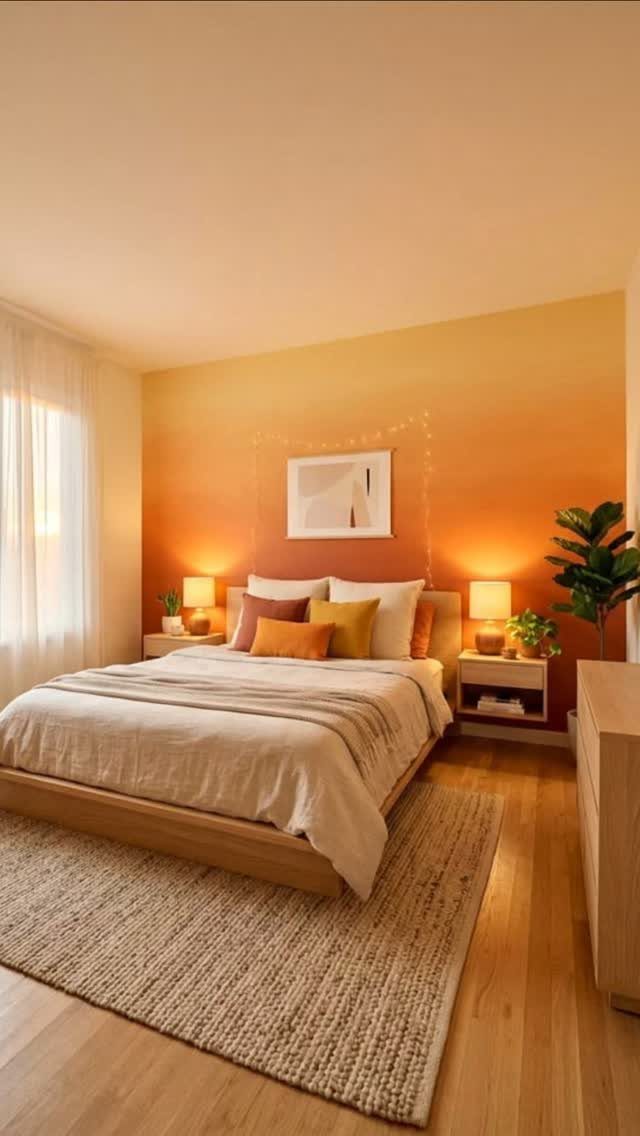
A gradient wall, warm peach settling into deep orange from ceiling to floor, replaces a headboard with something that seems to glow after dark.
Two to five colors and multiple rollers, one per color, let you blend wet edges before they set; latex with primer mixed in covers in fewer passes.
Freestyling the transition works if your eye is reliable; pencil marks at height intervals keep it even. Budget about $30 per color and buy more than a quart, since going back for another gallon mid-blend ruins the continuity.
This one demands time more than skill. I’d pick it for a bedroom where the lamps stay low, because the effect compresses in bright light and the money shows better in shadow.
7. Beadboard Accent Wall
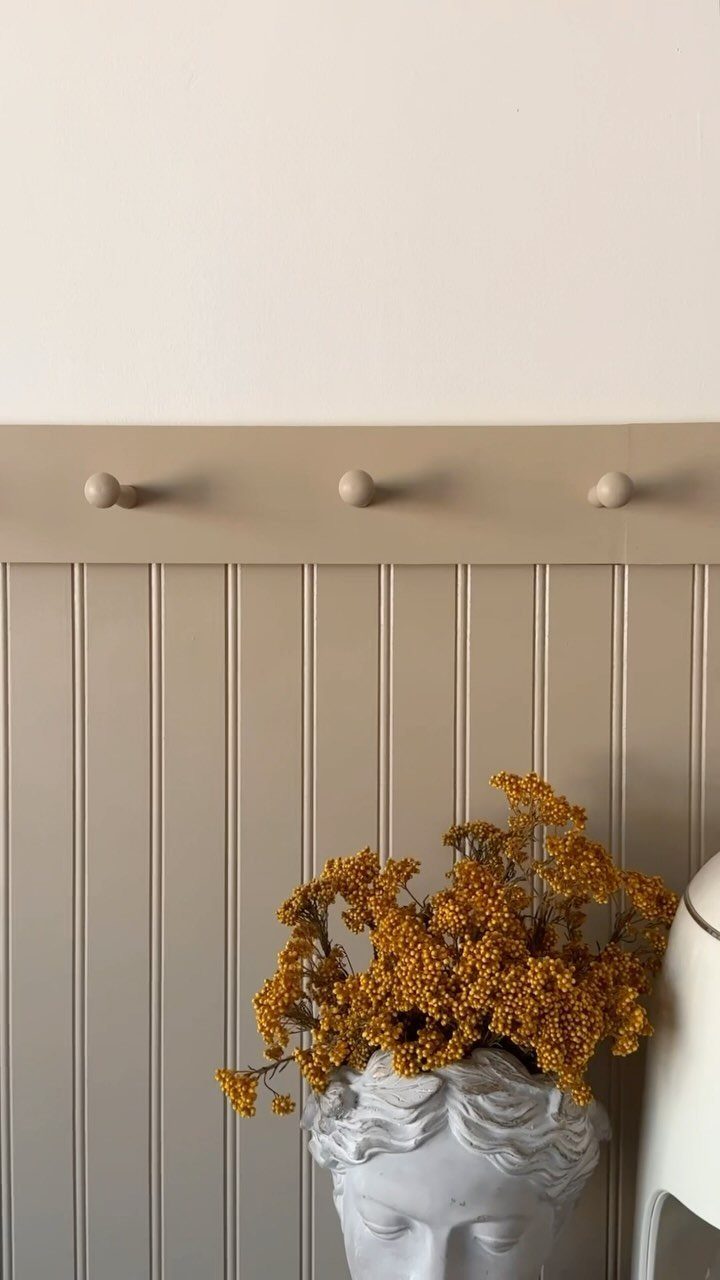
Beadboard runs about $20 to $30 in panels and trim, and it gives a wall the kind of detail that reads as built-in rather than applied.
I like it for renters because you can mount the panels with heavy-duty Command Strips instead of nails, though you’ll need to check the weight rating against your chosen material.
Peel-and-stick trim like Paparazzi molding rail saves you from miter cuts at the top edge.
The half-wall height keeps the look from feeling like a cottage overdose, and the chair rail gives you a natural stopping point.
Nail the panels if you own the place and already have the tools; it is cheaper and more permanent.
Best for entryways, bathrooms, or any room where you want warmth without pattern. Dust settles into the grooves faster than it would on flat paint, so you will be cleaning between them more often.
8. Matte Black Accent Wall
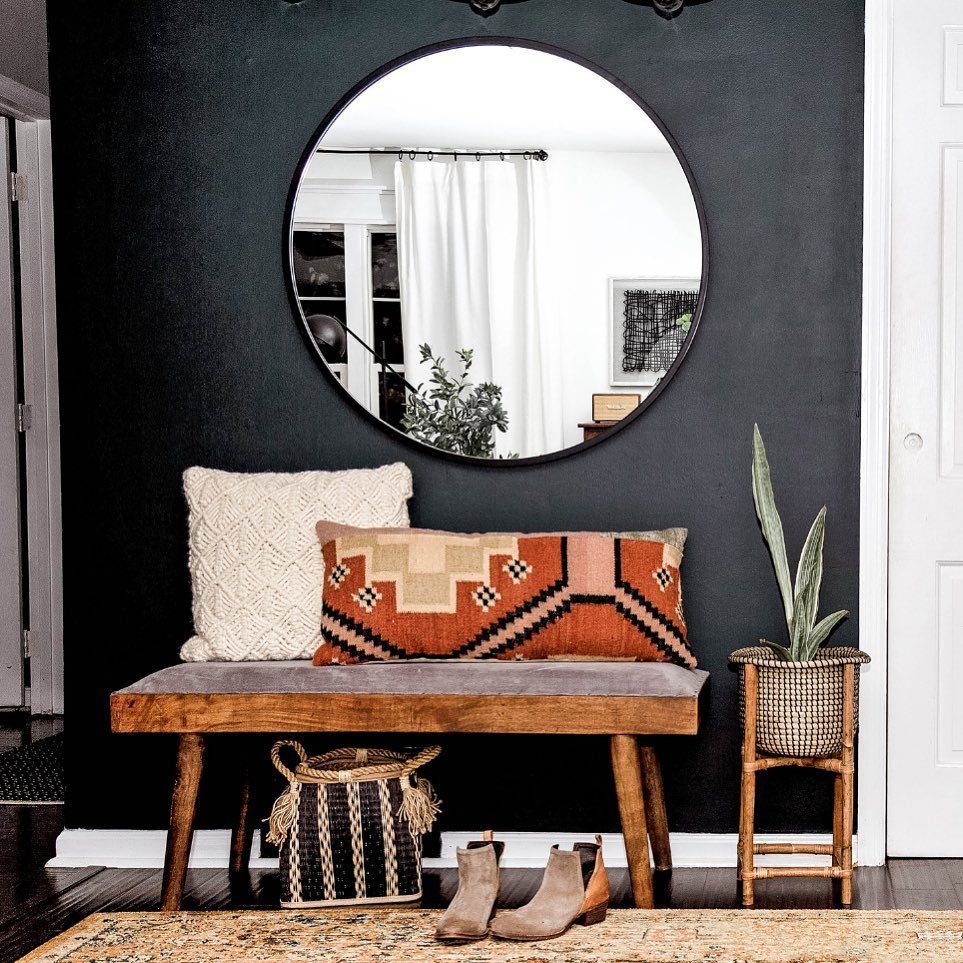
A matte black wall in under two hours is the kind of weekend project that actually finishes on the weekend.
I painted my office wall in a single afternoon, and the near-flat finish is what sells it: matte reads richer and more velvety than eggshell or satin, especially against white adjacent walls.
This only works if the contrast is sharp. Pick a wall that borders something light, or the effect goes muddy.
Be careful with the paint finish; anything with sheen turns this into a mirror under lights, and that is not the look.
Best for small rooms or single walls where you want depth without clutter. The risk is that black shows every scuff and dust speck, so keep a small touch-up can handy.
Skip this one if the wall gets brushed against daily by bags, coats, or kids.
9. Stencil Pattern Accent Wall
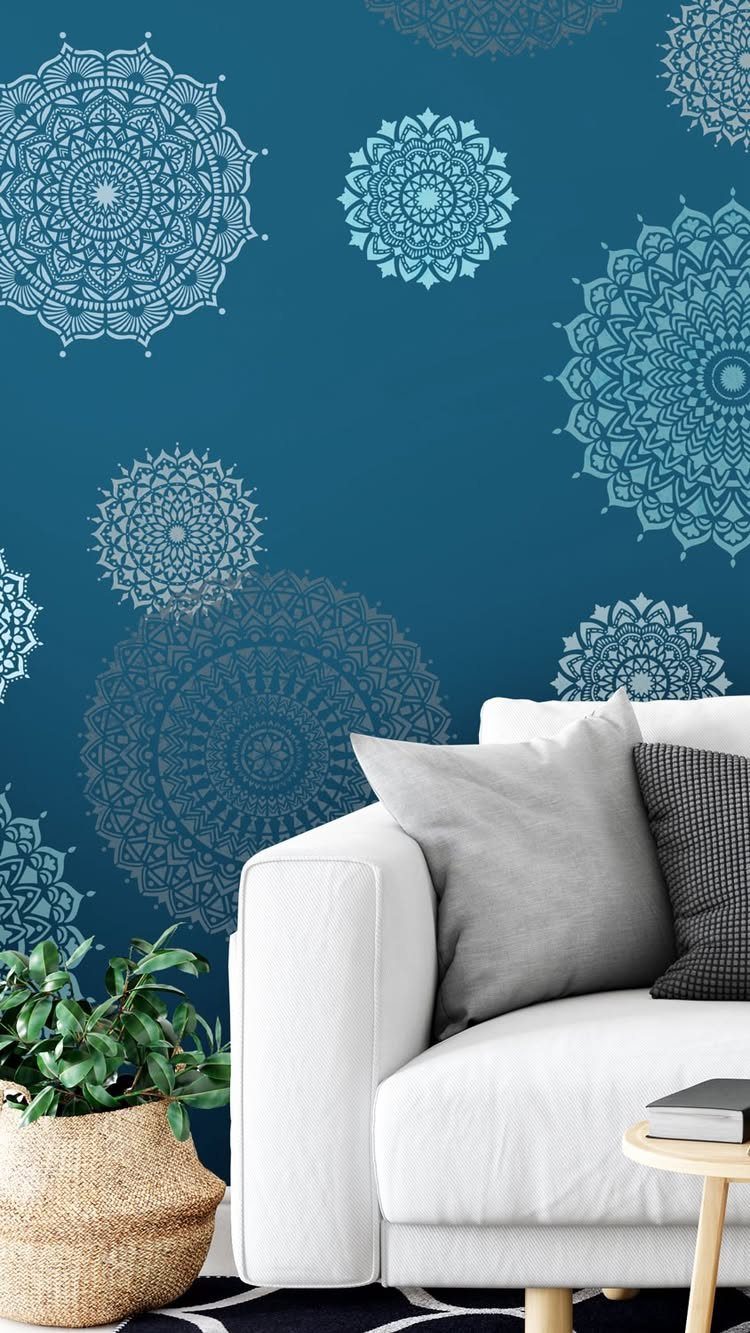
Stenciling a mandala or geometric pattern onto one wall takes paint, a roller, and a laser level to keep your rows straight.
A basic level runs under $10 on Amazon, which is worth it for keeping the design from drifting visibly off-kilter. Pre-made stencils start around $10 and climb from there depending on size and complexity.
The real cost here is time. Even with good technique, detailed work runs past 10 hours, and rushing shows in bleed-under at the edges.
I would block out a full weekend and treat it as meditative rather than efficient.
Best for a bedroom or a child’s room where the pattern earns prolonged looking. Shaky hands or thin patience means wallpaper is the safer bet here.
A finished stencil wall looks custom, but a half-done one looks like a mistake.
10. Limewash Accent Wall
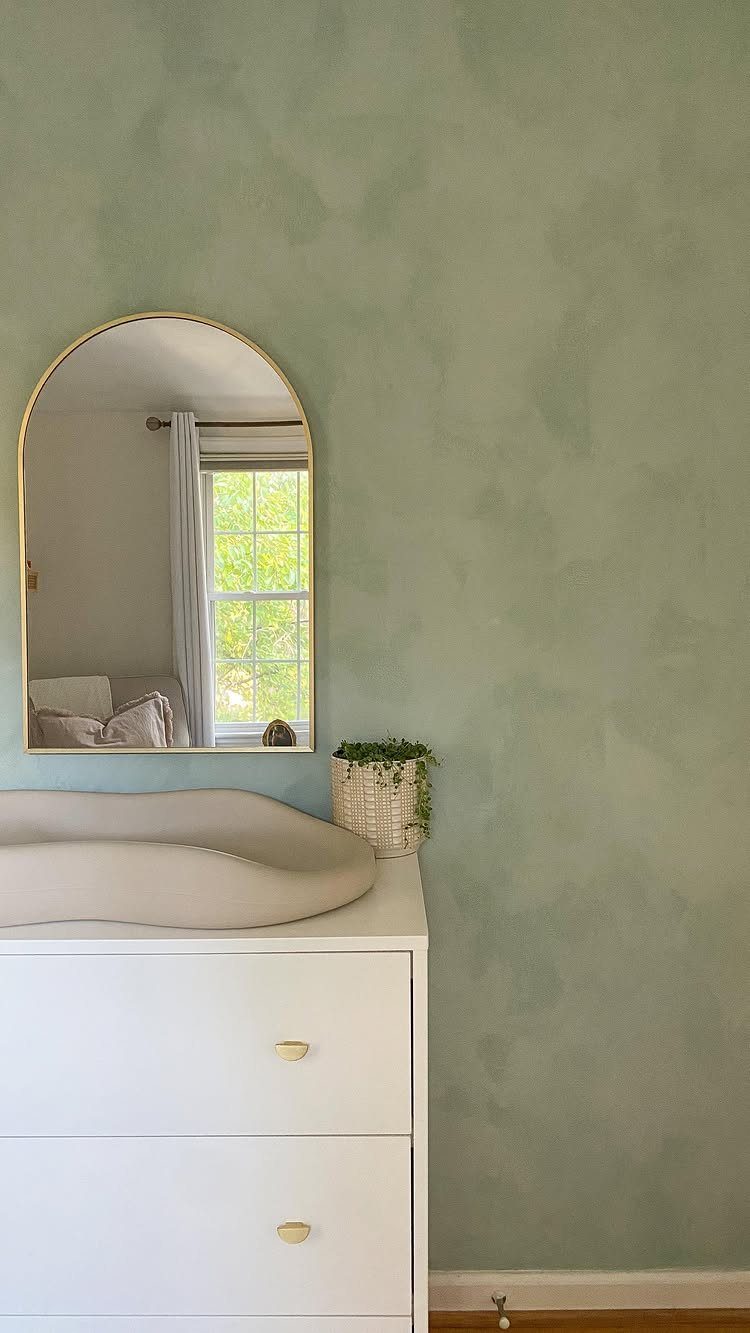
Limewash paint goes over brick, drywall, plaster, or stucco, and the technique forgives almost everything. You brush in random directions with varying stroke sizes; no artistic training required as long as the coat goes on evenly.
Two or three coats is standard, so plan for more than a day of drying time between layers.
One quart of limewash paint usually covers a single wall; I have had good luck with Heirloom Traditions.
The mottled, textured result reads as calm and slightly aged, which suits modern and boho rooms without leaning too far into either label.
Best for spaces where you want quiet texture rather than bold statement. The finish is matte and organic, so it hides imperfections that glossy paint would spotlight.
Do not attempt this if you need same-day results; the drying time is non-negotiable and rushing leaves streaks you will notice every morning.
DIY Accent Wall Tips
Most of these projects cost less than a takeout order for two, and none require a contractor’s license or a truck full of tools.
A cheap laser level, a miter saw you can borrow, or just a steady hand with a brush is usually enough.
The mistake I watch people make is buying the fancy version first. Start with the hardware store option, especially for paint and peel-and-stick products.
The boutique brand rarely performs better; it just costs more and arrives in prettier packaging.
If you rent, test your adhesive on a hidden corner before you commit a whole wall. Command Strips hold beadboard fine until summer humidity hits, and then you are fishing panels out from behind the sofa.
For owners, a nail gun pays for itself on the second project, but construction adhesive and a caulking gun get you through the first one.
Pairing an accent wall with a painted ceiling in a contrasting color works, though I would not attempt both in the same weekend. Finish the wall, live with it a week, then decide if the ceiling needs company.
Color Choices for Accent Walls
Deep navy against light gray reads elegant because the contrast does the work without shouting. Mustard yellow with charcoal, or emerald green with creamy white, sits in the same territory: the pairing matters more than the individual color.
I would not put a bold accent wall in a room that already fights for attention. If your sofa pattern competes with your rug, the wall becomes one more voice in an argument.
The matte black entry above only succeeds because the adjacent walls stay white and quiet; without that sharp border, the effect goes muddy and expensive-looking turns to dirty-looking.
For the ombré or limewash projects, the color shift stays within one family, so the wall reads as texture rather than statement. That is the safer path if your furniture is loud or your taste changes seasonally.
Unconventional pairings work when one color is deep and the other is muted. Two bright colors on the same wall rarely settle; one always looks like a mistake.
Materials for Accent Walls
Paint, wallpaper, wood, and fabric cover most of what you will actually use.
Reclaimed wood and exposed brick add tactile weight, though both demand more wall prep than a weekend allows unless you are lucky enough to find the brick already there.
Decorative panels and 3D tiles read contemporary but check the weight before you order; some need structural support that a standard drywall anchor will not handle.
Textured wallpaper that mimics natural surfaces gives you the look without the dusting schedule. Real brick collects grit; printed brick wipes clean.
For the matte black wall, the finish choice matters as much as the color. Matte or near-flat reads velvety; anything with sheen turns the wall into a mirror under your ceiling fixture.
I learned that the hard way in a bathroom where I used eggshell by accident and spent months catching my own reflection every time I reached for a towel.
Time and Cost Considerations
The stencil project, by contrast, runs past 10 hours even with good technique, and the ombré wall needs multiple coats with drying time between.
The stencil work wants a full weekend too, though mostly because rushing shows in the bleed-under. Time is the hidden cost in projects that look cheap on paper.
Frequently Asked Questions
What is the rule for accent walls?
An accent wall should complement what is already in the room rather than fight it.
The wall needs sharp contrast to read as intentional: matte black against white, warm peach fading to deep orange against neutral furniture, or natural wood battens on a solid base. Without that contrast, the effect goes muddy or disappears.
What color makes a good accent wall?
The best color depends on the light and the surrounding walls. A near-flat matte black reads rich and velvety against white; warm peach-to-orange ombré glows after dark in low-lamp bedrooms; sage green with natural wood battens reads calm and cabin-like.
The finish matters as much as the hue: anything with sheen turns black into a mirror, and bright light flattens an ombré gradient that shadow would deepen.