TV walls in this list run from a single gallon of charcoal paint to built-in cabinetry that swallows your whole weekend and then some.
What separates one idea from another is whether you own the wall or answer to a landlord, and whether you need the television to disappear or to hold its own.
The cheapest option here costs the price of two coats of quality paint; the most involved asks you to frame out a recessed niche and run cable behind drywall.
[link-whisper-related-posts]1. Wood-Paneled TV Wall
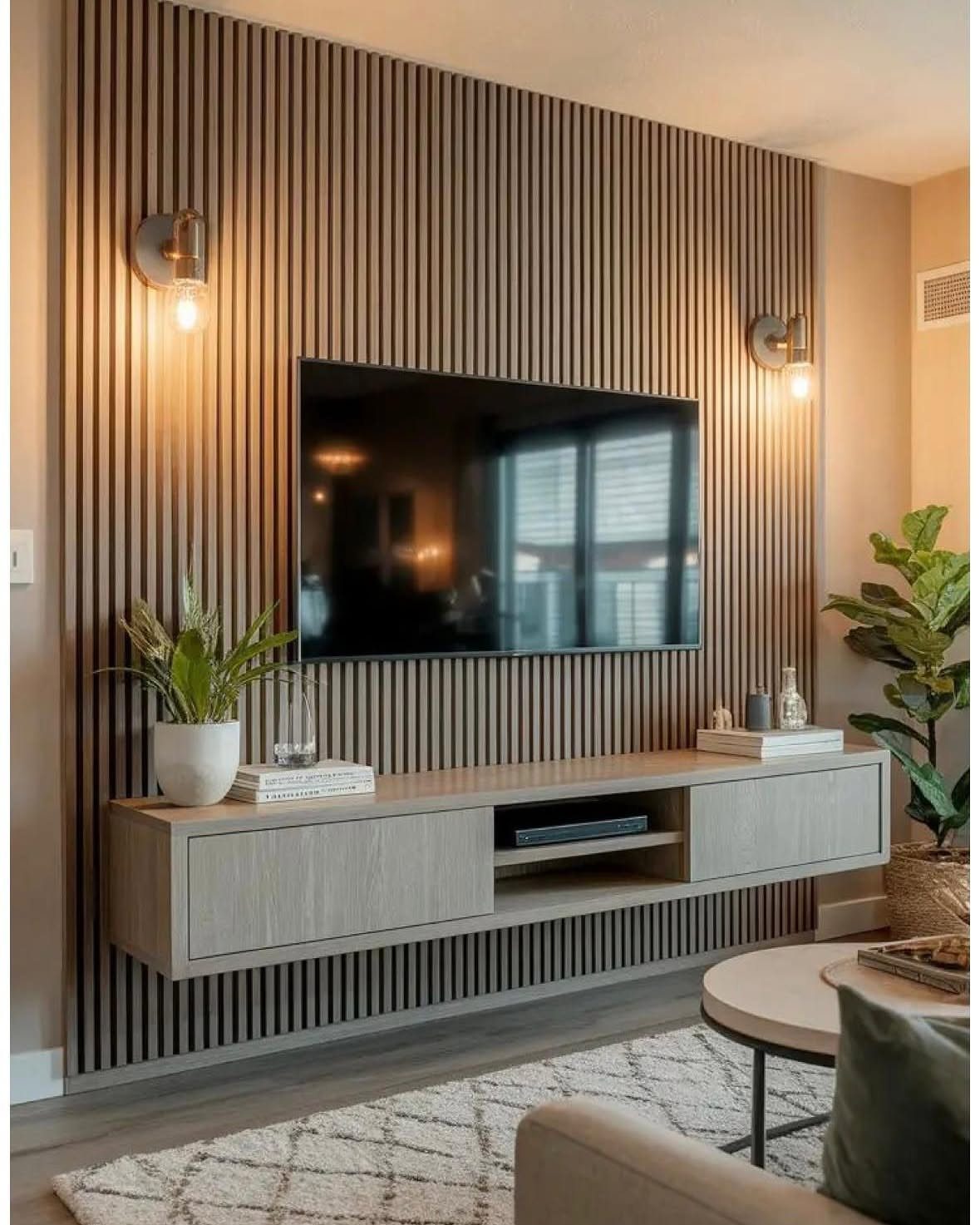
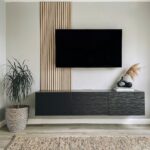
Vertical slats turn a flat wall into architecture without eating floor space. Light wood keeps the room from feeling like a cabin; dark panels would push the same room toward drama but shrink it visually.
I would check the wall’s studs first. Slats need anchoring to studs or they drum and sag.
Acoustic panels in a natural wood finish add sound absorption if the room echoes, which matters more than people think until a movie’s dialogue bounces off bare drywall.
Sconces at seated eye level are the move for ambient light that does not glare on the screen. Skip overhead cans directly in front of the TV; they wash out the picture.
Best for renters who can patch small holes: the slats mount as a single frame, not individual strips.
2. Wallpapered TV Wall
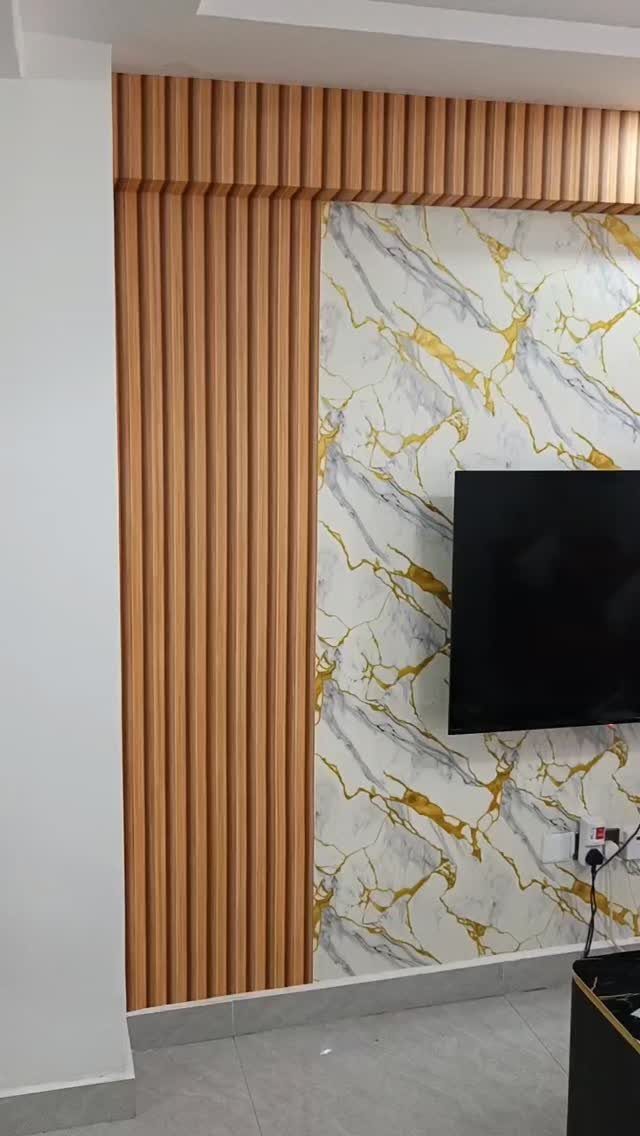
Wallpaper behind a television reads as intentional, not like a screen got parked in front of something prettier.
A marble pattern bridges the gap between bold and neutral; a small leaf or geometric print would read busier and need a smaller TV to balance it.
Grasscloth adds texture that photographs flat but rewards standing in the room. Concrete-look paper suits lofts with exposed ductwork; anywhere else it fights the furniture.
Floating shelves at console height catch remotes and a candle without the visual weight of a cabinet. The peach tone in one version I saw warmed up the whole wall; cream or gray would cool it down.
Check the wallpaper’s repeat before you buy. A large pattern with a wide repeat means more waste around a TV cutout, and the seam lands where you cannot hide it.
3. Marble Accent TV Wall
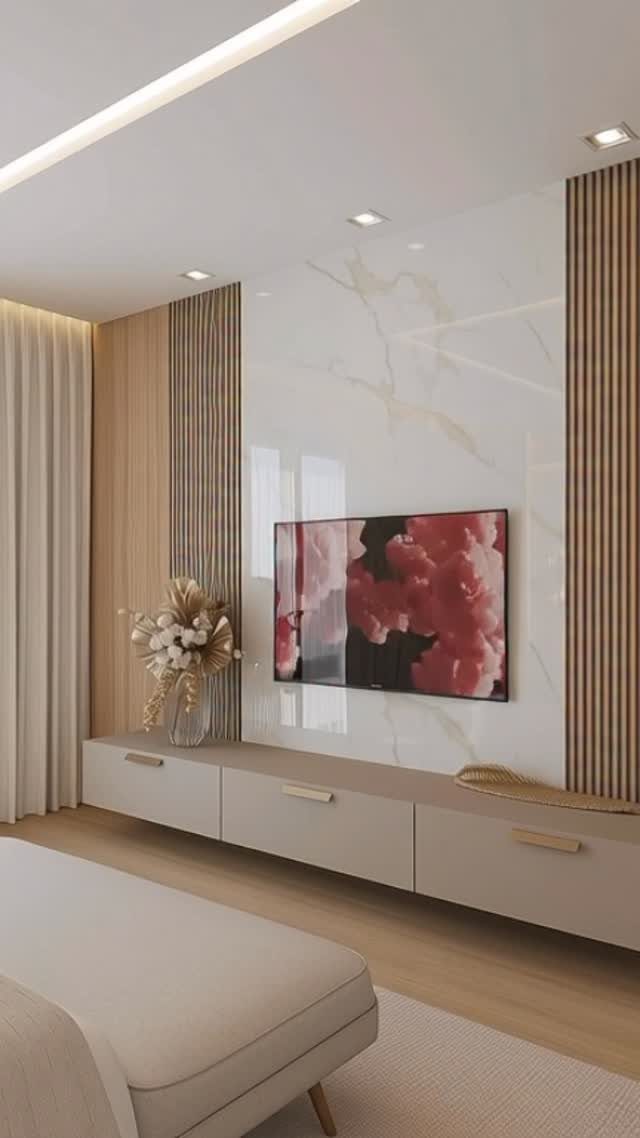
Marble-look panels with wood slats on each side solve the problem of a black rectangle floating in a white room. The stone draws the eye first; the wood keeps the wall from feeling cold or like a hotel lobby.
Real marble runs about 100 times the cost of porcelain panels from a big-box store.
I would not spend that on a TV wall unless the house justifies it; the panels read the same in photos and most guests will not touch your wall.
Backlit LED strips behind the stone, top and bottom, cast upward and downward glow that picks up the veining. Warm light keeps the wall inviting; cool white would read as office-like.
Dimmable is non-negotiable. Bright enough for cleaning, dim enough for movie night.
The beige console below ties to the wood slats. A black or white console would compete with the stone for attention.
4. Wooden Console TV Wall
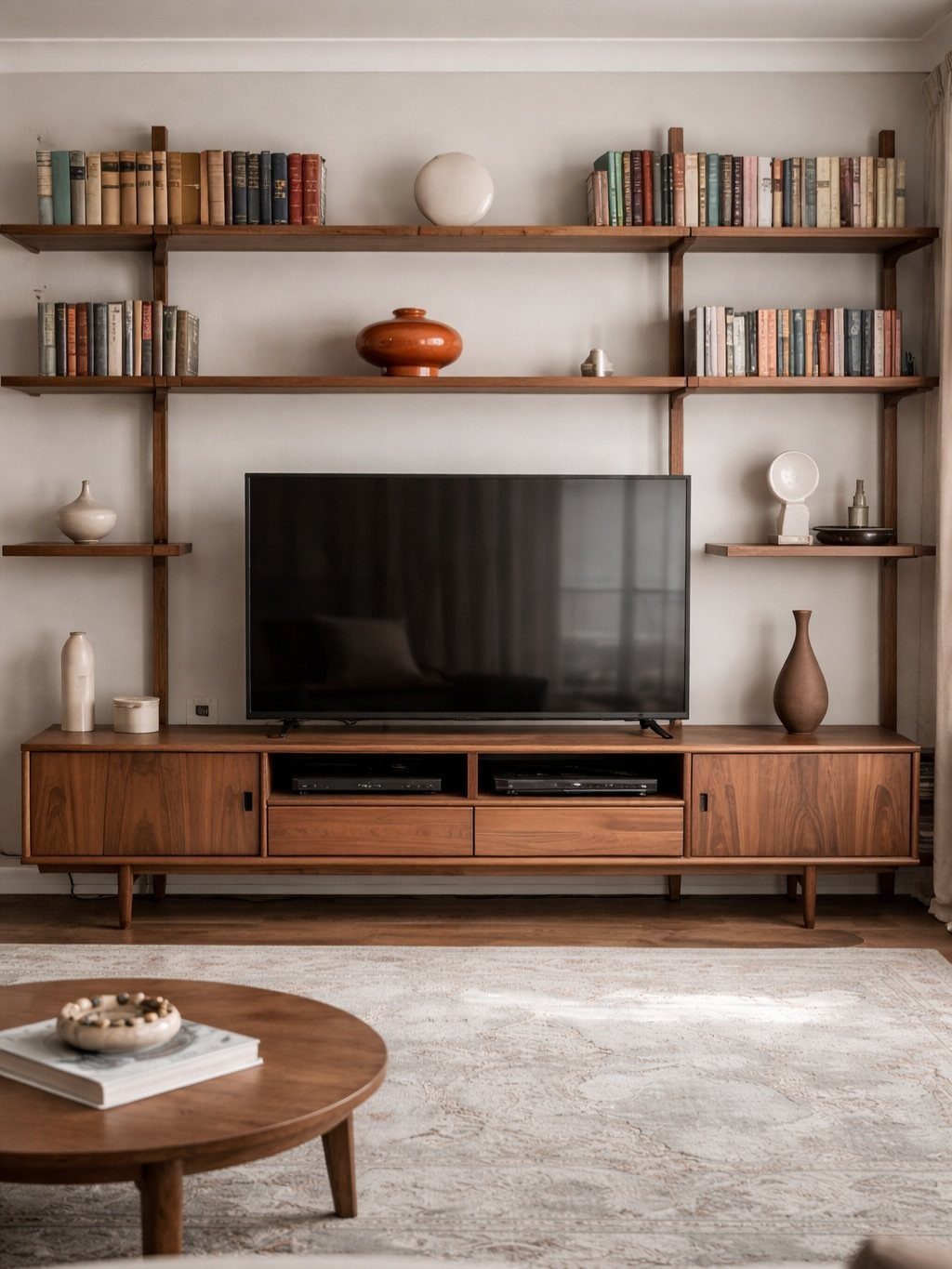
A console that carries the whole look lets you skip built-ins and still have storage. A low console keeps the TV at a sane height; taller ones raise the screen toward the ceiling and strain your neck over time.
Wall-mounted shelves above, matching the console’s wood, frame the television without enclosing it. Books and ceramics break up the rectangle of the screen when it is off.
I would leave some shelf empty; packed shelves read as clutter, not curation.
Brass hardware or mesh doors push the same shape toward vintage-luxe; cane or rattan goes boho. A plain steel console on hairpin legs costs less and suits small rooms where the furniture needs to disappear.
The lamp built into one 1960s console I have seen solves ambient lighting with no extra cord management. Reproductions with that feature are worth hunting for.
5. Mantel-Powered TV Wall
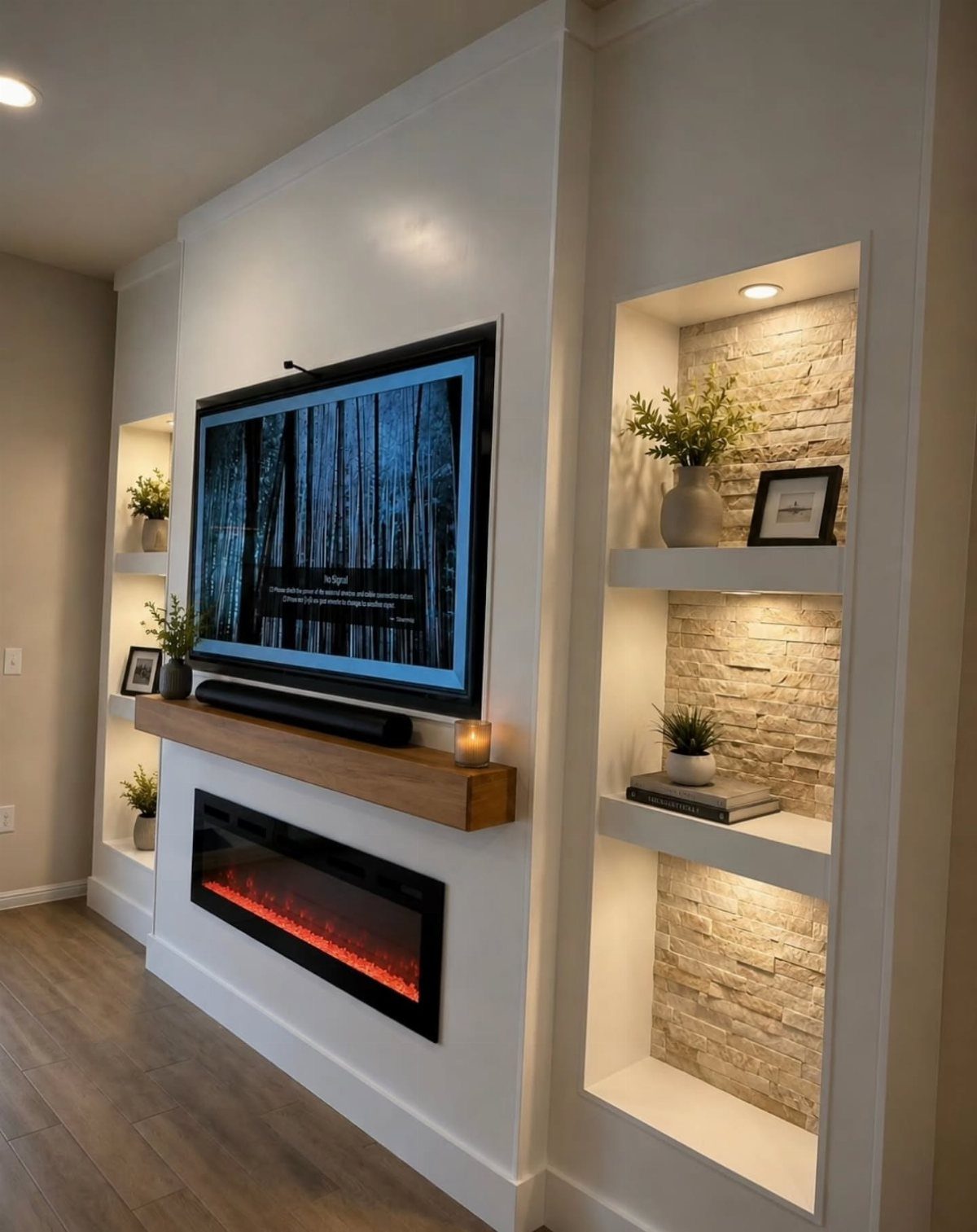
A mantel under the television gives the eye something horizontal to rest on, which helps when the screen is dark. Stone-backed niches add depth that flat built-ins lack; recessed shelving reads as architecture, not furniture.
A low-profile mount pulls the TV close to the wall so it does not hover. The mantel below needs breathing room; one or two objects, not a crowded ledge.
The eye goes to whatever competes for attention, and the TV should win or the room should, not a dozen small things fighting.
The heat function is separate from the display, so you can run flames in July.
Check viewing height with your own body on the sofa before you drill. A mantel that is too high means looking up for 2 hours.
6. Bookshelf Wealth TV Wall
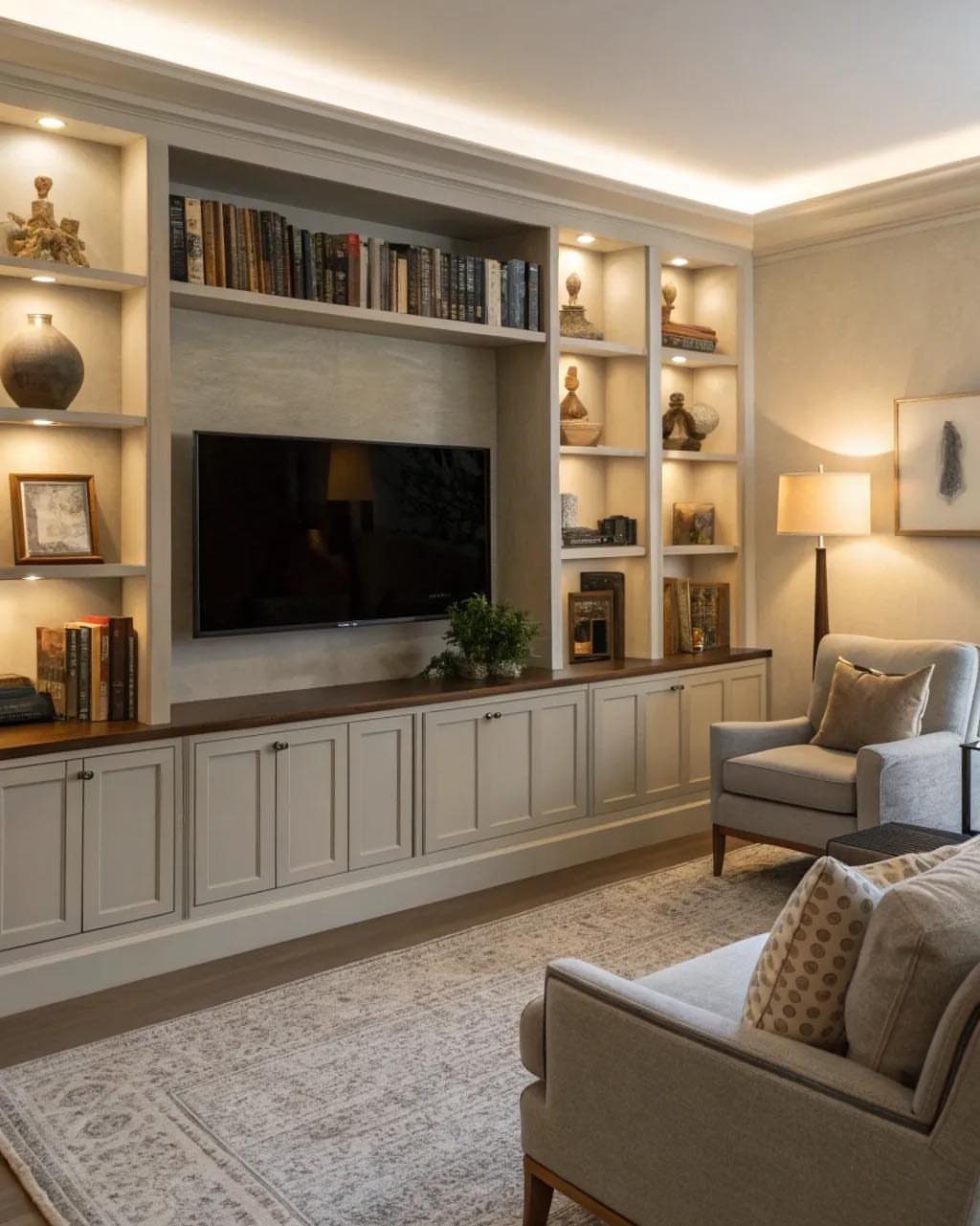
Built-in shelves that eat the whole wall make the television one object among many instead of the room’s obvious center.
A gray unit can use the TV’s black frame as visual punctuation; surrounded by books, it almost reads as another dark spine.
A Samsung Frame TV sinks flush and displays art when off, which matters in a bookshelf wall because the blank screen would break the rhythm.
The price stings; a standard TV with a black bezel works if you fill the shelves densely enough that the eye does not settle on it.
Lighting inside the shelves, top or back, keeps the wall alive after dark. Without it, the unit goes flat and shadowed.
Warm temperature, dimmable, aimed at the objects not the room.
I would sort books by size, not color. Color-blocking looks arranged; size sorting looks lived-in.
7. Custom Cabinet TV Wall
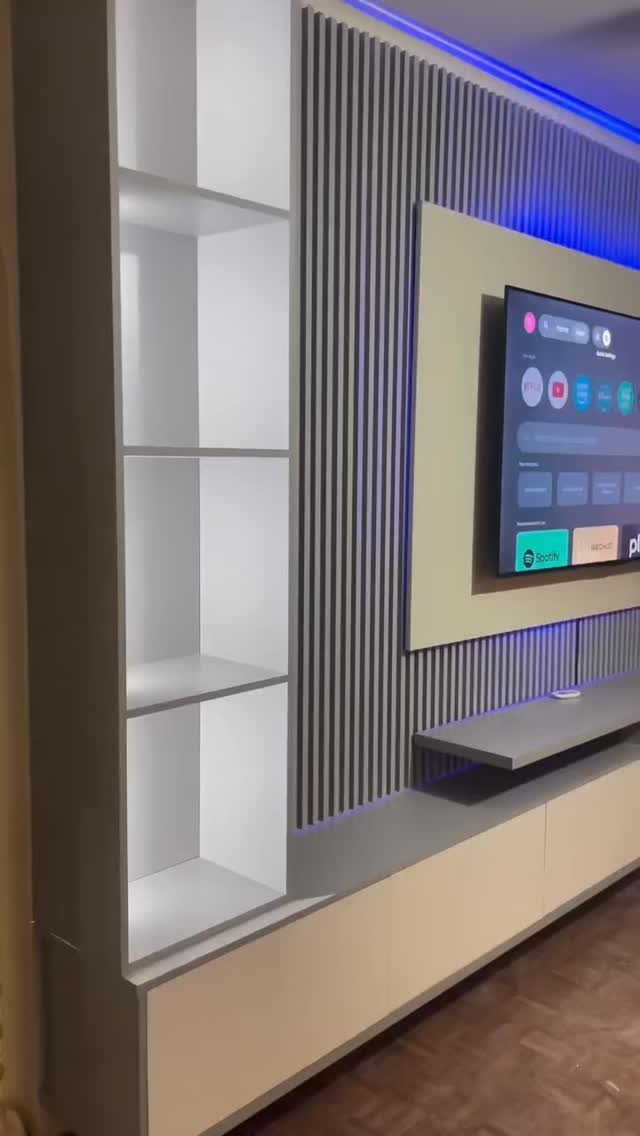
Built-in cabinetry turns the TV from an appliance into architecture.
The open upper shelves let you stack books, vases, or a small plant where most walls just have black glass, while closed storage below swallows remotes, game controllers, and the cable box that normally clutters the top of a console.
I like this best in rooms where the TV wall faces the entry, since the cabinet reads as furniture rather than an entertainment zone.
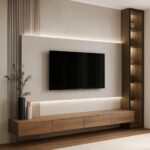
Wood slat backing adds warmth that plain drywall would not, and an LED strip behind the slats gives enough glow for evening without turning on overhead cans.
8. Backlit TV Wall
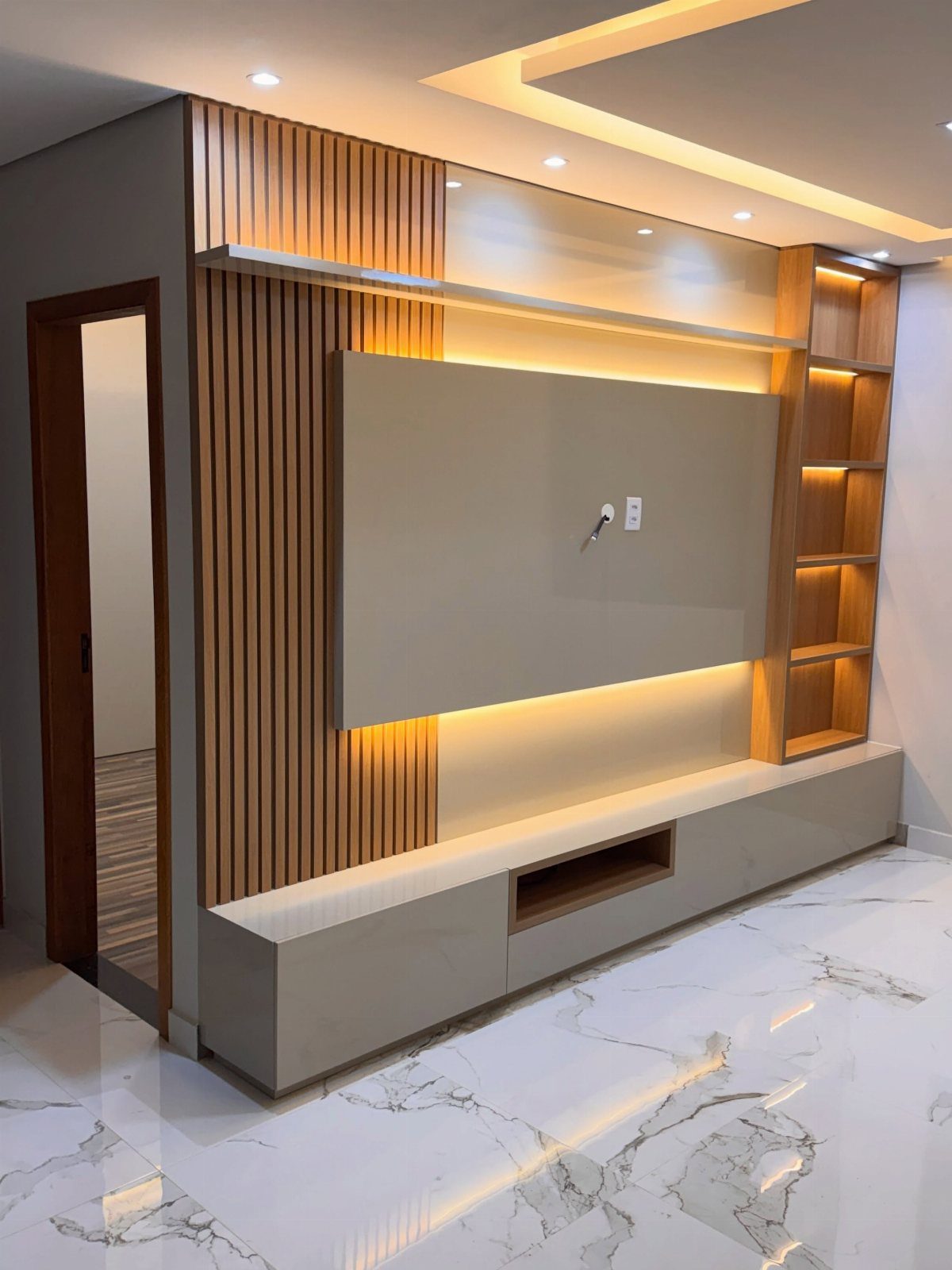
A strip of light behind the TV does two jobs: it softens the contrast between a bright screen and a dark room, and it gives the wall some presence when the set is off.
Installation means running a low-voltage strip around the TV’s perimeter or mounting it to the wall behind. Most kits plug into the TV’s USB port and turn on with the screen, which saves you a switch.
Marble-look tile and vertical slats are optional; the light works against painted drywall too.
Skip this if your room already has layered lighting from lamps or sconces at seated height. Add it if your only sources are overhead.
9. Media Wall
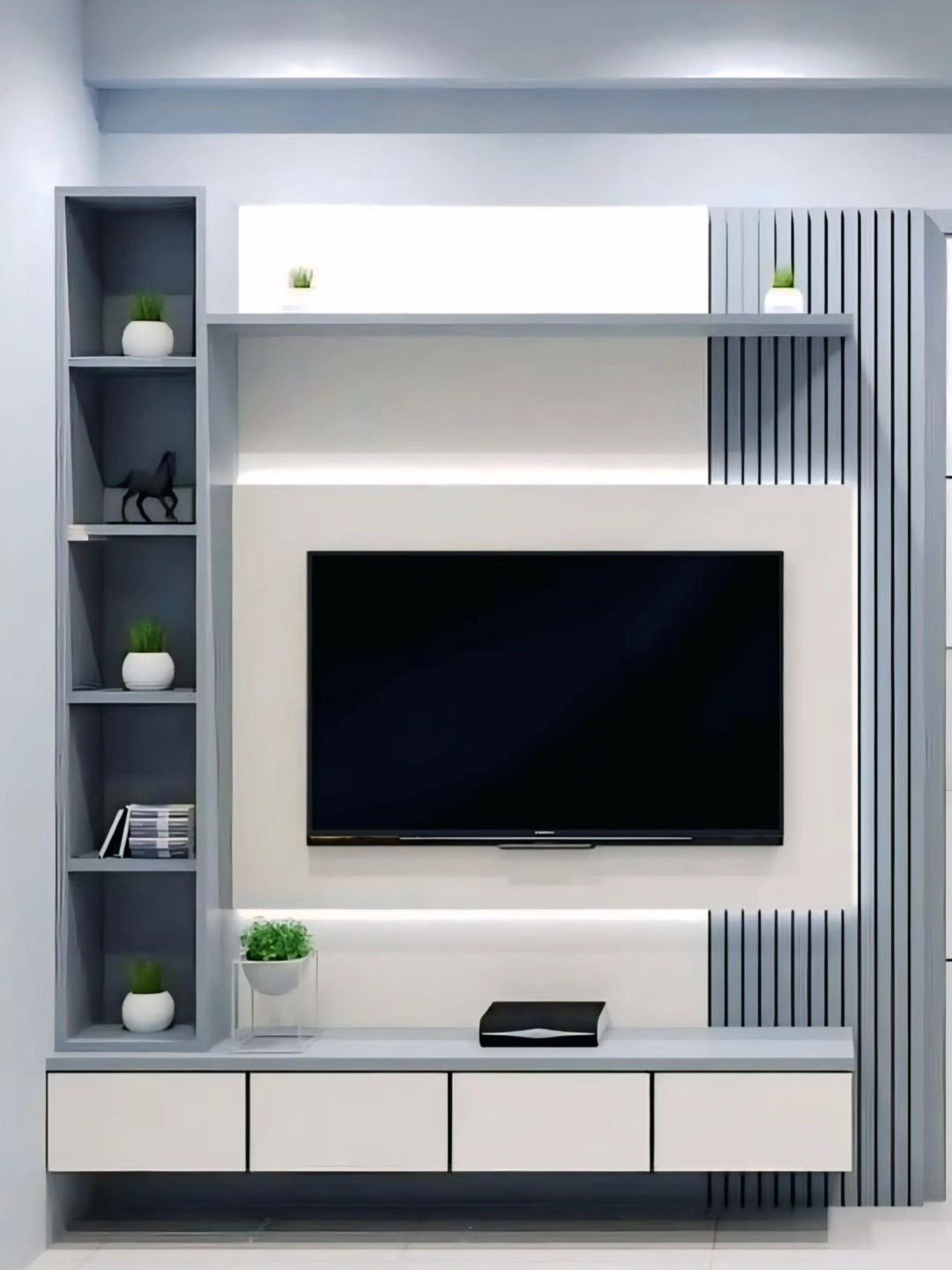
A media wall corrals every box, wire, and speaker into one vertical zone so the rest of the room stays clean.
The formula runs: TV centered on a backlit panel, flanked by shelving for components, with a low console below for the items you touch daily.
What changes the cost is how much you build in versus buy loose.
The grey vertical slats and integrated lighting here read custom, but the same organization comes from a wall-mounted TV above a long console with a cable raceway behind.
This suits renters who can patch a few screw holes later, and owners who want one weekend project, not a carpentry month.
10. Recessed TV Wall
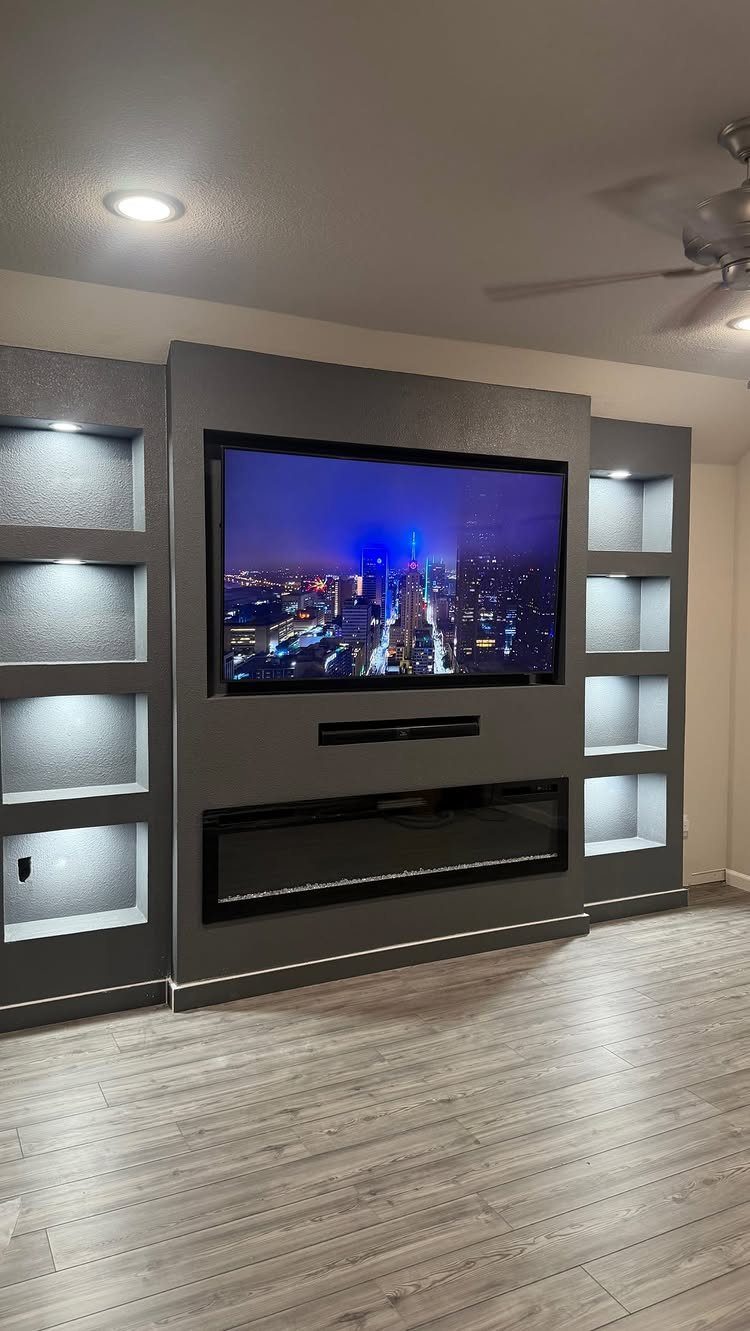
Recessing the TV into the wall trades depth for neatness. The screen sits flush with the surrounding surface instead of floating out on a bracket, which quiets the whole composition.
The typical build is a niche sized to the TV with a few inches of clearance for ventilation, often with a soundbar shelf and display cubbies on one or both sides.
What the niche costs depends on what is behind your wall. An interior partition with no plumbing or HVAC might open up for a few hundred in materials; an exterior wall with insulation and fireblocking is a different conversation.
You need enough recess depth for the TV plus any mount, and you need to plan air flow so the set does not cook itself.
Check your wall’s framing before you commit. A standard 2×4 wall gives you shallow depth; a 2×6 gives noticeably more room to work with.
Your TV’s thickness plus mount eats most of that.
11. Frame TV Gallery Wall
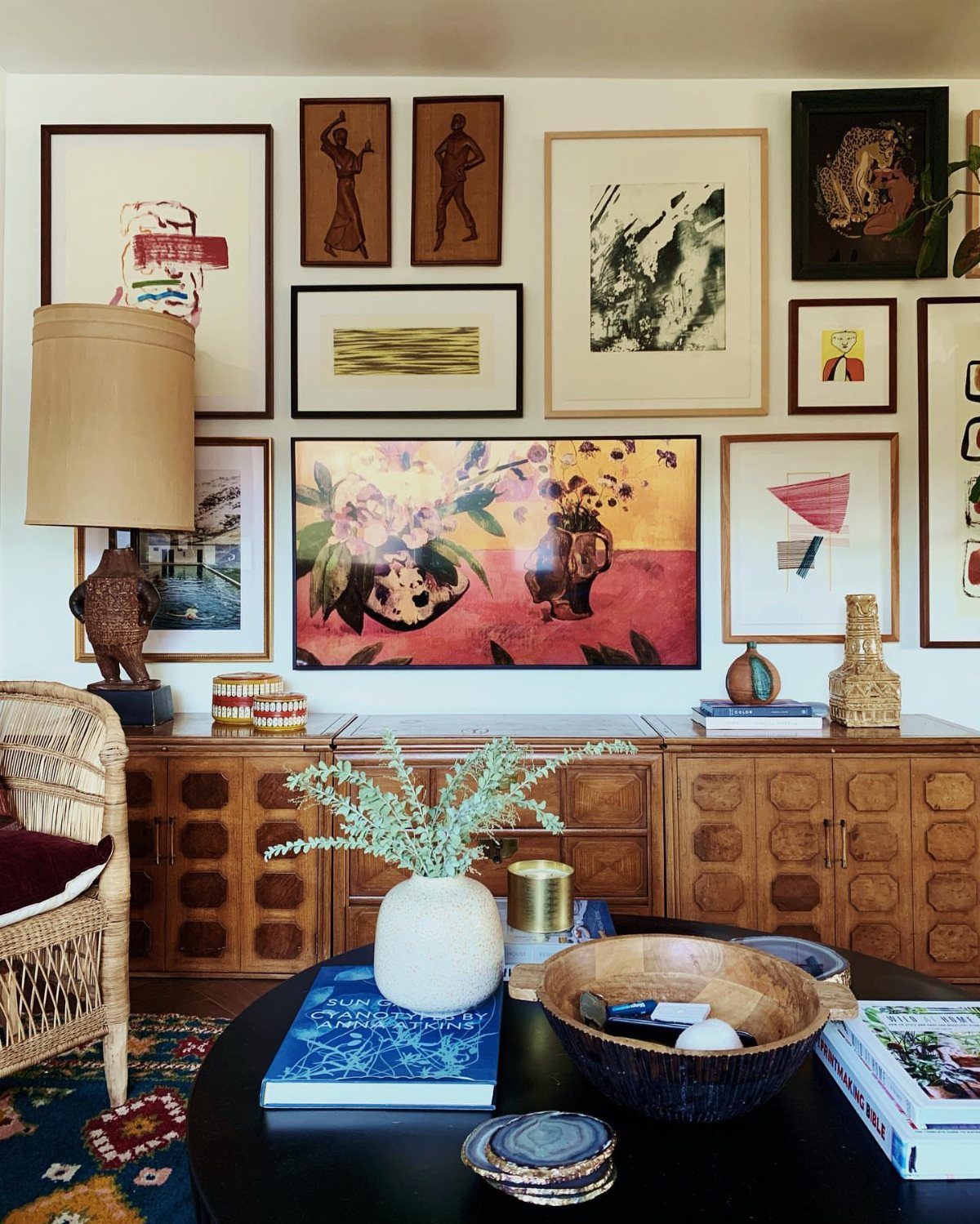
Samsung’s Frame TV was built for this exact trick. When the screen sleeps, it displays art instead of going black, and the bezel looks like a picture frame rather than plastic tech.
Surround it with actual framed prints and the TV becomes one object in a grid instead of the grid’s reason for being.
The layout centers or slightly offsets the Frame TV, with mixed-size art hung around it on a white wall, all above a wooden credenza that holds the room together.
Framebridge prints or thrift store frames both work; the consistency comes from matching mat widths or frame finishes, not from buying everything at once.
A regular TV cannot do this. The black rectangle stays black, and no amount of surrounding art hides that it is a screen.
If you own a standard set already, gallery walls around it read as compensation, not design.
12. Wall Frame Molding
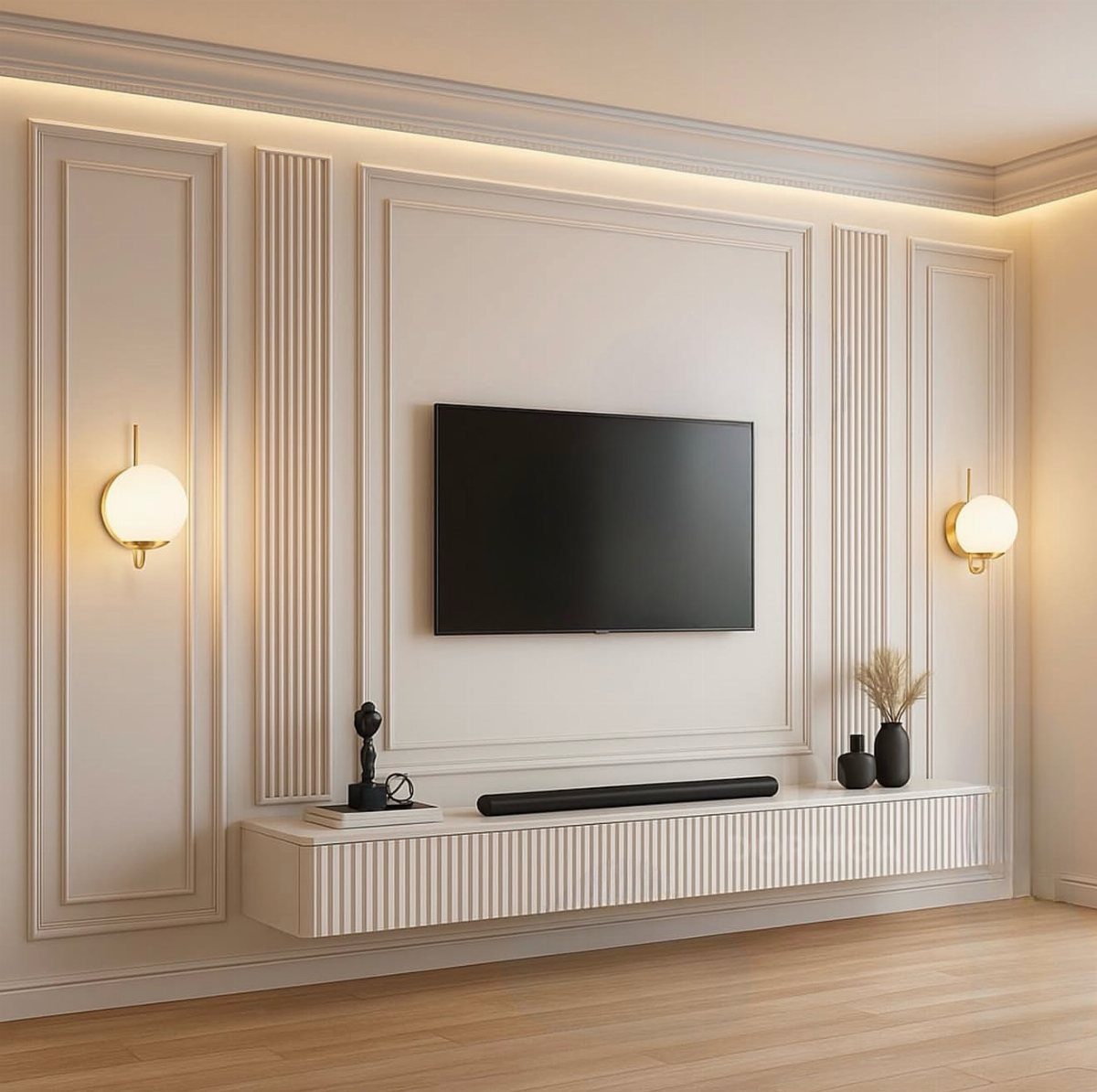
Wall frame molding gives a TV the treatment once reserved for oil portraits.
The raised trim creates a rectangle on the wall that contains the screen the way a 1750s salon frame contained a canvas, and the fluted console below continues the classical language into furniture.
You can buy pre-cut molding kits and install them in a weekend with a miter box, adhesive, and a level. Paint everything, wall and trim, the same color so the molding reads as shadow and depth rather than stripe.
Spherical sconces are a smart addition; they give reading light without the formality of picture lights above the TV.
This reads formal in a way that slat walls or media units do not. I would use it in a room with existing traditional detail: crown molding, cased openings, hardwood floors.
In a bare drywall box it can feel like costume jewelry.
13. Exposed Brick TV Wall
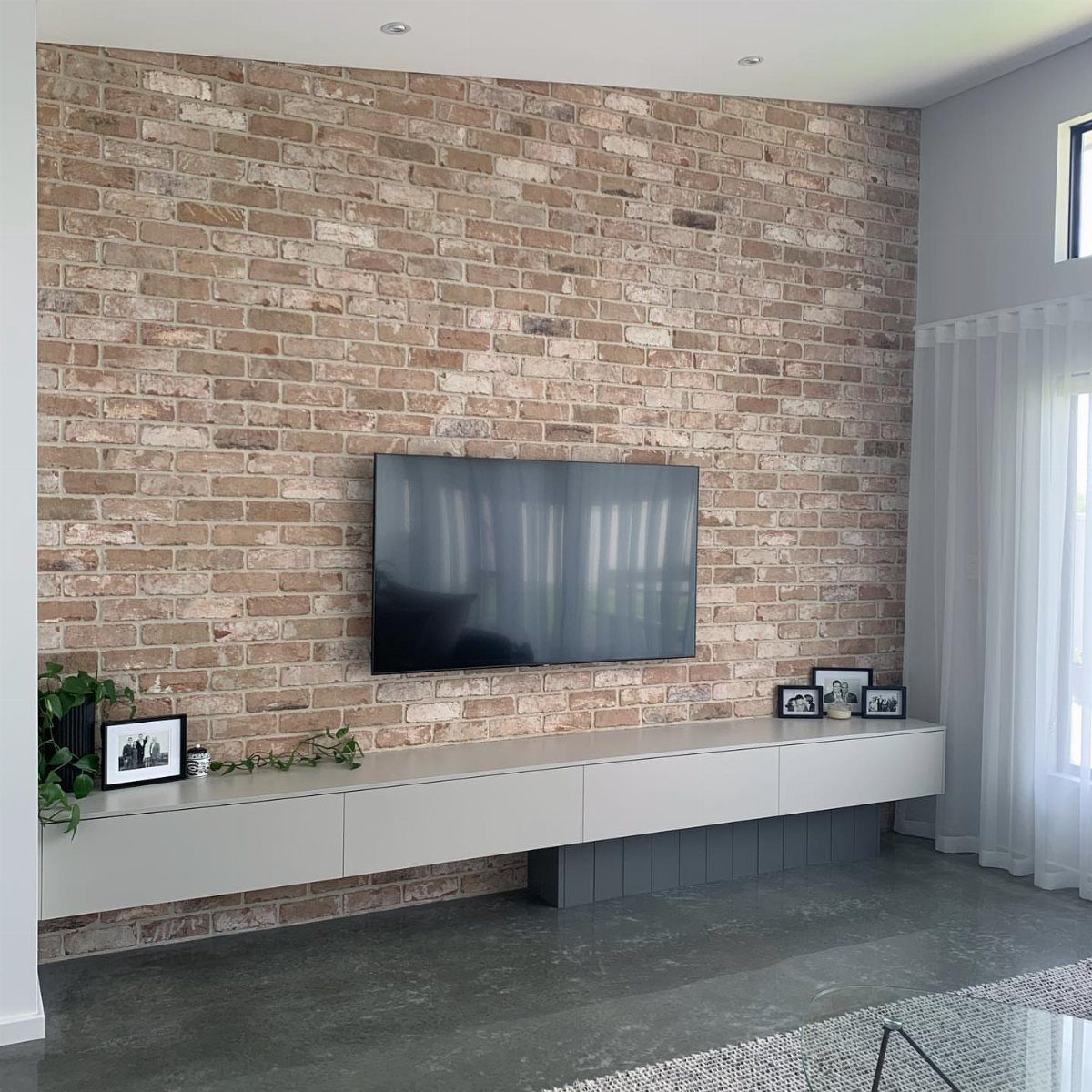
Exposed brick gives a television something rough to compete against, and that competition hides the screen better than smooth drywall ever could.
White painted brick does the same job, the texture pulls attention so the TV itself does not have to carry the whole wall. Natural tan and brown brick works best when the rest of the room stays clean and modern.
A floating white console underneath keeps the look from going industrial.
If your brick is already there, this is mostly a mounting job. Check that the mortar is sound and use a masonry bit; the right anchors are cheap but they are the only thing keeping your mount from pulling loose.
Painted brick is easier to drill; raw brick chews up bits faster.
This suits renters only if the brick is already exposed. Covering drywall in brick veneer takes half a weekend and real money, so weigh that against how long you will stay.
14. Dark Charcoal Accent TV Wall
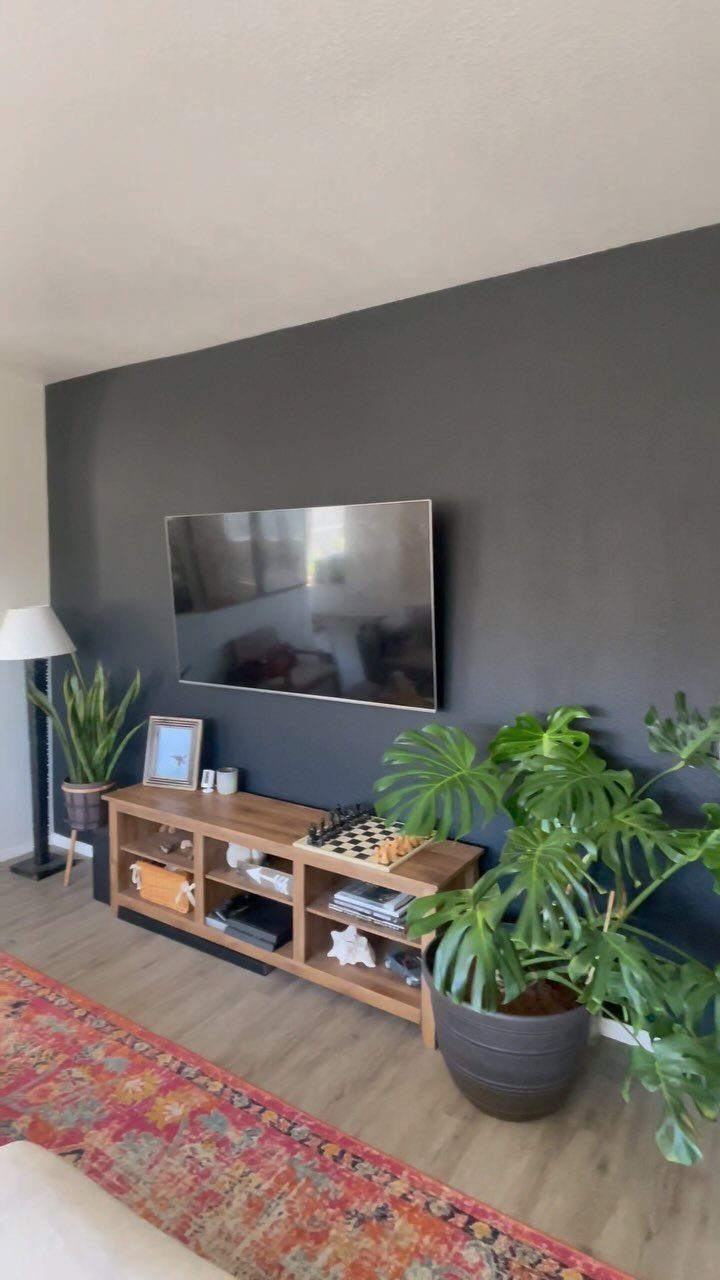
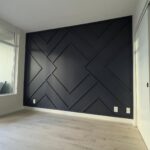
Dark charcoal paint on a single wall does two jobs at once: it turns the television into a faint rectangle instead of a black hole, and it makes whatever sits below it look deliberate.
Tongue-and-groove paneling painted dark avoids the cottage look that beadboard earns in white. A smooth painted wall skips the carpentry, saves money and still gets the camouflage effect.
A light wood console underneath provides the necessary contrast; without it, the wall swallows the furniture too.
One gallon of quality charcoal covers a lot of ground, usually enough for an accent wall with some left for touch-ups. Two coats are non-negotiable over a lighter existing color.
I would add one caution: charcoal in a north-facing room can feel like a cave once afternoon fades.
If your living room lacks natural light, step down to a medium gray or keep the dark wall to the TV zone only and paint the rest warm white.
Concealing Wires and Cables
Cable trunking sticks to the wall and swallows the run from TV to outlet in one clean line. I would run it down from the mount, behind the console, to the floor rather than across open wall.
A tidy box under the console or behind it holds the power strip, the streaming stick, and the knot of adapters that otherwise spill onto the floor.
Velcro the box to the console leg or the wall so it does not slide when you vacuum.
Where the wall is hollow, a recessed outlet behind the TV and a second low on the wall lets you drop the cord inside the cavity with no surface channel at all.
That takes 2 holes and a fish tape; patching them later is easier than hiding a trunking run you regret.
Importantly, always consider your cables, says Gary Walmsley, managing director at Designer Walls: ‘Often modern TVs only require power as they work on Wi-Fi – a recessed box behind the TV is very helpful when tidying up cables.
Choosing the Right TV
The Frame includes some free pieces; the full catalog runs on a monthly fee. I would budget for 1 year and decide at renewal whether the rotation matters to you.
Mount it flush if you can. The Frame looks its best when the bezel sits nearly against the wall like a hung canvas, not tilted on an arm for corner viewing.
Creating a Focal Point
A single large piece hung above the television gives the eye somewhere else to land, and smaller framed works at either side pull the screen into a gallery arrangement rather than leaving it isolated.
The art should be substantial enough to compete. A small print above a large screen looks like an afterthought; go bigger or skip it.
I would leave 4 to 6 inches between the TV’s top edge and the frame’s bottom, close enough to read as intentional spacing, not a gap you missed.
For a looser version, lean a tall canvas on the console and flank the whole stack with a lamp and a ceramic.
No hanging, no holes, and the leaning piece breaks the vertical line of the television without the precision of a grid.
DIY Solutions
MDF boards ripped to width and painted to match the wall build out a shallow frame that contains the television the way molding would, for the cost of a sheet and a weekend.
Construction adhesive and a brad nailer are enough for most of these builds.
Custom cabinetry from scratch is a heavier project. A cabinet with open shelving above and closed storage below takes accurate cuts for square corners and doors that hang true.
I would price out stock cabinets modified to fit before committing to building; the savings shrink fast once you buy hardwood face frames and hardware.
A project that goes badly with a handsaw and a cordless drill goes badly; borrowing or renting a miter saw and a pocket-hole jig saves hours of frustration.
Frequently Asked Questions
How do I design my TV wall?
Start with what you want the wall to do besides hold a screen. Built-in cabinetry blends the TV into architecture; vertical slats add texture without floor space; dark paint camouflages the black rectangle against a matching background.
A media wall corrals components into one zone, while recessed mounting trades depth for a flush, quiet look. Check your wall’s framing first: studs matter for slats, and a 2×6 wall gives more recess room than a 2×4.
Is it a good idea to hang a TV on a wall?
Getting the screen up off a stand or cabinet opens up the floor underneath and lets you set the height where your neck is not craning up or down.
Check that your wall can take the weight: masonry needs the right anchors, and studs or solid blocking beat hollow wall anchors for anything over about 50 pounds.
Run cables through a raceway or in-wall rated conduit to keep the look clean.