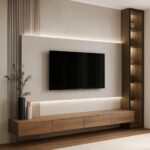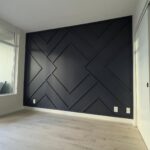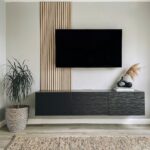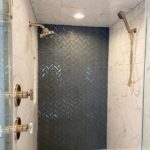
PVC panel wall design runs from about one tenth the cost of real marble up to a single showpiece wall with built-in lighting and gold inlay.
The right choice depends on whether you need the wall to disappear behind furniture or become the room’s focal point.
[link-whisper-related-posts]1. Marble Effect PVC Panels
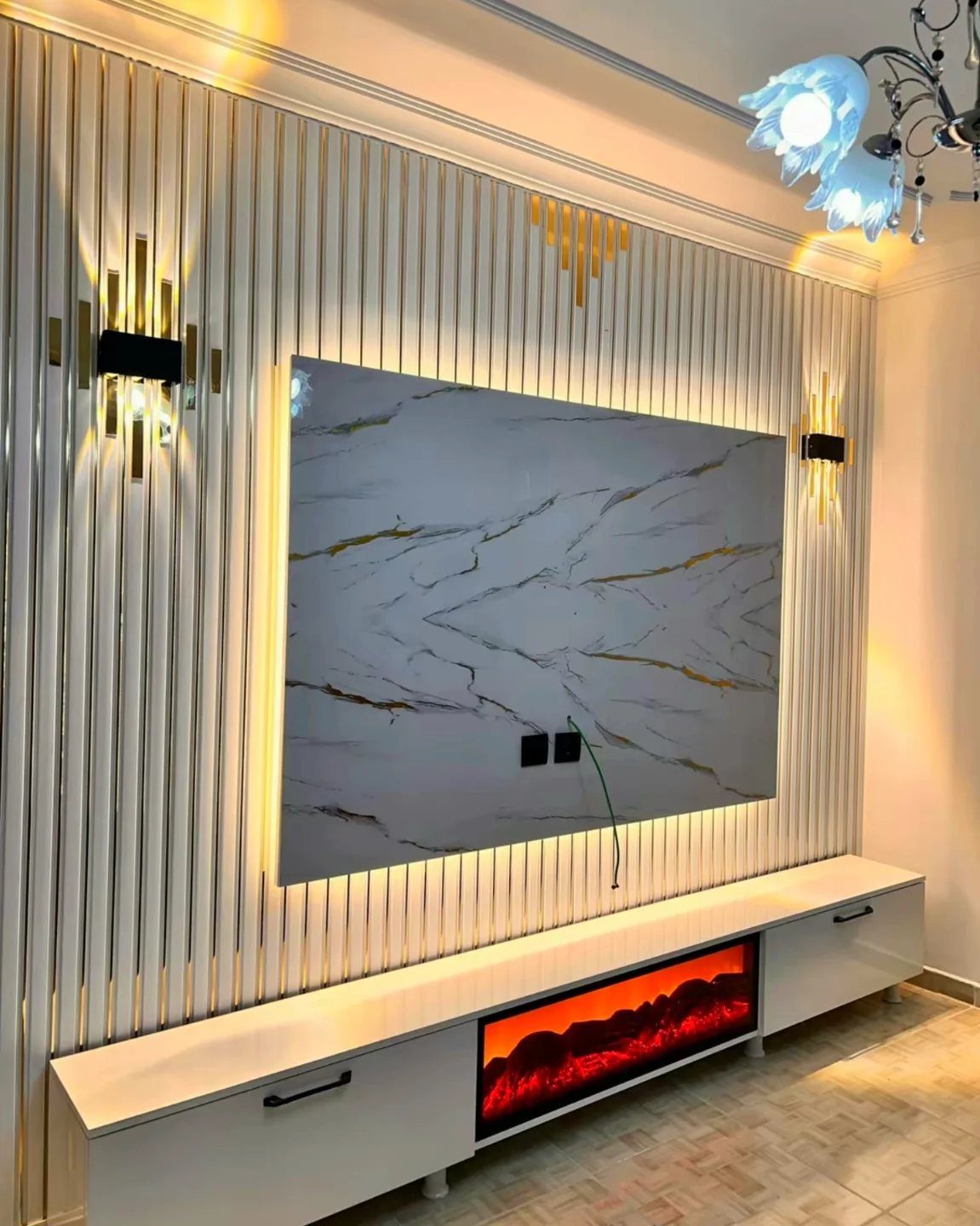
Marble-look PVC gives you the veining and polish of real stone at roughly 1/10 the cost, with no sealing or polishing ever.
I would put this behind a TV unit or a low console where the panel becomes the room’s focal point without fighting the furniture.
Veined quartz and terrazzo patterns read cleaner than older swirls; match them to marble-look floor tiles if you want the full effect, or let one wall carry the whole statement.
Wipe-clean maintenance matters most in bathrooms and entryways, where real marble would stain inside a year.
2. Fluted PVC Panels
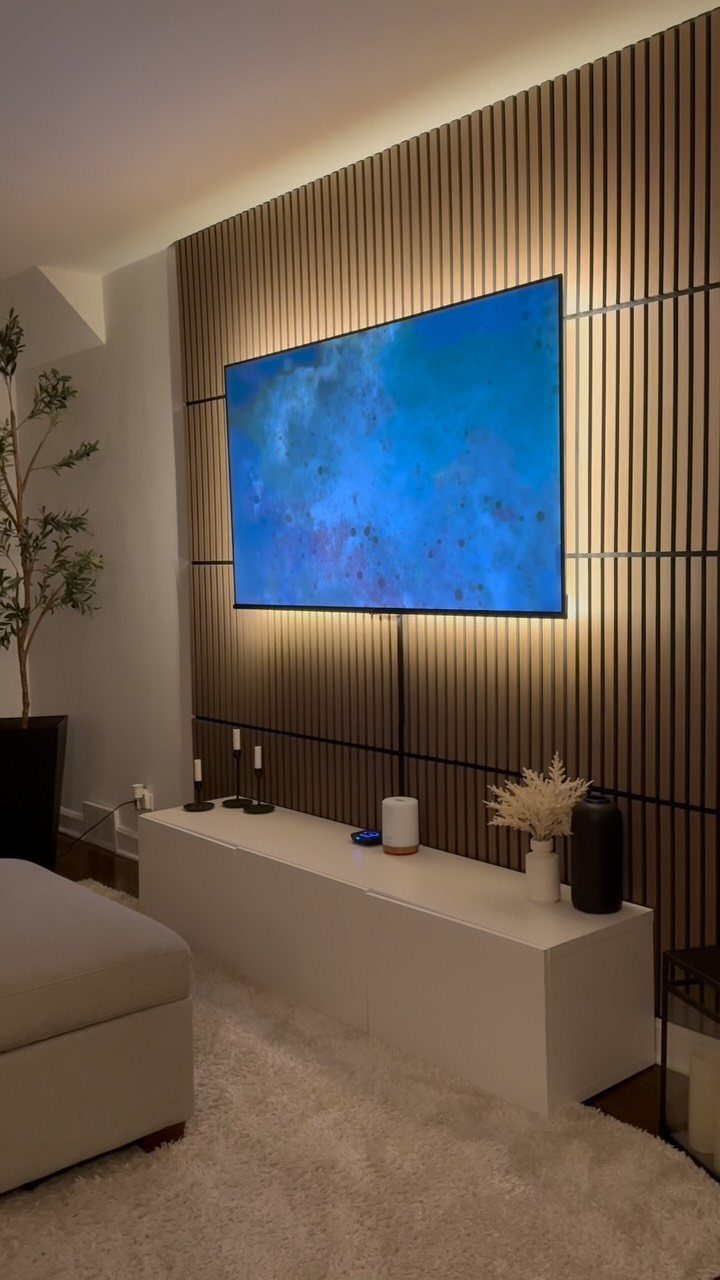
Vertical grooves draw the eye up and add structure without pattern clutter.
A single wall of fluted PVC behind a bed, media console, or long sofa gives the eye something to follow without taking over the room. The lines need that contrast to read.
Matte wall paint or wooden flooring underneath keeps the texture from feeling busy. I would check the groove spacing before ordering; tighter flutes read more refined, wider ones more casual.
Horizontal flutes exist too, though they widen a room rather than heighten it. Either direction installs the same way.
3. 3D Textured PVC Panels
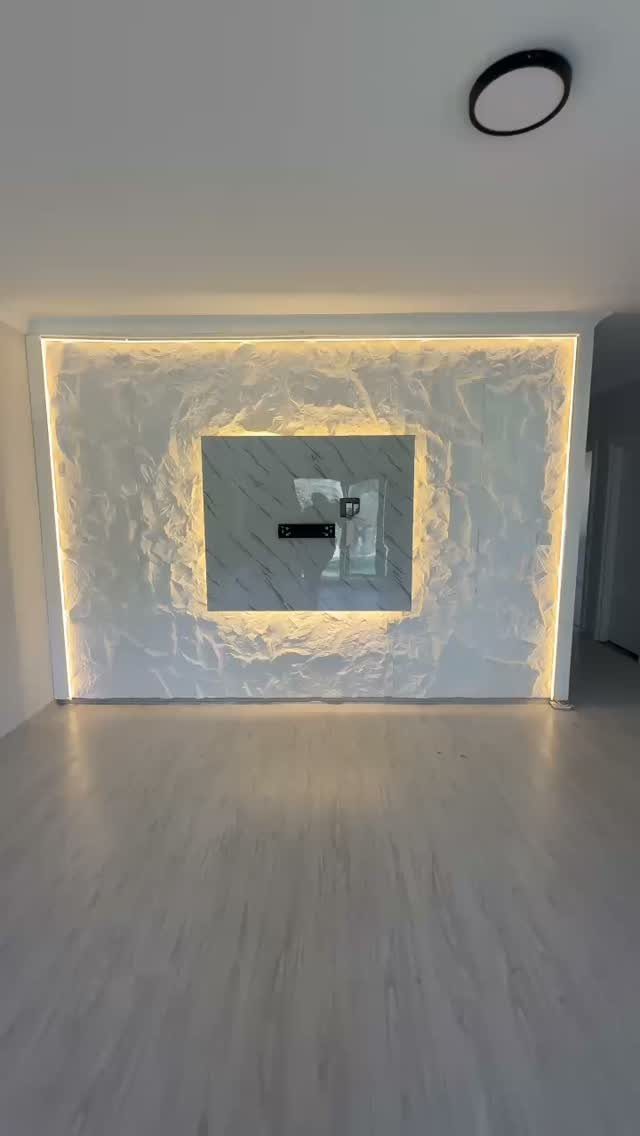
Crinkled or wave-pattern PVC catches light across its surface, so the wall changes as you move through the room. The ridges and valleys catch light from perimeter LED strips and throw shadows that read as twice the actual depth.
Keep the floor quiet, matte tile or plain wood, so the wall stays the event.
Subtle textures suit bedrooms and living rooms where you live with them daily; bolder 3D geometry works in an office or entry where the visit is shorter. Neutral panel colors let you swap furniture without clashing.
4. Stone Look PVC Panels
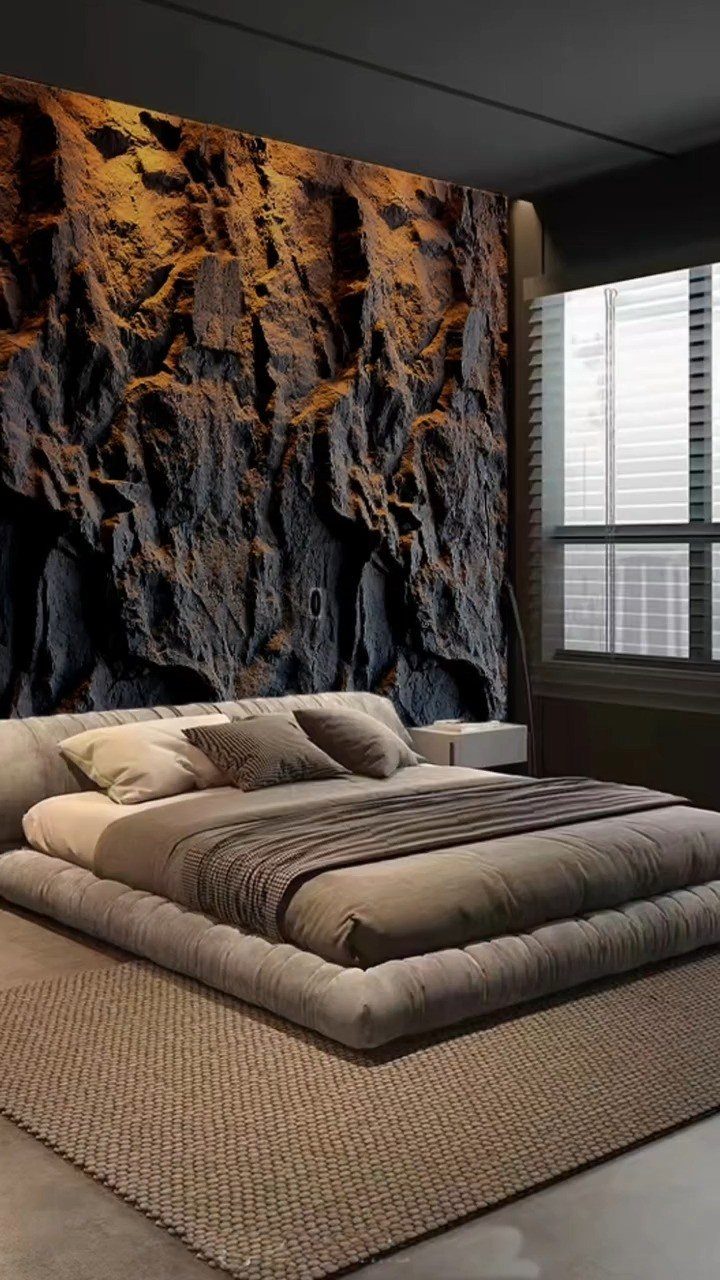
Dark, rough-cut stone PVC brings in the weight of slate or granite without the structural load. That matters on any upper floor or older wall where real stone would need reinforcement.
Pair it with textured flooring, wood-look tile or a nubby rug, to keep the earthy thread running.
I would use this in a bedroom or a den where the mood should settle down, not in a kitchen where the texture fights cleanliness.
Check the panel edges; some stone-look profiles interlock tight, others need trim pieces that break the illusion.
5. Integrated LED Lighting Panels
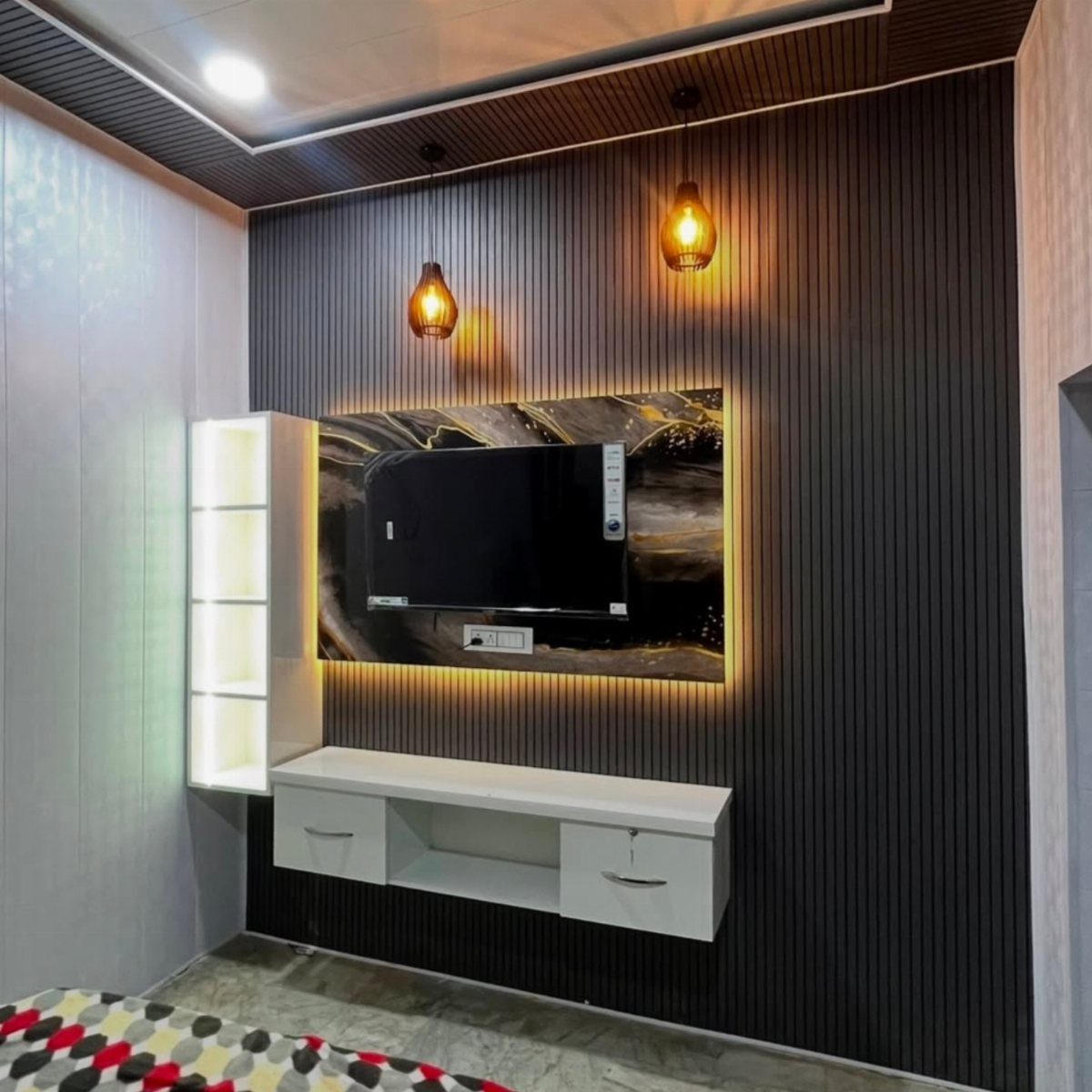
Built-in LED strips turn the panel itself into the light source, not just the surface. The glow pools behind and around the panel, which works especially well with glossy or marble-look finishes that throw the light back into the room.
Plan your wiring before the panels go up; retrofitting means pulling trim. I would run the lights on a dimmer, since full brightness flattens the effect and half-power makes the wall feel like a lantern.
Glossy floor tiles underneath amplify the bounce, though matte keeps it calmer if the room already has enough reflection.
6. Bold Color Accent Panels
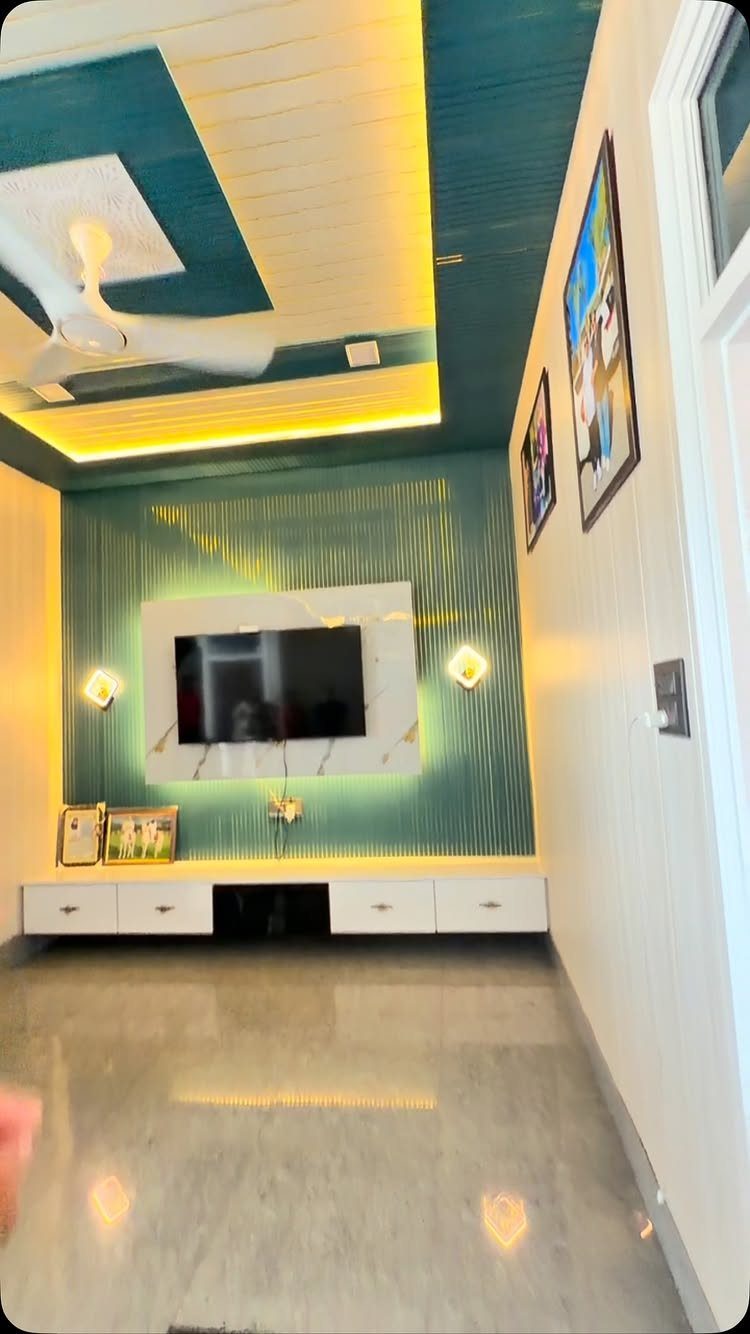
Teal this saturated turns the wall into furniture, almost; the color does so much work that the fluting becomes texture rather than the main event.
That tradeoff suits renters and first-home owners who want one big move instead of a roomful of small ones.
Sage green, terracotta, and matte navy are the shades moving now; teal sits in that family without dating as fast as last year’s cobalt.
I would panel the ceiling too only if the room gets strong natural light, otherwise the color drops like a lid. One wall, one ceiling plane, or a single built-in niche: pick one, not all three.
7. Geometric Patterned PVC Panels
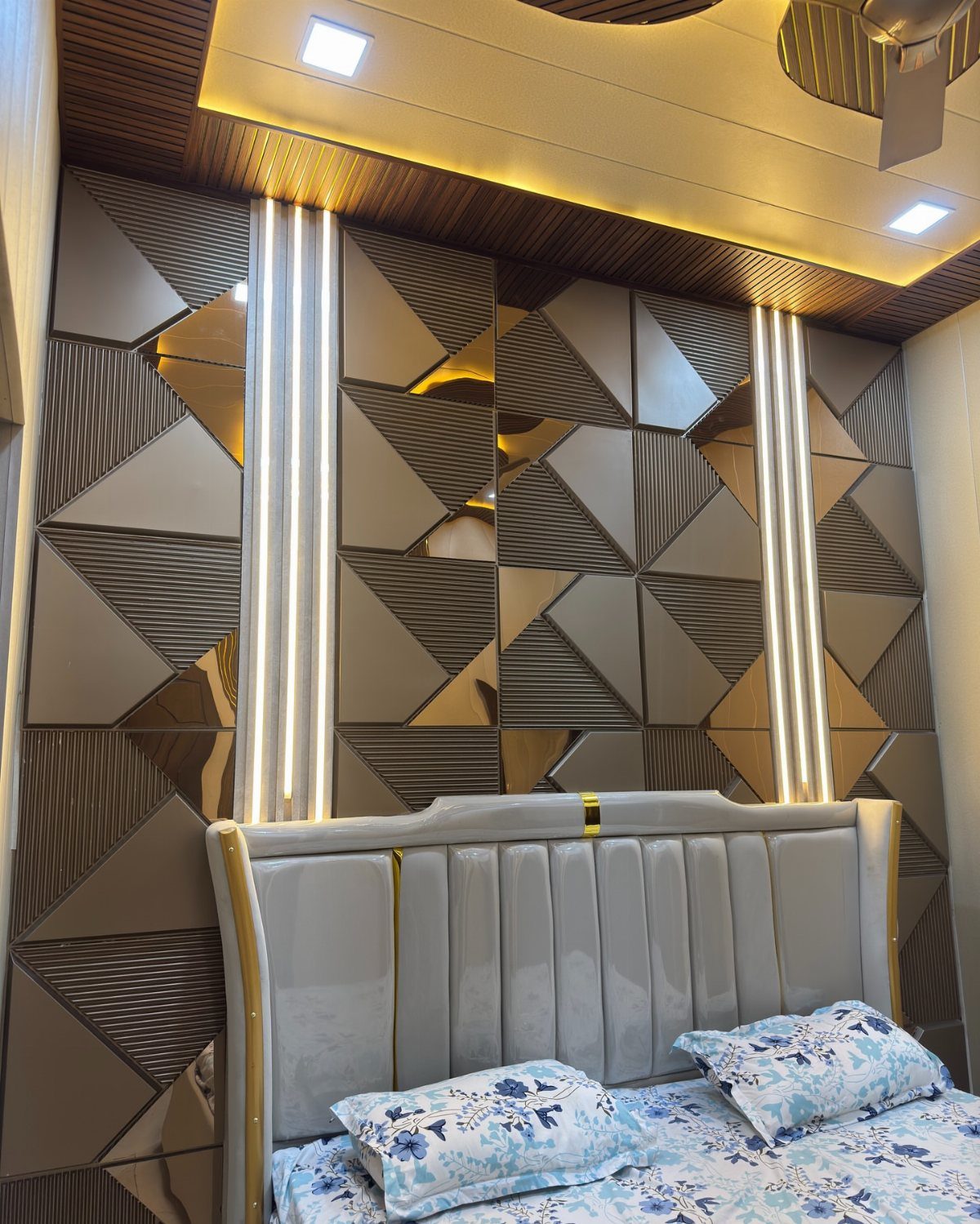
Triangles catch light differently at every hour of the day, which is why this geometric pattern works behind a headboard where you actually see it morning and evening.
Brown, grey and gold panels in 3D relief need edge lighting to do the work after dark; strip lights at the sides make the shapes pop.
If you are buying rather than building, expanded PVC cuts cleanly with a utility knife and weighs almost nothing, so one person can handle a full wall without help.
Velcro mounting exists for rental situations, though I would screw anything with this much depth to the studs and patch later. LED strips behind the panels read as recessed lighting without the electrician’s bill.
This suits someone who wants one showpiece wall and can keep the rest of the room quiet. The pattern is busy; put it opposite a window and it competes with everything outside.
8. Floral Patterned Accent Panels
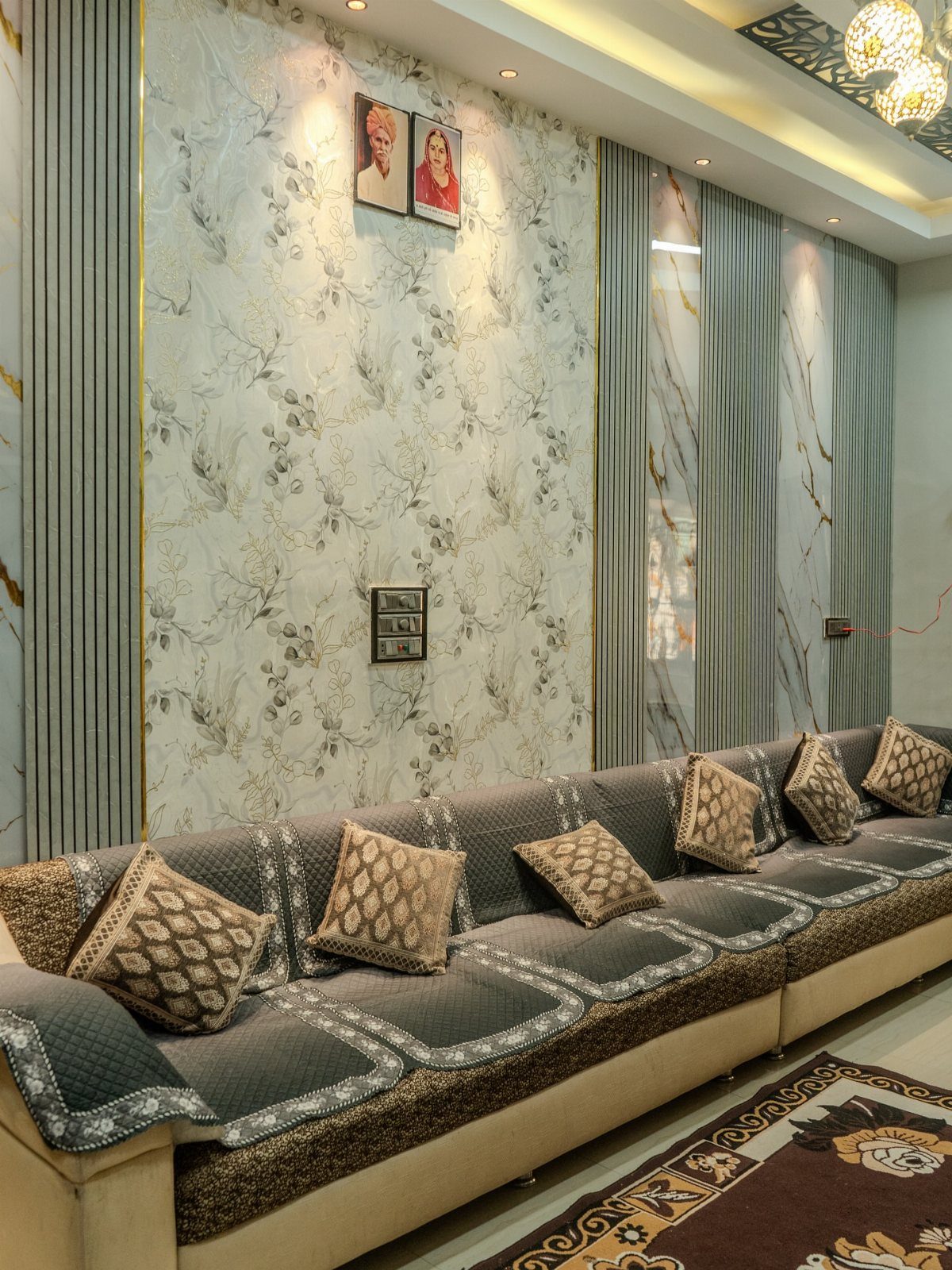
A floral panel dead center, grey fluted panels at each side, gold trim where they meet: this is the formula for a wall that reads as decorated rather than merely covered.
A patterned sofa in front of these panels tells you the wall can hold its own against real life.
PVC floral panels are printed or embossed; embossed costs more but catches side light and hides scuffs from kids or dogs.
The fluted side panels are doing 2 jobs here, adding vertical lines that make the ceiling feel higher and framing the floral center so it does not float loose.
Gold trim is usually an anodized aluminum strip stuck on with contact adhesive, and it is the first thing to look cheap if the width wanders even slightly.
I would use this in a long room where one end needs weight.
In a square room the asymmetry fights itself. For a bedroom, swap the floral for wood grain or marble and keep the same layout; the fluted sides and trim do the architectural work either way.
9. Gold Inlay PVC Panels
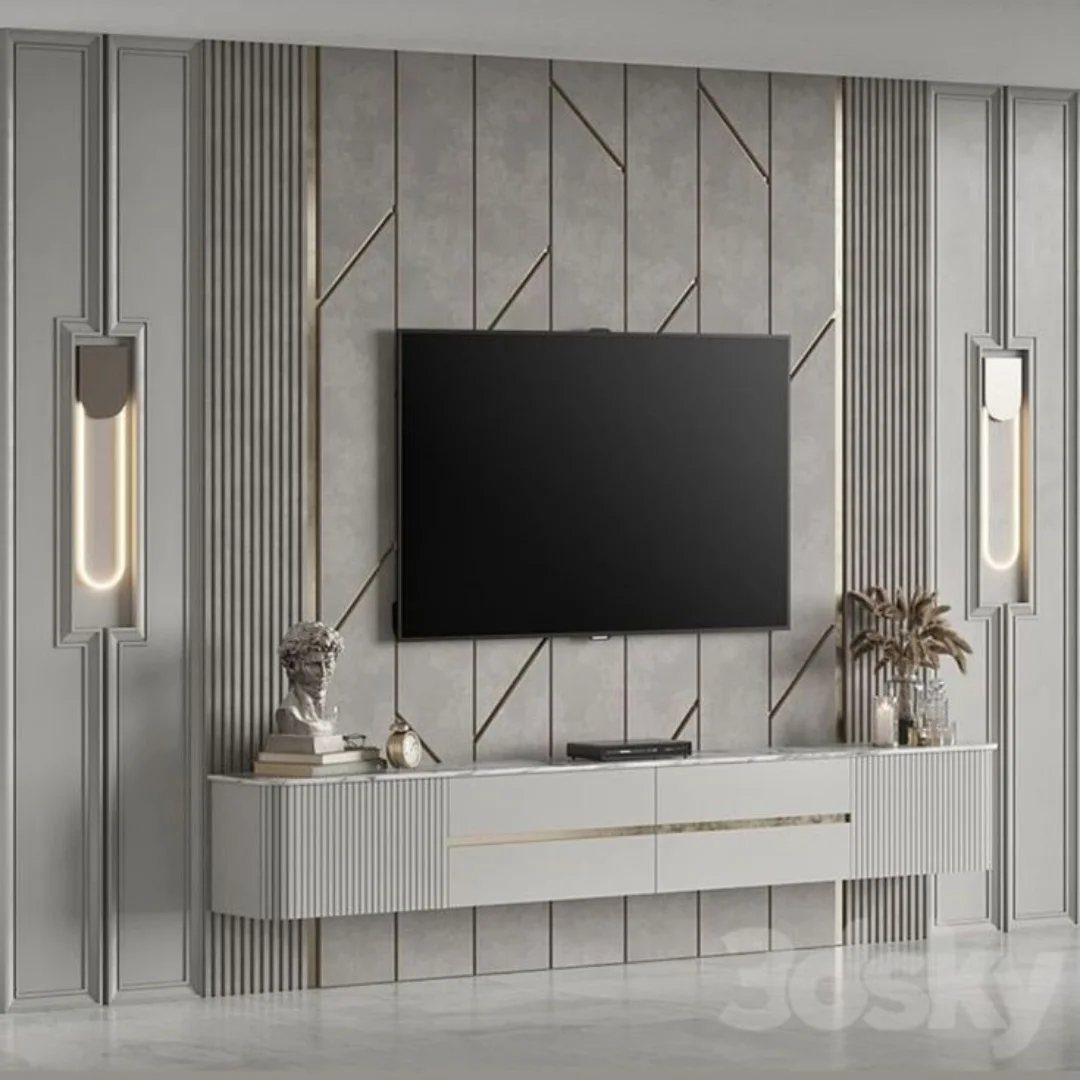
Gold inlay on grey textured panels is the quietest way to add warmth to a modern room without crossing into traditional territory.
Thin geometric lines, recessed slightly, catch light only when the sconces or TV screen is on. That restraint matters: wider gold strips read as dated hotel lobby by month three.
The textured grey base is doing more work than the gold. Texture hides the seams between PVC sheets, which matters on a TV wall where you are staring straight at it from a sofa.
I would check the panel thickness against your TV mount before ordering; some textured panels run thick, and shallow-mount brackets will not seat properly.
This works best where the room already has cool tones and one warm element, like a wood floor or leather chair, to keep the gold from looking orphaned.
If your room is all warm already, skip the inlay and let the texture alone do the job.
10. Vertical Striped PVC Panels
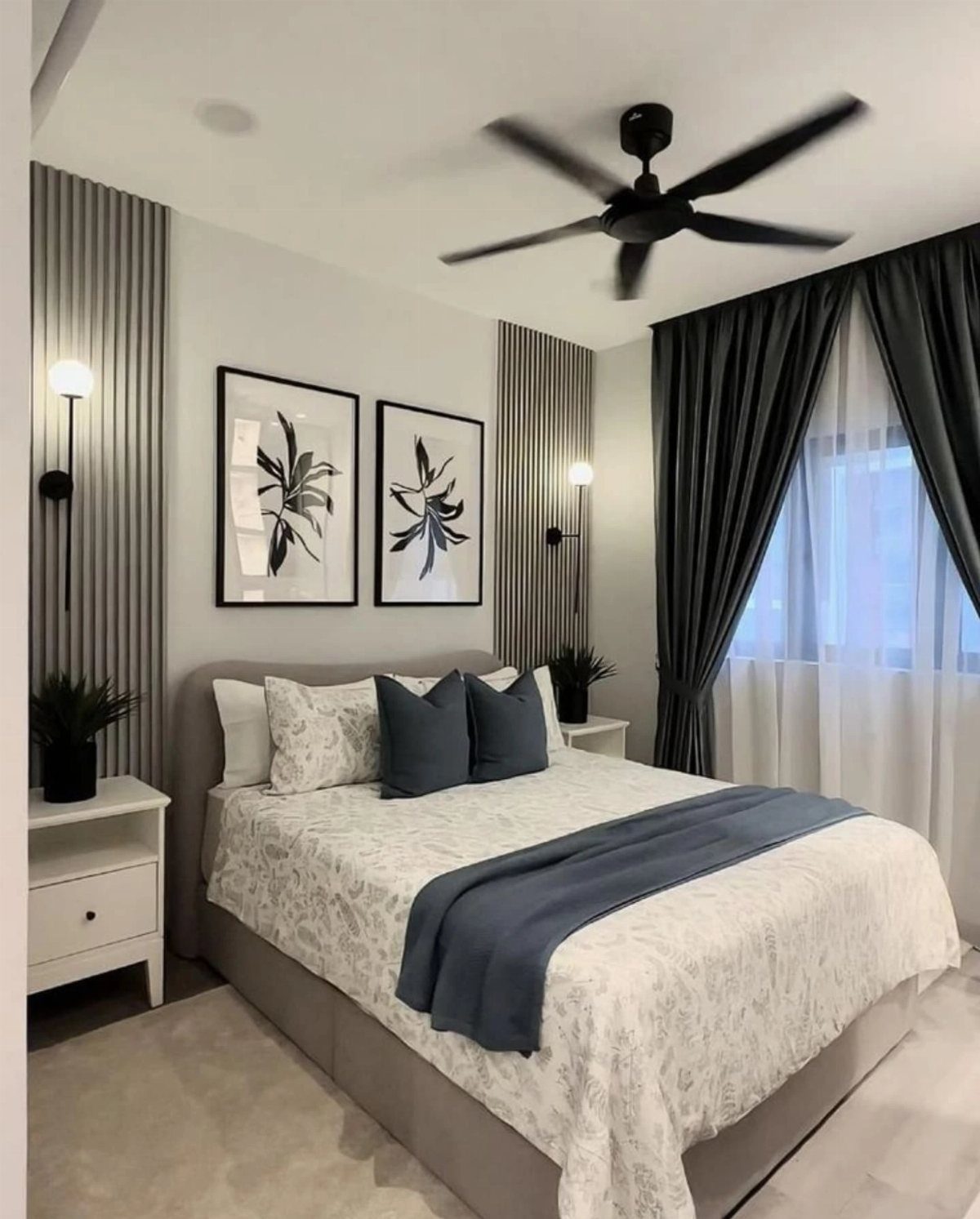
Vertical stripes on headboard panels pull the eye up and make standard ceilings feel intentional rather than low.
The grey and white alternation here is subtle enough to live with, and the sconces mounted directly to the panels tell you the material takes hardware without crumbling.
Grooved PVC panels come in fixed widths, so measure your wall and buy to fit rather than cutting down the groove pattern.
2 narrow panels with plain wall between works because the bed itself fills the center gap; in a room with a platform bed and no headboard, the gap would look like a mistake.
I would use this in a bedroom with horizontal windows or wide furniture that needs breaking up.
In a narrow room the stripes push the walls closer visually, so face them the long way instead, or pick a horizontal panel pattern.
Maintenance Tips for PVC Panels
PVC panels need almost nothing after they go up.
A soft cloth and mild soap handle ordinary dust and kitchen grease; that is the whole routine. Skip anything abrasive, including scrubbing powders or stiff brushes, or the surface finish clouds over time.
Wet the cloth rather than spraying the wall directly, especially near panel seams or trim. Water behind the panels is the one thing that causes real trouble, and standing moisture at the edges can lift adhesive over months.
Glossy or marble-look panels clean the same way; one wipe takes off the dust and brings the finish back. Matte textures hide streaks better but still need the gentle cloth; paper towels can leave lint caught in fine grooves.
Check seams once a year for any lift, particularly in bathrooms where temperature swings stress the adhesive. A thin bead of silicone at the top edge, where panel meets ceiling, stops steam from working its way behind.
Installation Process for PVC Panels
Dry walls matter more than perfect ones.
Old paint can stay; loose paint or crumbly plaster needs scraping back to something solid. Fill holes, sand the patches flush, and sweep dust off before the first panel goes up.
Measure wall height and width at multiple points, old construction is rarely square. A utility knife and straightedge give clean edges if you score deep enough, then snap the panel at the line.
Interlocking panels start at a corner and work across, edge clicking into edge. Trim covers the last cut and the corner where you began.
Adhesive spreads on the back in a zigzag, or panels with a locking system may need no glue at all.
Press and hold for the minute the manufacturer specifies; a rolling pin works in place of a proper roller if you already own one.
LED and 3D panels need planning before the first strip touches the wall.
Wire channels, transformer placement, and where the switch loop exits all get easier with the wall open. Retrofit means pulling trim and hoping you do not crack a panel.
Cost Factors for PVC Panels
Panel thickness drives price more than pattern does.
Thicker stock costs more per square foot but carries its own structure, which matters on walls that are not perfectly flat. Thin panels need a truer surface or they telegraph every bump underneath.
Design complexity adds cost in step changes, not smooth curves.
A basic matte panel runs less than wood-grain or marble-look printing, and 3D relief or gold inlay sits above both. Brand reputation shows up in warranty length and batch consistency, not always in visible quality.
In Indian pricing, panels alone run ₹120–350 per square foot.
Add base material, adhesive, trim, and labor, and the installed total lands between ₹300–800 per square foot. Ceiling work and premium textures push toward the top of that range.
For a US reader, think in ratios rather than converting: the panel is roughly a third of your installed cost, preparation and labor the rest.
A single accent wall in a bedroom is a weekend project in panels, plus whatever trim and adhesive your wall condition demands.
Frequently Asked Questions
What is the price of PVC wall panels?
Thickness and pattern complexity drive the price more than anything else; a plain panel costs less than one mimicking marble or wood grain, and the thin stuff meant for ceilings runs cheaper than the heavy-duty wall grade.
That figure does not include adhesive, trim, or any labor if you hire it out. I would budget an extra 20% for cuts and mistakes on a first wall.
What material is used to make PVC panels?
PVC panels start as polyvinyl chloride resin, then get blended with stabilizers, fillers, and lubricants before the extrusion process shapes them into sheets that stay flexible enough to cut by hand but stiff enough to hang without sagging.
The recipe is what makes them waterproof, termite-resistant, and fire-retardant without extra coatings. That same extrusion process is how they get embossed textures and printed patterns built in, not layered on top.
How do you fit PVC wall panels?
The wall needs to be clean and dry first; after that, a utility knife cuts panels to length and leaves the straightest edges.
Most systems either lock edge-to-edge from a corner or glue directly to the surface with panel adhesive. Trim out the edges with PVC molding to hide any gaps where the wall meets the ceiling or an inside corner.
Can PVC wall panels be used in bathrooms?
Yes, and that is where they earn their keep. The material does not absorb moisture, so it will not warp or breed mold behind the surface the way drywall can.
How do you clean PVC wall panels?
A soft cloth and mild soap handle daily dust and splashes without touching the finish.
Skip abrasive scrubbers or ammonia-heavy sprays; they cloud glossy surfaces and can lift printed patterns over time. If the panel has texture, run the cloth with the grooves so you are not pushing grime into the lows.