Interior wall decor runs from nursery decals you replace in an afternoon to vertical slat panels that need a stud finder and a drill.
The deciding factor is how long you plan to live with the choice: temporary rooms get decals and plate collages, permanent ones get built-in light and anchored weight.
A single 2 mm black metal silhouette or a row of hand-shaped wall-mounted planters with mature pothos in them changes the math on both wall strength and watering schedule.
[link-whisper-related-posts]1. Gallery Wall
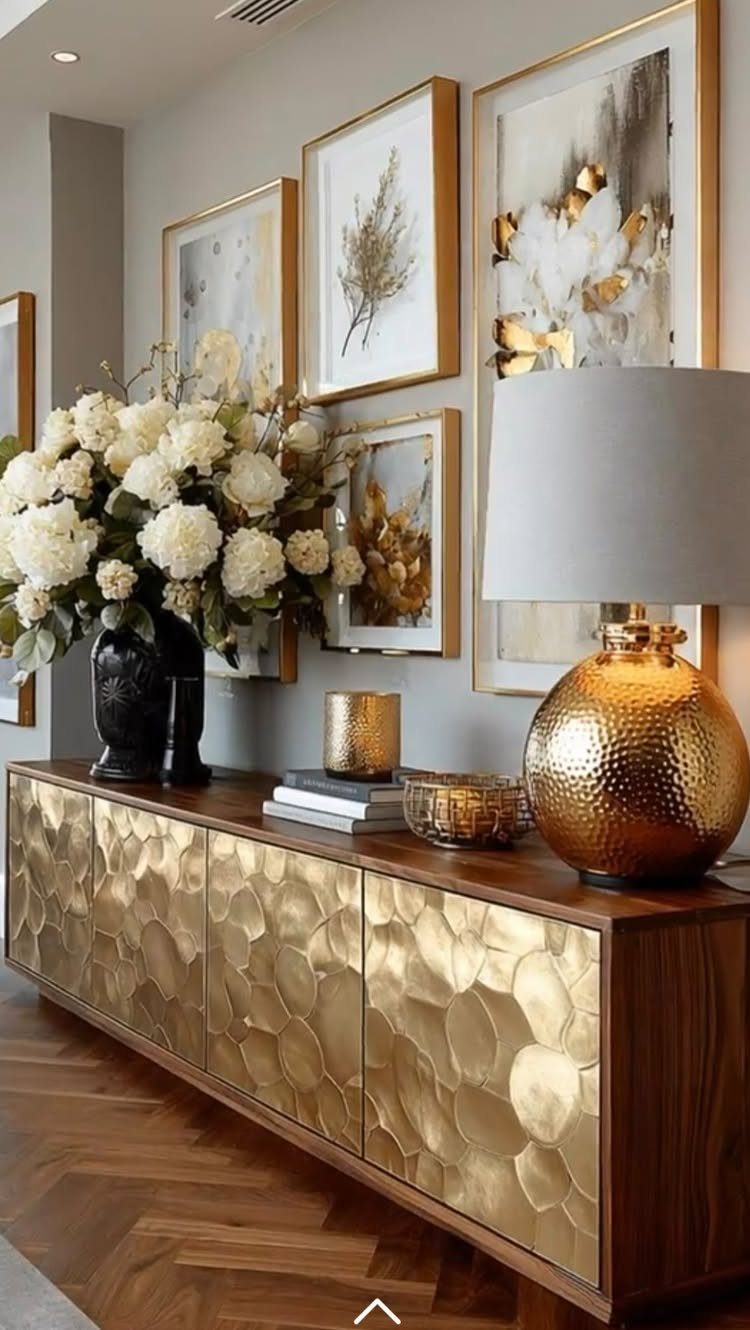
A gallery wall only works when the frames share something: warm metal finishes, matching wood tones, or identical mat widths. Four matching gold frames in a tight grid keeps the arrangement calm even above a busy sideboard.
For renters, command strips rated for the frame weight save your deposit. For first-home owners, nail holes are easier to patch than you think, so a looser asymmetrical grouping is worth trying.
I would start with the largest frame slightly off-center and build outward.
The Scandinavian approach pairs botanical prints with pale wood frames and soft lighting. If your room already has a lot of texture, keep the frames identical.
If the room is flat, mix frame sizes and add one small object, a ceramic dish or a tiny shelf, to break the rectangle.
2. Triangular Panels Geometric Wall Art
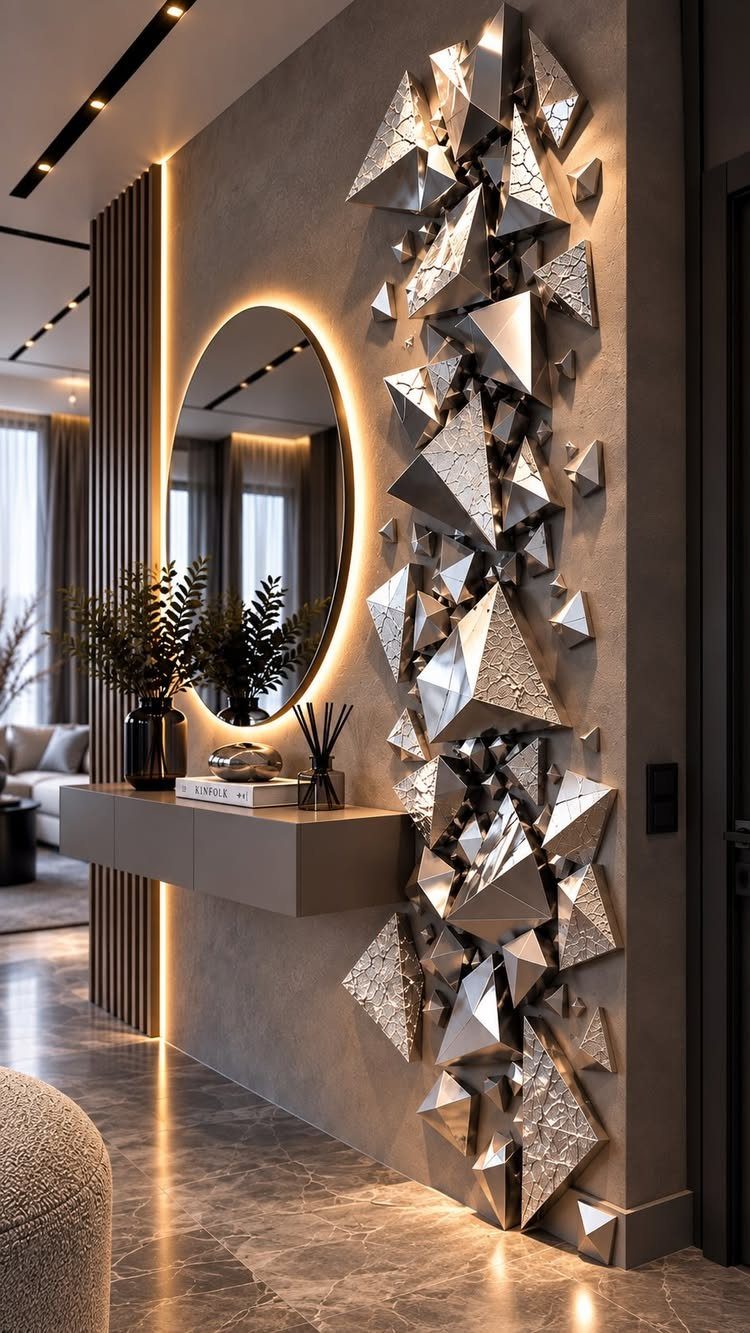
Faceted triangular panels catch light differently across a day than flat art does, which is why they work in entryways where people pause.
Metallic silver triangles at varying depths read differently with a backlit mirror nearby; the light source matters as much as the panels.
Wood-textured panels with inset bronze or gold mirror shapes are easier to live with long-term than all-metal. The mirror catches lamp light in the evening and window light in the morning, so the wall changes.
Installation needs a stud finder or heavy-duty anchors; these panels weigh more than a framed print. I would budget for a contractor unless you are comfortable with a level, a drill, and patching a few misplaced holes.
A wall lined this way reads as architecture, not decoration.
3. Botanical Prints
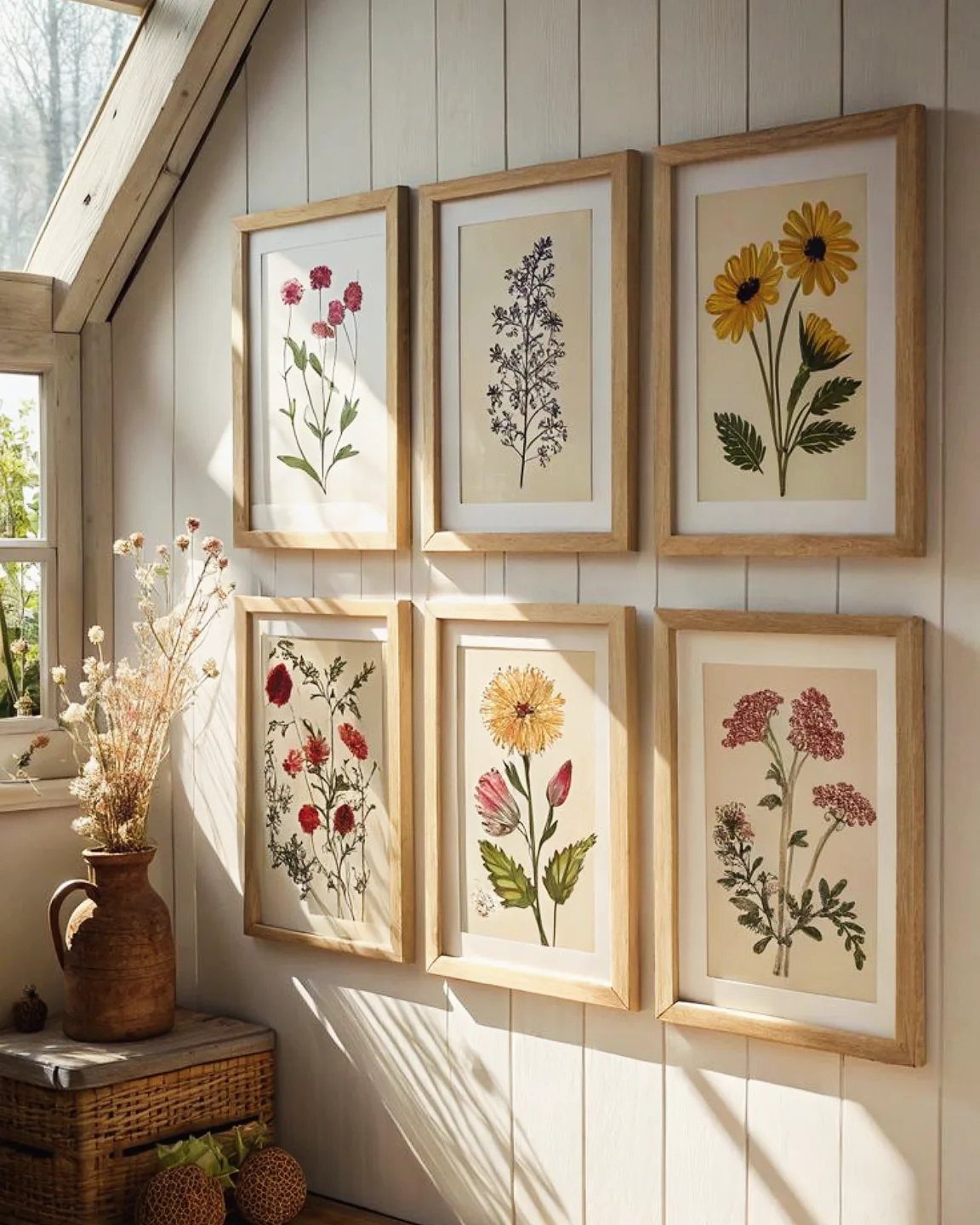
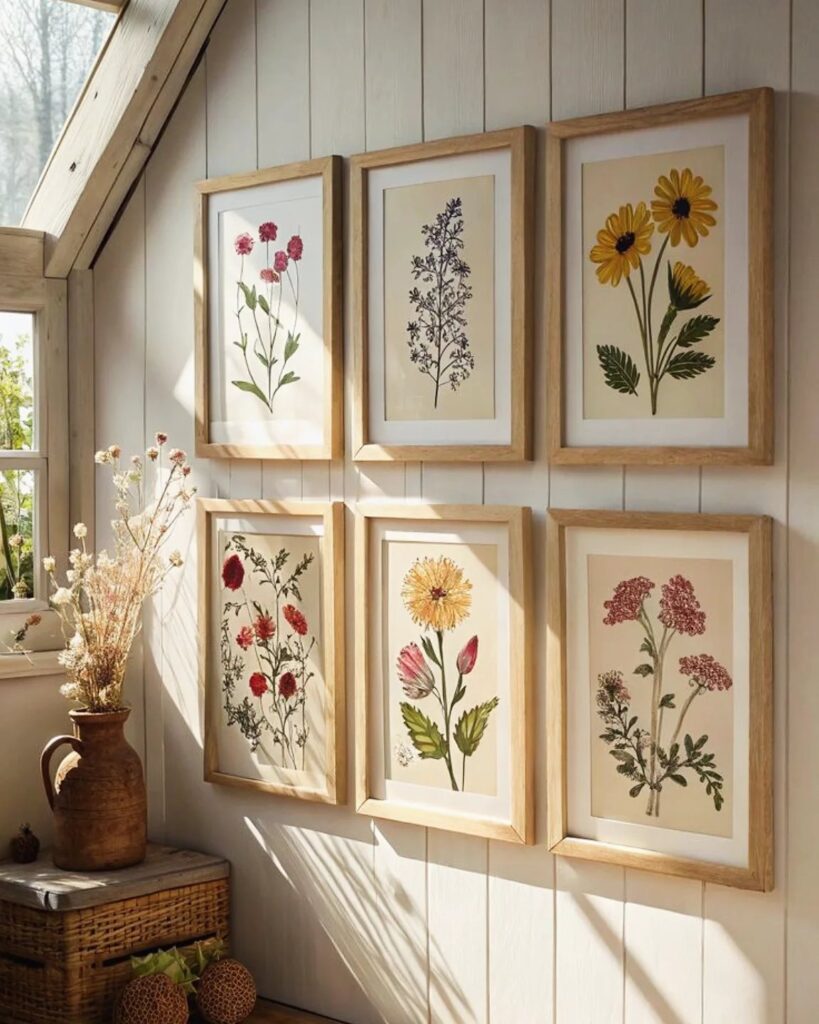
Botanical prints are the safest starting point for wall decor because they bridge modern and traditional without trying hard. Six matching wood frames with white mats keep botanical colors readable against a paneled white wall.
Mixing the idea with other plant-based pieces is where it gets interesting. Circular metal tree art adds geometry; recessed shadow boxes with small vases turn the wall three-dimensional; floating shelves with trailing plants bring in living texture.
I would pick one of these additions, not all three, or the wall starts to feel like a greenhouse.
For a weekend project, six matching frames and a level are enough. The frames usually cost more than the art.
4. Vertical Wooden Slats Wall Panels
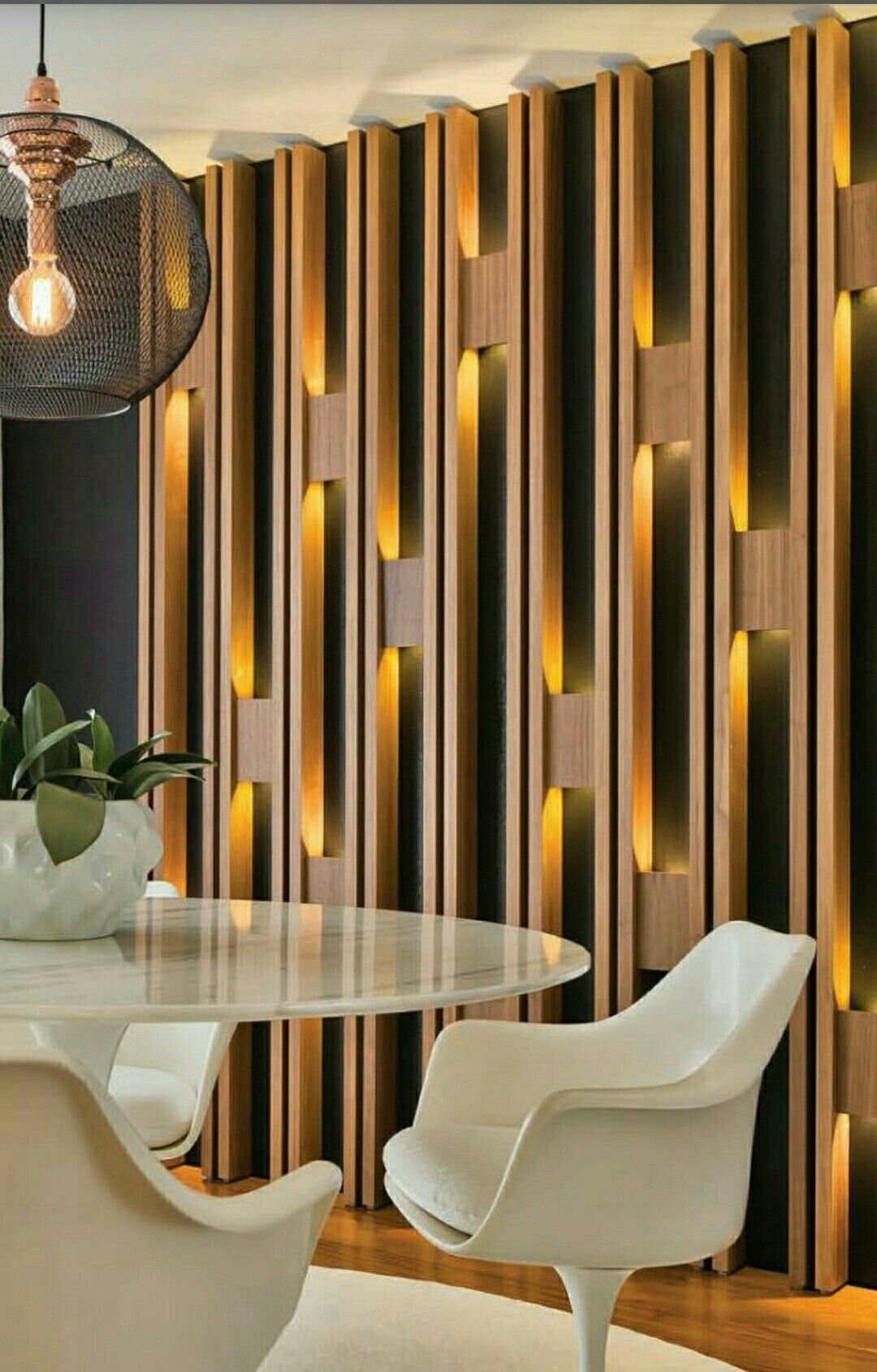
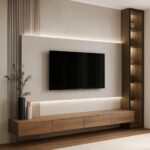
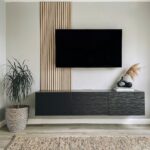
Vertical slats with backlighting turn a plain wall into something that reads as built-in. Varying slat lengths against a dark background with warm LED strips behind; the glow defines the pattern more than the wood itself.
Background color makes or breaks this look. Dark paint or stain behind the slats makes the light gaps read as geometry; a light background and the same installation looks like a fence.
I would go dark in a dining room or bedroom, where the wall should recede, and skip the backlighting in a small room where every inch of brightness matters.
Self-adhesive louver panels exist now, which changes the project from a weekend to an afternoon. Recessed LED strips still need a channel or a gap to sit in, so check the panel thickness before you buy the lights.
5. Diamond Patterns Accent Wall
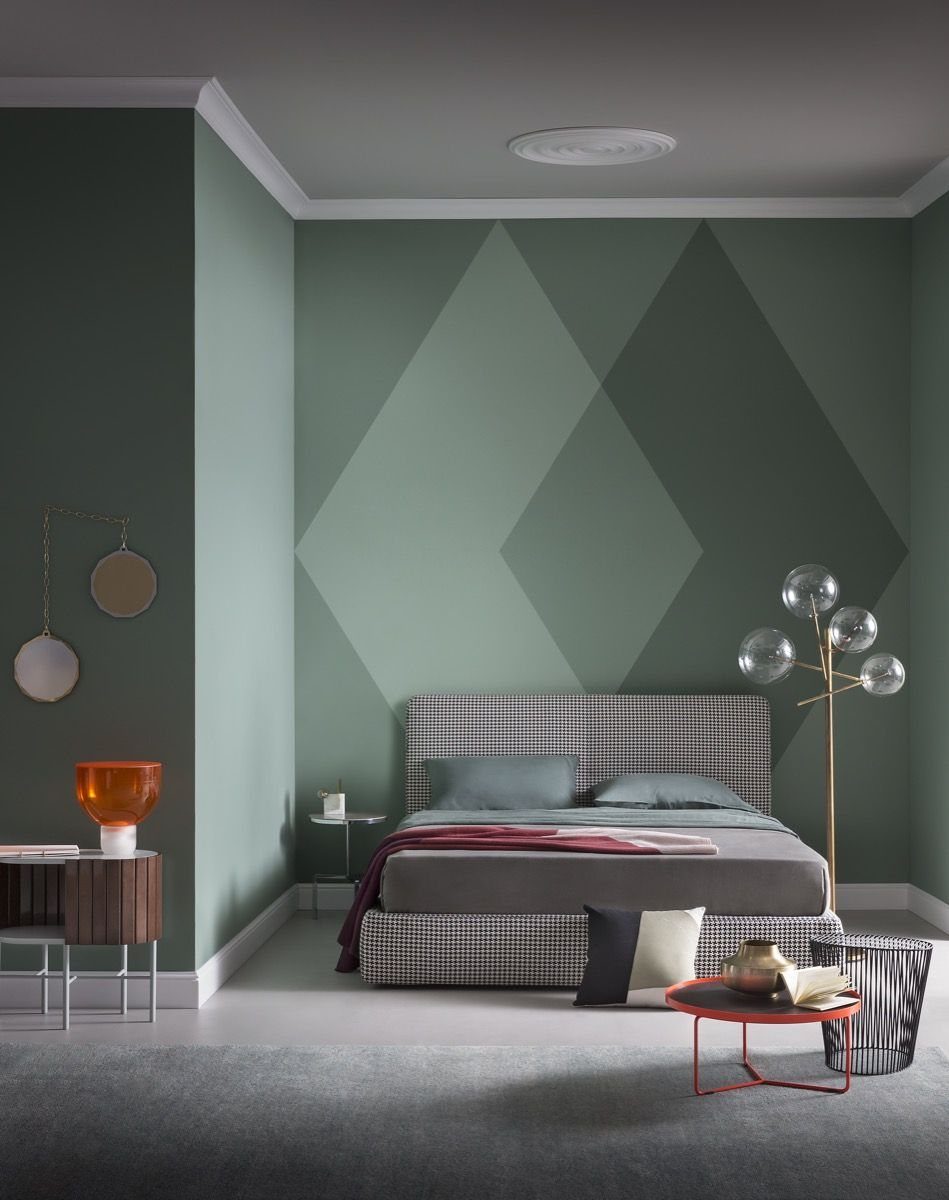
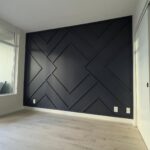
Painting a diamond pattern directly on the wall is cheaper than wallpaper and easier to change when you tire of it. Large sage and mint diamonds on matte paint behind an upholstered bed; the scale matters more than the colors.
Large patterns read as texture from across the room, small patterns read as busyness. I would tape off diamonds tall enough to read from bed height in a bedroom, smaller only in a narrow hallway where people pass close.
A checkered bed competes a little with the diamonds; a solid-colored bed would let the wall do more work.
Matte paint is forgiving during touch-ups, which you will need at the tape lines. Two coats of base color, one coat of the diamond color, and peel the tape while the second color is still slightly tacky.
6. Hand-shaped Wall-mounted Planters
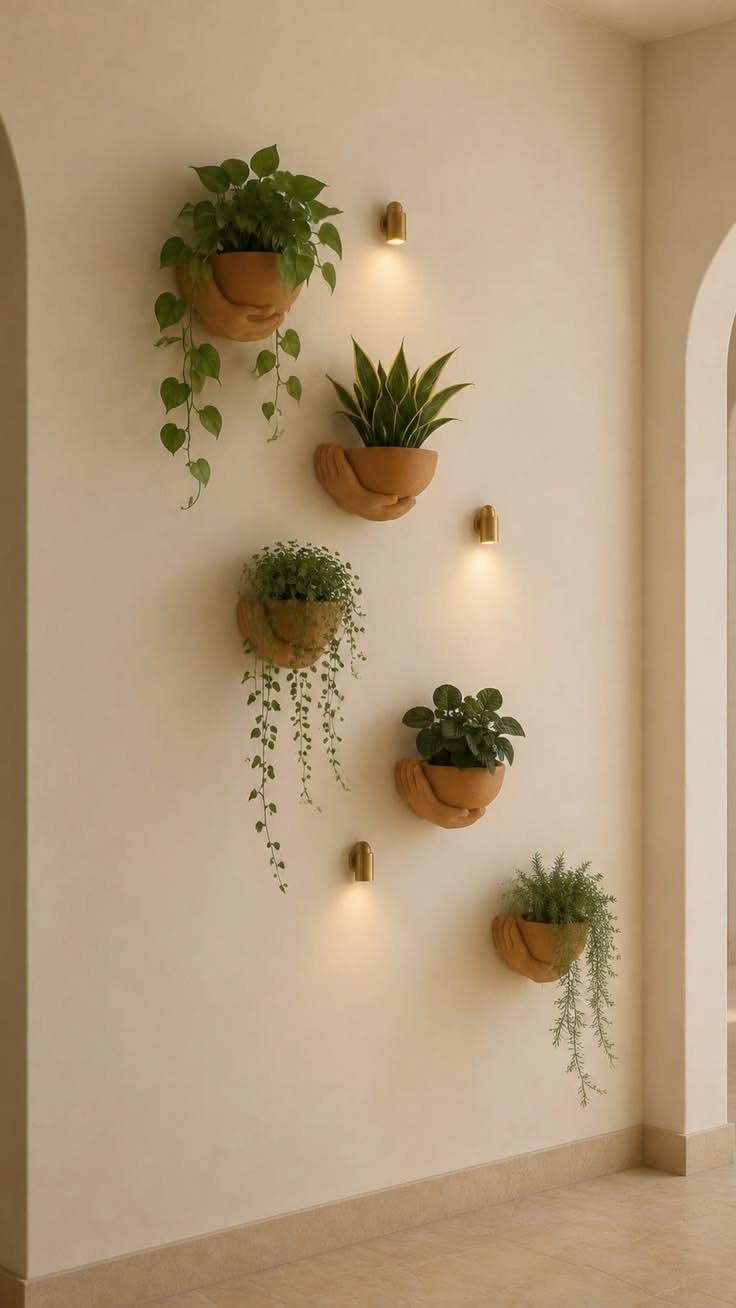
Hand-shaped planters are sculptural enough to carry a hallway that otherwise has no architecture.
Terracotta versions holding trailing and upright plants in a staggered line, with small brass sconces between them; the lighting turns the wall into an installation at night.
Staggered placement matters more than perfect spacing. I would start with the lowest planter at hip height and step upward, which follows how the eye moves down a hallway.
The plants need to tolerate the light you have; pothos and philodendron handle low light and look good trailing from a hand cupped upward.
For renters, these need real anchors or a mounted rail system. The weight adds up fast: terracotta, soil, water, and a mature plant need anchors rated for more than the empty planter alone.
Brass sconces between them are optional but worth it; the warm light makes terracotta glow.
7. Floating Shelves
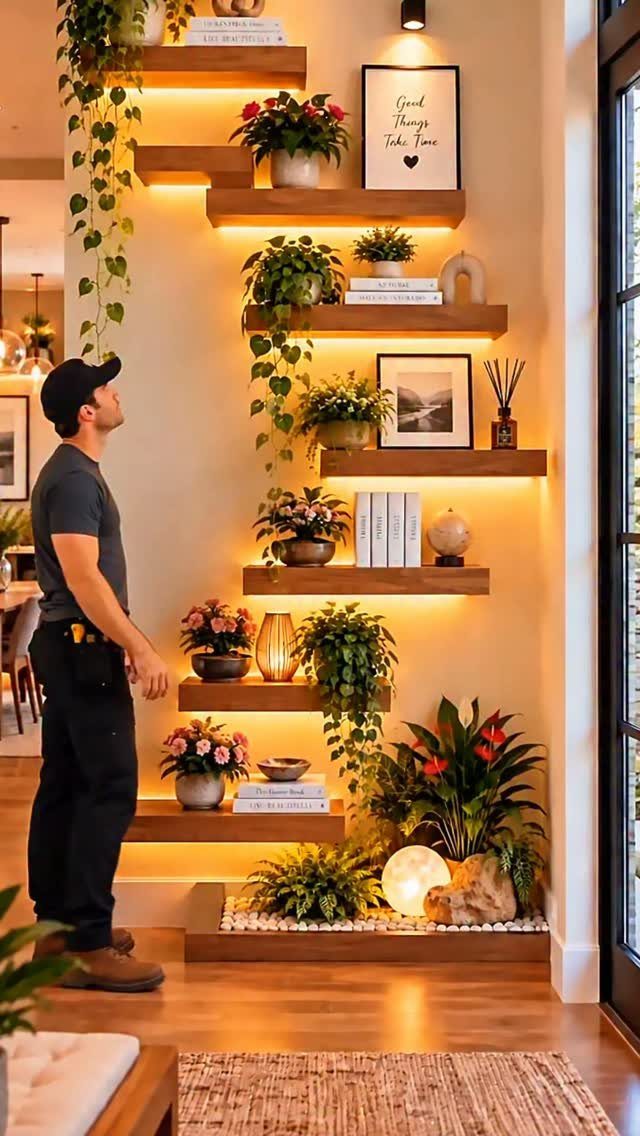
Floating shelves hide their brackets inside the shelf itself, so the wall stays clean and the objects seem to hover.
That corner setup with staggered heights and backlighting works because the light carves out depth where the wall would otherwise go flat.
Hardware makes or breaks the look; the bracket has to disappear completely. A hollow shelf slips over a metal bracket locked to studs; solid wood needs rods drilled deep into the wall.
I have seen too many sagging shelves where someone guessed at drywall anchors. Check your bracket rating against what you plan to load: books run heavy, trailing ivy barely registers.
Staggered placement lets you tuck in a framed piece or a candle without everything lining up like a store display. Backlighting comes from LED strip, warm temperature, run off a wall plug or hardwired if you are comfortable with that.
Battery strips exist but need tending like a houseplant.
This suits renters who can patch 3 screw holes later, and owners who want storage that reads as sculpture. A floating shelf will never carry what a bracketed one will; that is the cost of the clean look.
8. Old Shutters Decor
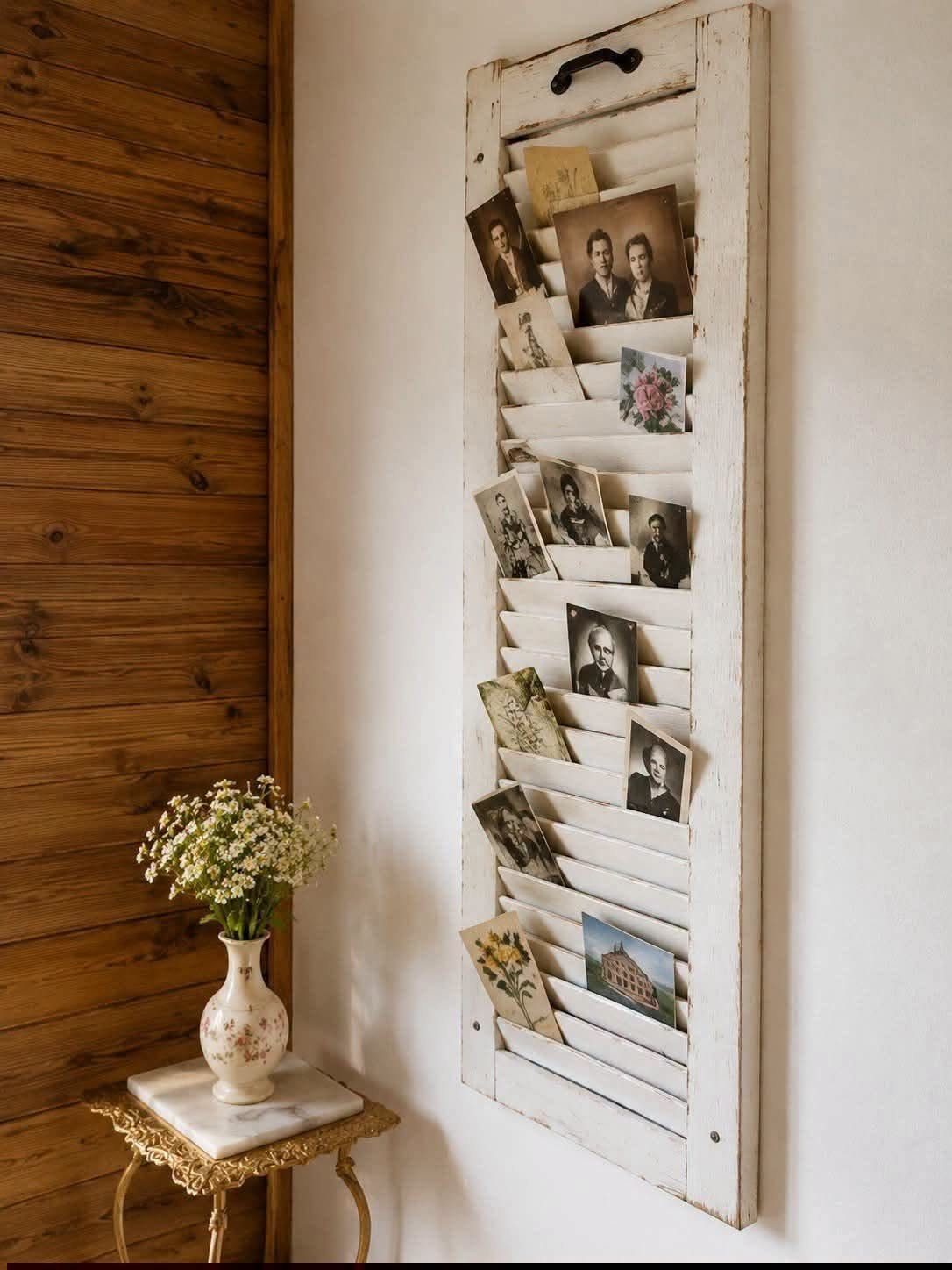
A shutter’s slats are already a grid waiting to hold something. Tuck vintage portraits or postcards between them and the louvers do the framing for you.
Weathered white finish against a white wall keeps the look from going too country; the distressing adds texture without shouting for attention.
Vertical gardens are the other move: wire small pots or glass votives into the slats, or lean air plants where the slats angle down.
I have seen headboards built from a pair of shutters stood on end, though that needs a bed width that matches what you find.
Sourcing matters more than building. Architectural salvage yards price shutters by the pane; estate sales can yield a stack for the cost of one reproduction.
Check that the slats still tilt and lock, or the pieces you tuck will slide through.
The rustic charm is real but it commits a room to a direction. In a space already mixing eras, a shutter fits.
In a room chasing minimalism, it reads as clutter.
9. 3D Wall Art
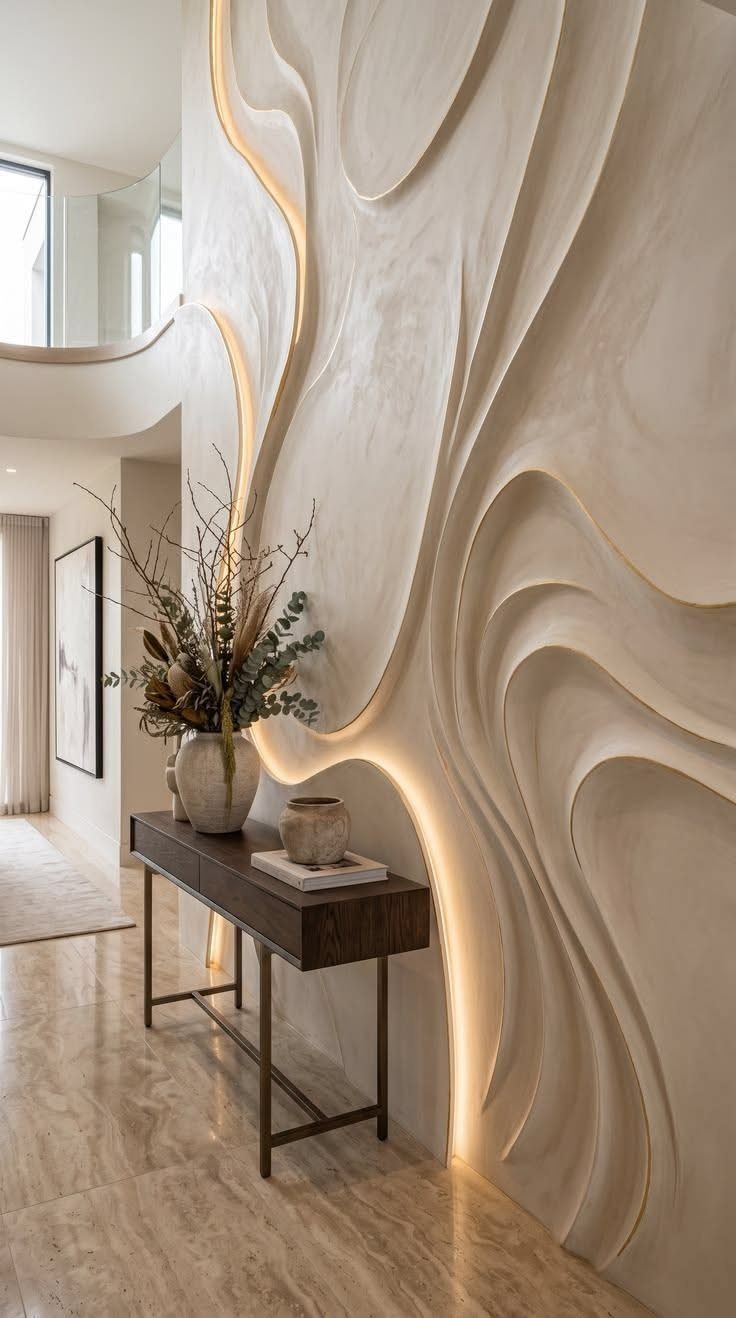
Layered timber sections at different heights cast shadows that change through the day, so the wall becomes something you watch as much as hang.
Wave relief with backlit edges pushes the effect further; the light finds the high points and drops the lows into shade.
Construction is layered plywood or solid timber, cut on a CNC or by hand with patience and a jigsaw. The backing board stays flat; each successive layer gets shorter or narrower, building the form.
Paint or stain each layer separately before assembly, or the gaps stay raw in a way that only works if you intended it.
Same technique, different mood; choose based on what the room already holds.
Cost scales with size and complexity. A single panel above a console is a weekend; a full wall is a commission or a very long weekend.
A slim, dark console below is the right pairing: it sits there without competing.
10. Ceramic Wall Art
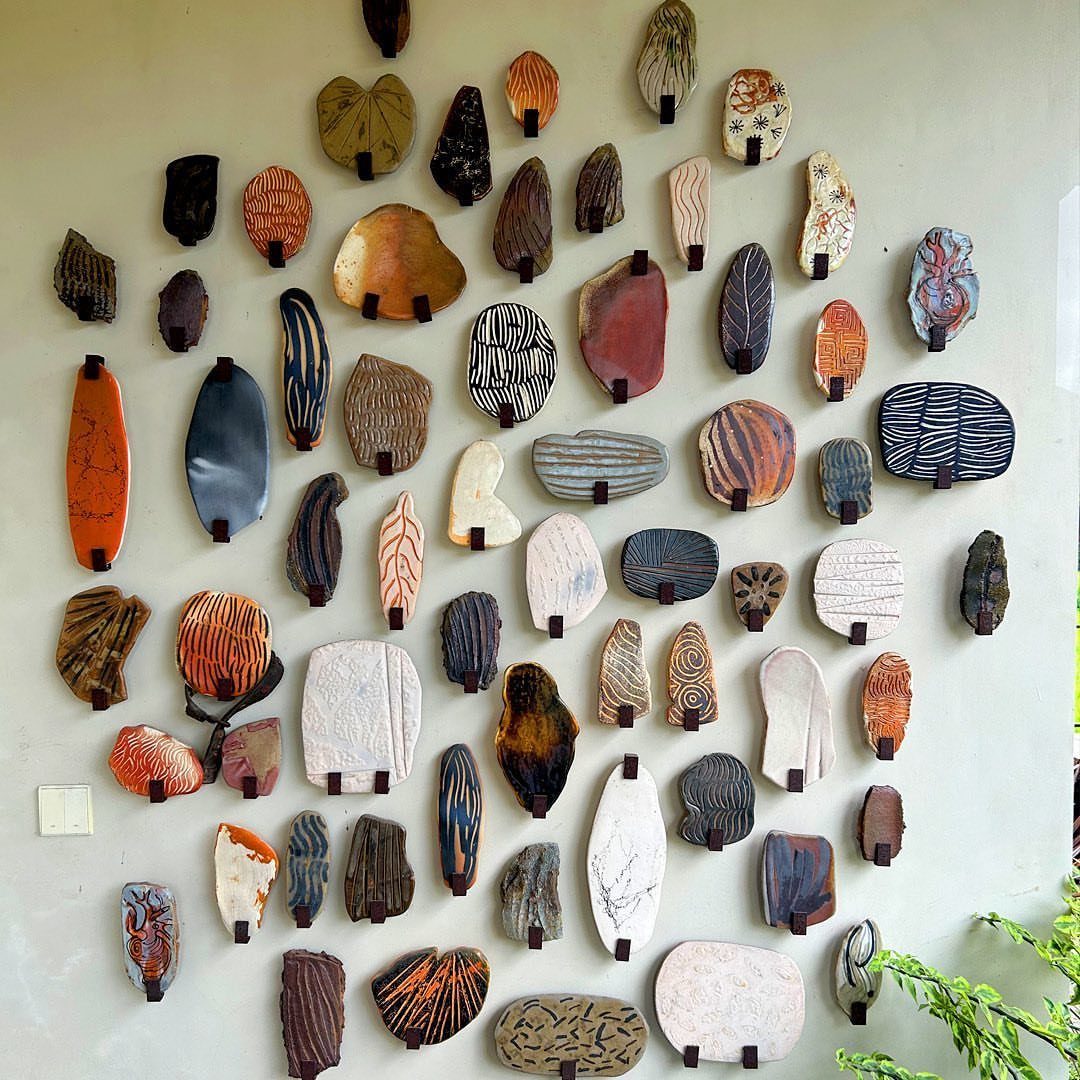
Ceramic wall art lives in the space between tile and sculpture. The brackets holding them off the wall let light pass behind, so the wall color becomes part of the piece.
The leaf sculptures in white and metallic gold, scattered organic, work on a neutral wall because the gold catches lamp light and the white holds its own against pale paint.
Earthy tones need a wall warm enough to receive them; put terracotta against stark white and it looks stranded.
Making ceramic pieces means clay, kiln, and time most readers do not have. Buying from ceramicists costs more than mass production but less than gallery work; a cluster fills a wall meaningfully when you stop counting and start arranging.
Arrange on the floor first, photograph the layout, then transfer up.
The weight adds up. Toggle anchors or molly bolts, not picture hooks, and check that your wall can take it.
11. Black Metal Wall Silhouettes
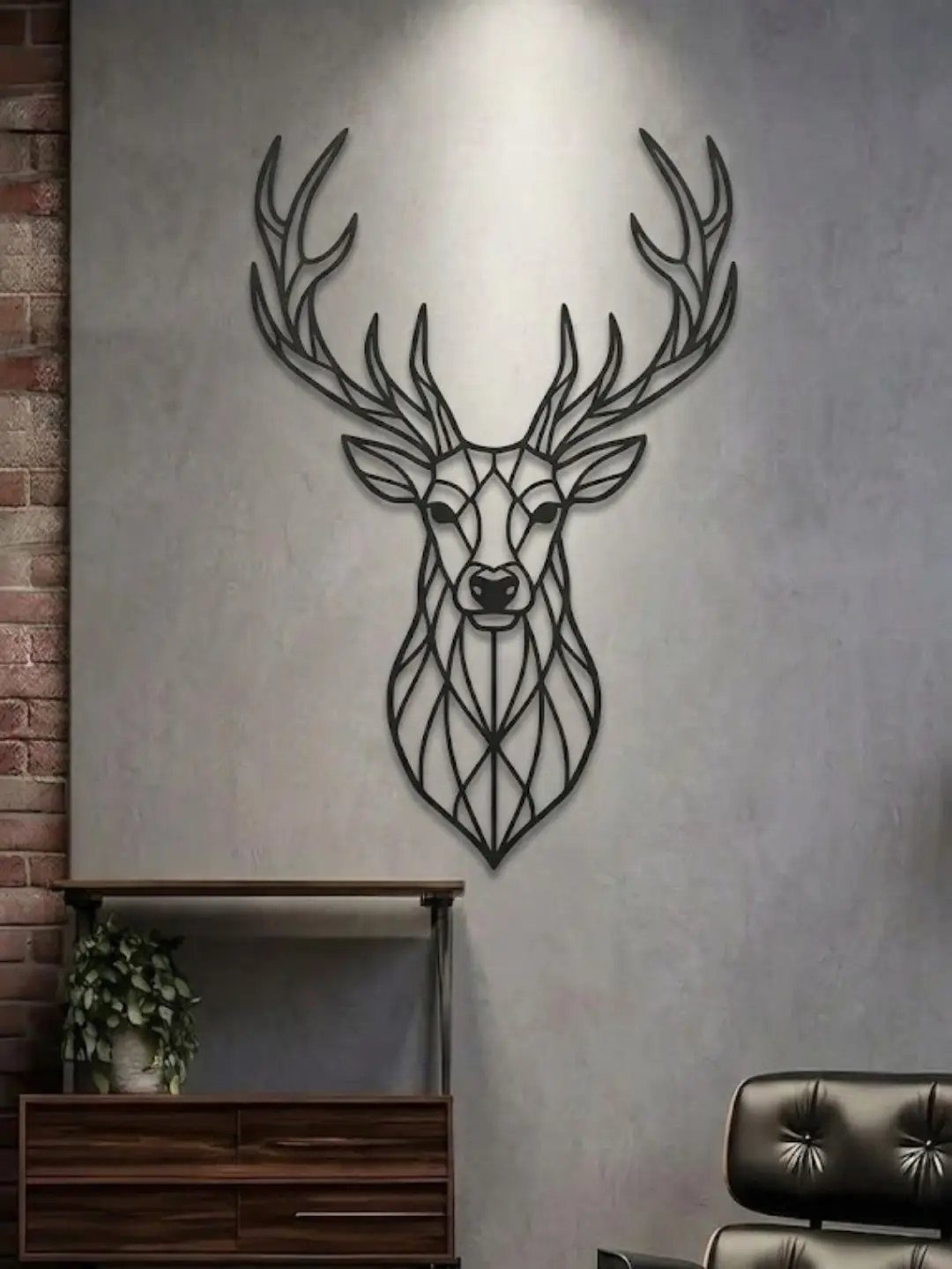
A black metal silhouette reads as line drawing in space.
A geometric stag head large enough to own the wall works because the negative space inside the frame lets the gray texture show through, so the wall and piece become one thing.
Metal this thin, 2 mm steel, ships flat and hangs like a heavy picture. The precision cut matters; hand-cut tin reads folk art, laser-cut steel reads designed.
Matte black finish disappears; gold-and-black declares. Those are the two directions.
The deer, the abstract rods, the circular sculpture: each is a single gesture. This is not a gallery wall; it is one object that holds the wall alone.
The console below it should be quieter than the piece, not competing in material or finish.
Renters can use a heavy-duty hook rated for the weight and patch one hole later. Owners might want to hard-mount for security.
The silhouette casts a shadow that shifts; place it where morning or evening light gives it a second life.
12. Nursery Wall Decals
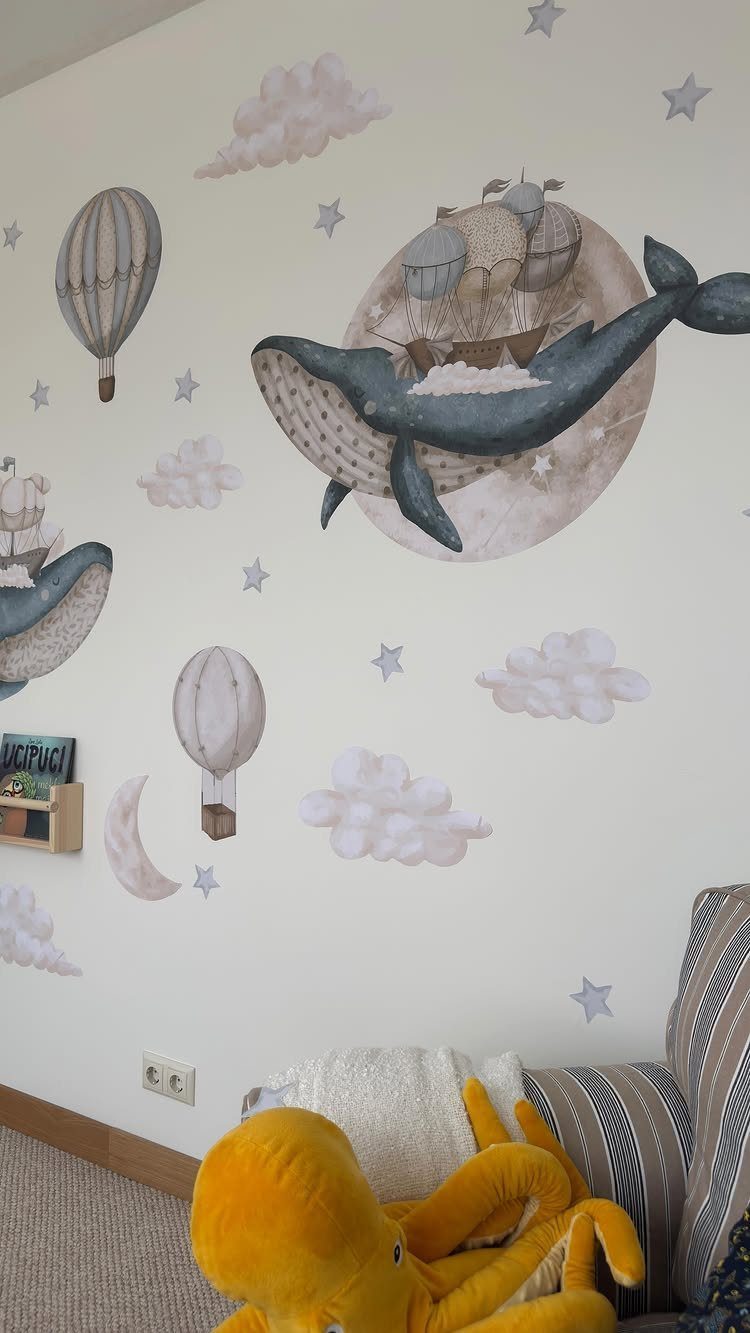
Wall decals let a nursery change as fast as the child. Whales and balloons peel off when the phase passes, or when the room becomes a study space and the octopus moves to a closet.
The application is dry, no paste, no water on fresh paint.
Brown and tan keeps it from screaming theme; the red potion and blue gem frames are for the kid who has already chosen.
Surface prep is the whole job. Paint needs time to cure fully or the decal lifts the finish; texture means air bubbles and early peeling.
A squeegee and patience beat a hairdryer and hope.
Cost runs low enough to treat as temporary. A large whale scene costs little; a full wall of pixel pattern, more.
Edges curl eventually, sooner in direct sun; that is the cost of a temporary fix. For a room that turns over every few years anyway, that is the right match.
13. Decorative Wall Plate Collage
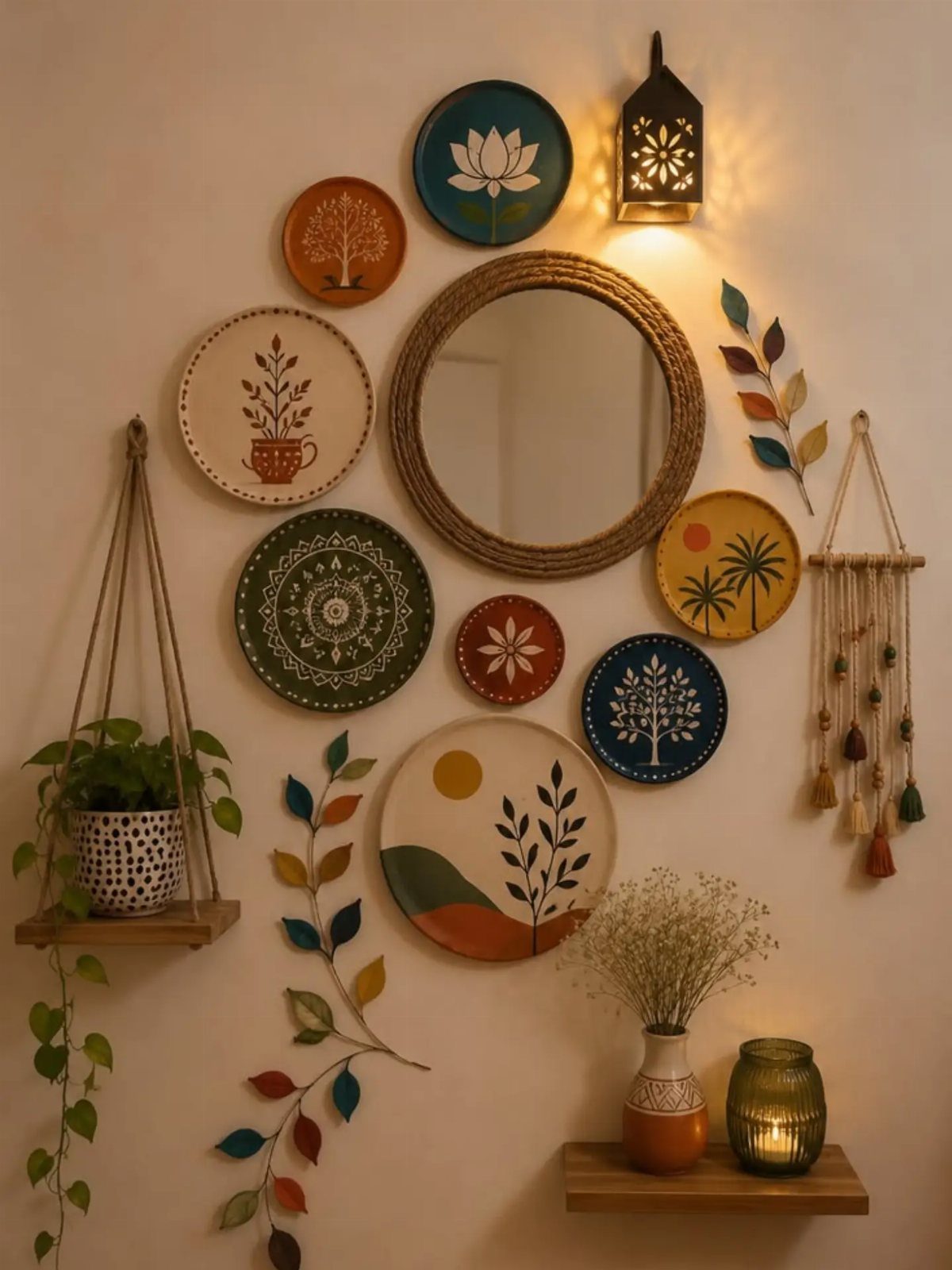
Decorative wall plate collages work best when the plates overlap slightly rather than floating in rigid rows.
Botanical patterns that share a palette read as one garden viewed through different frames, and that cohesion is what keeps a cluster of plates from looking like yard-sale finds.
Start with one large plate as an anchor, then build outward with smaller ones in size steps that feel gradual rather than random.
Thrift stores and estate sales are the usual sources; the price per plate is low enough that a whole wall costs less than a single framed print.
A plate hanger wire costs next to nothing and holds firmer than the stick-on discs on anything heavier than a salad plate.
The round mirror tucked into this cluster is a smart move: it breaks the sameness and bounces light back into the room. I’d add one only if the wall faces a window or a lamp.
This idea suits renters who can’t paint and homeowners who want pattern without wallpaper commitment. Each plate is a surface to wipe, so this idea asks more of a duster than a canvas or print would.
Skip it if you hate rearranging, since finding the right overlap takes trial and patience before a single nail goes in.
Current Wall Decor Trends
Gallery walls, floating shelves, and natural materials are what I see most often in current wall decor.
The combination reads as intentional rather than accumulated when the materials share a finish: warm wood shelves with wood frames, or black metal brackets with black metal sculpture.
Natural textures currently run toward raw edges, visible grain, and matte surfaces rather than high gloss.
What changed is the lighting. I would not build a feature wall now without planning where the light source sits.
Decorating with Plants
Wall-mounted planters and floating shelves with greenery solve the same problem differently. Planters carry weight and need real anchors; shelves let you swap plants without drilling again.
The Scandinavian approach keeps plant walls readable by limiting variety: one species, one pot color, one shelf material. The calm comes from repetition, not from a botanical collection.
The objects on a floating shelf need to share scale: a small plant, a book, and a ceramic object sit right together because none of them overwhelms the others.
Three plants of different sizes on one shelf fight each other; one plant and two still objects lets the green breathe. Backlighting from below, warm temperature, turns the shelf into a lamp at night without adding a fixture.
DIY Wall Decor Ideas
Old shutters are the best example of repurposed wall decor because the slats are already structured. The work is sourcing and cleaning, not building from raw lumber.
For original art, layered plywood builds 3D relief without a CNC if you have patience and a jigsaw.
The money saved on shutters or self-built timber art goes toward proper hardware. Sagging shelves and fallen panels are almost always an anchor problem, not a material problem.
Color Schemes for Wall Decor
Bold color on walls works in large shapes, not small busy patterns. Overlapping triangles in mustard, terracotta, teal, and white need scale to read as texture; the same colors in small diamonds would jitter.
Muted tones, forest green and sage, suit walls that should recede. I would use them behind slats with backlighting, or as the ground for botanical prints in pale wood frames.
Matte paint is the practical choice for any hand-applied pattern. Gloss or eggshell will show every overlap.
Frequently Asked Questions
What are the current wall decor trends?
Gallery walls with matching frames, floating shelves with hidden brackets, and natural materials like wood and ceramic are holding strong. Geometric panels and vertical slats with backlighting are newer moves that add architecture without a contractor.
Botanical prints in matching wood frames hit a middle ground that works in most rooms, modern or traditional.
What can I put on my walls to decorate?
Framed art, floating shelves with plants or objects, textured panels, ceramic pieces, or even old shutters with items tucked between the slats.
A weekend gallery wall needs six matching frames, a level, and a tape measure; the frames usually run more than the prints. One material direction, carried across every piece, keeps a wall from looking like a random accumulation.