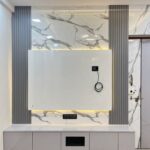
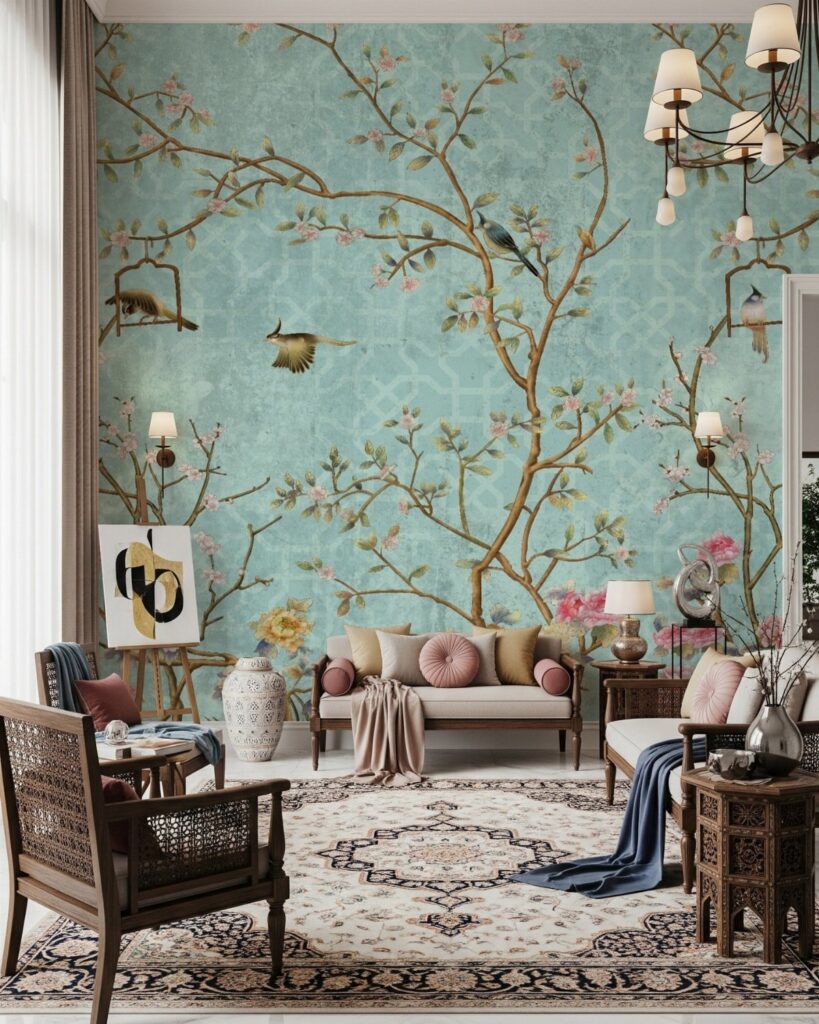
These ideas range from mirror tiles you stick up in an afternoon to full natural stone installs that need structural reinforcement and a contractor’s timeline.
The deciding factor is whether you own the wall or answer to a landlord; that single fact eliminates options like stone, tile, and wood paneling before you pick up a sample swatch.
Even the faux marble paint finish needs a base coat drying overnight, so every option here respects that a weekend is the most time most of us can give it.
[link-whisper-related-posts]1. Painted Feature Wall
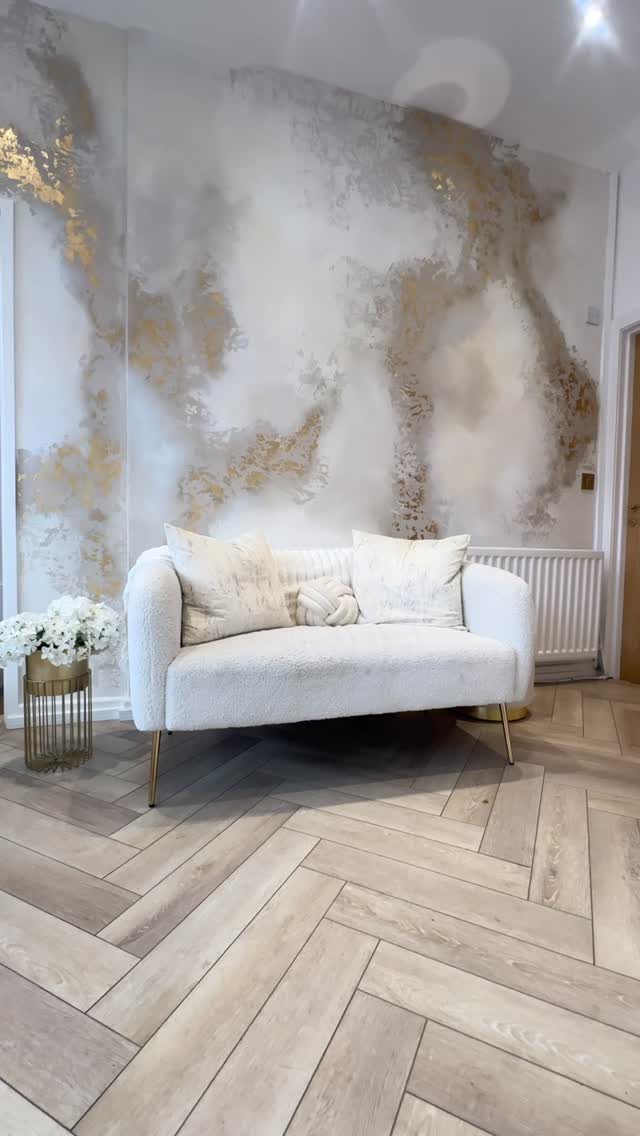
A painted feature wall lives or dies by the finish you choose, not the color alone.
A marbled effect reads expensive because it mimics stone without the weight or the install; you can get there with tinted glazes layered over a base coat and worked with a dry brush while still tacky.
For a softer bedroom, Benjamin Moore pairs like Hint of Violet 2114-60 against Quiet Moments 1563 give you that cocoon feeling without closing the room in.
This suits renters who can paint one wall and patch it later, or first-home owners who need the focal point now and the built-ins later.
A faux marble takes a full weekend, two if you count the base coat drying overnight. A single bold color takes 4 hours and a roller.
I’d skip texture paint in a small room; the bumps catch shadows and the wall advances on you.
2. Mural Wallpaper
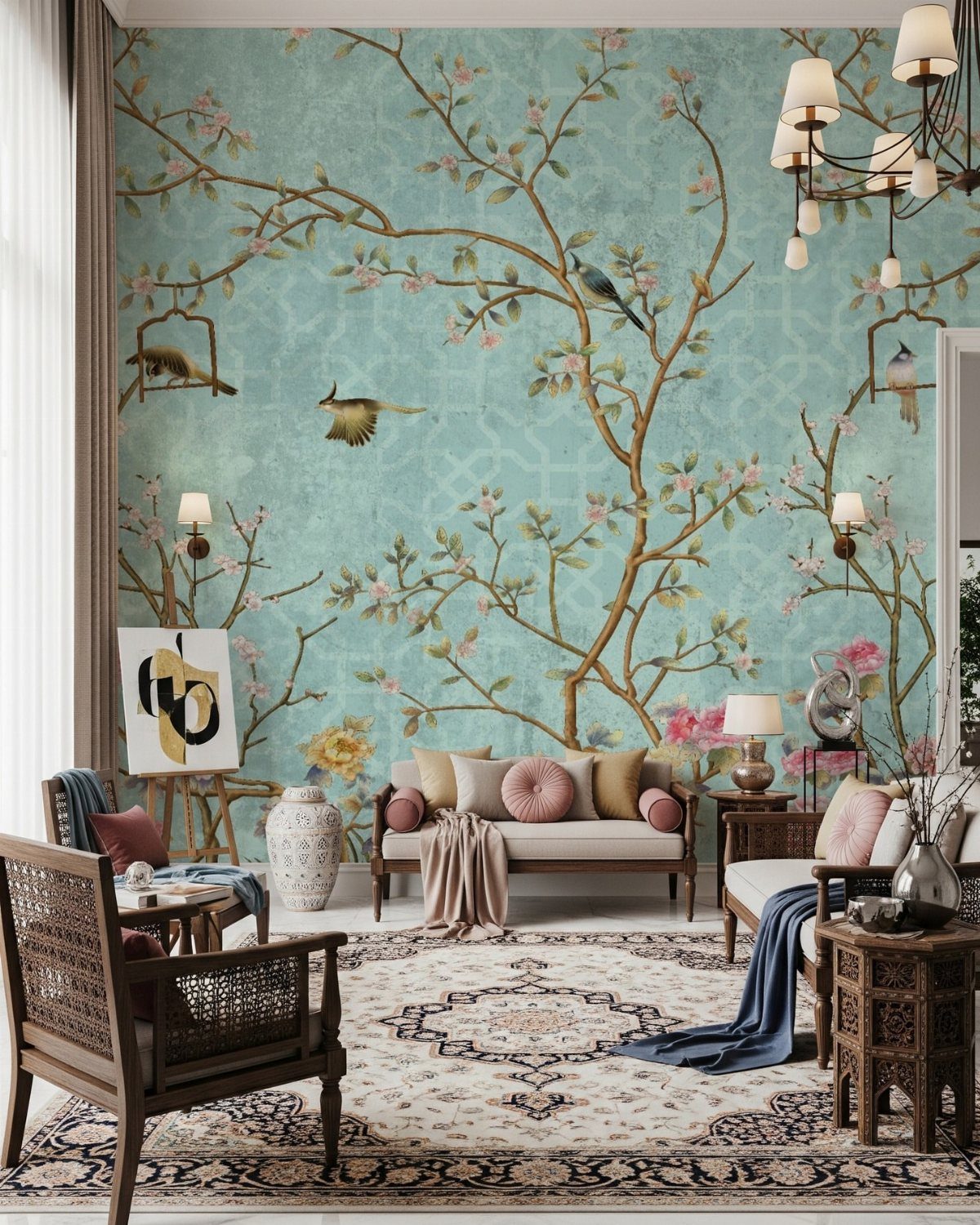
Large-scale wallpaper murals give you the drama of a hand-painted scene without the commission or the permanence.
A botanical print running floor to ceiling sells itself on vertical reach; standard rolls won’t get you there, so check the panel height before you order.
Removable options from shops like Chasing Paper mean you can peel it off when the lease ends or your taste turns.
Balance is the hard part. Jewel-toned upholstery and quiet textures elsewhere keep the wall from swallowing the room.
In a small living room, a bold print actually helps; the eye reads the pattern before it registers the square footage.
This one costs more than standard rolls and takes 2 people to hang straight. I’d save it for the wall you face when you walk in, not the one behind the sofa you stare at.
3. Wood Paneling
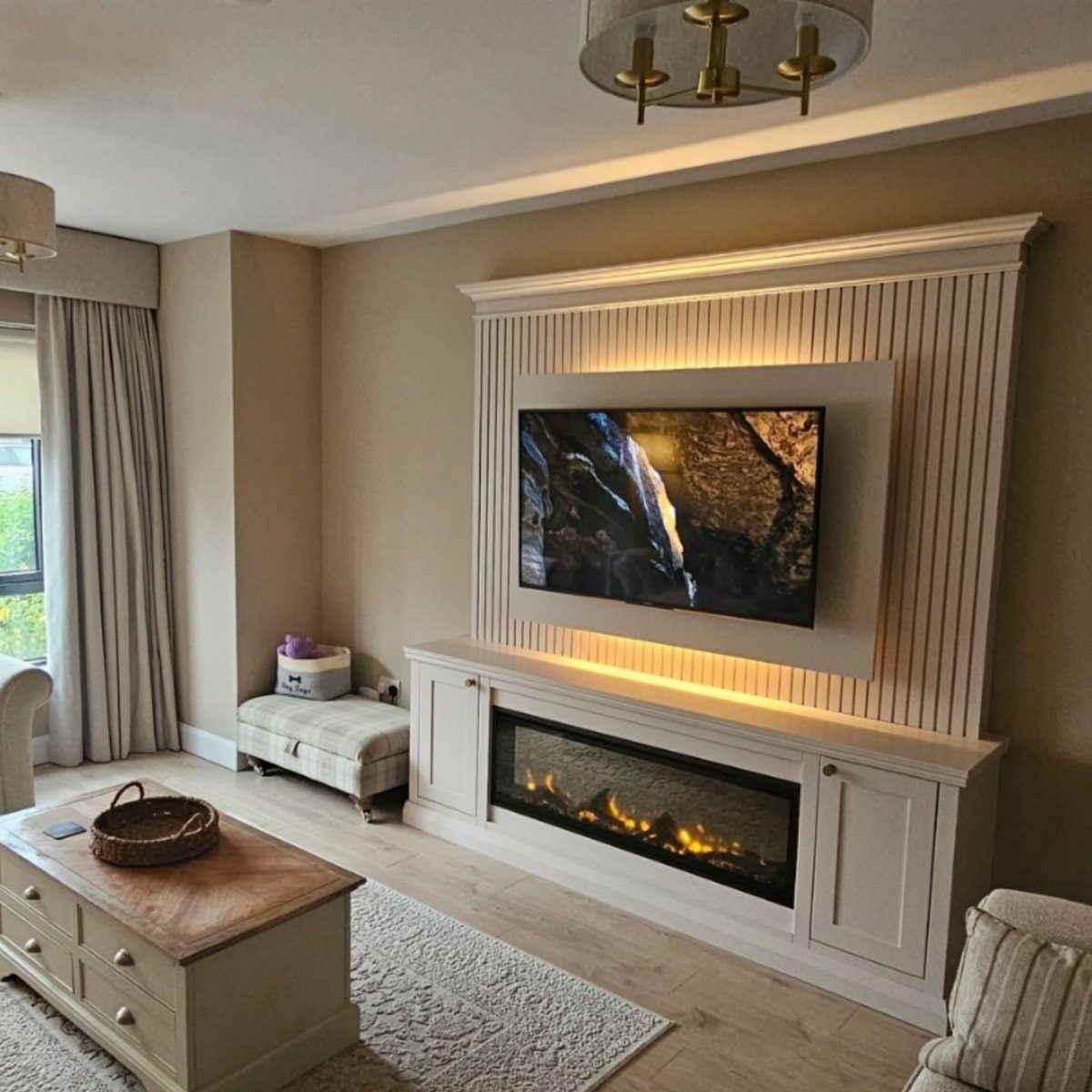
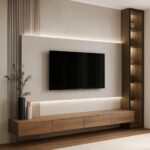
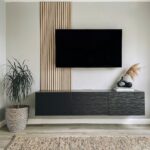
Vertical boards draw the eye up and make low ceilings feel intentional rather than cramped. Painted paneling works as the quiet frame for a media wall, but stained natural wood warms a room that gets northern light.
Rebecca Plumb’s chevron install in Tahoe used tongue-and-groove boards cut oversized and painted a vivid green; the pattern carried the wall, not the material cost.
Three-dimensional panels add sound absorption, which matters in a home office or a living room with hard floors. Map the design in a photo editor, transfer it to the wall, and cut to fit.
Paint the boards before you install them; touch-ups between seams never disappear.
Reclaimed wood looks best when it varies in tone; too uniform and it reads as manufactured. I’d budget for new material by the square foot, more if you source actual salvage.
4. Gallery Wall
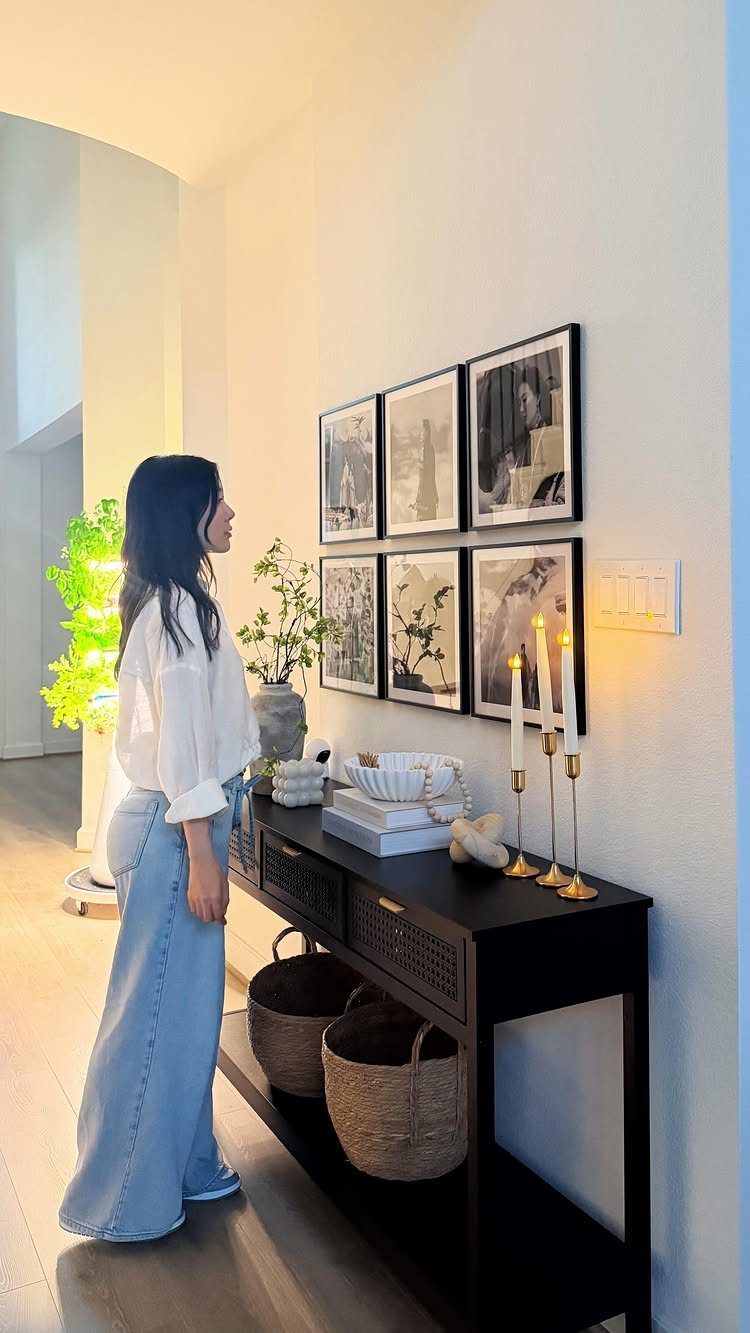
A grid of identical frames, hung level, reads as one unit rather than a collection of separate decisions. Prints arranged in two neat rows let black-and-white photography feel collected instead of cluttered.
Nicole Arruda’s longer hallway install mixed frame styles and leaning pieces on a lower ledge, which takes more eye and more patience.
Start with cardboard templates, labeled, and tape them to the wall for a couple of days. Live with the arrangement before you drive a single nail.
Metal frames with tempered glass add weight fast, so use anchors, not picture hooks, in drywall.
This suits renters who can patch nail holes, but I’d skip the gallery wall in a narrow hallway; the frames become obstacles you brush against.
One large piece, or a single shelf with art leaned against the wall, breathes better in tight space.
5. Stone Accent Wall
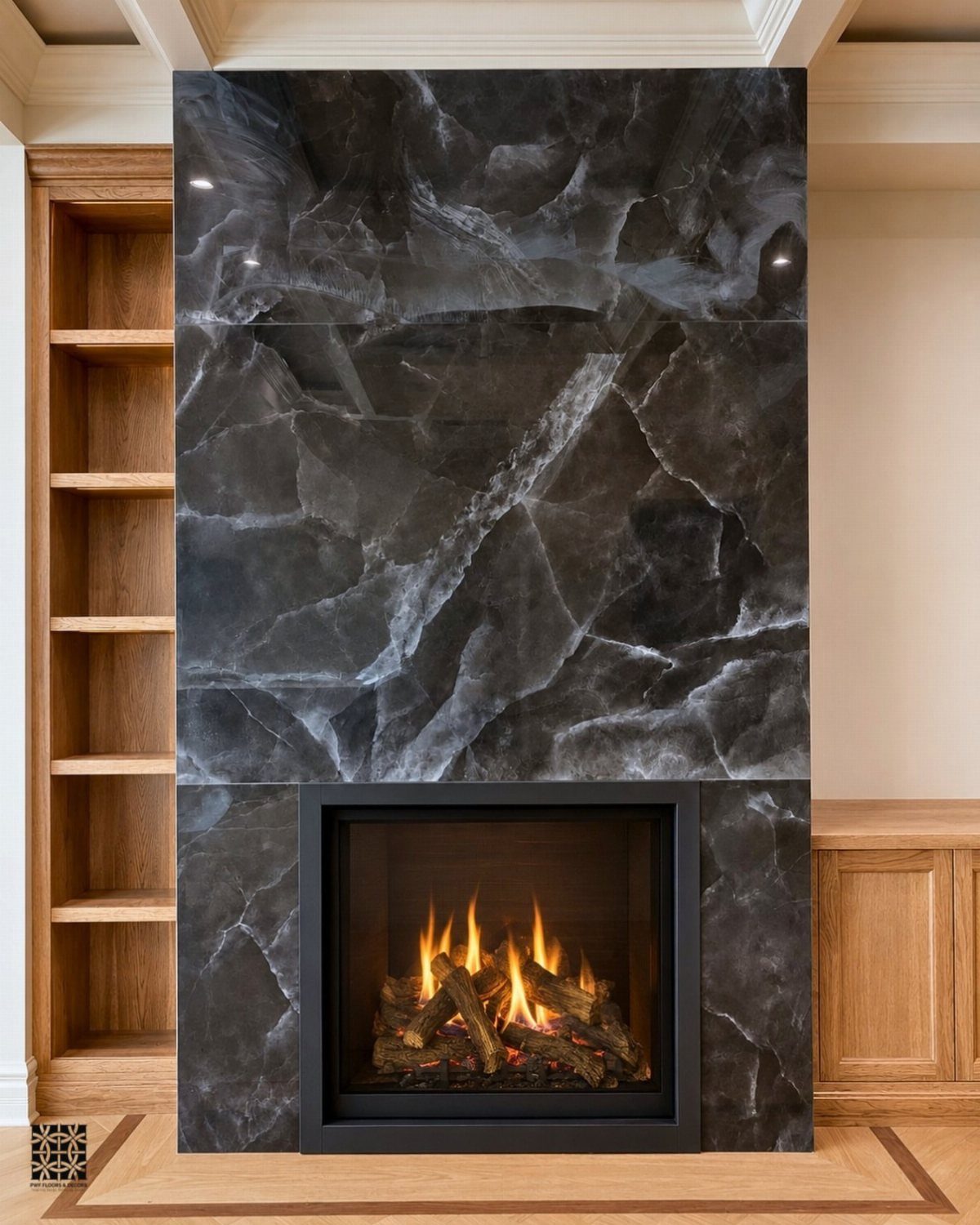
Stone carries visual weight that drywall never will, so the question is whether your room can handle it.
Black marble works because the stone is broken by shelving on both sides and grounded by the hearth below; floor-to-ceiling without interruption would read as a mausoleum in a standard room.
Faux stone panels give you the veining and the variation at roughly half the weight and a quarter the install time.
Natural stone needs sealing, especially near a fireplace where soot settles into porous surfaces. Check whether your wall can bear the load; a full natural install runs heavy, and older homes may need reinforcement.
Faux options in sheet panels or stacked ledgers install with construction adhesive and a few screws.
I’d use real stone only where it meets the floor and the eye expects mass: a fireplace, an entryway, maybe the wall behind a soaking tub. Anywhere else, the panels are convincing enough and your back will thank you.
6. Art Feature Wall
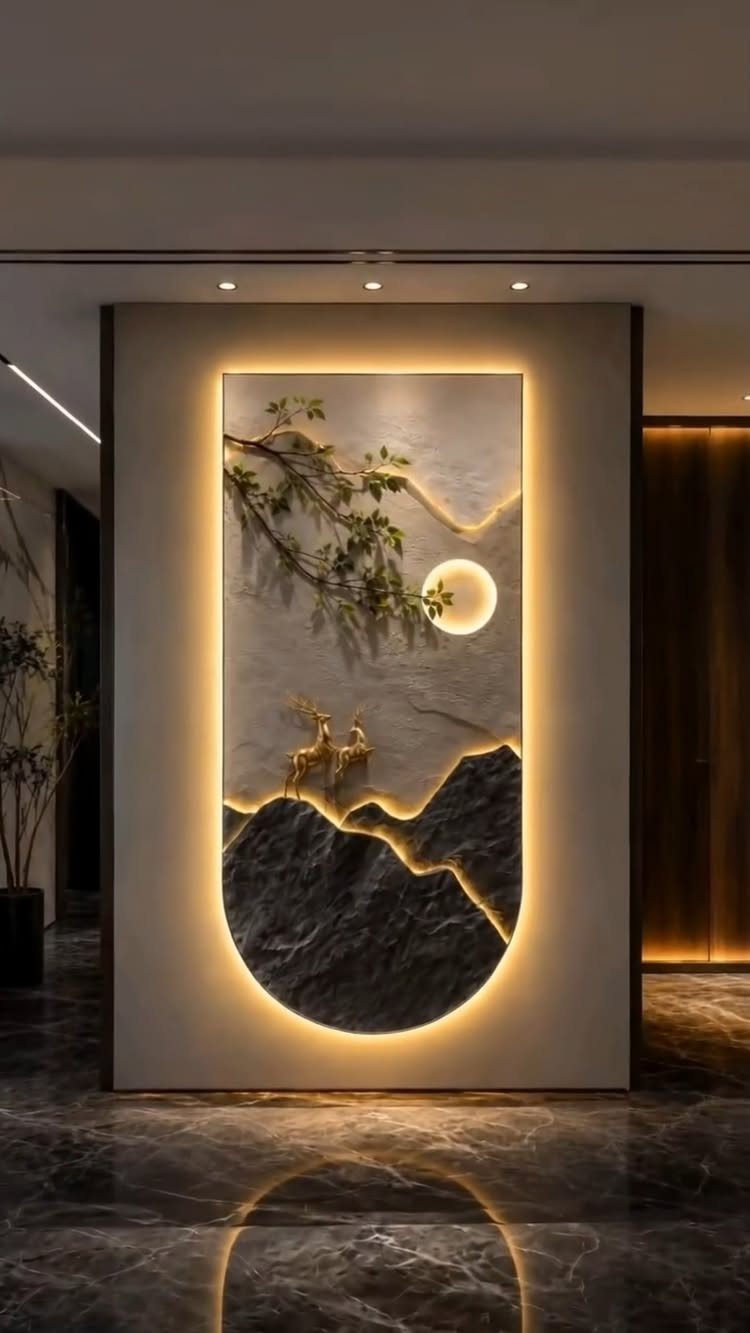
A single piece that fills a wall turns the room into a gallery and you into a collector, whether you planned it or not.
A backlit relief is 3D and architectural, more a built-in than a hang-and-go; that kind of install needs an electrician and a decision you live with for years.
For most of us, one large canvas or a framed textile does the same work without the construction.
Commissioning a piece from a working artist runs high for wall-scale work, but you can start with a print from an up-and-comer and trade up later.
The risk is the long look: you have to want to live with this image daily. A gallery wall lets you rotate; a single piece commits.
I’d choose this for an entry or a stair landing, somewhere you pass through rather than sit facing for hours.
The lighting matters as much as the art; a cheap track from above destroys the effect, and side wash from a sconce saves it.
7. Ceramic Tile Wall
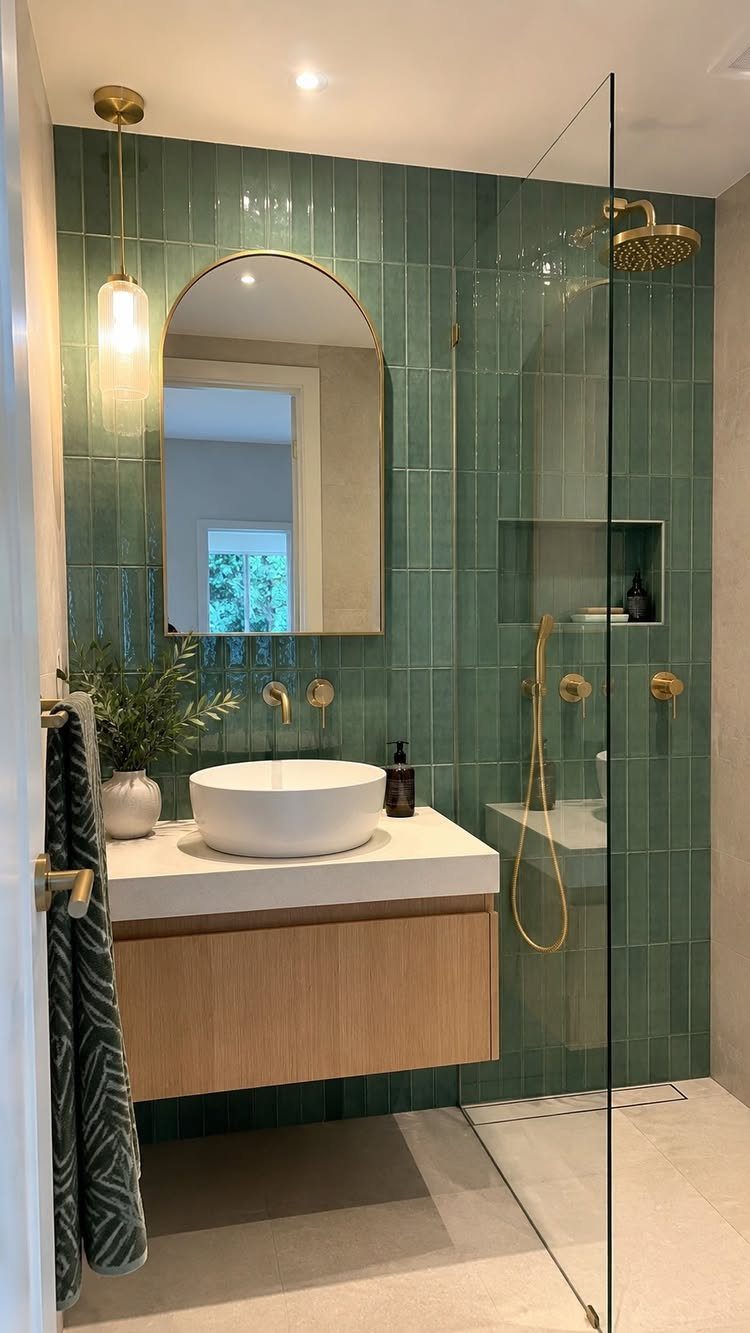
Ceramic tile on a wall handles the splashes and steam that ruin paper in a bathroom or behind a range.
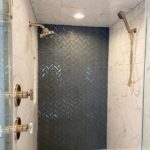
A vertical stack of green ceramic tile reads as texture from across the room and shows its gloss only when you are close.
I would check the glaze rating before buying. A semi-gloss or gloss finish wipes clean; matte holds grease and soap scum.
Grout color matters more than people think. Matching the tile makes the wall look continuous; contrasting grout turns each tile into a grid point.
Real tile needs backer board, thinset, and a weekend of cutting around outlets. If your wall is sound and flat, peel-and-stick tile panels exist now, though I have not tried them in a shower zone.
For a powder room or a backsplash, they might save you Saturday.
8. Metal Feature Wall

Riveted steel plates and gear shapes turn a wall into something closer to sculpture than finish. The industrial look works best when the rest of the room stays simple; too much else and it becomes a set for a film.
Actual sheet metal is heavy, sharp at the edges, and needs a substrate to screw into. I have seen cleaner results from MDF panels painted with metallic finishes, then distressed with sandpaper and dark wax.
Those gears are almost certainly cast resin or wood, not steel; lighter to hang and easier to find online.
Faux brick panels in gray or charcoal give a similar urban feel with less weight. Pair either with warm wood and soft textiles or the room goes cold fast.
9. Fireplace Feature Wall
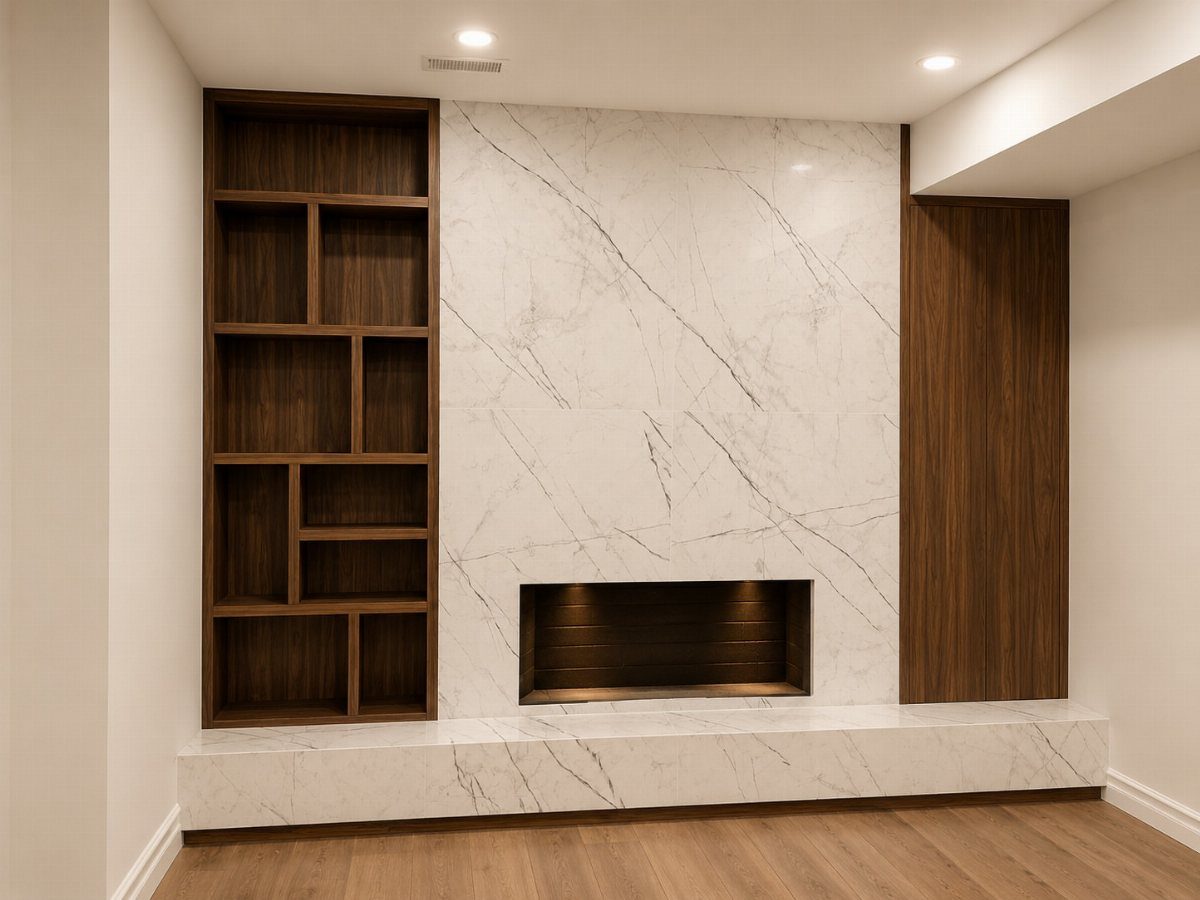
A fireplace wall earns its square footage by giving the room a center to arrange around. A marble slab with flanking walnut shows one way to treat the surround as architecture, not trim.
Stone or tile needs a heat-rated substrate and clearance to combustibles; check your insert manual before you frame anything. Gas units vent differently than wood, and zero-clearance boxes have their own rules.
I would call the installer before the drywall goes up, not after.
Built-ins on one side only keep the wall from feeling too symmetrical and formal. If you need storage, both sides works; if you want the fire to dominate, leave one side open or run paneling there instead.
10. Accent Ceiling Feature Wall
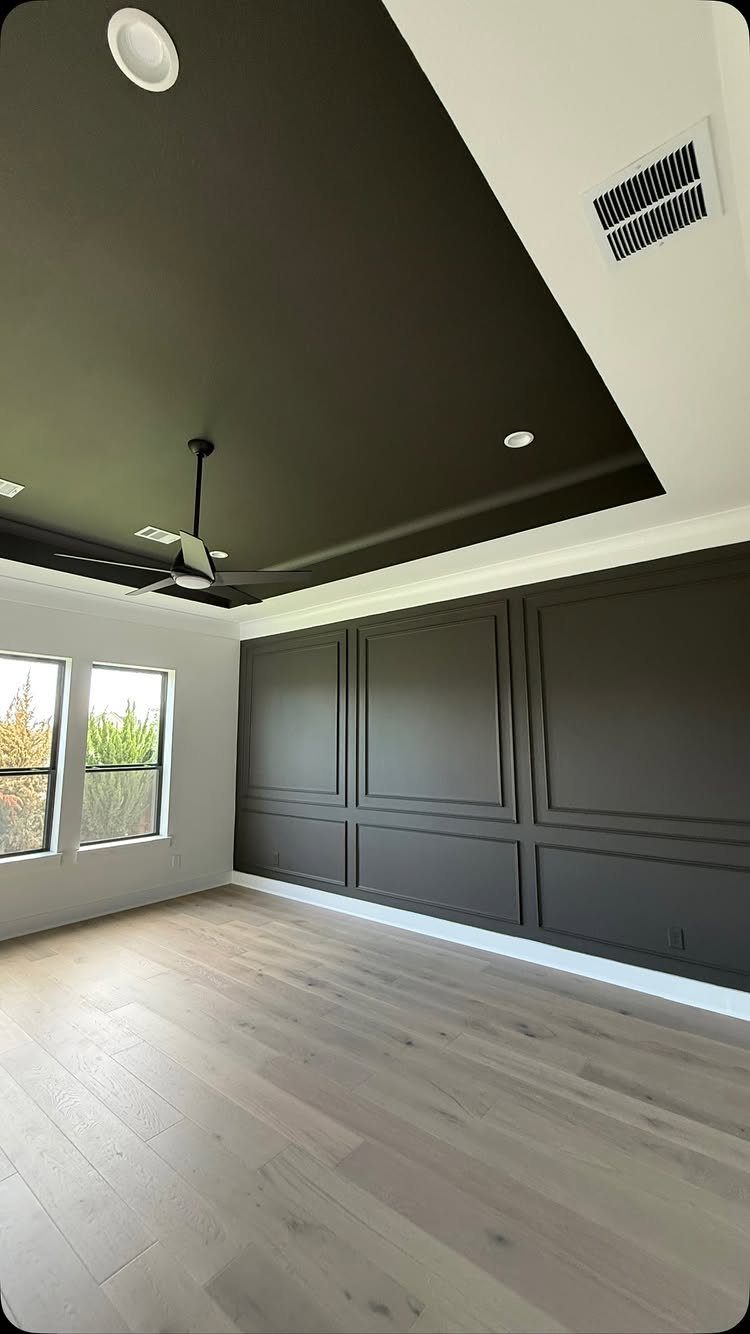
Painting the ceiling to match a dark wall wraps the room differently than any wall treatment alone. Charcoal paint pulls the eye up and makes tall windows read as cutouts in a single volume.
This move needs flat ceiling paint, not wall; ceiling formulas hide lap marks under low light. I would tape the wall-to-ceiling corner with a 2-day set time, not rush it.
The fan and any can lights will need touching up after.
Light colors on a ceiling do the opposite; they lift and expand. A soft blue there with white walls feels like open sky, though in a small room it can read as a mistake if the tone goes too bright.
Test a 2-foot square and live with it at dusk before you commit.
11. Geometric Accent Wall
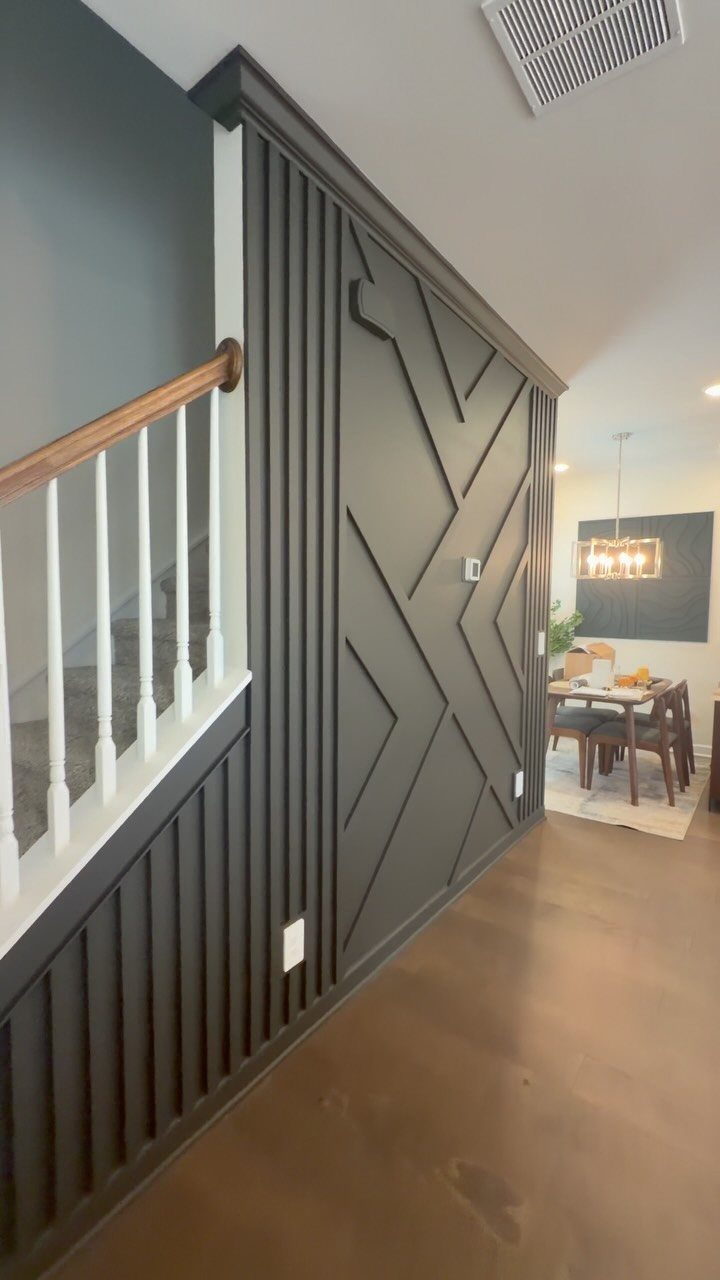
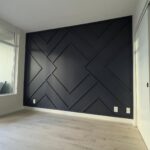
Geometric trim in wood adds shadow and rhythm that paint alone cannot manage. Diagonal and vertical slats cut from stock molding, probably 1×2 or lattice, then spaced and nailed to a flat wall.
The pattern is the hard part. I would draw it full scale on the floor with painter’s tape, live with it for a day, then transfer measurements to the wall.
MDF trims cheaper than pine but dents if you look at it wrong; poplar or oak holds an edge.
Paint everything one color and the shapes read as texture. Paint the wall behind a different shade and the geometry pops forward.
Wallpaper with a bold geometric print does the same job faster and cheaper, though you lose the actual depth.
12. Two-Tone Wall
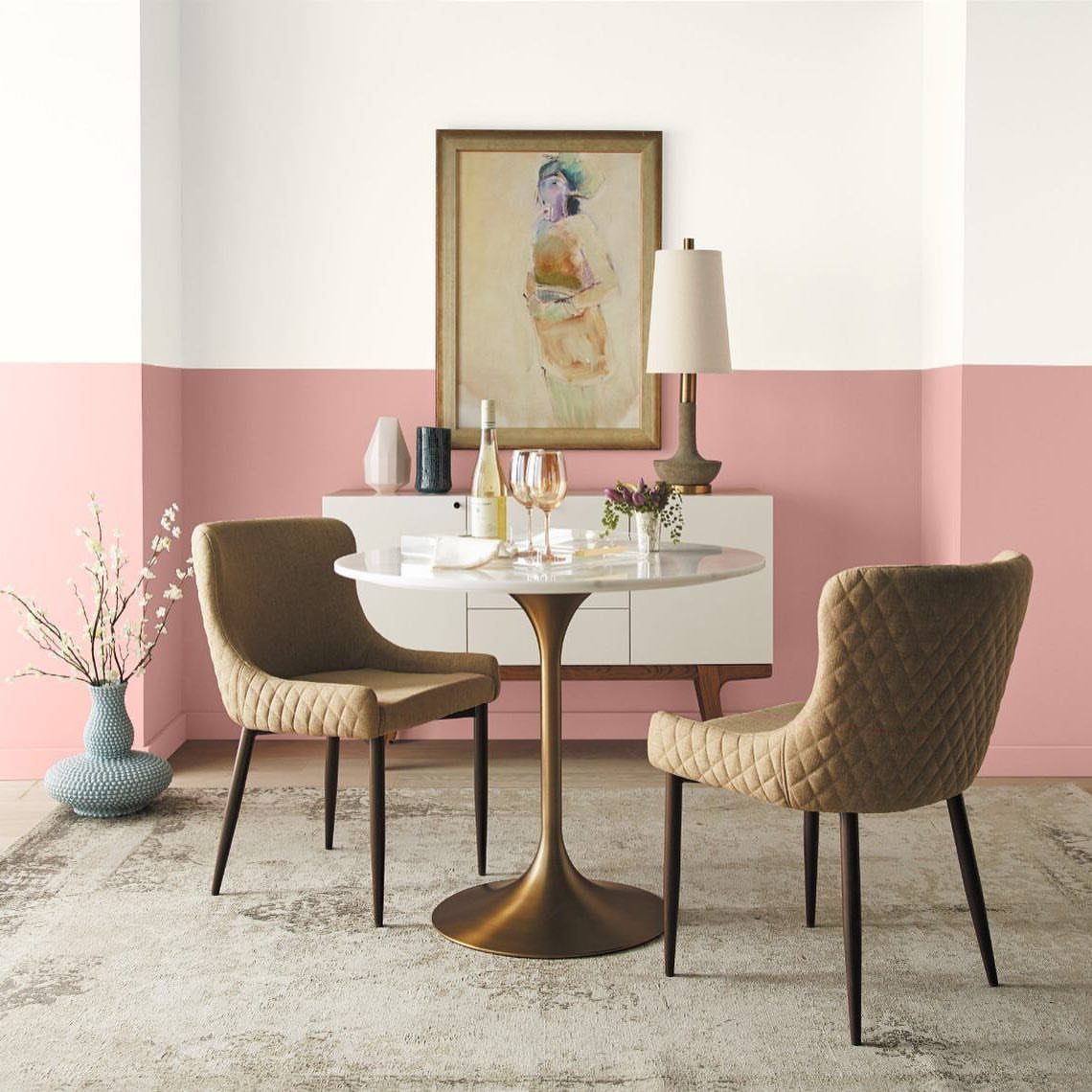
Splitting a wall at chair rail height, or wherever the architecture suggests, gives you two colors without the risk of a full dark room.
The line is the detail that matters. A crisp edge needs tape pulled when the paint is tacky, not dry.
I would use the existing baseboard as the bottom boundary and add a simple molding at the break if the wall lacks one; a freehand line reads as a mistake.
Horizontal splits widen a room visually; vertical ones, rare but possible, add height. In a narrow dining nook like the photo, the horizontal band grounds the table and makes the ceiling feel higher above it.
For a teenager’s room, a bolder split with deeper tones reads as grown-up without going full cave.
13. Living Plant Wall
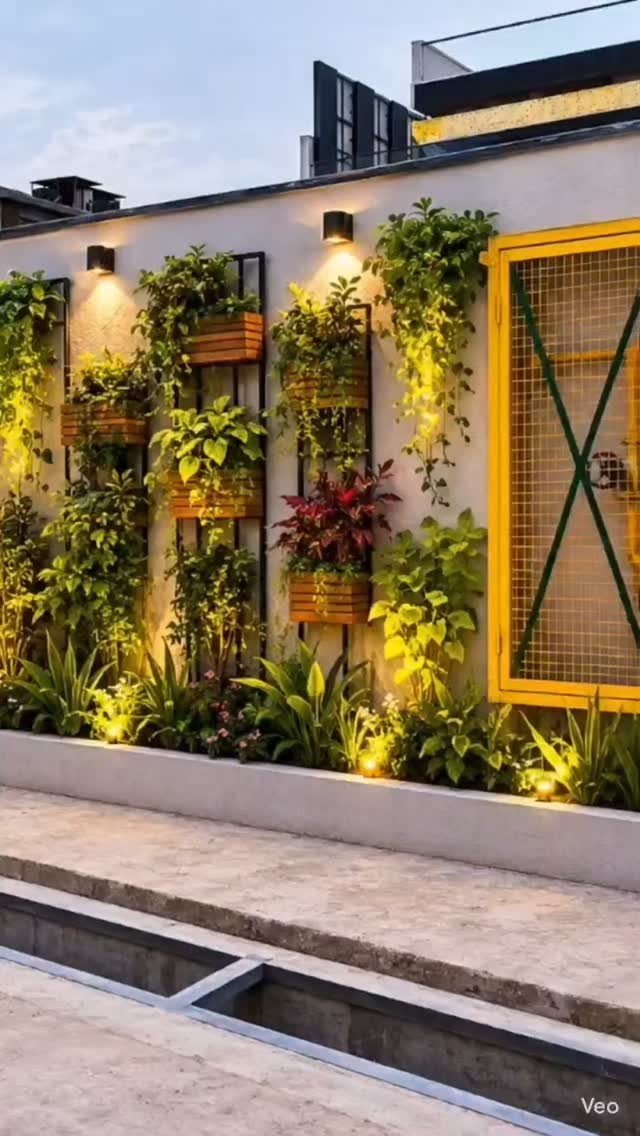
A living plant wall turns an ordinary surface into something that breathes.
For renters, vertical planters with built-in reservoirs keep water off the landlord’s paint; homeowners can mount floating shelves and train pothos or ferns around a frame for a layered effect.
Succulents need the least attention, though ferns give that dense, overgrown look the photos show. Moss panels work indoors where light is scarce, but they stay decorative; only rooted plants filter air in any meaningful way.
One weekend is realistic for a small section if you plan the irrigation first. Ongoing care is the real commitment: this wall dies fast if you travel often.
For low-commitment results, a single vertical planter column beside a sconce gives most of the impact with far less watering.
14. Diamond Pattern Wall
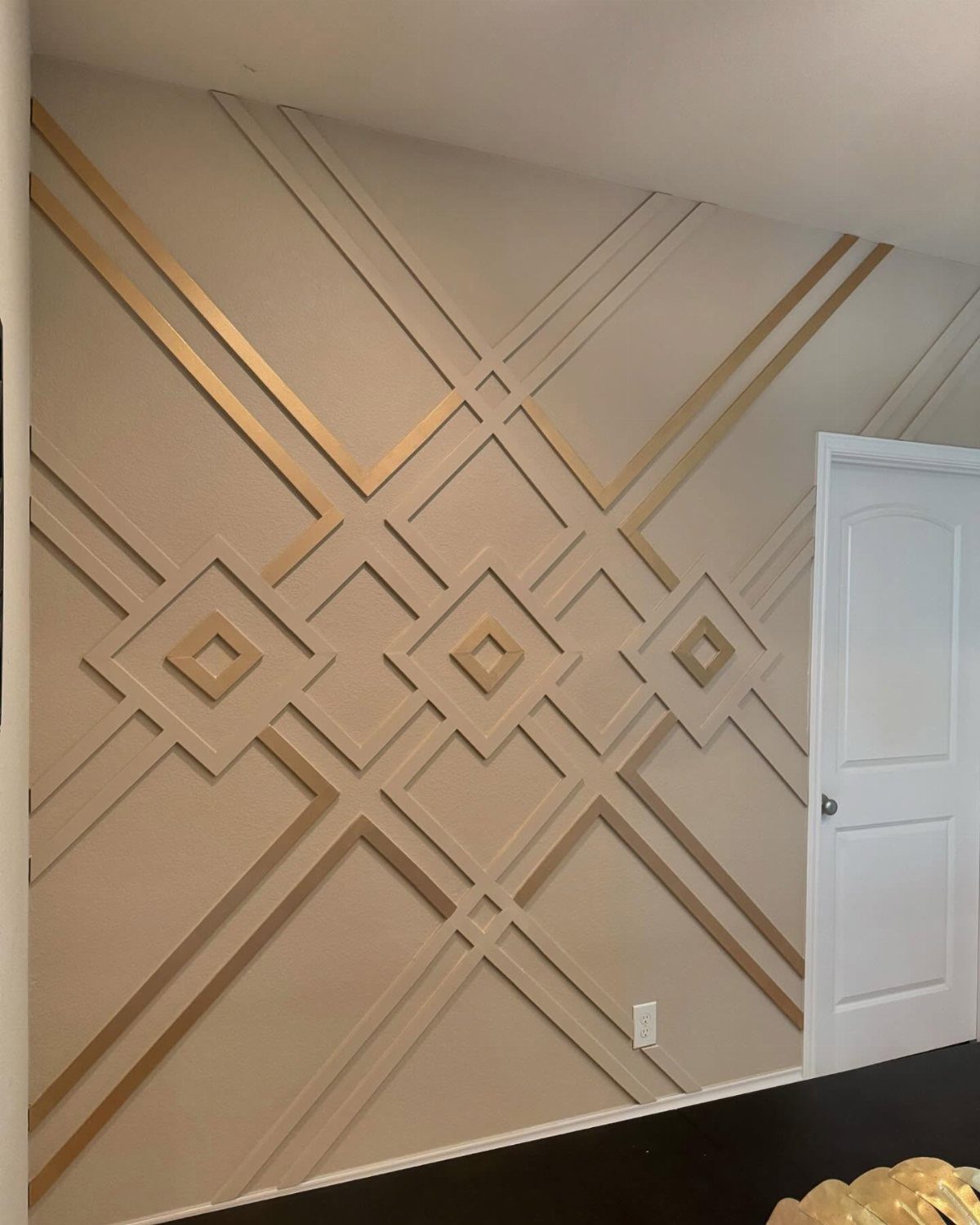
Raised trim in a diamond pattern reads as texture under neutral paint or as outright geometry when you gild the edges. Wood glue at the joints keeps corners from separating in seasonal humidity.
Construction adhesive works if you cannot find studs, though it complicates eventual removal.
This pattern suits spaces where you want architectural interest without artwork. Precision matters: uneven spacing or sloppy miters show instantly.
If your walls are wavy or your corners are not square, a smaller repeating pattern like herringbone forgives more than large diamonds do.
15. Mirrored Wall
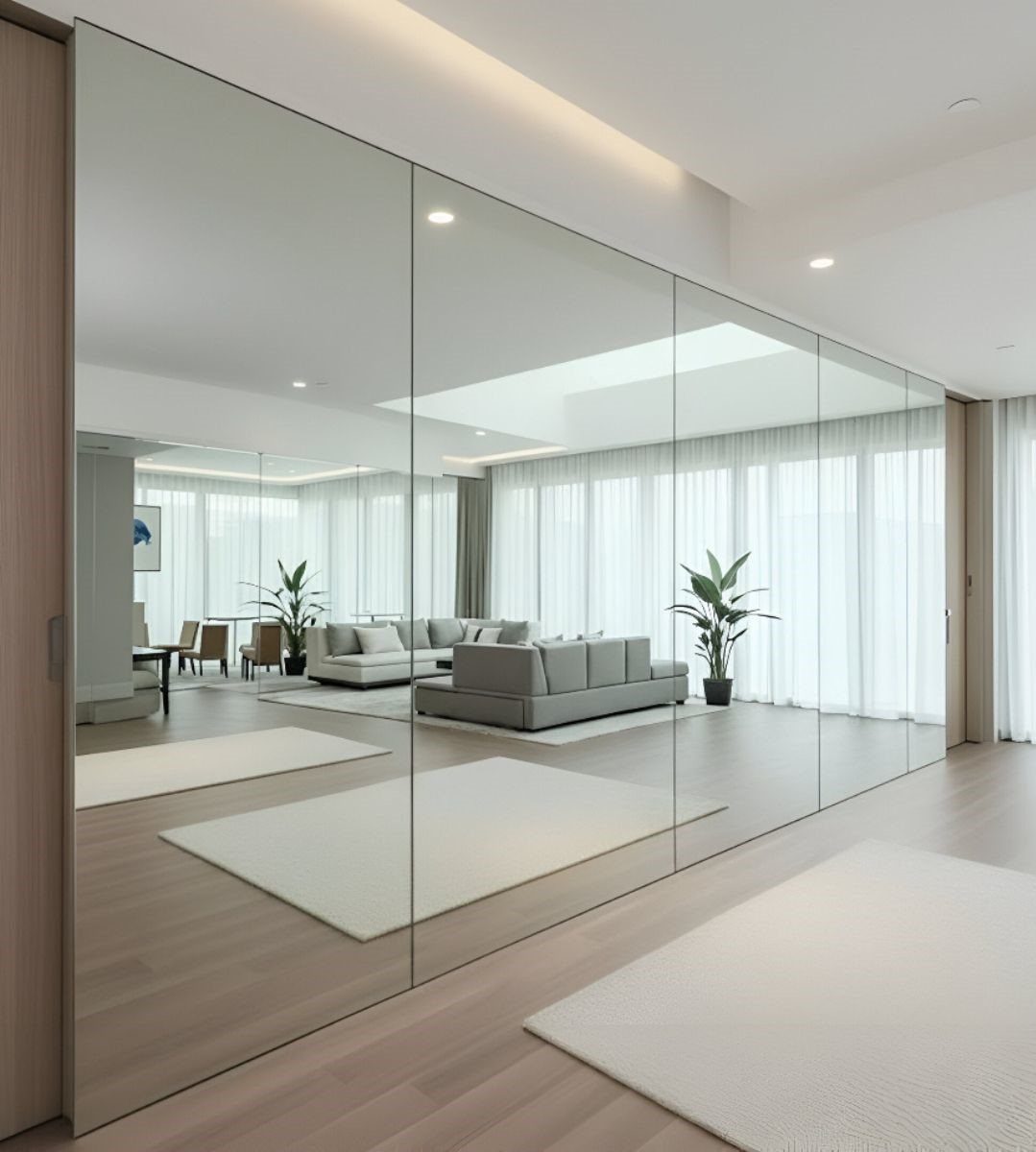
Mirrored panels multiply whatever light and square footage a room already has.
For a DIY version, small mirror tiles run a few dollars each and mount with adhesive squares rated for glass.
Floor-to-ceiling panels like those shown need professional installation at a cost per square foot that adds up fast, since one dropped sheet is a total loss.
This idea wins in narrow entryways, small bathrooms, or anywhere the alternative is a blank wall you cannot decorate with shelves. The maintenance is real: every fingerprint shows, and the reflected view had better be worth doubling.
Choosing the Right Wall
The wall behind a headboard or opposite the entry door already pulls the eye; those are natural candidates. A dining room, home office, or playroom works too if the wall has enough presence to carry the room.
Check the surface before you commit. Old plaster with waves or patches will telegraph through thin materials like wallpaper or large-scale tile.
A painted treatment forgives more than a mirror or paneling will.
I would avoid walls you want to disappear. The breaker panel, the awkward corner with the radiator, the spot where the roofline cuts down at a strange angle; drawing attention there fixes nothing.
Built-ins, a fireplace, or existing trim already give some walls architecture to build around. Work with that, not against it.
“There are no hard rules when it comes to accent walls—there are simply too many variables to ever say ‘never,’” explains Cindy Smith, the cofounder of Smith Interiors in Charlotte, North Carolina.
Color Selection Tips
Light changes a color across the day. A blue that reads crisp at 10 AM can turn muddy by lamp light; paint a 2-foot test patch and watch it shift before you buy the gallon.
Analogous colors, the neighbors on the wheel, give you contrast without clash. Warmer tones add energy where you want it; cooler ones settle a bedroom or a reading corner.
I would match the undertone to what is already fixed in the room. The oak floor leans yellow, the sofa reads gray; the wall has to talk to both or it floats alone.
DIY Vs. Professional Help
Paint, peel-and-stick tile, a gallery grid, or wood slats cut from stock lumber need patience more than training.
The line is where weight, wiring, or permanence enters. Stone that needs structural assessment, metal that wants a substrate built, anything backlit: those pull in permits and trades.
Gas fireplaces have their own venting rules, and a dropped mirror sheet is money gone.
The cost of fixing a wrong path usually doubles the cost of doing it right the first time.
Maintenance Considerations
High-traffic walls collect scuffs fast. In a hallway or behind a dining table, that distinction matters more than the color itself.
Grout on a tile wall needs sealing yearly in a steam zone; unsealed, it darkens and the wall looks tired before its time.
Living walls are the outlier. A reservoir system helps, but someone still fills it.
If you travel weekly, the maintenance load may outlast the initial weekend of installation.
I would pick materials for the life the room actually gets, not the life you plan to give it.
Frequently Asked Questions
Are feature walls out of trend?
No, feature walls stay current when they solve a real problem rather than shouting for attention.
A painted wall that anchors a room, tile that handles steam behind a range, or vertical boards that draw the eye up from low ceilings all earn their place.
A random red wall with no purpose looks dated; the better ones earn their spot by doing something useful.
What are some modern feature wall ideas?
Bold paint with layered glazes, large-scale removable murals, vertical wood paneling, and ceramic tile with stacked installation all read current now.
Mixed materials are showing up more: painted sections with timber molding, or geometric trim in one color over a different base shade. The through-line is texture and shadow, not just a contrasting color.
What are the rules for feature walls?
Pick the wall you face when you enter, or the one that carries the room’s natural focal point like a fireplace or bed. One per room is the limit; two compete and the room fractures.
The finish should relate to what happens in front of it: sound-absorbing panels for a home office, wipeable tile for a kitchen, soft color for a bedroom you sleep in.
Are accent walls outdated in 2026?
No, accent walls are not outdated when the choice is deliberate. A single bold color in a four-hour paint job still works for renters and first-home owners who need impact on a weekend timeline.
The shift is toward texture and material, paint plus glaze or trim or tile, rather than flat color alone.