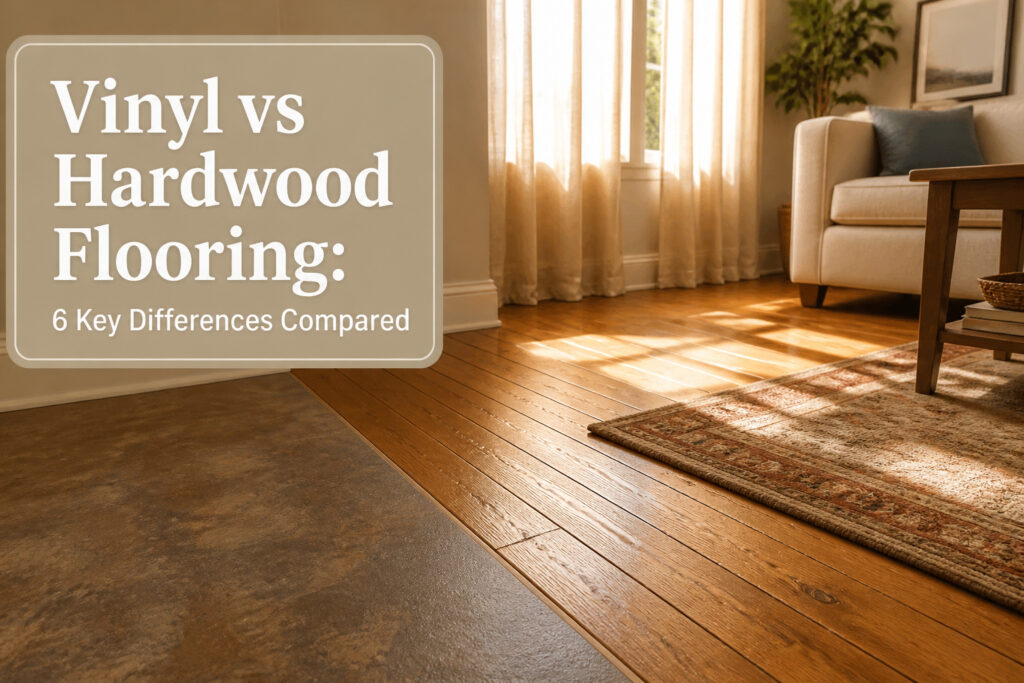
Vinyl wins for anyone working with a tight budget or a single weekend.
Hardwood pulls ahead once you own the home and plan to stay past five years, because buyers pay more for it and you can refinish it instead of replacing it.
The gap in installed cost runs roughly $5–$10 per square foot for vinyl against $10–$30 for hardwood, and that difference alone has killed more DIY dreams than bad subfloors.
[link-whisper-related-posts]Cost
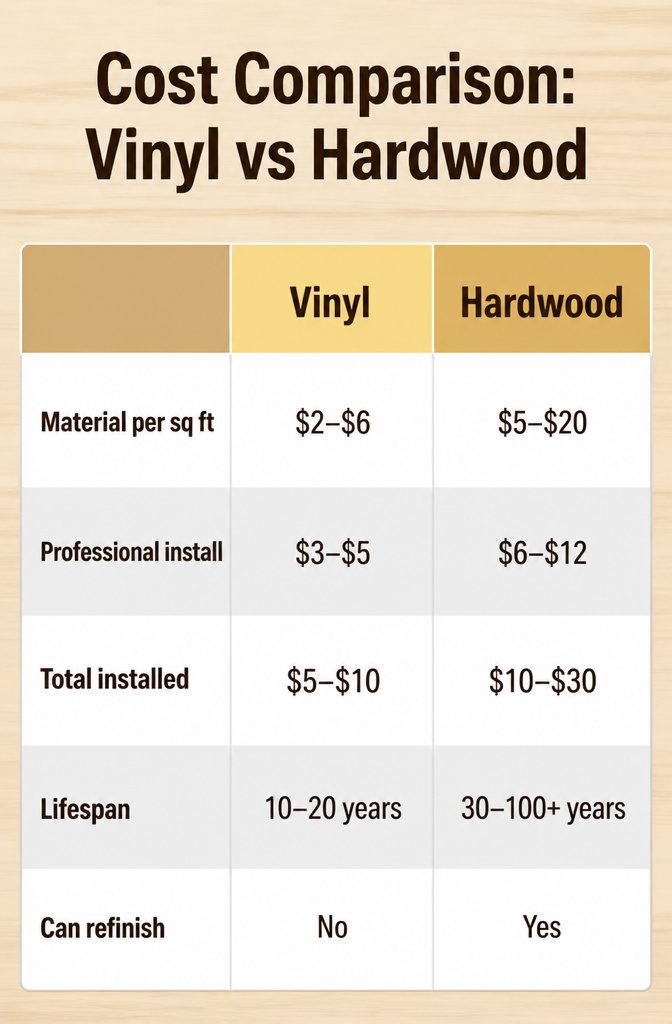
Hardwood runs $5–$20 per square foot installed, while vinyl lands at $2–$8. That gap widens fast across a whole room.
| Vinyl | Hardwood | |
|---|---|---|
| Material per sq ft | $2–$6 | $5–$20 |
| Professional install | $3–$5 | $6–$12 |
| Total installed | $5–$10 | $10–$30 |
| Lifespan | 10–20 years | 30–100+ years |
| Can refinish | No | Yes |
I went with vinyl plank in a rental kitchen once because the upfront math was undeniable: half the material cost, and I could lay it myself over a weekend.
The floor looked sharp on move-out day, but I knew it was a short-term fix. The wear layer was already thinning where the fridge rolled.
Real estate professionals consistently report that homes with hardwood floors tend to sell faster and at higher prices than comparable properties with other flooring types.
For the reader deciding today: vinyl gets you in the door cheap, but hardwood is the only one that pays back at resale.
If you’re staying five years or more, the higher upfront cost starts looking like the cheaper long-term move.
Durability
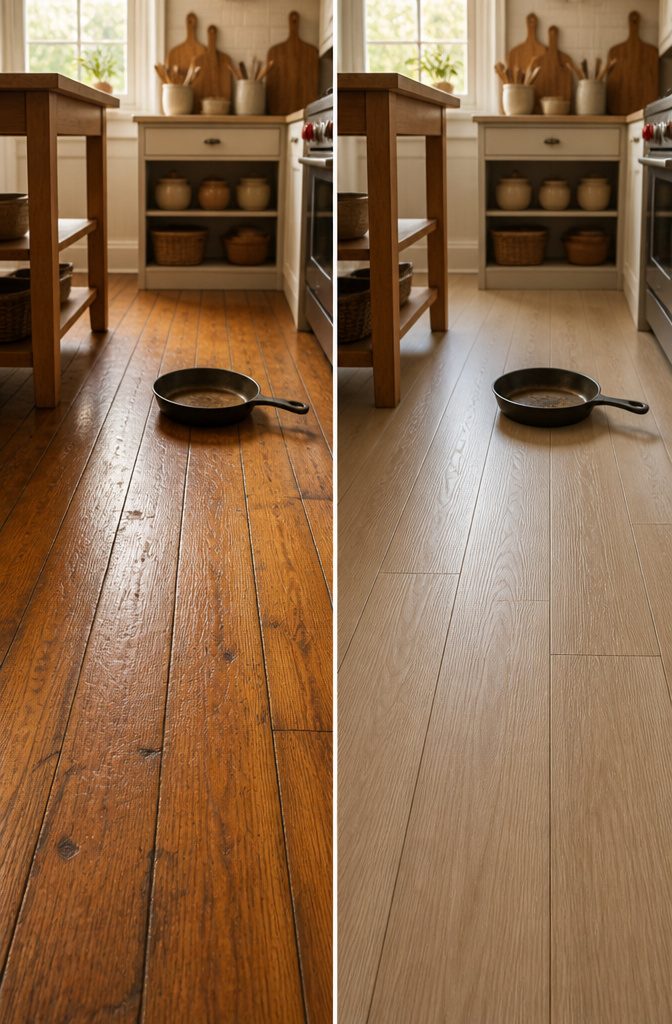
Solid hardwood floors can last 30 to 100 years with proper care, and that lifespan includes multiple rounds of refinishing when scratches or dents accumulate.
I have seen century-old oak floors brought back to life after sanding, which is something no vinyl product can offer.
Luxury vinyl plank, in contrast, tops out around 10 to 30 years before the wear layer gives out, and once the dyed surface is scratched through, replacement is the only fix.
That tradeoff shapes daily use. Hardwood dents under heavy furniture and shows every claw mark from a 70-pound dog.
Vinyl resists those scratches and shrugs off moisture that would warp wood in a basement or kitchen, though a dropped cast-iron pan can gouge straight through the rigid core.
For a weekend project with a few hundred dollars, the question is whether you want a floor you can renew or one you can abuse and then discard.
Maintenance
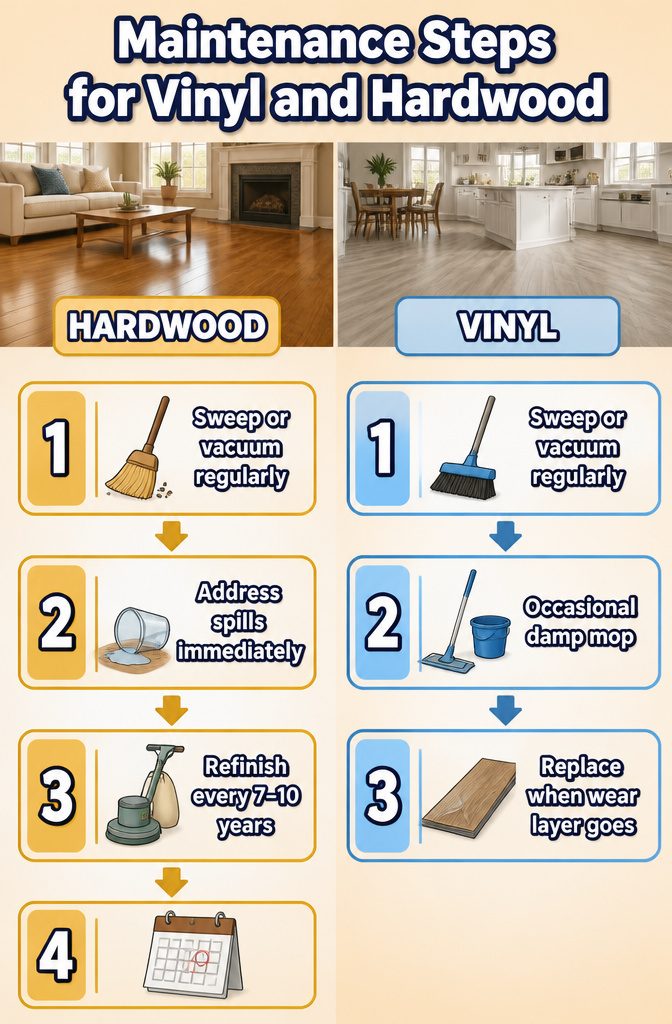
Hardwood floors demand a rhythm you either accept or resent.
Sweeping or vacuuming has to happen often enough that grit never gets a chance to scratch the surface, and spills need immediate attention before water can seep in and warp the boards.
Every 7–10 years, refinishing becomes unavoidable if you want to keep the floor looking presentable; that’s sanding down to bare wood, staining, sealing, and staying off it for days, whether you hire it out or tackle the DIY route.
Vinyl asks for almost none of this. Regular sweeping and the occasional damp mop with a mild cleaner handles daily life, and since the material itself resists water, a spill can wait until you finish what you were doing.
The tradeoff shows up in the long term: vinyl can’t be refinished, so once the wear layer goes, replacement is the only option.
Sources tend to call this low-maintenance without mentioning that the maintenance schedule is simply front-loaded into a shorter lifespan. For a weekend-project budget and timeline, that trade often still wins.
Installation
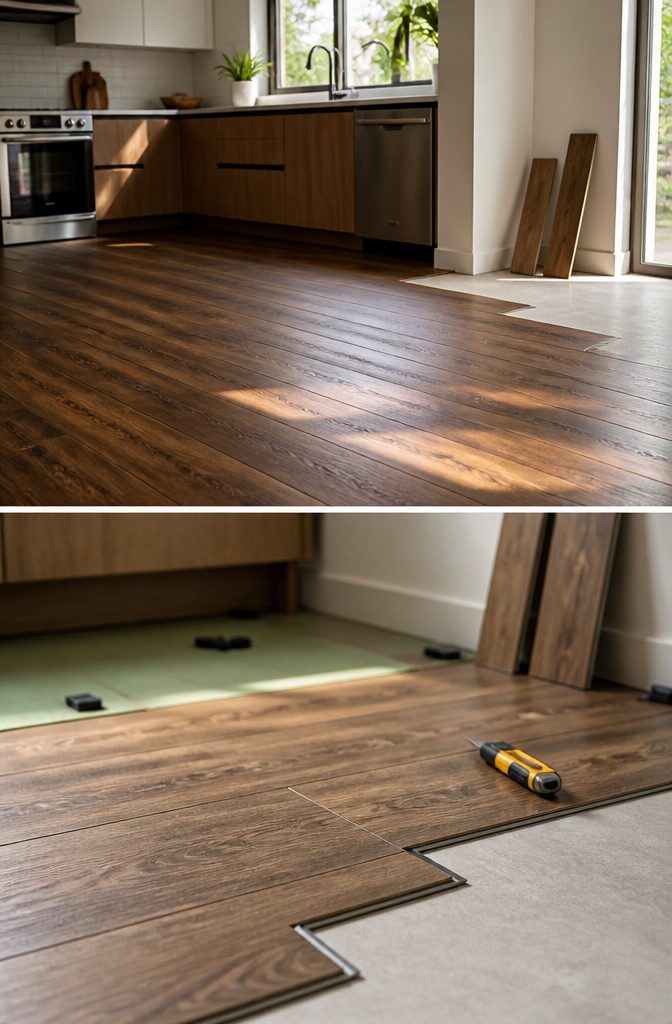
Click-lock luxury vinyl plank changed how I think about flooring projects. The planks are light enough to carry in a sedan, cut with a utility knife, and float over most existing surfaces without nails or glue.
I watched a friend lay 200 square feet in her rental’s kitchen Saturday morning and move the stove back by dinner.
Hardwood demands more. The subfloor has to be level, dry, and structurally sound; any high spot telegraphs through.
Solid wood needs acclimation for 48 to 72 hours before installation, then precise nailing or gluing. Engineered hardwood with click-lock exists, but the planks are heavier and less forgiving than vinyl, so most first-time owners hire out.
The tool list tells the story.
Vinyl needs a knife, spacers, and a tapping block. Hardwood wants a miter saw, nail gun, and moisture barriers.
Professional installation runs $3 to $5 per square foot for vinyl versus $6 to $12 for hardwood, but the bigger cost for weekend DIYers is time: one to two days versus two to four, and that is before the acclimation wait.
Appearance
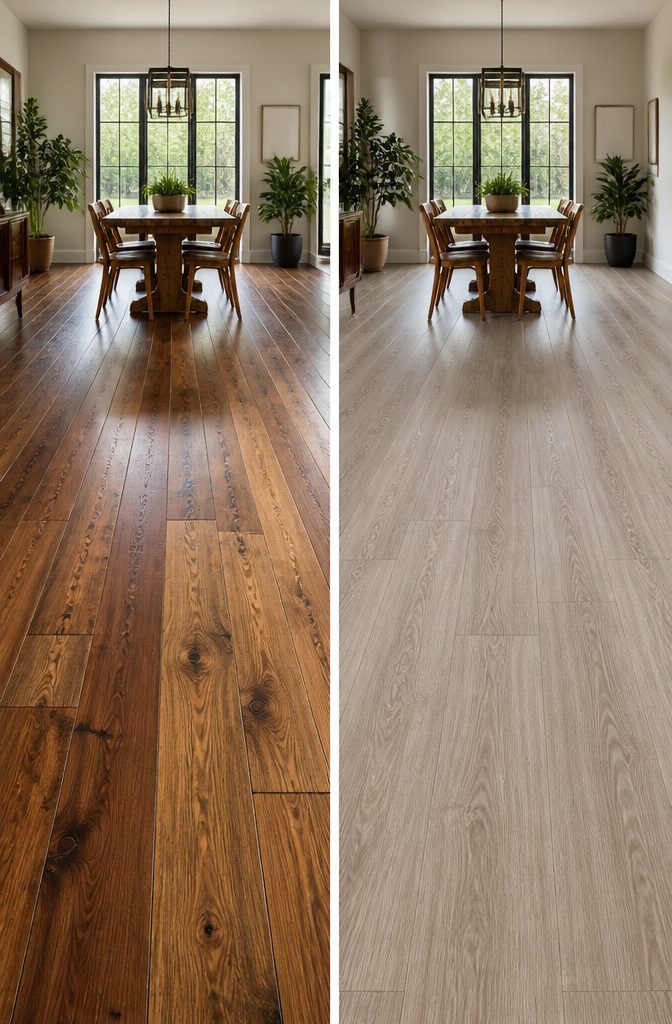
Hardwood carries a warmth that starts at the grain and works outward. Every plank holds its own knots, color shifts, and growth-ring story, and the patina that builds over years only deepens the effect.
Vinyl has closed the gap more than people expect; high-definition printing and embossed textures can fool a quick glance, especially in luxury vinyl plank. But the pattern repeats.
Step back from the wall in actual daylight and the symmetry shows. Hardwood edges stay sharp.
Vinyl planks carry a rolled or beveled edge and, flipped over, paper or fiberboard backing instead of wood. The difference lives in the depth you see from an angle, not head-on in a showroom.
I have watched renters pause at open houses over this exact thing, then learn to spot the tell in about thirty seconds of looking along a wall.
Environmental Impact
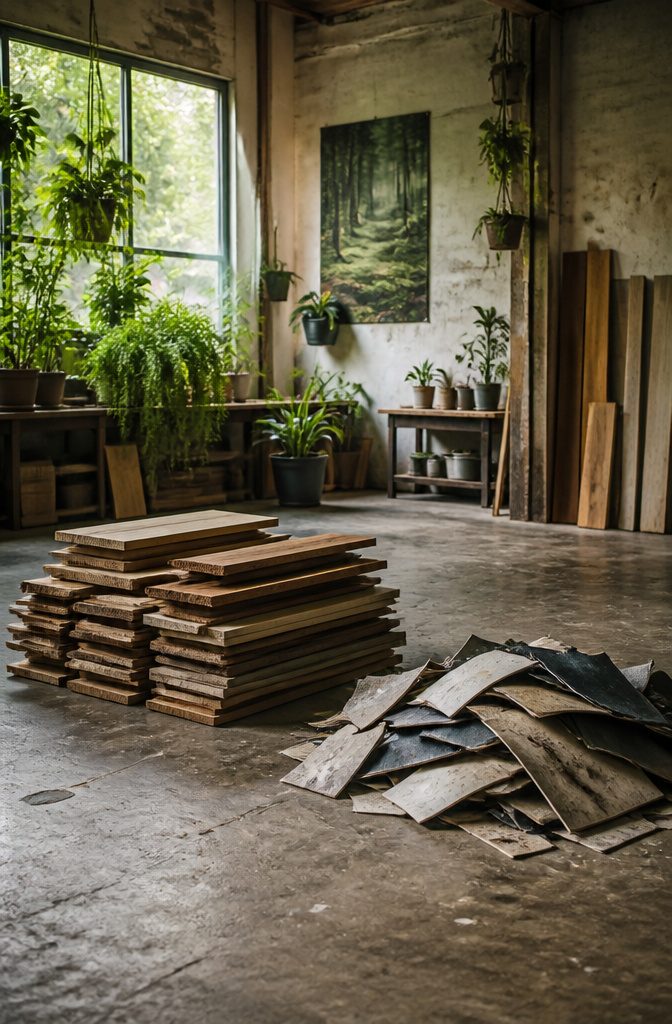
Hardwood comes from a tree that grew back, and at the end of its life it can rot or burn or be made into something else.
Vinyl is PVC, a petroleum product that does not biodegrade and mostly ends up in landfills. The difference matters if you are trying to limit what your project leaves behind.
FSC certification on hardwood means the forest it came from is managed for regrowth, so the renewable part is not just theoretical.
Engineered hardwood stretches those slower-growing species further, which is worth considering if you want the look without the resource load.
Vinyl manufacturing carries a larger carbon footprint, and lower-cost products can emit VOCs that affect indoor air quality.
Some brands now offer low-VOC or FloorScore-certified options, so checking the certification label before you buy is not just box-ticking; it is the difference between a floor you feel good about and one you ventilate against.
At the end of a hardwood floor’s century-plus lifespan, you refinish it, repurpose it, or compost it depending on the finish.
Vinyl’s chemical makeup makes recycling difficult, and while some manufacturers are exploring closed-loop systems, those are not yet common enough to plan around.
Comfort Underfoot
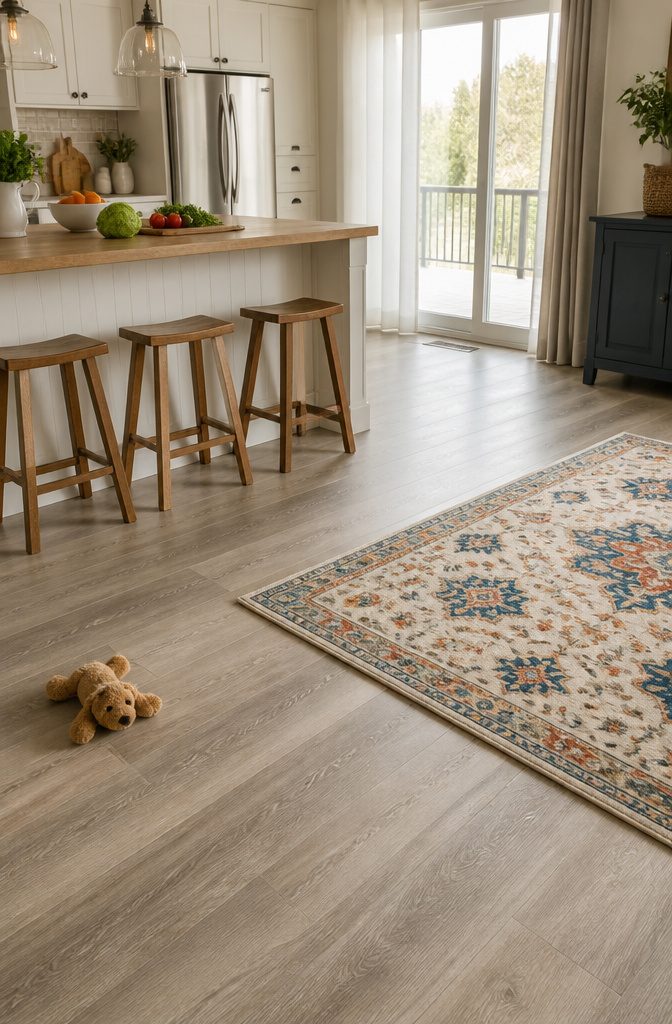
Vinyl has a slight give under your feet that hardwood simply does not. The layered construction, especially with a cushioned underlayment, makes it softer to stand on for long stretches at the kitchen sink or while folding laundry.
That same resilience absorbs the sound of footsteps and dropped toys, which matters more than I expected before living with a dog whose nails clicked constantly on the firmer surface.
Hardwood feels solid and grounded, and in a well-insulated room it carries a natural warmth that vinyl does not quite match.
But it also transmits noise rather than swallowing it, and after an hour of cooking you notice the hardness in your knees and ankles.
For households with kids, pets, or anyone clocking serious hours on their feet, vinyl wins on fatigue and noise. The trade is the sensory satisfaction of real wood, which some mornings you will miss under bare feet.
Resale Value
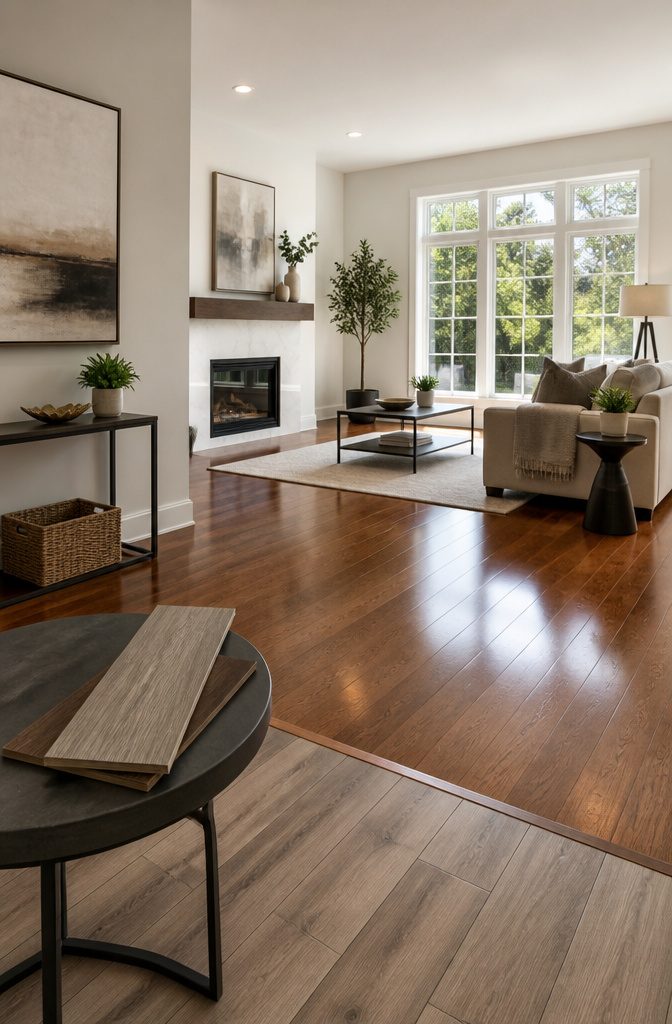
Hardwood flooring can add significant resale value to a home, while vinyl tends to have a more modest effect on buyer interest and sale price.
Real estate professionals consistently report that homes with hardwood floors sell faster and at higher prices than comparable properties with other flooring types, and the material’s 30–100+ year lifespan lets buyers see it as a genuine long-term asset rather than a surface they’ll need to replace.
For first-home owners, this creates a tension worth sitting with.
Hardwood’s material cost runs $5–$20 per square foot, plus $6–$12 for professional installation, so the upfront hit is substantial. Vinyl’s total installed cost averages $5–$10 per square foot, which keeps more cash free for other projects now.
The choice between them depends on how long you plan to stay. If you’re likely to sell within five years, a high-quality luxury vinyl plank gives you a fresh, appealing look without tying up capital you might need elsewhere.
Stay longer, and hardwood’s stronger return on investment starts to justify the higher initial expense.
Which One for Your Project
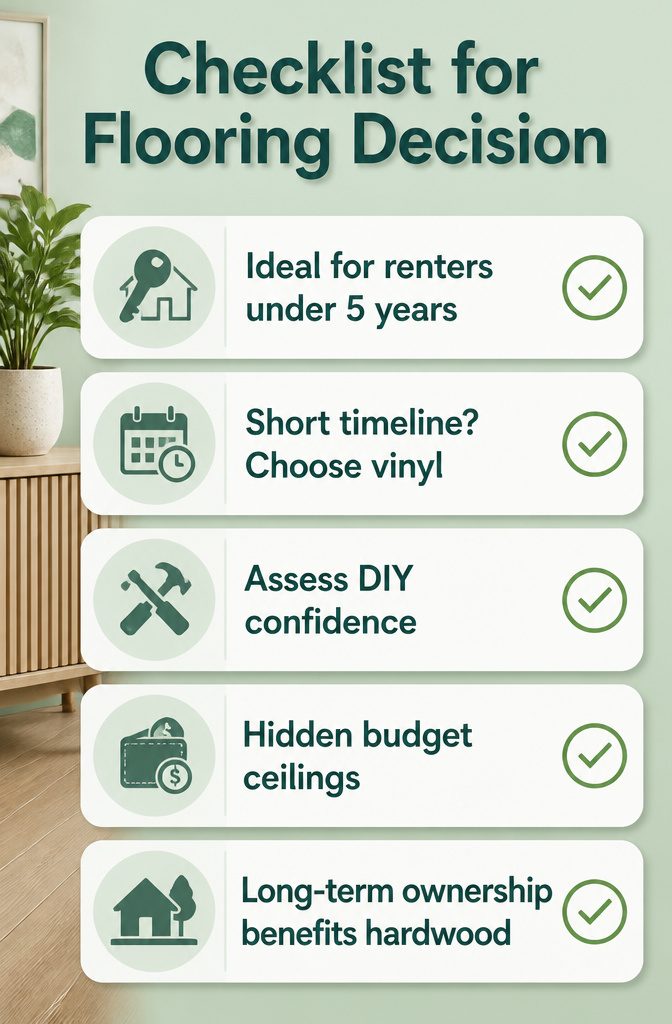
The choice between vinyl and hardwood usually clicks into place once you map your actual constraints.
- Renters or anyone staying under five years should look hard at luxury vinyl plank. It runs $2–$6 per square foot, clicks together without glue or nails, and comes back up when you leave. Hardwood at $5–$20 per square foot plus professional labor makes little sense when you cannot take it with you and the landlord may not even allow it.
- A tight weekend timeline favors vinyl. Most LVP installs directly over existing flooring if the surface is smooth and level. Hardwood needs acclimation days for humidity and temperature, then nailing, stapling, or gluing. That is not a Saturday project.
- DIY confidence matters more than you think. Vinyl forgives a learning curve. Hardwood mistakes are expensive to reverse, and the special tools sit in most closets unused. If you have never run a flooring nailer, hire the pro for hardwood or choose vinyl.
- Budget ceilings have hidden floors. Saving labor with DIY vinyl keeps total cost down even if you spring for premium planks. Hardwood savings on materials disappear fast once installation enters the equation.
- Long-term owners planning to stay and eventually sell get the payoff from hardwood. Buyers actively seek it out, and the refinishing option lets you erase decades of wear. That long-term value is vinyl’s tradeoff for its upfront practicality.
What I Got Wrong
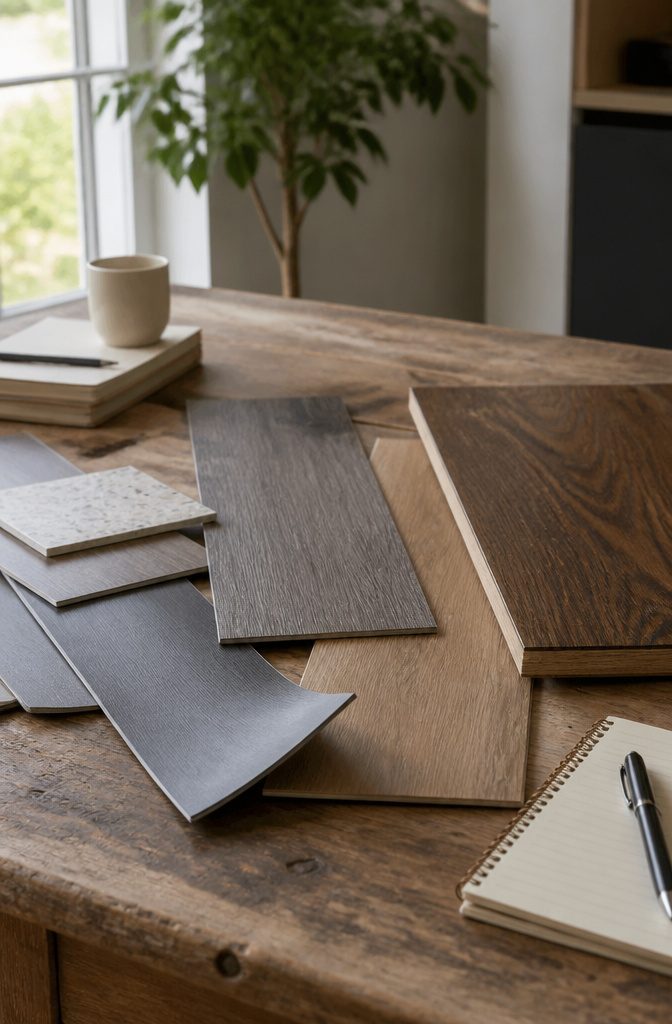
A sample of luxury vinyl plank looks bulletproof in the store. I learned that the hard way after installing it in a bathroom without checking the subfloor moisture first.
The edges curled within six months, not because the vinyl failed, but because I had assumed the "waterproof" label meant I could skip the basics.
Waterproof planks still need a dry, flat subfloor, or the adhesive backing traps vapor against the concrete and the seams lift like peeling wallpaper.
The same mistake almost repeated itself with hardwood. I nearly ordered three-inch white oak based on a single showroom board, not realizing how much the tone shifts under incandescent bulbs versus the LEDs in my living room.
A contractor I called for a quote talked me into borrowing a larger sample and living with it for a week. The board I loved under showroom spots looked almost pink at 7 a.m. by my east windows.
I would have been sick over that floor for years. Now I tape samples to the actual subfloor and walk past them at every hour before I decide.
Budget Reality Check
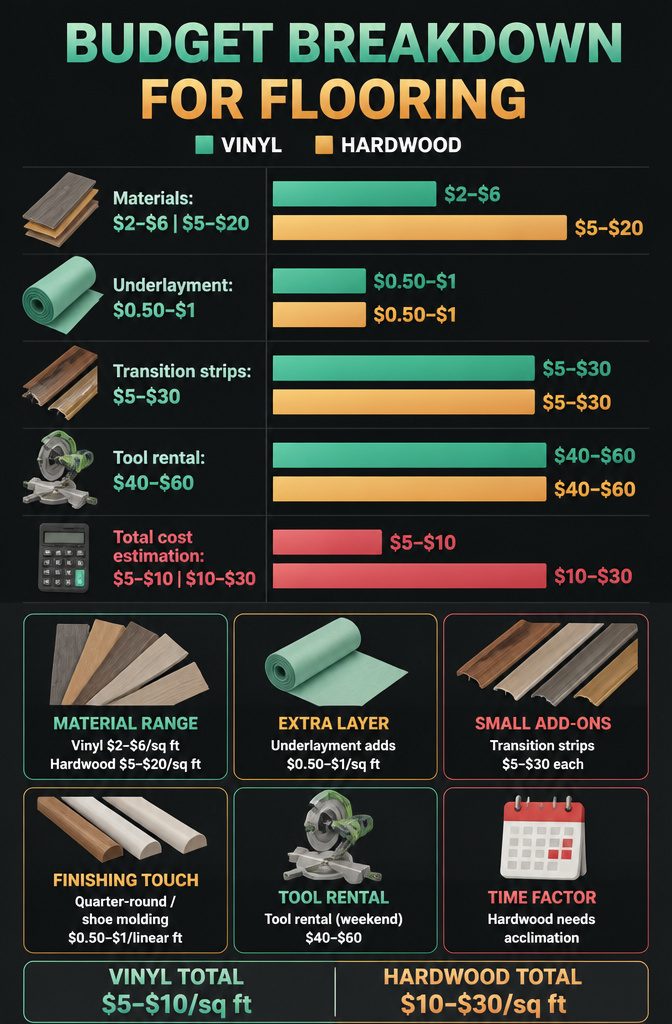
A few hundred to a thousand dollars disappears fast on flooring, and the square-foot price on the box is only the opening bid.
At $2–$6 per square foot for vinyl and $5–$20 for hardwood, a 120-square-foot bedroom rings up at roughly $240–$720 in materials for vinyl, or $600–$2,400 for hardwood, before you’ve touched a tool.
The extras come at you in stages you do not budget for.
Underlayment adds $0.50–$1 per square foot if it is not built into the plank. Transition strips between rooms run $5–$30 each.
Tool rental for a flooring nailer or a decent miter saw hits $40–$60 for the weekend. Quarter-round shoe molding to cover the expansion gap, which I always forget until I am staring at exposed drywall, is another $0.50–$1 per linear foot.
| What you actually pay for | Vinyl | Hardwood |
|---|---|---|
| Material per sq ft | $2–$6 | $5–$20 |
| Underlayment (if separate) | $0.50–$1/sq ft | $0.50–$1/sq ft |
| Transition strips | $5–$30 each | $5–$30 each |
| Quarter-round / shoe molding | $0.50–$1/linear ft | $0.50–$1/linear ft |
| Tool rental (weekend) | $40–$60 | $40–$60 |
| Total installed cost | $5–$10/sq ft | $10–$30/sq ft |
Hardwood also carries the cost of acclimating the wood to your home’s humidity before install, which means another few days of your project timeline where you are not allowed to walk on the material you already paid for.
That is not a line item on the receipt, but it is a cost.
For a weekend project with a thousand-dollar ceiling, vinyl usually wins because it lets you keep the tool rental simple and skip the acclimation wait.
Hardwood only fits if the room is small, the wood is basic oak at the low end of its range, and you already own the saw.
Frequently Asked Questions
What is the difference between hardwood and vinyl flooring?
Hardwood is a natural material cut from trees, while vinyl is a synthetic PVC product designed to mimic wood. Hardwood carries unique grain patterns, knots, and color shifts in every plank, and it can be refinished multiple times over decades.
Vinyl repeats its printed pattern across the floor, cannot be refinished, and has a fiberboard or paper backing instead of solid wood.
Is vinyl flooring more durable than hardwood?
Vinyl resists scratches and moisture better, making it harder to damage day-to-day, but hardwood outlasts it overall because it can be refinished.
Solid hardwood lasts 30 to 100-plus years with several rounds of sanding and sealing; vinyl tops out at 10 to 30 years before the wear layer fails, and once the surface is gouged through, replacement is the only option.
How much does it cost to install hardwood vs vinyl flooring?
Vinyl runs $5 to $10 per square foot installed, while hardwood lands at $10 to $30.
Material alone is $2 to $6 for vinyl and $5 to $20 for hardwood, and professional installation adds $3 to $5 per square foot for vinyl versus $6 to $12 for hardwood. DIY vinyl keeps costs down further since it needs only basic tools and no acclimation time.
What is the downside to vinyl flooring?
The wear layer cannot be renewed once it thins or scratches through, so the floor has to be replaced within 10 to 30 years.
It also lacks the resale value of hardwood, adds no long-term investment return, and because it is PVC, it does not biodegrade and is difficult to recycle. Lower-end products can emit VOCs that affect indoor air quality.
Do high end homes use vinyl plank flooring?
Luxury vinyl plank appears in high-end homes for basements, kitchens, and rental properties where moisture or turnover is a concern, but it is not what buyers actively seek.
Real estate professionals report that homes with hardwood floors sell faster and at higher prices, so vinyl functions more as a practical or temporary choice than a premium selling point.
Is hardwood cheaper than vinyl?
No. Hardwood material starts around $5 per square foot and climbs to $20, while vinyl starts at $2.
With installation, hardwood costs $10 to $30 per square foot installed against vinyl’s $5 to $10. Hardwood only approaches vinyl pricing if you find bargain oak, install it yourself, and already own the required saws and nailers.
How to know if it is hardwood or vinyl?
Flip a plank or look at the edge. Hardwood shows solid wood all the way through with sharp, squared edges; vinyl has a rolled or beveled edge and paper or fiberboard backing underneath.
Patterns are another tell: hardwood planks vary in grain and tone naturally, while vinyl repeats its printed design, which becomes obvious when you sight along a wall. The surface feel differs too; vinyl is smoother and slightly softer underfoot.