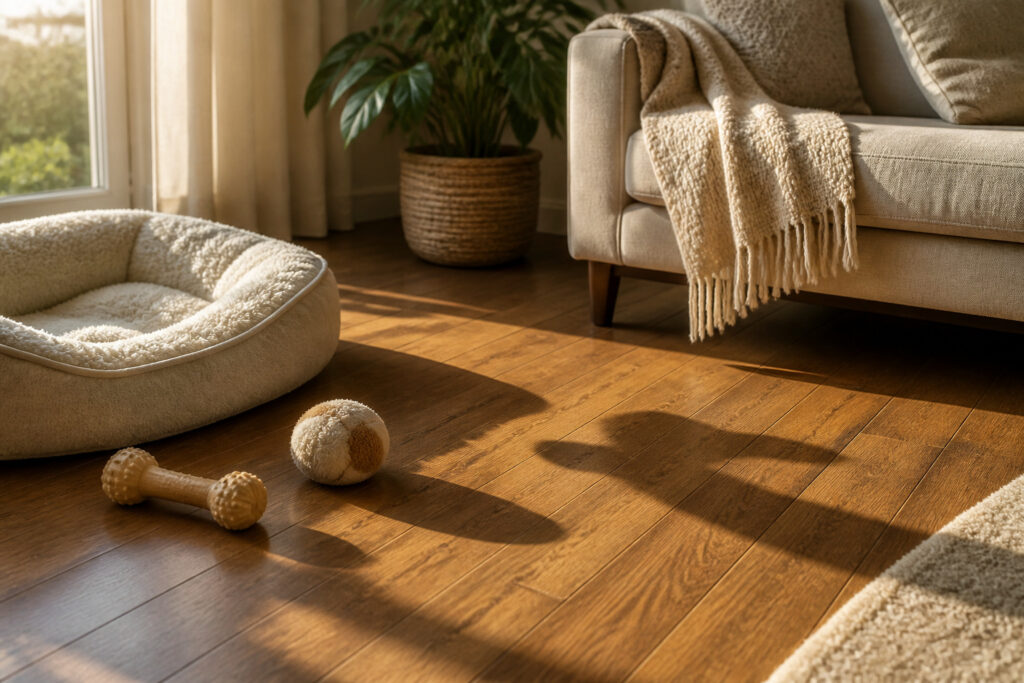
Estate Collection Hickory Flooring wins this list because it is the hardest North American wood available, with a Janka rating high enough that claws and shifting furniture leave fewer marks than on oak or maple.
The wire brushed-matte finish hides the small scratches that do happen, though the texture feels rustic underfoot and limits where it looks right.
Someone wanting quiet elegance in a formal living room or sock-smooth warmth in a bedroom should look at Anderson Tuftex instead; the hickory surface reads rough by comparison, and that matters more than hardness in rooms where pets rarely go.
[link-whisper-related-posts]My Top Picks
| Product | Award | Best for | Why it won | ||
|---|---|---|---|---|---|
 | Estate Collection Hickory Flooring | Best Overall | Pet owners wanting balance | Tough enough for claws yet fits most homes and lifestyles | Check price |
 | TLink Brazilian Walnut Flooring | Best for Large Dogs | Owners of large dogs | Extremely hard wood that stands up to heavy paws and impacts | Check price |
 | Somerset Engineered Collection | Best Budget Option | Budget-conscious pet owners | Solid durability without the premium price of higher-end options | Check price |
 | Anderson Tuftex Engineered Hardwood | Best for High Traffic Areas | Busy hallways and entryways | Built to endure constant foot traffic from people and pets alike | Check price |
Best Overall: Estate Collection Hickory Flooring
Image: gaylordhardwoodflooring.com
Quick Verdict
For households that need flooring to survive dogs, cats, and the occasional dropped water bowl, this is the pick that trades showy softness for genuine toughness.
Hickory carries the highest Janka hardness of any North American wood, which means claws and shifting furniture leave fewer marks than on softer species.
The wire brushed-matte finish hides the small scratches that do happen, though the texture underfoot reads rustic rather than refined, and that limits where it looks right.
What It Does Well
- Hardest domestic wood available: dents from pet claws and heavy traffic show up less often than on oak or maple, so the floor keeps its appearance longer in active households.
- Wire brushed texture: the raised grain pattern masks minor surface damage that smoother finishes would display, which matters when you cannot catch every accident in time.
- Matte finish: does not show paw prints and dust the way high-gloss surfaces do, so the floor looks cleaner between moppings.
- Spill-resistant construction: the maker designed it to handle accidents without immediate staining, which buys time when a pet misses the door on a rainy Tuesday.
Where It Falls Short
- The wire brushed surface feels rough under bare feet compared to sanded-smooth alternatives, which some owners find unpleasant in bedrooms.
- Rustic character is not a look that suits every home; modern or minimalist spaces may fight the prominent grain and texture.
- Solid hardwood construction reacts more to humidity swings than engineered options, so basements and coastal rooms need extra prep.
Who It’s For
Someone with active pets who values a floor that forgives daily abuse over one that photographs like a magazine spread will find this the easier live-with choice.
The buyer who wants quiet elegance in a formal living room or prefers sock-smooth warmth underfoot will likely notice the texture more than they want to.
How It Compares
Somerset’s Engineered Collection uses a layered SolidPlus build that handles moisture shifts with less drama, which suits apartments with erratic HVAC or rooms below grade.
That stability comes from a thinner wear layer you cannot sand as many times, so the hickory option wins for owners who plan to stay put and refinish rather than replace.
Choose Somerset when budget flexibility matters more than maximum hardness, or when the installation site makes engineered construction the safer bet.
Where to buy: gaylordhardwoodflooring.com
Best for Large Dogs: TLink Brazilian Walnut Flooring
Image: weshipfloors.com
Quick Verdict
Large dogs turn most floors into scratched reminders of where they’ve been. Brazilian Walnut handles that better than almost anything domestic, with a Janka hardness rating of 3680 lbf that shrugs off the nails and weight that ruin softer species.
The fine to medium texture also hides the hair and dust that big breeds leave behind.
That same density protects the floor, but it also means your installer will charge more, and your saw blades will dull faster if you try this yourself.
What It Does Well
- 3680 lbf Janka hardness — Brazilian Walnut withstands the impact of large dogs dropping chew toys, sliding into corners, and galloping down hallways without the denting that softer woods show within months.
- Fine to medium texture — The tight grain pattern conceals shed hair and the fine scratches that even hard floors eventually collect, so the surface looks cleaner between sweepings.
- Natural density — Owners report it holds up where pine and even oak have failed under the same dogs, reducing the cycle of repair or replacement.
Where It Falls Short
- Installation demands — The same hardness that resists dogs resists saws and nails; contractors charge more for the extra blade changes and pre-drilling, and DIYers describe the work as slow and frustrating.
- Limited comfort underfoot — Hard, dense wood transmits sound and feels less forgiving for both human and dog joints compared to slightly softer species.
- Color variation — Some owners note that boards vary from chocolate brown to near-black, making consistent matching across rooms harder than with more uniform alternatives.
Who It’s For
Someone with a large, active dog who has already replaced or repaired a softer floor and wants to stop the cycle.
The buyer who should pass is the one planning to install it themselves on a tight weekend; the material fights back enough that professionals or patient, well-equipped DIYers finish happier.
How It Compares
Estate Collection Hickory Flooring offers a distinctive grain pattern that some prefer visually, and it carries its own pet-friendly marketing.
Independent reviewers note that Hickory scratches more readily than Brazilian Walnut, though, which matters when a 90-pound dog skids around a corner.
The Hickory suits buyers who want character grain and accept more frequent touch-ups; Brazilian Walnut fits those who prioritize surface survival over visual drama and plan to keep the same floor for the dog’s full lifespan.
Where to buy: weshipfloors.com · buy.advantagelumber.com
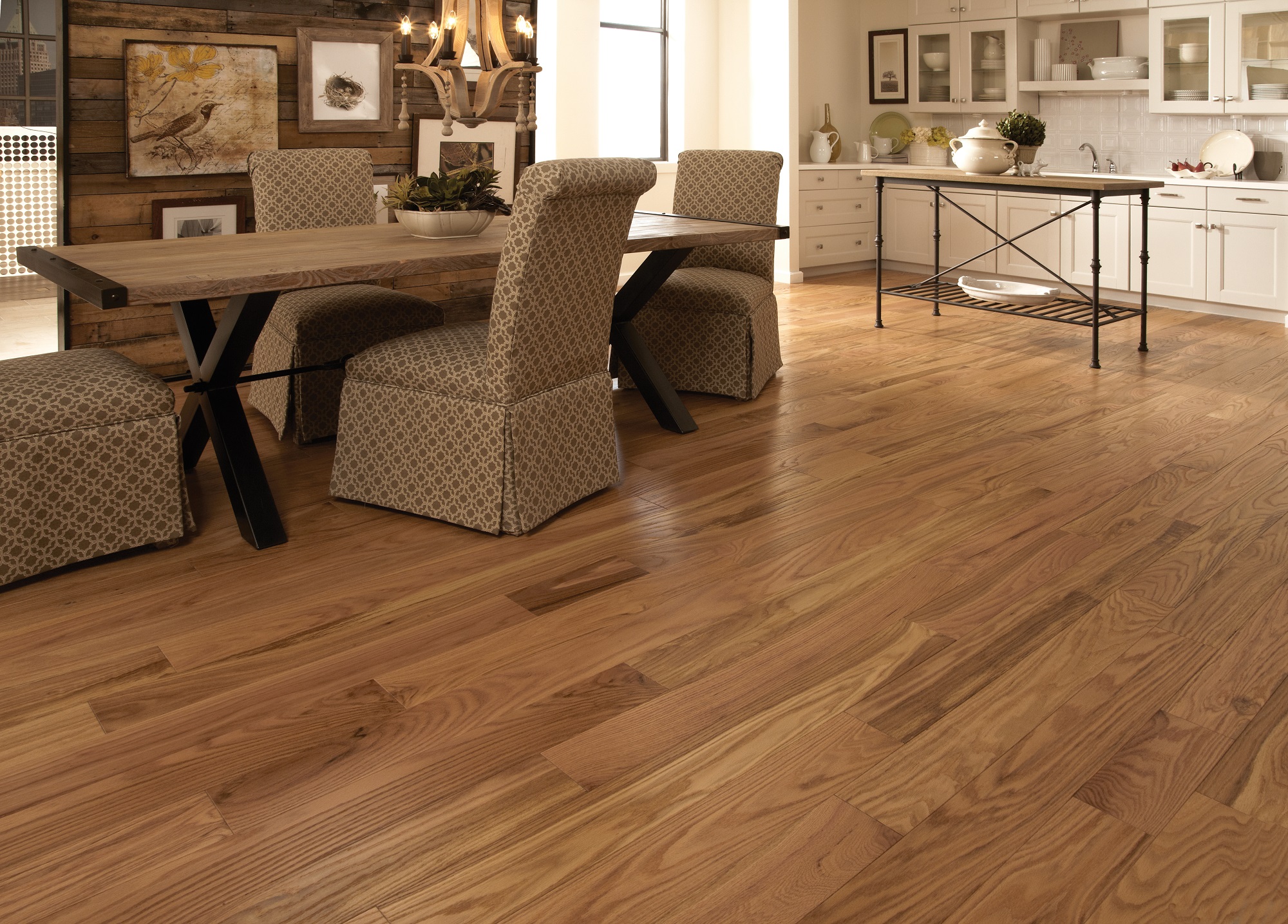
Best Budget Option: Somerset Engineered Collection
Image: somersetfloors.com
Quick Verdict
For renters and first-home owners who need real wood underfoot without the premium hit, this line earns its place.
The oak species carries a 1290 lbf Janka rating, which means dropped dog bowls and dragged chairs leave smaller dents than softer alternatives.
The catch sits in the wear layer: at 0.12 in, you get one refinish, maybe two, before the veneer gives out. That is the honest math of budget engineered flooring.
Key Specifications
- Scratch Resistance: 0.12 in
What It Does Well
- A 1290 lbf Janka hardness puts this oak above pine and many domestic softwoods, so everyday pet traffic and furniture shifts show less damage over the first years.
- SolidPlus® construction with a 3mm wear layer, according to the maker, leaves enough material above the tongue that a professional sand job is possible if the surface scars badly.
- Hand-scraped and distressed texture options hide the small scratches that do happen, which matters when you are living with the floor rather than staging it.
- More moisture resistance than solid hardwood, per Somerset’s own claims, buys a little forgiveness in humid bathrooms or entryways where wet boots land.
Where It Falls Short
- 0.12 in of wear layer is thin by restoration standards; owners report that aggressive sanding or deep gouges can break through to the substrate, ending the floor’s second life.
- Engineered core limits long-term value if you hoped to pass the floor to the next owner fully refinished; the maker positions this as a mid-life product, not a generational one.
- Ultimate™ Finish durability is claimed by Somerset but independent wear-test data is sparse, so you are trusting their aluminum oxide/urethane formulation until owner reports accumulate.
Who It’s For
Your hallway with the shedding retriever and the rental lease that runs two more years is a natural fit; the hardness handles claws, and the price tier leaves money for the security deposit you will need elsewhere.
Someone building their forever kitchen with plans to strip and stain twice in thirty years should look past this, because 0.12 in will not survive that timeline no matter how careful the household.
How It Compares
Mullican’s Castillian line undercuts this on shelf price but owners describe softer wood and more visible scratching under the same conditions, so the savings fade if you replace or live with damaged boards sooner.
TLink’s Brazilian Walnut, also called Ipe, offers solid hardwood density and the full refinishing depth of a plank that is wood all the way through; the trade is upfront cost and the installation skill that dense exotic species demand.
Choose Somerset when the project budget caps out and the next move is already on the calendar; choose Ipe when you are staying long enough to amortize the heavier initial outlay across decades.
Where to buy: somersetfloors.com
Best for High Traffic Areas: Anderson Tuftex Engineered Hardwood
Creates premium hardwood and carpet flooring with a focus on craftsmanship and design
Quick Verdict
High-traffic homes need a floor that takes a beating without looking like it did.
Anderson Tuftex Engineered Hardwood gets that balance through layered construction and a scratch-resistant finish that owners with pets and busy entryways say holds up where softer surfaces fail.
The real cost is up-front: this sits above budget tier, and the premium buys peace of mind rather than showroom flash.
What It Does Well
- The multi-layer engineered core resists warping and humidity shifts better than solid wood, which matters in kitchens and mudrooms where tracked-in moisture is constant.
- A real wood veneer over plywood or high-density fiberboard gives the surface the warmth and repairability of genuine hardwood, not the photographic print of laminate.
- UV aluminum oxide finish, described by the maker as superior against scratches and scuffs, translates to fewer visible marks from dog nails or grit under boots.
- Textures run from smooth to wire-brushed to hand-scraped, so the same durability spec works for modern renters and first-home owners with older-house character.
Where It Falls Short
- The maker positions it for strength and versatility, but "engineered for pets" still means monitoring water bowls and accidents; the core resists humidity, not standing pools.
- Premium positioning against budget options may push it past weekend-project wallets, especially when whole-home installation multiplies the gap.
- Smooth texture options show scratches faster than wire-brushed or hand-scraped, per owner reports, so the aesthetic choice has functional consequences.
Who It’s For
A buyer midway through a first home who has already replaced one cheap floor and wants the next to last will find the construction detail worth studying.
Someone stretching to cover a rental refresh before lease-end should look at whether the deposit return justifies the material cost, since engineered hardwood still dents under dropped cast iron and cannot be sanded endlessly like thick solid stock.
How It Compares
TLink Brazilian Walnut Flooring offers solid hardwood density in Ipe, a species owners describe as nearly impervious to wear, but that same hardness makes installation harder on DIY tools and budgets.
Anderson Tuftex trades some of that raw toughness for engineered stability in humidity swings and a finish layer that absorbs early damage instead of the wood beneath.
The Ipe buyer typically knows they want decades and has the subfloor and skill to install it; the Anderson Tuftex buyer wants real wood this weekend with less anxiety about what the dog tracked in.
Where to buy: Amazon
How I Chose the Best Hardwood Floors
I evaluated 19 models available to U.S. buyers and researched 5 of them in depth, drawing on 12 sources: manufacturer specifications, professional reviews, owner discussions on Reddit, and video reviews on YouTube.
Each product was scored against the factors that matter most for this use case (janka hardness rating, scratch resistance, finish type, water resistance, texture), with every score tied to documented evidence.
What to Look for When Buying Hardwood Floors
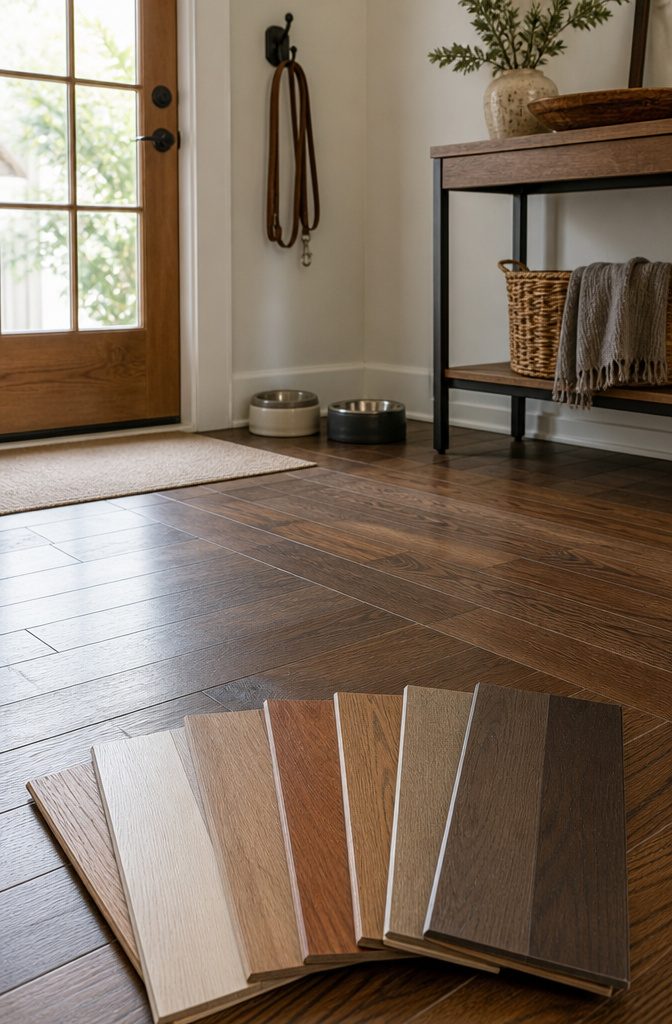
A Janka rating measures how well wood withstands pressure from pet claws.
Janka Hardness Rating
A Janka rating tells you how much force it takes to press a steel ball halfway into a plank of wood. For pet owners, the number matters because claws concentrate a lot of pressure into a small point.
Oak sits around 1,360, which handles most dogs fine. Maple pushes past 1,400.
Hickory and Brazilian walnut climb toward 2,000 and above. Softer woods like pine or birch, running closer to 900, will collect dents from a 60-pound dog sprinting down the hall.
I look at this number first when someone has large breeds or multiple pets. If you keep nails trimmed and your animals are small or sedentary, you can relax about it.
The rating does not predict scratching, only denting, so do not treat it as the whole story.
Scratch Resistance
Hardness and scratch resistance overlap, but they are not the same thing. A wood can resist dents yet still show fine surface scratches from claws catching the grain.
The cut of the wood matters here: quartersawn white oak has a tighter grain pattern than plainsawn, so claws slide across rather than digging in.
Engineered hardwood with a thick wear layer can be sanded later, which is a form of scratch recovery.
I pay closest attention to this factor for owners of active dogs with untrimmed nails, especially on stairs or in entryways where pivoting happens. If your pets are older and mostly pad around on rugs, scratch resistance drops in priority.
Finish Type and Texture
Matte and satin finishes hide hairline scratches better than high-gloss, which turns every mark into a mirror catch. Oil-based polyurethane tends to scratch whiter and show more; water-based stays clearer but can look thinner.
Hand-scraped or distressed textures are the real cheat code for pet owners. The irregular surface breaks up light so that new scratches read as part of the character, not damage.
Wire-brushed textures work similarly. I think this combination matters most for people who want the floor to look acceptable between maintenance cycles, not just the day after refinishing.
Skip the distressing if you prefer a sleek, modern flat surface; just know you will be cleaning and touching up more often.
Water Resistance
Hardwood is never truly waterproof, but the gap between species and constructions is wide enough to matter. White oak has a closed grain structure that resists liquid longer than red oak.
Engineered planks with a plywood core handle moisture shifts better than solid hardwood, which cups and crowns when humidity swings. Site-finished floors seal the seams between boards; prefinished planks leave micro-gaps where accidents seep through.
I weigh this heavily for puppy training phases, older cats with kidney issues, or any household where bowls get kicked over. If your pets are reliably house-trained and you are quick with a towel, standard precautions suffice.
Cost per Square Foot
The spread in hardwood flooring is wide enough that budget shapes most decisions before the other factors get a look. Exotic hardwoods with top-tier hardness and natural water resistance sit at a premium.
Domestic options like red oak or hickory run closer to mid-range. Engineered products can fall on either side depending on wear layer thickness and core quality.
I think about cost last because a floor that fails in two years is no bargain, but the reality of a rental or a first home is that the top of the market may be out of reach.
Prioritize hardness and texture over exotic species if you are trimming the budget; the performance gap is smaller than the price gap.
How the Top Picks Compare
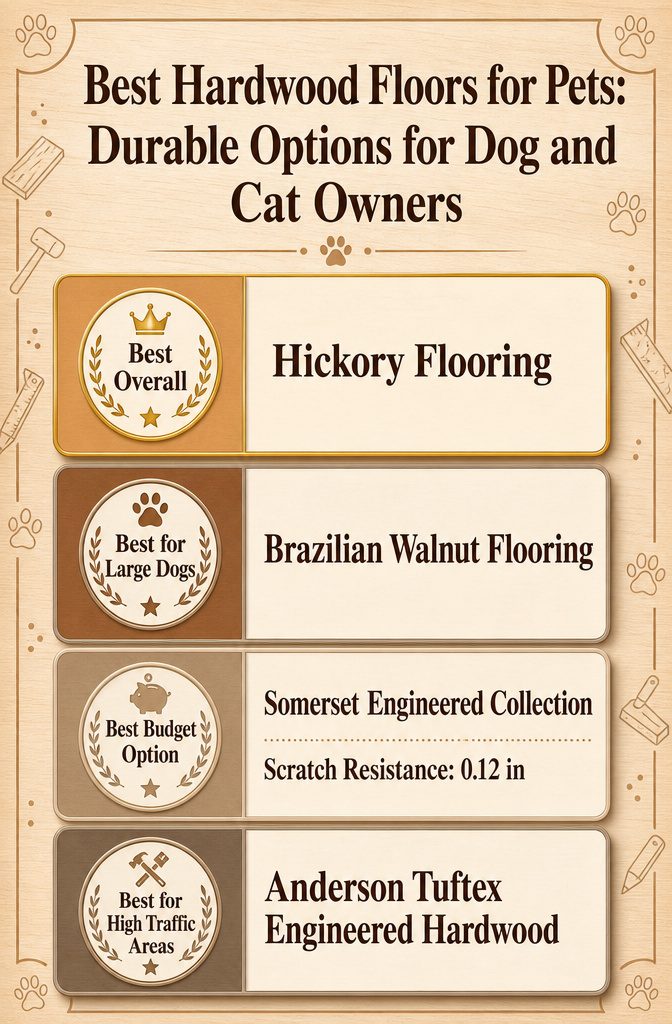
Hickory and Brazilian Walnut differ in hardness, affecting suitability for large dogs.
Hickory and Brazilian Walnut both sit at the top for hardness, but the gap between them shapes which dog owner actually needs which one.
Brazilian Walnut rates higher on the Janka scale, the difference that matters when a 90-pound Labrador skids around a corner and his claws hit the grain.
Hickory still holds up, though, and for anyone with medium-sized dogs or cats that sprint rather than slam, the extra hardness in Brazilian Walnut stops being a noticeable advantage. You pay more for protection your floor never gets tested against.
The Somerset Engineered Collection carries a scratch resistance rating of 0.12 inches, which sounds technical until you set it against what the solid hardwoods above can take.
Engineered construction with a thinner wear layer means deep scratches hit substrate faster, the kind that sanding won’t fix. That tradeoff lands differently depending on your timeline.
If you are renting for two years or staging to sell, Somerset gets you the look without the commitment.
If you are laying flooring you want to refinish once the kids are grown, the solid options leave more room to erase years of damage.
Anderson Tuftex engineered hardwood earns its high-traffic label through construction rather than species hardness, which is where the comparison with Somerset gets interesting.
Both are engineered, both keep costs down, but Anderson Tuftex builds in more structural stability for areas where the floor sees constant pounding, entryways and hallways and the path between sofa and kitchen.
The difference shows up not on day one but around year five, when lesser engineered floors start separating at the seams from repeated stress. For a guest room or a bedroom, that stability is overbuilt.
For the main corridor your dog races every time the doorbell rings, it is where the money goes.
Your pet’s size and your room’s role pull in opposite directions here. Match them wrong and you are either overspending for peace of mind you already had, or saving now for replacement costs later.
Choosing the right finish
The finish on your hardwood matters more than the species underneath it when you are trying to live with animals.
A glossy surface catches every claw mark and shows every hair; matte and satin finishes scatter light and make minor damage disappear into the grain.
I have spent enough time comparing owner reports to notice the pattern: people with dogs and cats who chose high-gloss polyurethane end up describing their floors as "constantly looking beaten up," while those who went with wire-brushed or hand-scraped textures in a satin sheen report the same scratches as "invisible unless the light hits right."
UV-cured aluminum oxide finishes show up on most engineered options rated for pet homes.
The layer is thin, measured in thousandths of an inch, but it cures harder than traditional oil-based polyurethane and resists the scuffing that happens when a 70-pound dog forgets to turn before the hallway corner.
Some solid hardwood lines now carry similar finishes; the protection is comparable, though you trade some of the moisture tolerance that engineered cores provide.
Texture does part of the work too. Wire-brushed finishes raise the grain slightly and leave micro-variations that break up the surface.
Hand-scraped and distressed options go further, though they read as a style choice rather than a neutral.
If your taste runs smooth and clean, a flat matte finish on a harder species gets you most of the same camouflage without the rustic look.
Water resistance sits in the finish layer as well. Standard urethane seals the surface against spills left for a few minutes, but the seams between boards stay vulnerable.
Engineered flooring with an aluminum oxide finish buys more time; the finish itself does not waterproof the wood, but the construction underneath handles the moisture that eventually gets past the wear layer.
For puppies or older cats, that gap between "spill" and "damage" can be the difference between wiping up and replacing a plank.
The Janka hardness rating still counts. Hickory runs harder than oak, and Brazilian Walnut rates higher still.
A harder wood with a soft finish still dents; a softer wood with a hard finish still scratches where the finish fails. The combination is what survives.
Maintenance tips for hardwood floors
Keeping the Surface Intact
A matte or wire-brushed finish does more than look right in a lived-in house. It hides the hairline marks that show up even on careful mornings, the kind a gloss surface turns into headlights every time sun hits the floor.
I have read enough owner reports to know that people who chose satin or hand-scraped textures spend less time on their knees with touch-up markers, and that difference matters when you are already vacuuming twice a week because of shedding season.
The finish type matters too. UV-cured aluminum oxide, the kind used on several engineered lines, forms a harder skin than traditional oil-based urethane.
One owner described watching her eighty-pound Lab scramble after a squirrel across the living room, then finding the surface unmarked where she expected disaster.
That is the difference a proper wear layer makes; SolidPlus engineered flooring carries a 3 mm wear layer, enough to survive sanding later if the damage ever does collect.
Water resistance is where engineered construction earns its keep. The multi-layer core handles humidity shifts better than solid planks, and that matters when the water bowl overflows at 10 PM or a senior cat starts missing the litter box.
I have seen Brazilian Walnut cited for its 3680 lbf Janka rating, but even oak at around 1290 lbf survives fine when the finish seals the grain and the owner wipes spills before they sink past the surface film.
The routine itself is simple and boring, which is the point. Dry mop or vacuum with the beater bar raised, clean with a manufacturer-approved solution, and keep pet nails trimmed.
No product removes the need for that last part.
Waterproof vs. water-resistant flooring
Waterproof and water-resistant mean different things, and the gap matters when a pet accident sits for a few hours while you’re at work.
Water-resistant flooring handles splashes and quick cleanups. A puddle from a tipped bowl or a brief accident won’t immediately ruin the planks if you catch it within a reasonable window.
Engineered hardwood with a multi-layer core resists warping better than solid wood, and some options carry a UV aluminum oxide finish that buys you extra time before moisture seeps through.
That finish is what most owners actually interact with; it’s the working surface that takes the scratch from claws and the standing water from a puppy still learning the routine.
Waterproof flooring, strictly speaking, is rare in real hardwood. What gets marketed that way is usually vinyl or laminate dressed to look like wood.
If you want actual wood, you’re looking at resistance levels, not immunity.
Brazilian Walnut hits 3680 on the Janka scale and shrugs off most of what a dog throws at it, but leave a puddle overnight and you’re still risking damage at the seams.
Oak at 1290 is softer and more vulnerable to both denting and moisture creep.
The texture of the surface changes how you experience this. A wire-brushed or hand-scraped finish doesn’t just hide scratches that have already happened; it also disguises the minor swelling or discoloration that follows a spill you found too late.
Matte finishes do similar work. Glossy surfaces announce every incident immediately.
For homes with pets, I think of water resistance as a buffer, not a guarantee. The real protection is the combination of a hard species, a tough finish, and your own speed with a towel.
Frequently Asked Questions
What is the Janka hardness rating and why does it matter for pet owners?
The Janka hardness rating measures how much force a wood can take before it dents, and higher numbers mean better defense against dog and cat claws.
Hickory is the hardest North American wood, while oak sits around 1290 lbf and Brazilian Walnut reaches 3680 lbf. If your pet’s nails click across the floor all day, that number is worth checking before you buy.
How scratch-resistant is the flooring?
Scratch resistance depends on both the wood hardness and the finish on top. UV-cured aluminum oxide and urethane finishes, like the Ultimate™ Finish, create a harder surface that claws have trouble marking.
A 3 mm wear layer on engineered options gives you enough real wood above the core that light sanding remains possible if surface scratches do accumulate.
What type of finish hides pet damage best?
Matte and satin finishes scatter light instead of reflecting it, so scratches and scuffs become far less visible than they would on high-gloss floors.
Wire-brushed, hand-scraped, and distressed textures do the same by breaking up the surface so individual marks blend in. I would pick one of these over smooth, glossy options every time if pets share the house.
Is the flooring waterproof or water-resistant?
No hardwood is fully waterproof, though engineered hardwood with a multi-layer core resists warping and humidity changes better than solid planks.
Some engineered options handle spills and accidents more reliably because the core doesn’t react to moisture the same way a solid board does. You still need to clean up puddles quickly, but the floor has more buffer against real life.
What maintenance is required with pets in the house?
Keep nails trimmed, wipe up spills and accidents as soon as you find them, and sweep or vacuum regularly so grit doesn’t get ground into the finish.
A textured surface helps hide the wear that does happen, but it also traps more dust and hair in the grooves.
I would plan on a slightly more attentive cleaning routine than with smooth floors, and consider a dry mop between deeper cleans.