These 10 ideas run from $0.50 per square foot for a basic concrete polish to about $4 for bamboo, and from a single Saturday with a miter saw to a multi-day project ripping plywood into planks.
The deciding factor is not how much you have to spend but what the room throws at the floor: water, grit, heavy furniture, or just your own footsteps.
For proof of the range, herringbone laminate clicks together without glue while ceramic tile demands mortar, grout, and a subfloor flat enough that any error telegraphs through within months.
[link-whisper-related-posts]1. Laminate Flooring
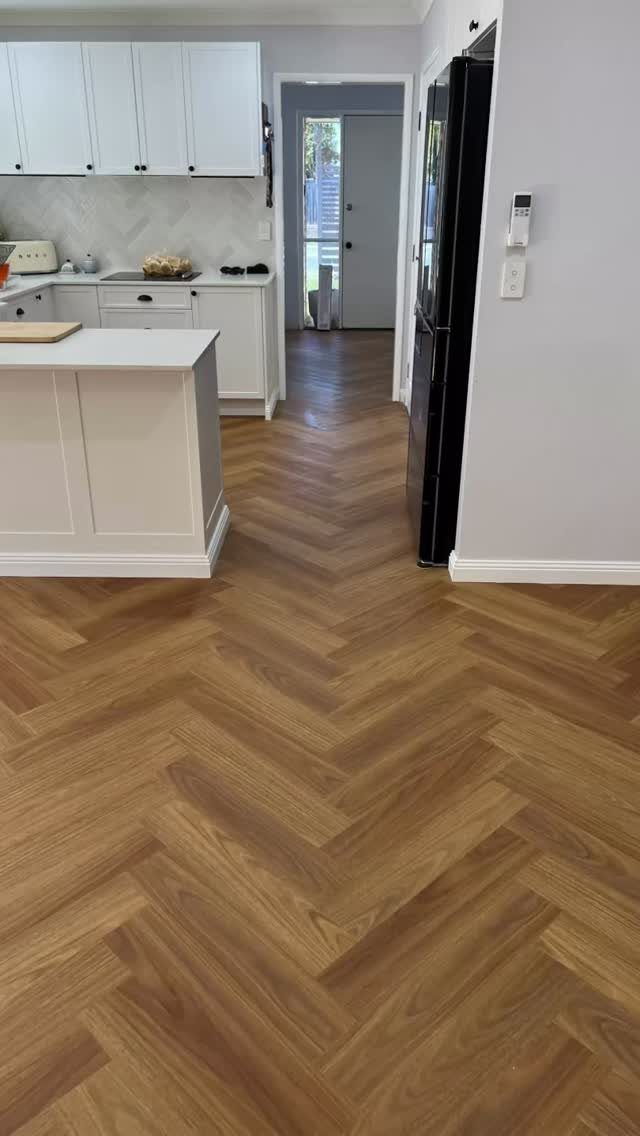
Herringbone laminate runs about $0.70 per square foot, and the click-lock system means you float it over the subfloor without glue.
I would not put this in a kitchen or bath, though; the seams let water in, and heat near the stove can warp the top layer.
The printed wood grain has gotten convincing enough that I have to kneel down to spot the repeat pattern.
For a weekend install with a miter saw and a tapping block, this is the one I’d pick for a rental or a first home you are not sure you will keep.
Expect 10 to 15 years if you stay on top of spills; some lines stretch to 25 with careful maintenance. Skip the wet mop and use a barely damp cloth instead.
2. Engineered Hardwood
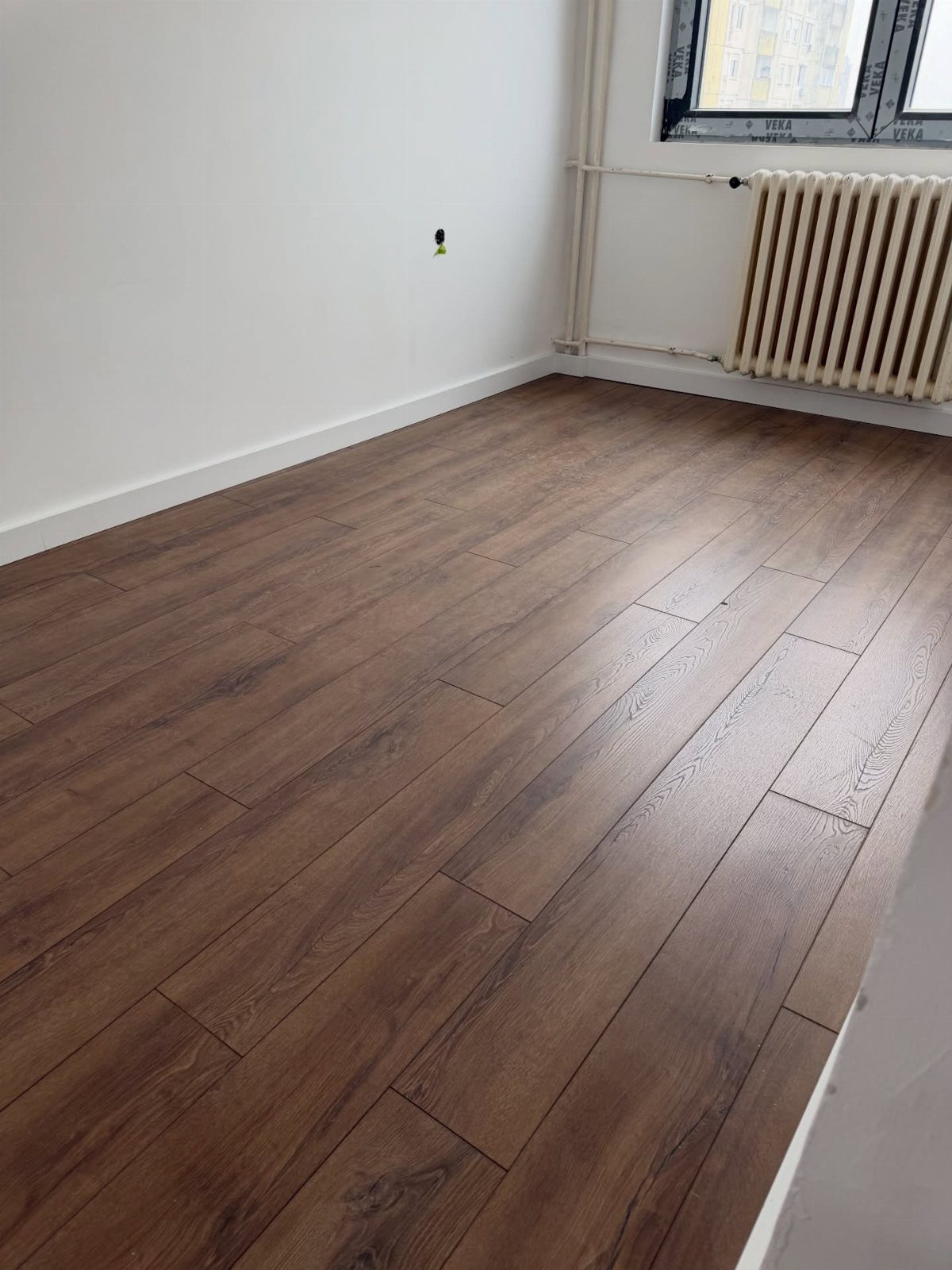
A real wood veneer over plywood core gives engineered hardwood the look of solid oak or hickory while handling humidity shifts far better.
That core is the reason this works in a basement or over concrete where solid boards would cup and gap.
Installation runs faster than traditional hardwood because the planks come pre-finished and often click together. I would still budget for a moisture barrier and leave the standard expansion gap at the walls.
The veneer is thick enough to sand once, maybe twice, so this is not a forever floor, but it is a 15- to 25-year floor at roughly half the cost of solid material.
For anyone who wants genuine grain underfoot without the genuine price, this is the compromise that actually holds up.
3. Plywood Flooring
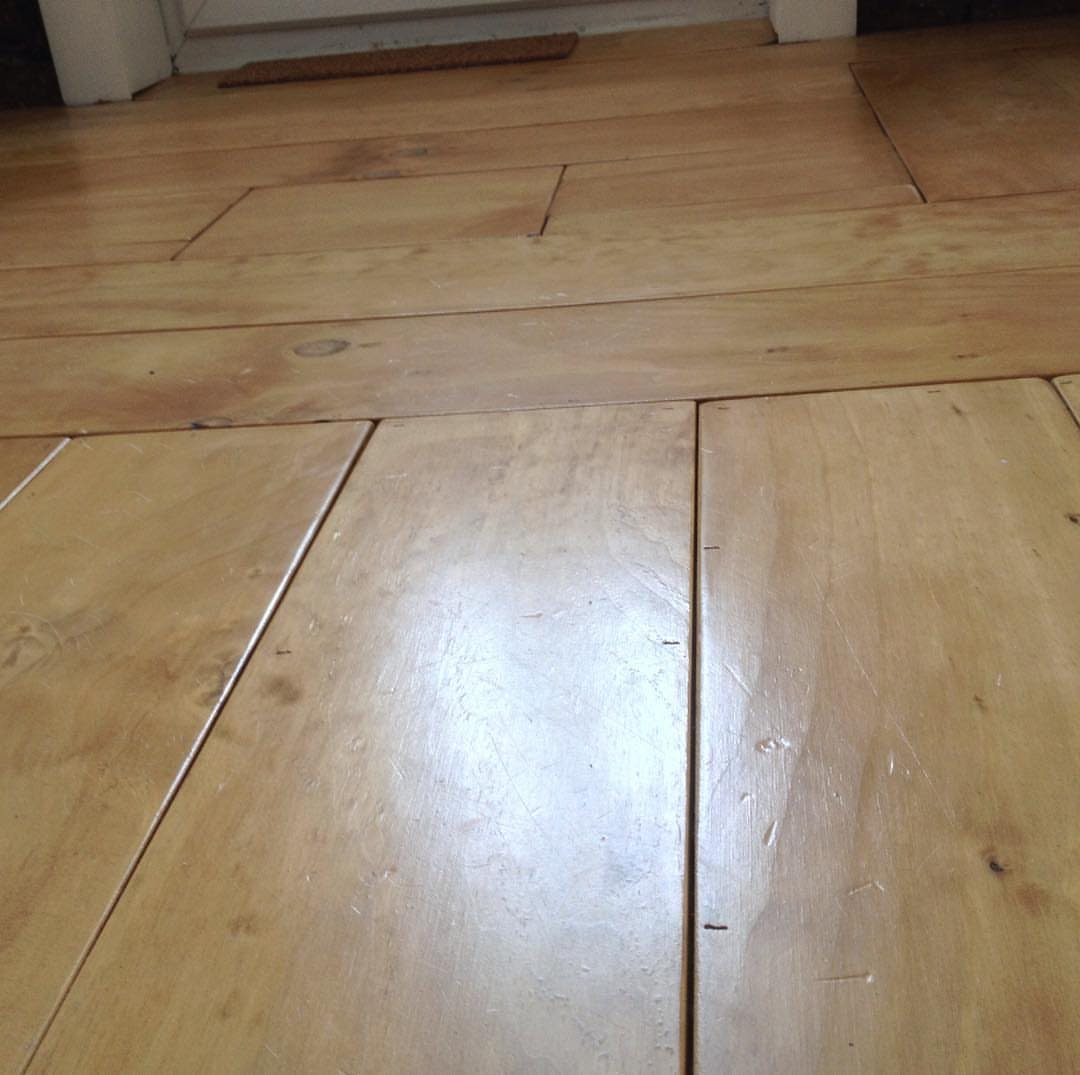
Plywood sheets ripped into planks and laid with a gap for expansion give you a floor that costs next to nothing in materials.
The grain and seams are real, not printed, and a coat of deck stain or paint turns the utilitarian into something intentional.
I have seen this done with ¾-inch ACX plywood, face-nailed and puttied, then sanded to a satin finish. The work is the real cost: ripping, laying, fastening, filling, sanding, finishing.
This is a multi-day project, not a Saturday, and the surface is softer than real hardwood so chair legs leave marks.
Best for a home office, a studio, or any room where a few dents read as character rather than damage.
Most homeowners consider installing new floors a huge renovation project that comes with a correspondingly huge price tag. But laying down new flooring doesn’t have to force you to break into your 401(k).
4. Reclaimed Hardwood
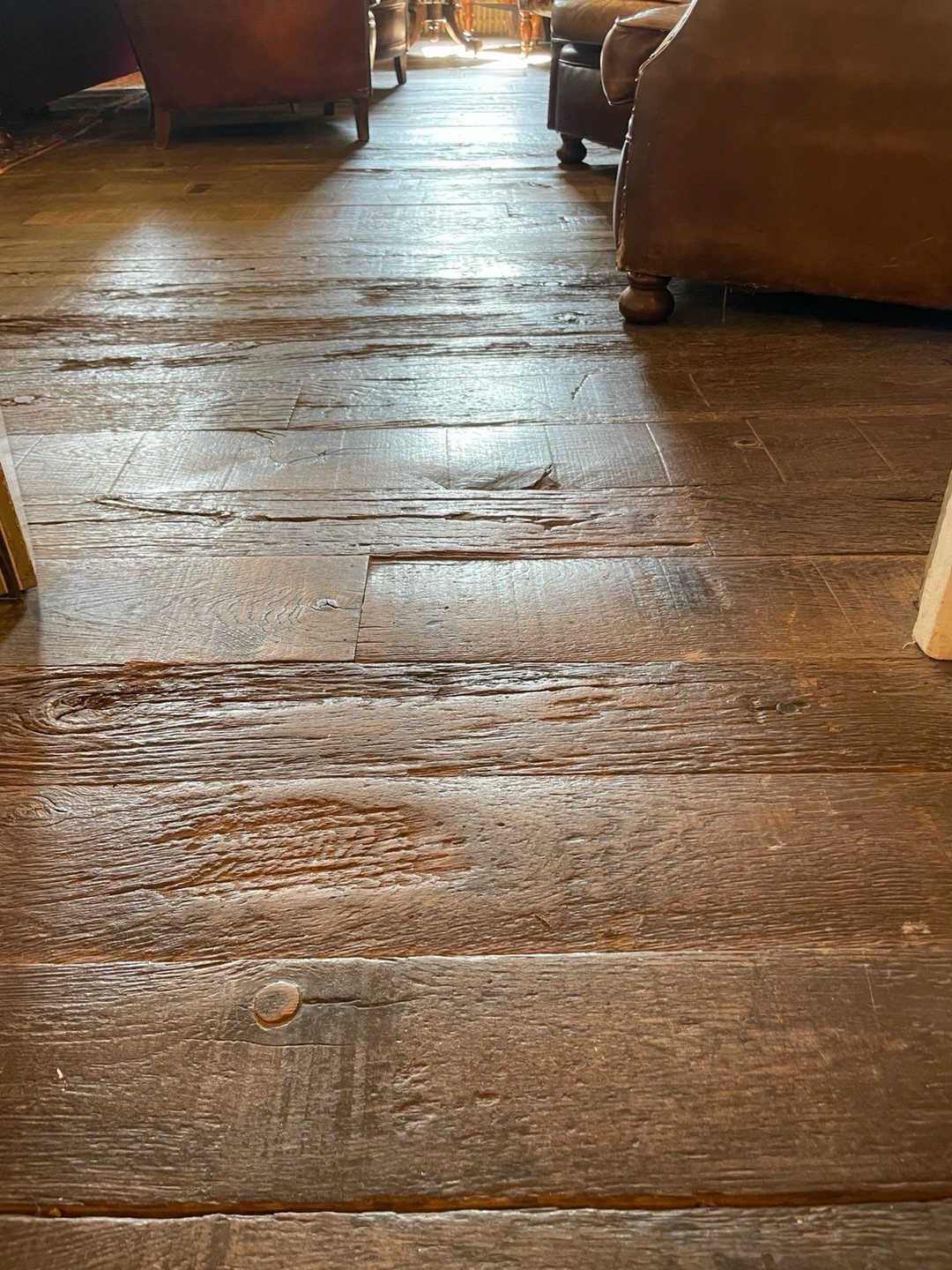
Salvaged boards from old barns and factories carry saw marks, nail holes, and a patina that no stain replicates. The wood is already dry and stable, so warping is rare, and you can refinish it the same as any hardwood.
The problem is supply. A single batch might cover a hallway but not a whole house, and matching later is nearly impossible.
Prices swing wildly depending on what a local dealer has in stock; sometimes it is competitive with new material, sometimes it is not.
I would use this for a single room where the story of the wood matters, or as an accent wall if the floor quote comes back too high.
Seal it well; old timber can hold grit that grinds through a finish.
5. Cork Flooring
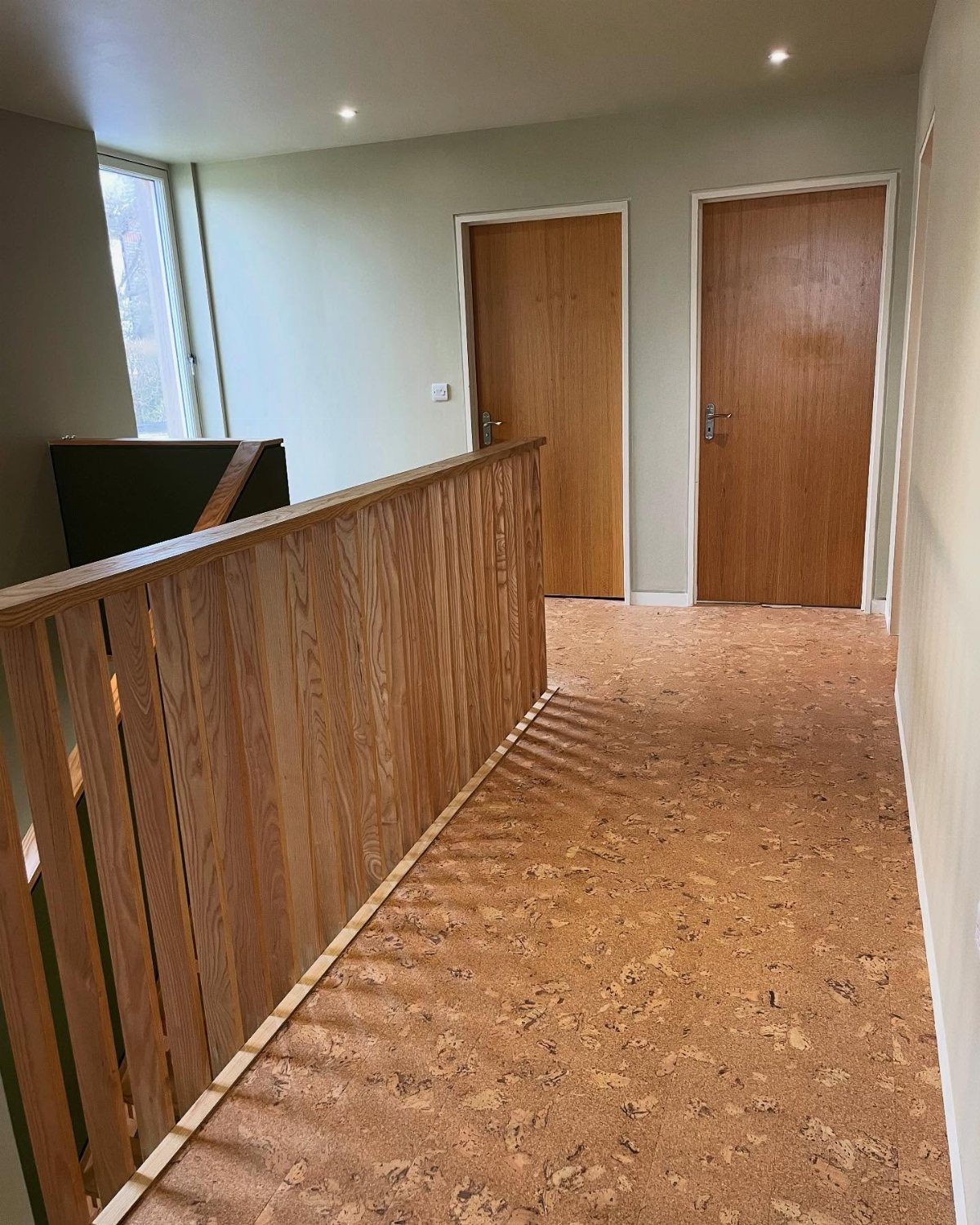
Cork underfoot feels like standing on a firm mattress, and the natural insulation keeps a hallway or bedroom quieter than tile or wood.
Sealed properly, it lasts 20 to 40 years, though I would not trust that lifespan in a kitchen or entry where grit and heels grind in.
The tan, slightly mottled surface is typical; it takes stain if you want to shift the color, but I like the raw look for a space that already has warm wood trim.
Sunlight fades it, so plan rugs or accept the patina. Dents happen, especially under furniture without felt pads, and the refinishing process is more delicate than sanding hardwood.
For a second-floor office or a child’s bedroom, the comfort tradeoff is worth it.
6. Luxury Vinyl Tiles
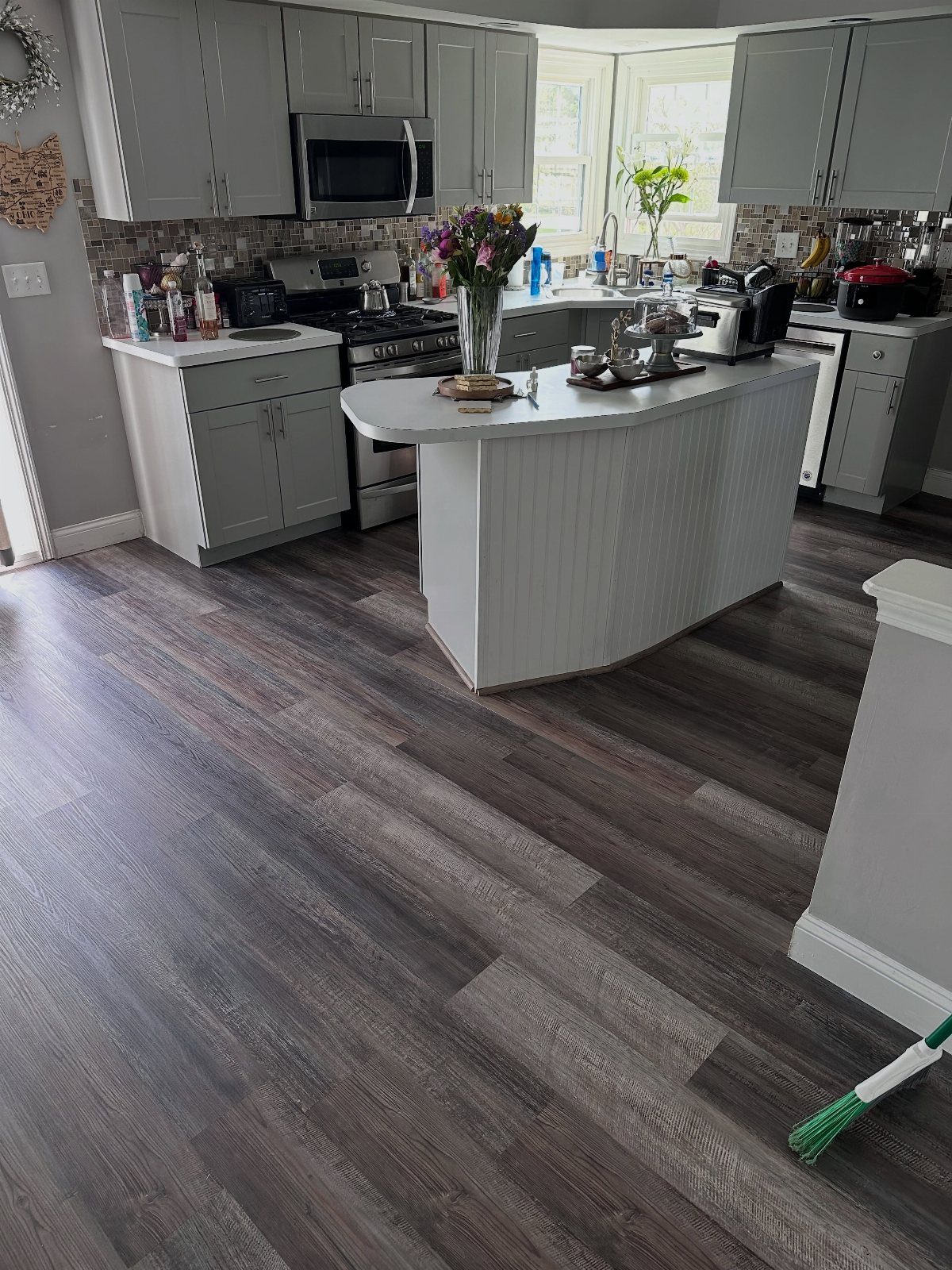
The grey planks are vinyl, not wood, and that is exactly why it works: waterproof PVC construction lets this run straight through a kitchen, a bath, and a laundry room without the acclimation or anxiety that real material demands.
Luxury vinyl plank clicks or glues down, and the thicker tiles can even take grout for a stone look that fools a close inspection.
Styles range from weathered barnwood to Calacatta marble, and the total cost usually sits below laminate once you factor in the skipped moisture barriers and sealers.
For a whole-house install on a tight timeline, this is the option that forgives almost everything.
7. Polished Concrete
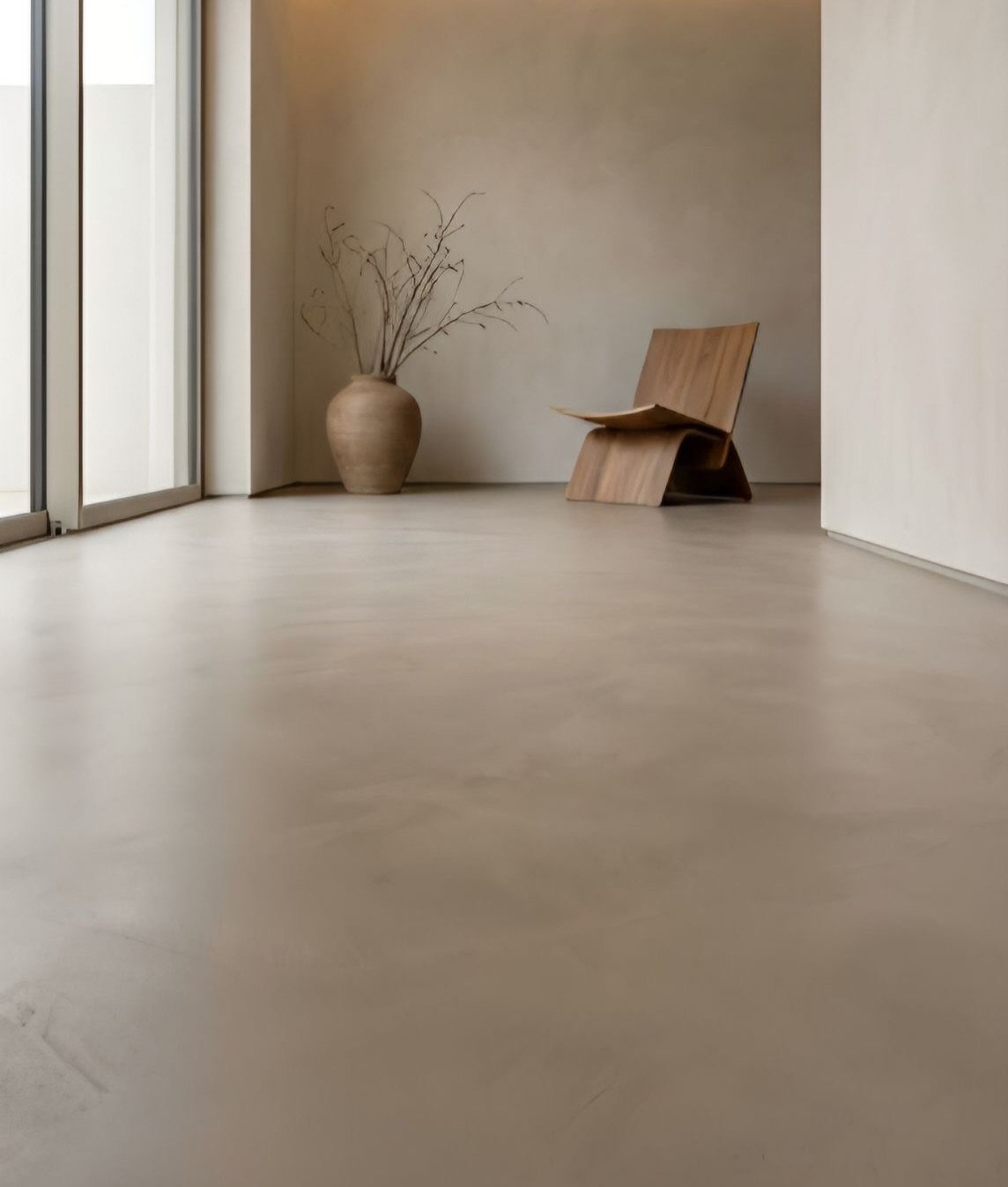
Polished concrete means taking the slab already under your house and grinding it smooth enough to live on.
If your basement, garage, or ground-floor slab is level and in decent shape, the material cost runs about $0.50 to $2 per square foot for a basic polish and seal, though decorative finishes climb from there.
The process is dusty and loud; rent a floor grinder, work through the grits, then seal with a penetrating or topical sealer depending on how much water the space sees.
I would not try this above a finished basement unless the subfloor is concrete.
Polished concrete works best in modern, open rooms where you want the floor to disappear. It is hard underfoot and cold in winter, so area rugs help.
Basements and lofts already on slab are the natural fit.
8. Ceramic Tile
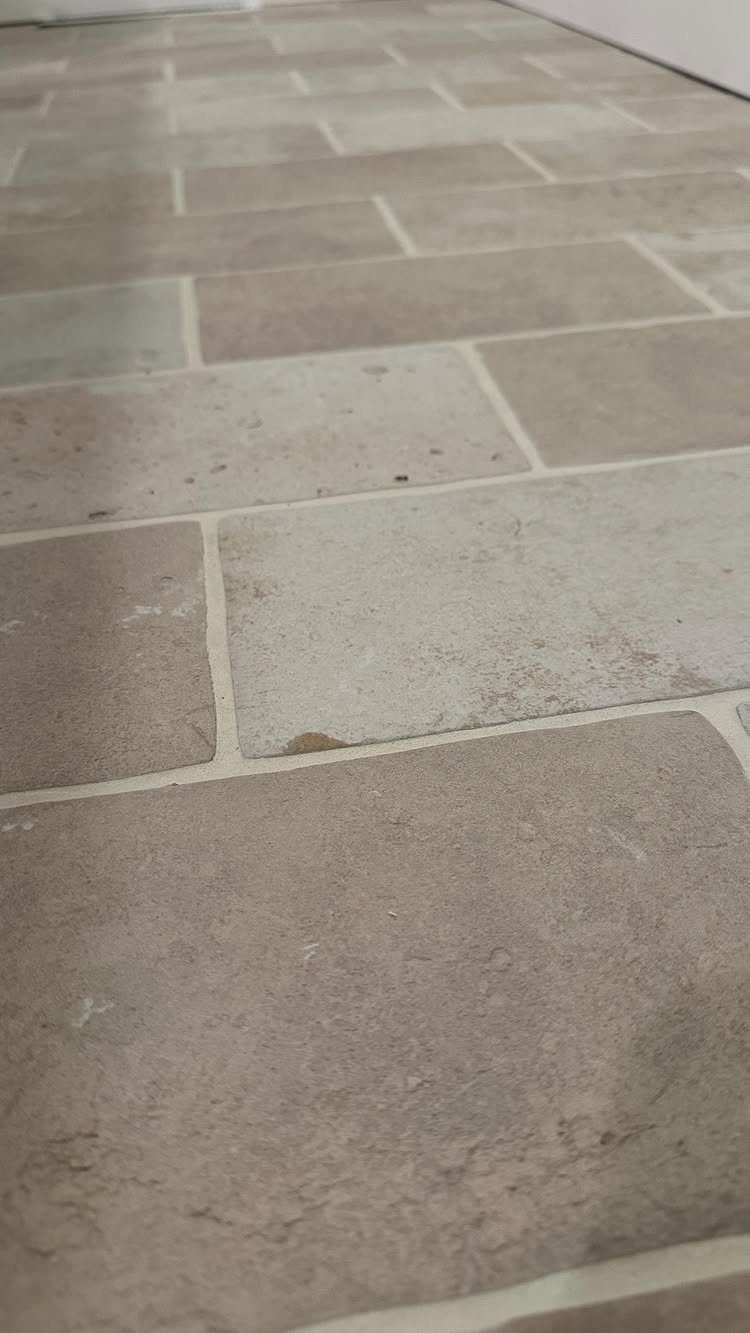
Ceramic tile starts cheap for the material, though installed cost jumps once you account for mortar, grout, and the labor of getting the subfloor dead flat. Look for a PEI rating of 3 or higher; anything lower chips under regular traffic.
A staggered brick pattern is forgiving of minor size variation and easy to lay out. Grout lines need periodic sealing, especially in wet areas, or they will stain.
I would pick ceramic for bathrooms, kitchens, and laundry rooms where water is guaranteed. This is not a one-day project, and a bad subfloor will telegraph through within months.
9. Bamboo Flooring
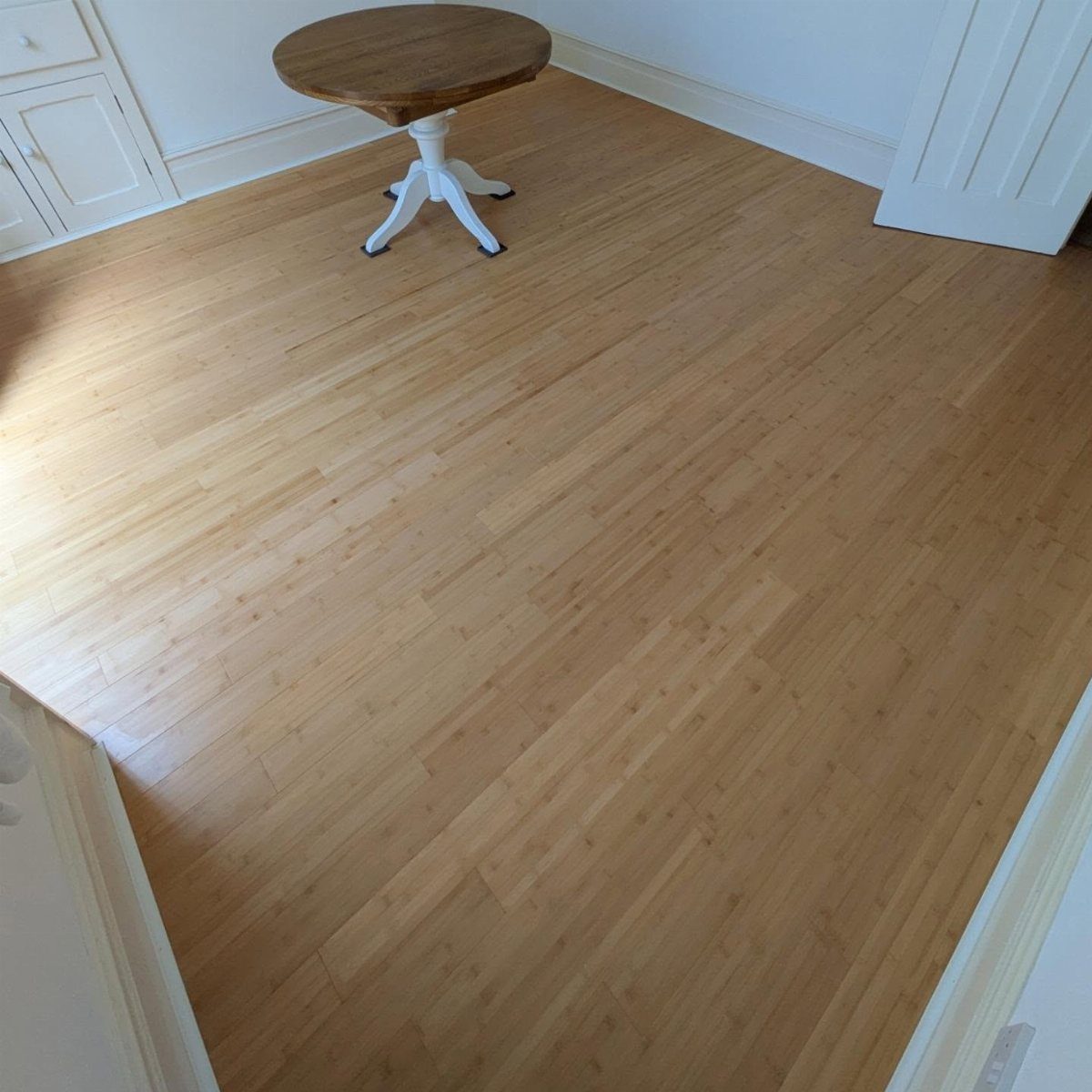
Bamboo flooring gives the warm look of hardwood from a grass that matures in years, not decades.
Cost runs about $4 per square foot, landing between laminate and engineered hardwood. Installation is similar to floating or nail-down wood.
Bamboo swells more than oak or maple, so I would keep it out of bathrooms and be cautious in kitchens.
Best for: bedrooms, living areas, and anywhere you want the hardwood aesthetic with a smaller environmental footprint. Sweep and vacuum regularly; grit is what scratches it.
10. Sheet Vinyl Flooring
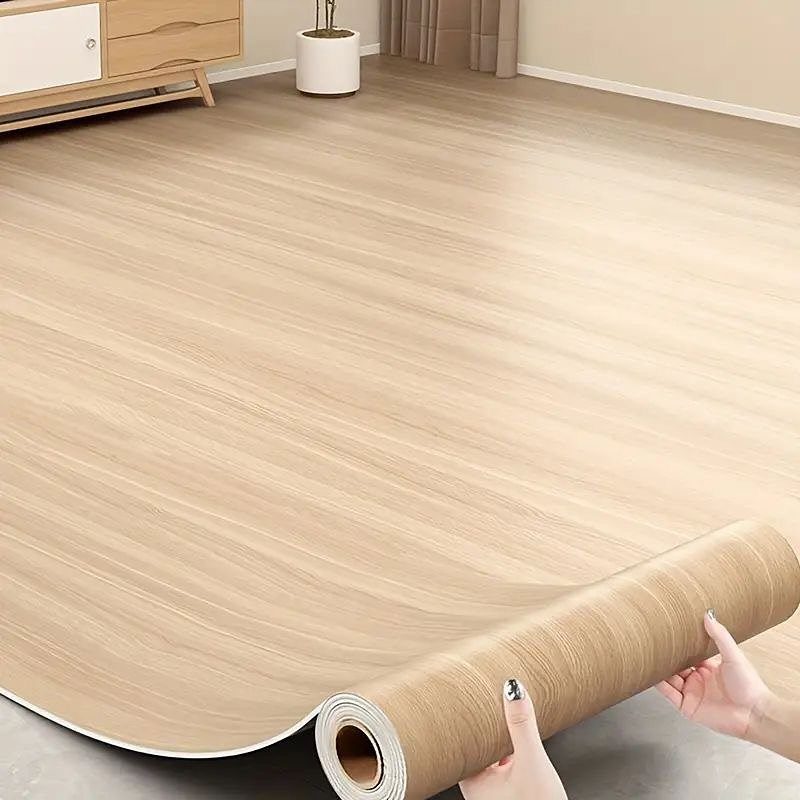
Sheet vinyl comes in wide rolls, which means a small living room or galley kitchen can go down with zero seams. Wood-grain prints have gotten surprisingly convincing; modern imaging does what the old stuff never managed.
Material runs exceptionally cheap, and peel-and-stick versions cut the install cost further. The PVC core is water-resistant and easy to wipe clean, making it a practical choice for bathrooms, kitchens, and laundry rooms.
I would unroll the sheet, let it relax flat for a day, then cut to fit with a sharp utility knife.
Sheet vinyl does not last like tile or wood, but at this price you can replace the look twice and still spend less.
Installation Tips
Click-lock laminate and floating vinyl are the two systems I would trust a first-timer with.
Both sit on top of the subfloor without glue or nails, so the worst mistake is a plank that gaps and needs lifting with the edge of a putty knife.
Reclaimed hardwood, on the other hand, needs face-nailing or full-spread adhesive and a pneumatic nailer you probably do not own.
I would hire that out unless you have already run a flooring nailer and know how to set the pressure so the tongues do not split.
Maintenance Advice
Laminate and standard vinyl share the same weakness: water sits on them rather than soaking in, and that is only a virtue if you wipe it up fast.
A damp cloth, not a wet mop, is the right tool for laminate; the seams wick moisture to the fiber core and the board swells from the edge inward.
Spills on vinyl are less urgent but still worth prompt attention, especially at the perimeter where adhesive can loosen.
Skip this and the porous grout stains regardless of how often you sweep.
Cost Considerations
Hiring out installation can double or triple the material cost, so a small kitchen quickly becomes a project where the labor rivals the price of the vinyl itself.
Engineered hardwood starts around $4 per square foot for materials and climbs to $12 for thicker veneer or wider planks. Labor runs $3 to $10 on top of that, which pushes the total toward $6 to $12 per square foot at the middle of the range.
Durability Factors
High-traffic areas need a surface that does not dent or scratch under daily grit. Laminate and ceramic tile are the usual choices for entries, kitchens, and living rooms where feet, paws, and dragged chairs all pass through.
Bedrooms and second-floor offices can afford softer materials. Cork or carpet underfoot trades durability for comfort and sound absorption, which matters more at 10 p.m. than at 10 a.m.
Water exposure is the other filter. Bathrooms, kitchens, and basements need waterproof or highly water-resistant options; standard laminate and bamboo swell at the edges, and even engineered hardwood is a risk over a damp slab without a moisture barrier.
For a space that sees both traffic and splashes, luxury vinyl plank or ceramic tile are the overlap I would pick.
Frequently Asked Questions
What is the most affordable type of flooring?
Sheet vinyl and vinyl plank run the lowest for material cost, which is why they show up in so many budget kitchen and bathroom redos.
Peel-and-stick vinyl tile skips the moisture barrier and sealer that laminate demands, so the total stays lower even when the sticker price looks close.
What is the new trend for flooring?
Bamboo and cork are getting attention for their smaller environmental footprint and natural feel underfoot. Bamboo matures in years rather than decades and installs like traditional hardwood, while cork brings quiet insulation to bedrooms and offices.
Both work best in dry spaces away from heavy water exposure.
How much does it cost to install 1000 sq ft of flooring?
Material-only costs spread wide: sheet vinyl at the bottom, bamboo at the top, with laminate, engineered hardwood, and luxury vinyl filling the middle.
Labor adds to that if you hire out, though click-lock laminate, floating engineered hardwood, and peel-and-stick vinyl are built for DIY. For a 1,000 square foot project, your total spend depends heavily on whether you keep the install in-house.
What cheap flooring options are ideal for high-traffic areas?
Laminate, luxury vinyl tile, and polished concrete hold up best where feet never stop moving.
Laminate carries a 10- to 15-year lifespan with spill management; vinyl’s PVC construction shrugs off water and wear; polished concrete on a ground-floor slab needs only periodic resealing.
Ceramic tile holds up to heavy traffic, though the full bill changes once mortar, grout, and any subfloor work get counted.